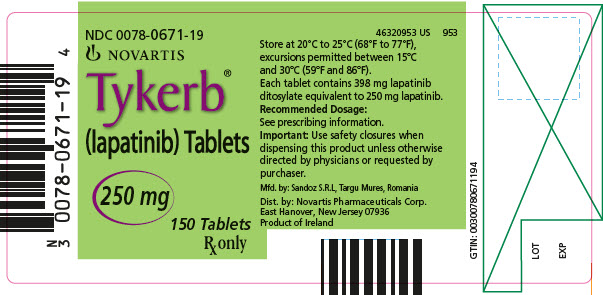
Tykerb
What is Tykerb (Lapatinib)?
Approved To Treat
Top Global Experts


Related Clinical Trials
Summary: This study gathers information from the blood cells and tumor tissue during treatment with anti-HER2 therapies, such as trastuzumab, pertuzumab, lapatinib, or neratinib, in patients with HER2 positive stage I-IV breast cancer who are scheduled to start anti-HER2 therapy. The information gained from this study may help researchers better understand the relation between cell response and anti-HER2 t...
Summary: This is a Phase Ib/II, open-label, multicenter, randomized umbrella study in participants with breast cancer. The study is designed with the flexibility to open new treatment arms as new treatments become available, close existing treatment arms that demonstrate minimal clinical activity or unacceptable toxicity, or modify the patient population. Cohort 1 will focus on participants with inoperable...
Summary: The H3RAKLES trial would allow patients with a progressive metastatic breast cancer to have access to one more line of systemic therapy. Patients included in this trial will have already received at least two lines of chemotherapy (and potentially several lines of endocrine therapy for patients with a HR+ disease). In this setting, few treatments have demonstrated a clinically meaningful benefit, ...
Related Latest Advances
Brand Information
- capecitabine for the treatment of patients with advanced or metastatic breast cancer whose tumors overexpress human epidermal growth factor receptor 2 (HER2) and who have received prior therapy, including an anthracycline, a taxane, and trastuzumab.
- letrozole for the treatment of postmenopausal women with hormone receptor-positive metastatic breast cancer that overexpresses the HER2 receptor for whom hormonal therapy is indicated.

- TYKERB has been reported to decrease left ventricular ejection fraction which may result in shortness of breath, palpitations, and/or fatigue
- Periodic laboratory testing will be performed while taking TYKERB. Advise patients to report signs and symptoms of liver dysfunction to their healthcare provider right away
- TYKERB often causes diarrhea which may be severe in some cases
- Advise patients to report pulmonary signs or symptoms indicative of ILD or pneumonitis
- Advise patients to report severe cutaneous reactions to their healthcare provider if they develop these symptoms while taking TYKERB
- TYKERB may interact with many drugs; therefore, advise patients to report to their healthcare provider the use of any other prescription or nonprescription medication or herbal products
- TYKERB may interact with grapefruit. Advise patients not to take TYKERB with grapefruit products
- TYKERB should be taken at least one hour before or one hour after a meal, in contrast to capecitabine which should be taken with food or within 30 minutes after food. The dose of TYKERB should be taken once daily. Dividing the daily dose is not recommended
- Inform female patients of the risk to a fetus and potential loss of the pregnancy. Advise females to inform their healthcare provider if they are pregnant or become pregnant
- Advise females of reproductive potential to use effective contraception during treatment with TYKERB and for 1 week after the last dose.
- Advise male patients with female partners of reproductive potential to use effective contraception during treatment and for 1 week following the last dose
- Advise patients not to breastfeed during treatment and for 1 week after the last dose of TYKERB