Brand Name

Xcopri

Generic Name
Cenobamate
View Brand Information
FDA approval date: March 12, 2020
Form: Tablet, Kit

What is Xcopri (Cenobamate)?

XCOPRI is indicated for the treatment of partial-onset seizures in adult patients. XCOPRI is indicated for the treatment of partial-onset seizures in adult patients.

Approved To Treat

Save this treatment for later
Sign Up
Not sure about your diagnosis?
Check Your Symptoms

Related Clinical Trials

Retrospective Evaluation of Cenobamate's Health Care Resources Utilization (HCRU) in the Management of Uncontrolled Focal Onset Seizures- A Retrospective, Chart Review Study

Summary: The Study is an observational, retrospective study which aim is to assess cenobamate's healthcare resources utilization (HCRU) in the management of uncontrolled focal onset seizures. The amin objective is to compare the resource utilization before and after the use of cenobamate. Data from medical charts will be used and inserted into the eCRF from which the analyses will be conducted. Data from 2...

Open-label Study of Cenobamate Monotherapy in Adult Subjects With Newly Diagnosed or Recurrent Partial-Onset Epilepsy

Summary: Cenobamate (YKP3089) is a small molecule approved in the United States (US), Europe and several other countries around the world for the treatment of Partial-Onset (focal) seizures in adult subjects (≥18 years of age). In the US it is approved for use as monotherapy, however, there is little clinical data assessing its use as monotherapy in adults with POS. This study is designed to explore the ef...

Observational Cohort Study on Adult Patients With Not-adequately Controlled FOcal-onset Seizures Treated With Cenobamate as Early adjUnctive Therapy in a Real-world Setting - FOCUS

Summary: Aim of the study is to better characterize the clinical profile of adjunctive cenobamate by collecting data from the current standard clinical practice in France, Germany, and Spain, to describe the real-world clinical response among adult patients affected by focal epilepsy not adequately controlled despite a history of 2 or 3 ASMs before starting treatment with cenobamate (including previous and...

Brand Information

Xcopri (cenobamate)
1INDICATIONS AND USAGE
XCOPRI is indicated for the treatment of partial-onset seizures in adult patients.
2DOSAGE FORMS AND STRENGTHS
XCOPRI tablets are available in the following strengths, shapes, colors, and tablet markings (Table 2).
3CONTRAINDICATIONS
XCOPRI is contraindicated in patients with:
  • Hypersensitivity to cenobamate or any of the inactive ingredients in XCOPRI
  • Familial Short QT syndrome
4ADVERSE REACTIONS
The following serious adverse reactions are described in more detail in the Warnings and Precautions section of the labeling:
  • Drug Reaction with Eosinophilia and Systemic Symptoms (DRESS)/Multiorgan Hypersensitivity
  • QT Shortening
  • Suicidal Behavior and Ideation
  • Liver Injury
  • Neurological Adverse Reactions
  • Withdrawal of Antiepileptic Drugs
4.1Clinical Trials Experience
Because clinical trials are conducted under widely varying conditions and for varying durations, adverse reaction frequencies observed in the clinical trials of a drug cannot be directly compared with frequencies in the clinical trials of another drug and may not reflect the frequencies observed in practice.
In all controlled and uncontrolled trials performed in adult partial-onset seizure patients, XCOPRI was administered as adjunctive therapy to 1944 patients. Of these patients, 1575 were treated for at least 6 months, 710 for at least 12 months, 349 for at least 24 months, and 320 for at least 36 months. A total of 658 patients (442 patients treated with XCOPRI and 216 patients treated with placebo) constituted the safety population in the pooled analysis of placebo-controlled studies in patients with partial-onset seizures (Studies 1 and 2)
In Study 1 and Study 2, adverse events occurred in 77% of patients treated with XCOPRI and 68% treated with placebo.
The discontinuation rates because of adverse events were 11%, 9%, and 21% for patients randomized to receive XCOPRI at doses of 100 mg/day, 200 mg/day, and 400 mg/day, respectively, compared to 4% in patients randomized to receive placebo. The adverse reactions most commonly (1% or greater in any XCOPRI treatment group, and greater than placebo) leading to discontinuation, in descending order of frequency, were ataxia, dizziness, somnolence, diplopia, nystagmus, and vertigo.
Laboratory Abnormalities
Hepatic Transaminases[see Warnings and Precautions (
In Study 2, there was a post-baseline elevation of alanine aminotransferase (ALT) to greater than 3 times the upper limit of normal (ULN) in 1 (0.9%) patient treated with 100 mg XCOPRI, 2 (1.8%) patients treated with 200 mg, and 3 (2.7%) patients treated with 400 mg, compared to no patients who took placebo. The maximum ALT elevation was 7.6 times ULN in patients treated with 400 mg XCOPRI.
Potassium
In clinical studies, there was a post-baseline elevation of potassium values greater than 5 meq/L (upper reference range) in patients treated with XCOPRI. In Study 1, there were 17 (17%) patients treated with XCOPRI 200 mg compared to 8 (7%) patients who took placebo with normal baseline potassium values who had at least one post-baseline maximum value greater than 5 meq/L. In Study 2, there was a dose-related distribution where at least one post-baseline potassium value was greater than 5 meq/L, occurring in 8.3%, 9.1%, and 10.8% of the patients treated with XCOPRI 100 mg, 200 mg, and 400 mg, respectively, compared to 5.6% of patients who took placebo. Two patients had a maximum potassium value of 5.9 meq/L.
Other Adverse Reactions
Gastrointestinal disorders: There was an incidence of appendicitis in the overall clinical trial safety population of 2.9 cases of appendicitis/1000 patient-years of exposure that is in excess of the expected background rate in the general population.
Adverse Reactions Based on Gender
No significant gender differences were noted in the incidence of adverse reactions.
4.2Postmarketing Experience
The following adverse reactions have been identified during post approval use of XCOPRI. Because these reactions are reported voluntarily from a population of uncertain size, it is not always possible to reliably estimate their frequency or establish a causal relationship to drug exposure.
Psychiatric Disorders: Psychosis (hallucinations, delusions/paranoia), hostility, aggression.
Hepatobiliary Disorders: Hepatic failure
5OVERDOSAGE
There is limited clinical experience with XCOPRI overdose in humans.
There is no specific antidote for overdose with XCOPRI. In the event of overdose, standard medical practice for the management of any overdose should be used. An adequate airway, oxygenation and ventilation should be ensured; monitoring of cardiac rate and rhythm and vital signs is recommended. A certified poison control center should be contacted for updated information on the management of overdose with XCOPRI. There are no data on the removal of XCOPRI using dialysis.
6DESCRIPTION
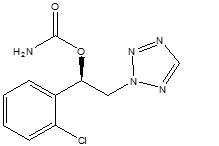
The chemical name of XCOPRI (cenobamate) is [(1
Chemical Structure
Cenobamate is a white to off-white crystalline powder. It is slightly soluble in aqueous solutions (water 1.7 mg/mL) and has higher solubility in organic solvents like ethanol (209.4 mg/mL).
XCOPRI tablets are for oral administration and contain the following inactive ingredients: colloidal silicon dioxide, lactose monohydrate, magnesium stearate, microcrystalline cellulose, and sodium starch glycolate and film coating agents specified below:
12.5 mg tablets: Not applicable, since 12.5 mg tablets are uncoated.
25 mg and 100 mg tablets: FD&C Blue# 2/indigo carmine aluminum lake, iron oxide red, iron oxide yellow, polyethylene glycol 3350, polyvinyl alcohol-part hydrolyzed, talc, and titanium dioxide.
50 mg tablets: iron oxide yellow, polyethylene glycol 3350, polyvinyl alcohol-part hydrolyzed, talc, and titanium dioxide.
150 mg and 200 mg tablets: iron oxide red, iron oxide yellow, polyethylene glycol 3350, polyvinyl alcohol-part hydrolyzed, talc, and titanium dioxide.
7CLINICAL STUDIES
The efficacy of XCOPRI for the treatment of partial-onset seizures was established in two multicenter, randomized, double-blind, placebo-controlled studies in adult patients (Study 1 and Study 2). Patients enrolled in the studies had partial-onset seizures with or without secondary generalization and were not adequately controlled with 1 to 3 concomitant AEDs. During an 8-week baseline period, patients were required to have at least 3 or 4 partial-onset seizures per 28 days on average with no seizure-free period exceeding 3 to 4 weeks. In these studies, patients had a mean duration of epilepsy of approximately 24 years and median baseline seizure frequency of 8.5 seizures per 28 days. More than 80% of patients were taking 2 or more concomitant AEDs.
Study 1 (
The primary efficacy outcome in Study 1 and Study 2 was the percent change from baseline in seizure frequency per 28 days in the treatment period.
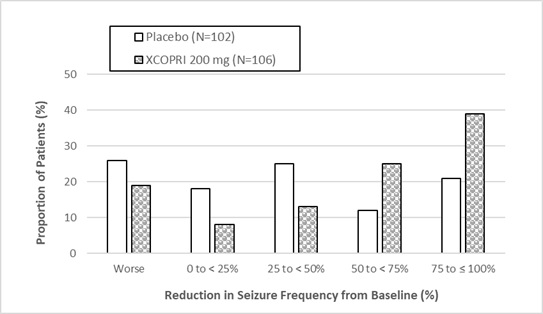
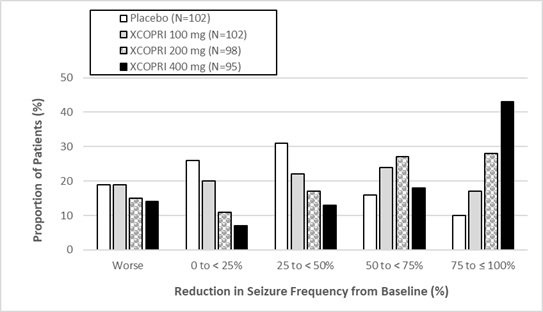
Figure 1 and Figure 2 show the proportion of patients with different percent reductions during the maintenance phase over baseline in Study 1 and Study 2, respectively. Patients in whom the seizure frequency increased are shown in the left-most column as “worse.” Patients in whom the seizure frequency decreased are shown in the remaining four categories.
Figure 1: Proportion of Patients Exhibiting Different Percent Reductions During the Maintenance Phase over Baseline in Study 1
Figure 1
Figure 2: Proportion of Patients Exhibiting Different Percent Reductions During the Maintenance Phase over Baseline in Study 2
Figure 2
In Study 2, 4 of 102 (4%) patients in the XCOPRI 100 mg/day group, 11 of 98 (11%) patients in the XCOPRI 200 mg/day group, and 20 of 95 (21%) patients in the XCOPRI 400 mg/day group and 1 of 102 (1%) of patients in the placebo group reported no partial seizures during the maintenance phase.
8PATIENT COUNSELING INFORMATION
Advise the patient to read the FDA-approved patient labeling (
DRESS/Multi-organ Hypersensitivity
Instruct patients and caregivers that a fever or rash associated with signs of other organ system involvement (e.g., lymphadenopathy, hepatic dysfunction) may be drug-related and should be reported to their healthcare provider immediately. XCOPRI should be discontinued immediately if a serious hypersensitivity reaction is suspected
QT Shortening
Instruct patients to inform their healthcare provider of all of the medications, over-the-counter medications, and herbal supplements that they are taking. Instruct patients to notify their healthcare provider if they have any symptoms of shortening of the QT interval, including prolonged heart palpitations or a loss of consciousness
Suicidal Behavior and Ideation
Counsel patients, their caregivers, and/or families that antiepileptic drugs, including XCOPRI, may increase the risk of suicidal thoughts and behavior, and advise patients to be alert for the emergence or worsening of symptoms of depression; unusual changes in mood or behavior; or suicidal thoughts, behavior, or thoughts about self-harm. Advise patients, their caregivers, and/or families to report behaviors of concern immediately to a healthcare provider
Liver Injury:
Inform patients that liver injury has been reported with XCOPRI. Instruct patients treated with XCOPRI to promptly report any symptoms that may indicate liver injury, including unexplained nausea, vomiting, right upper quadrant abdominal pain, fatigue, anorexia, jaundice, or dark urine. Discuss with patients that a blood test should be obtained before they start therapy if one has not been done within the prior 3 months, and that blood tests will be obtained during treatment if clinically indicated
Neurological Adverse Reactions
Counsel patients that XCOPRI causes somnolence, fatigue, dizziness, and gait disturbance. These adverse reactions, if observed, are more likely to occur early in treatment but can occur at any time. Advise patients not to drive or operate machinery until they have gained sufficient experience on XCOPRI to gauge whether it adversely affects their ability to drive or operate machinery and that other CNS depressants or alcohol may have additive effects
Withdrawal of XCOPRI
Advise patients not to discontinue use of XCOPRI without consulting with their healthcare provider. XCOPRI should normally be gradually withdrawn to reduce the potential for increased seizure frequency and status epilepticus
Contraceptives
Counsel females of reproductive potential that XCOPRI may decrease the efficacy of oral contraceptives and advise them to use additional or alternative non-hormonal birth control
Pregnancy
Advise patients to notify their healthcare provider if they become pregnant or intend to become pregnant during XCOPRI therapy. Encourage patients to enroll in the North American Antiepileptic Drug Pregnancy Registry if they become pregnant. This registry is collecting information about the safety of antiepileptic drugs during pregnancy
Dosing Instructions
Counsel patients that XCOPRI may be taken any time with or without food. Instruct patients that XCOPRI tablets can be taken whole or crushed. The crushed tablet can be mixed with water and either administered by mouth as an oral suspension or administered via a nasogastric (NG) tube. Counsel patients administering XCOPRI as an oral suspension or via NG tube on appropriate preparation and administration instructions
Abuse and Dependence
Advise patients that XCOPRI is a federally controlled substance (CV) because it can be abused or lead to dependence
Manufactured for:
XCOPRI
For patent information:
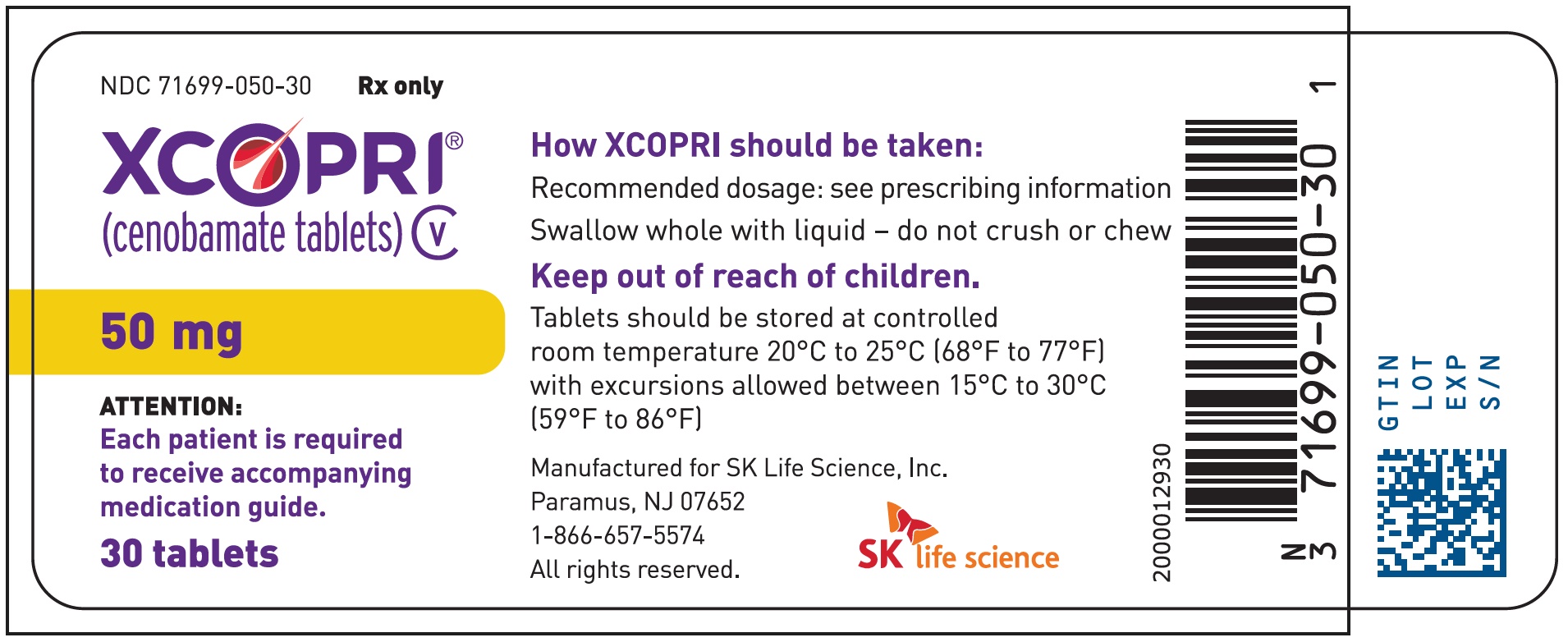
9PRINCIPAL DISPLAY PANEL - NDC: 71699-050-30 - 50 mg 30-count Bottle Label
50 mg 30-count Bottle Label
10PRINCIPAL DISPLAY PANEL - NDC: 71699-050-30 - 50 mg 30-count Bottle Label
50 mg 30-count Bottle Label
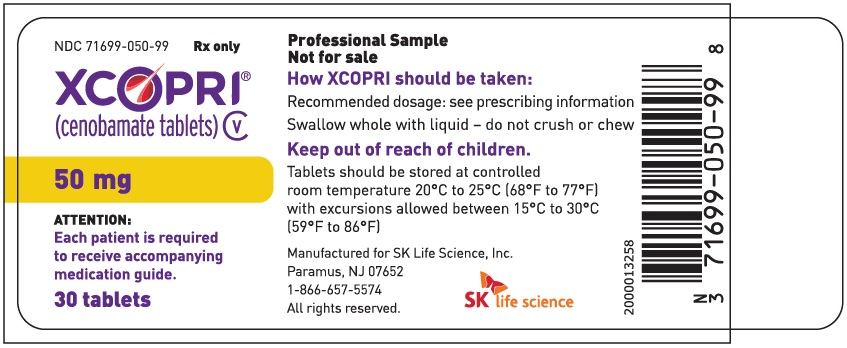
11PRINCIPAL DISPLAY PANEL - NDC: 71699-050-99 - 50 mg 30-count Bottle Label
50 mg 30-count Bottle Label
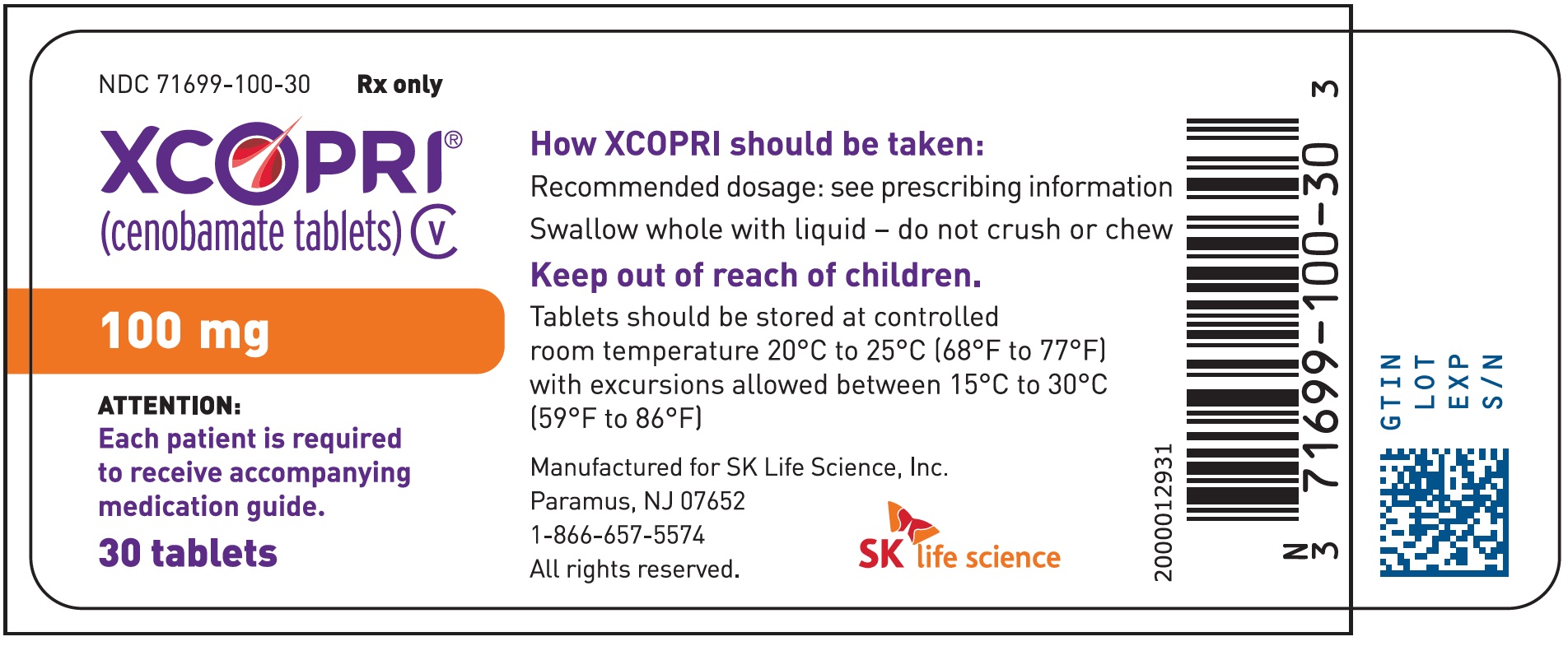
12PRINCIPAL DISPLAY PANEL - NDC: 71699-100-30 - 100 mg 30-count Bottle Label
100 mg 30-count Bottle Label
13PRINCIPAL DISPLAY PANEL - NDC: 71699-100-30 - 100 mg 30-count Bottle Label
100 mg 30-count Bottle Label
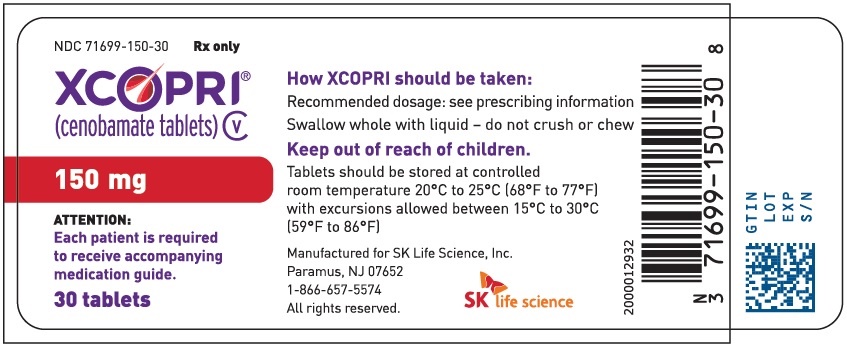
14PRINCIPAL DISPLAY PANEL - NDC: 71699-150-30 - 150 mg 30-count Bottle Label
150 mg 30-count Bottle Label
15PRINCIPAL DISPLAY PANEL - NDC: 71699-150-30 - 150 mg 30-count Bottle Label
150 mg 30-count Bottle Label
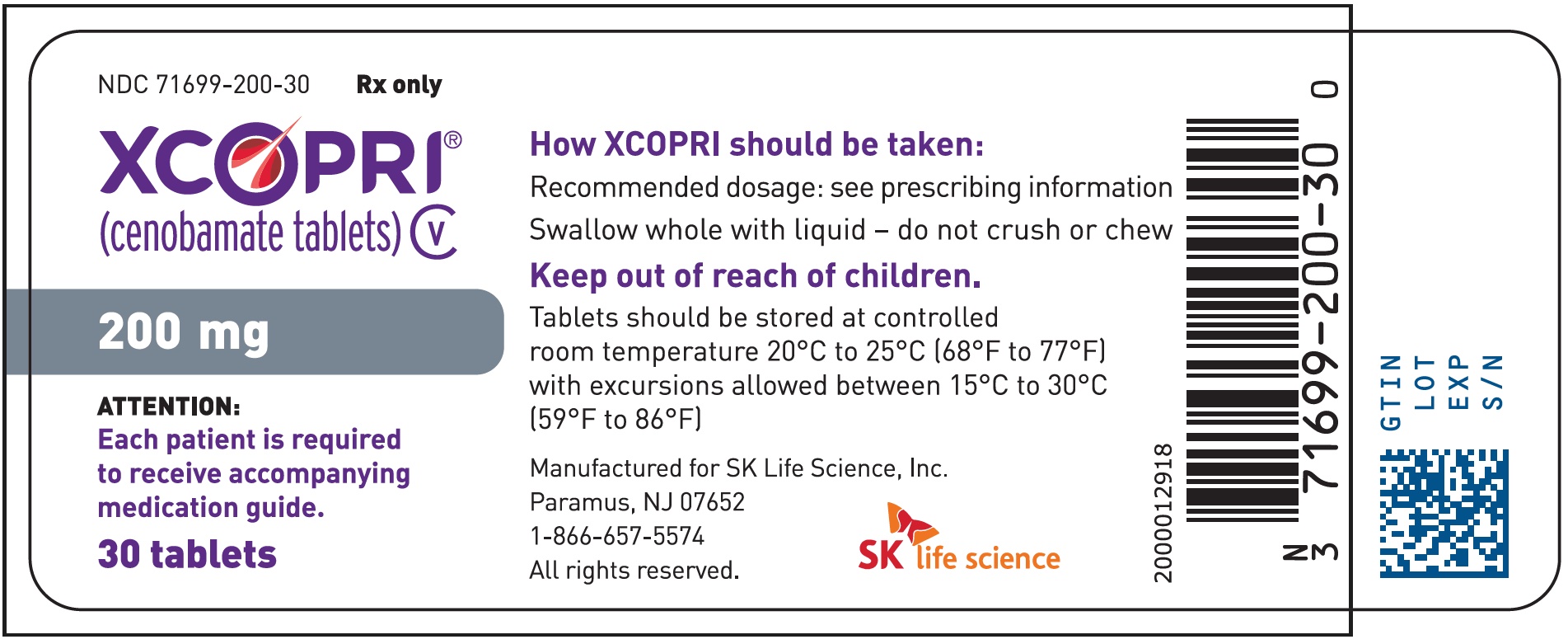
16PRINCIPAL DISPLAY PANEL - NDC: 71699-200-30 - 200 mg 30-count Bottle Label
200 mg 30-count Bottle Label
17PRINCIPAL DISPLAY PANEL - NDC: 71699-200-30 - 200 mg 30-count Bottle Label
200 mg 30-count Bottle Label
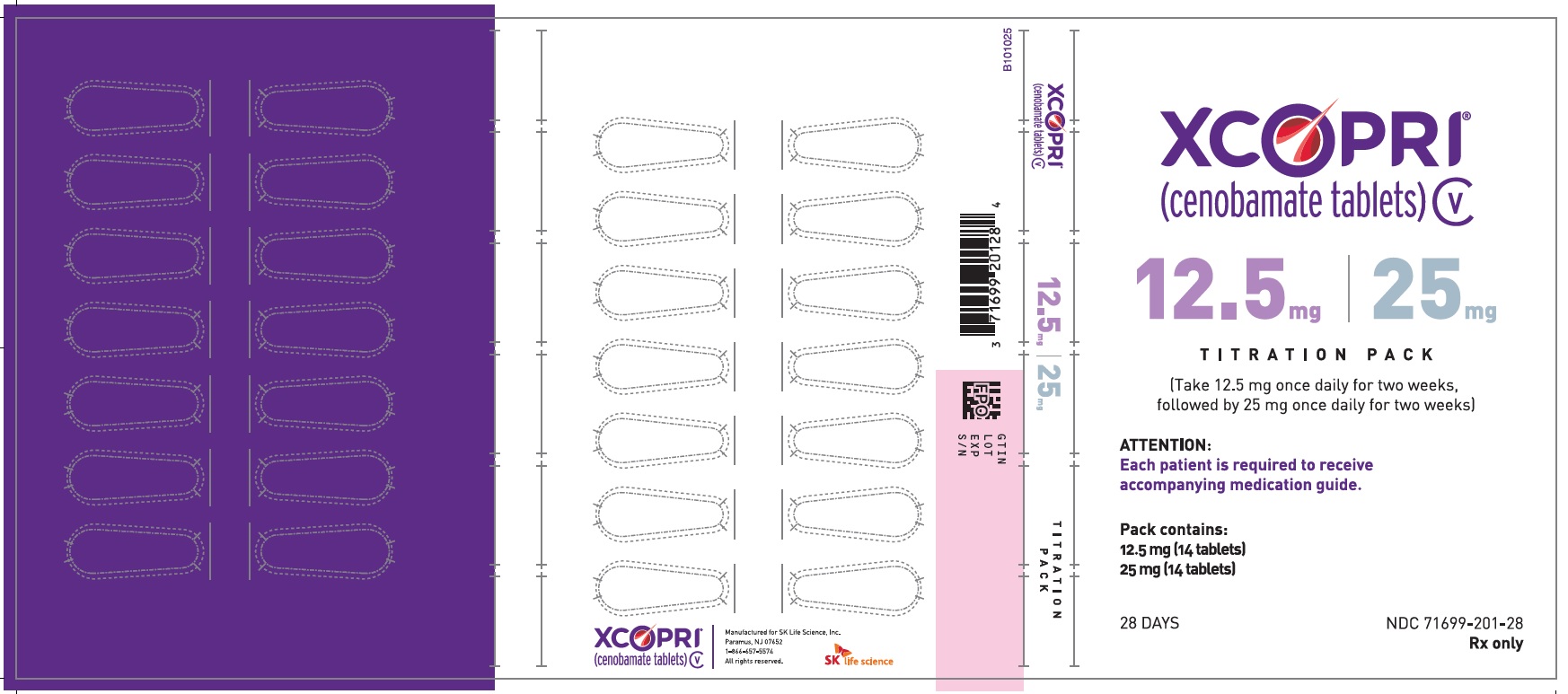
18PRINCIPAL DISPLAY PANEL - NDC: 71699-201-28 - 12.5 mg 14-count and 25 mg 14-count Titration Pack Label (Front)
12.5 mg 14-count and 25 mg 14-count Titration Pack Label (Back)
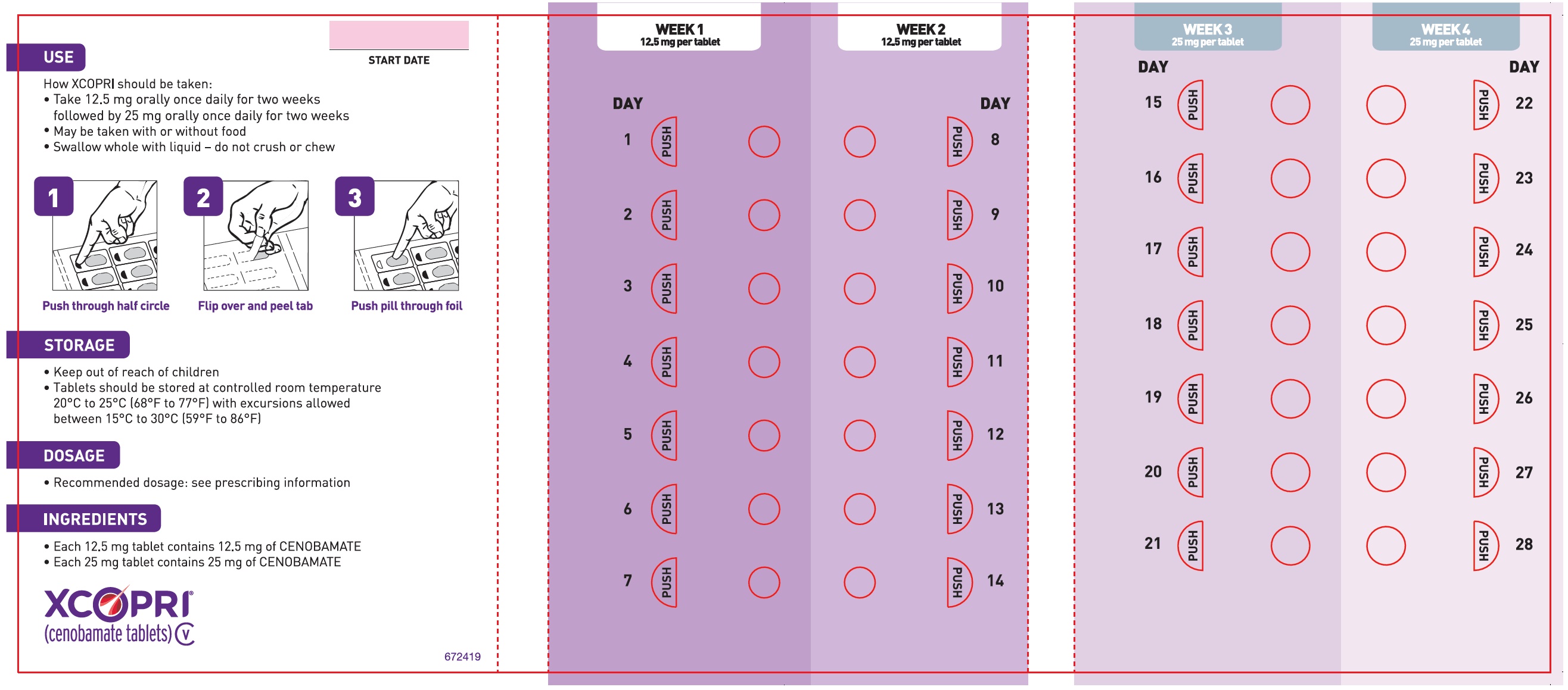
19PRINCIPAL DISPLAY PANEL - NDC: 71699-201-28 - 12.5 mg 14-count and 25 mg 14-count Titration Pack Label (Back)
12.5 mg 14-count and 25 mg 14-count Titration Pack Label (Back)
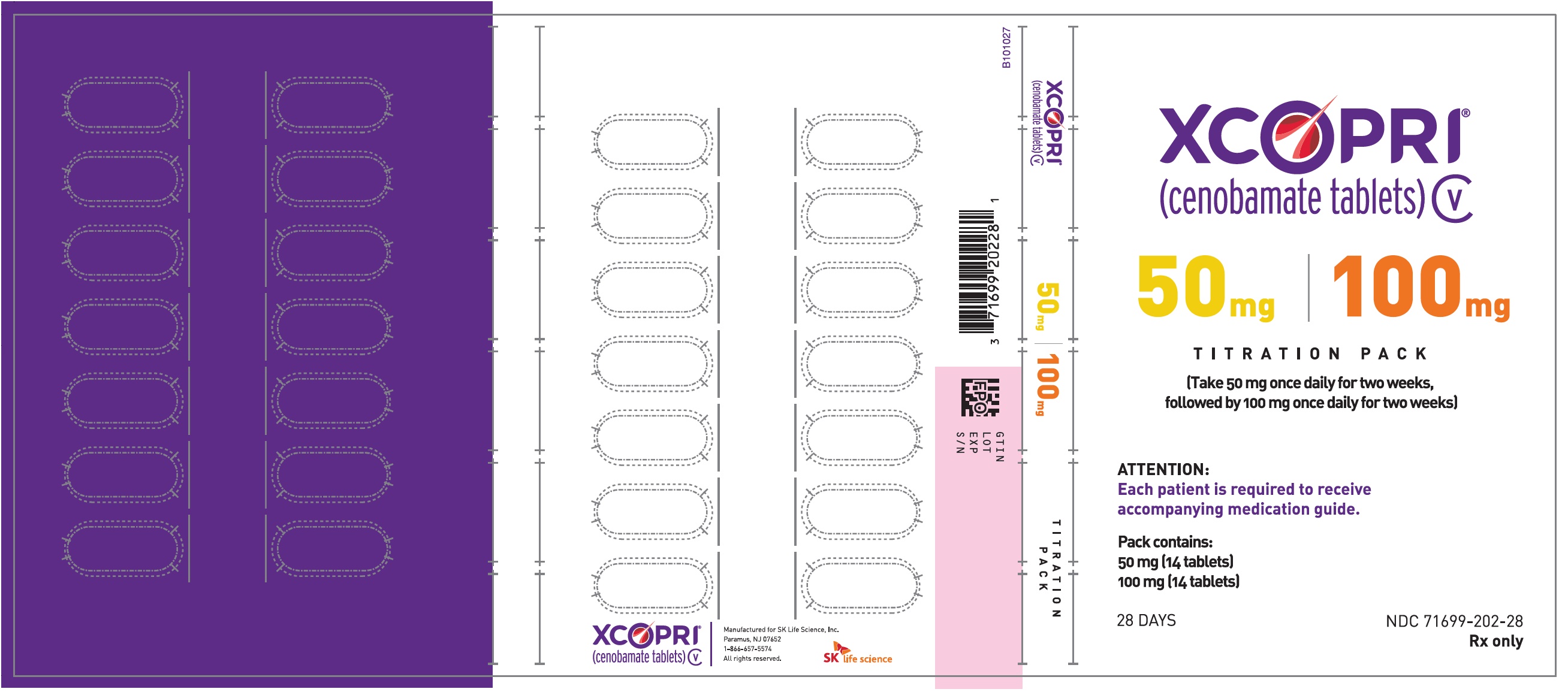
20PRINCIPAL DISPLAY PANEL - NDC: 71699-202-28 - 50 mg 14-count and 100 mg 14-count Titration Pack Label (Front)
50 mg 14-count and 100 mg 14-count Titration Pack Label (Front)
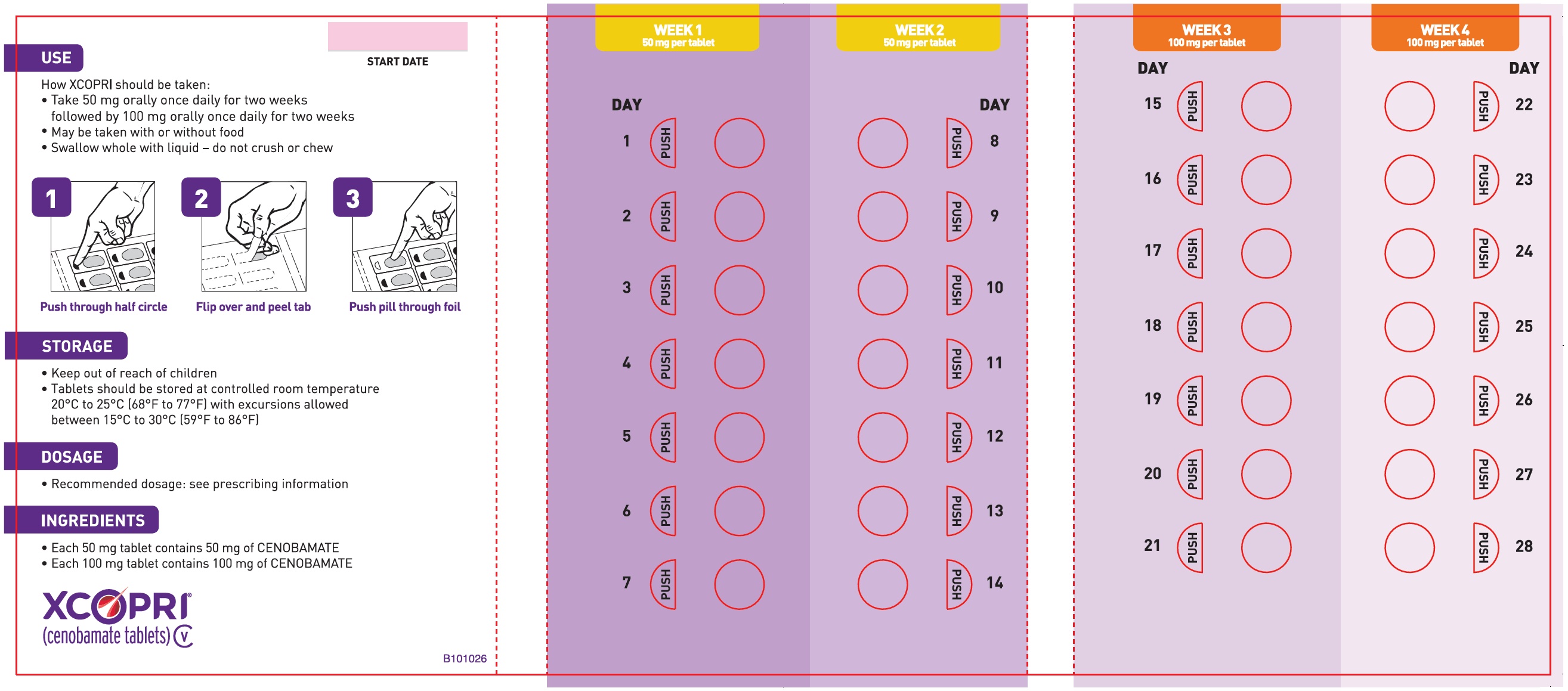
21PRINCIPAL DISPLAY PANEL - NDC: 71699-202-28 - 50 mg 14-count and 100 mg 14-count Titration Pack Label (Back)
50 mg 14-count and 100 mg 14-count Titration Pack Label (Back)
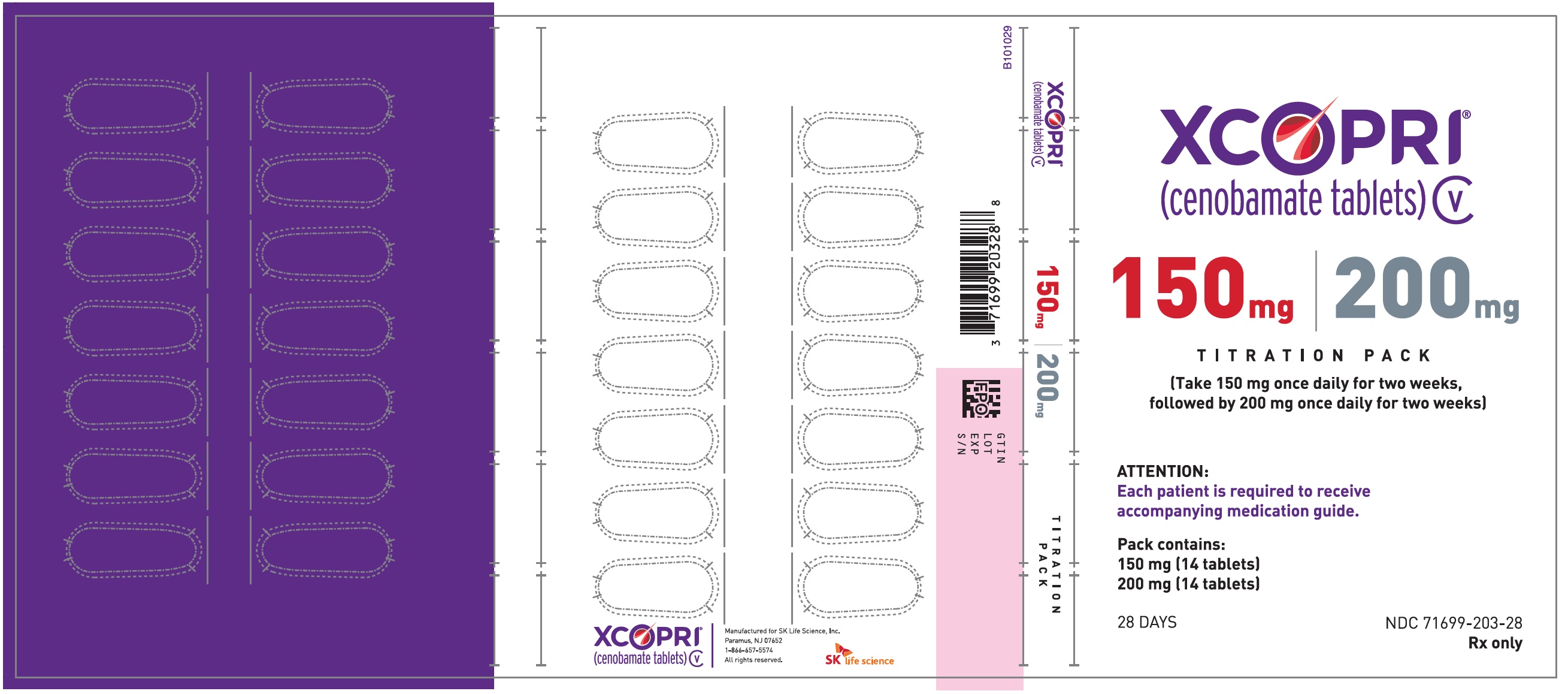
22PRINCIPAL DISPLAY PANEL - NDC: 71699-203-28 - 150 mg 14-count and 200 mg 14-count Titration Pack Label (Front)
150 mg 14-count and 200 mg 14-count Titration Pack Label (Front)
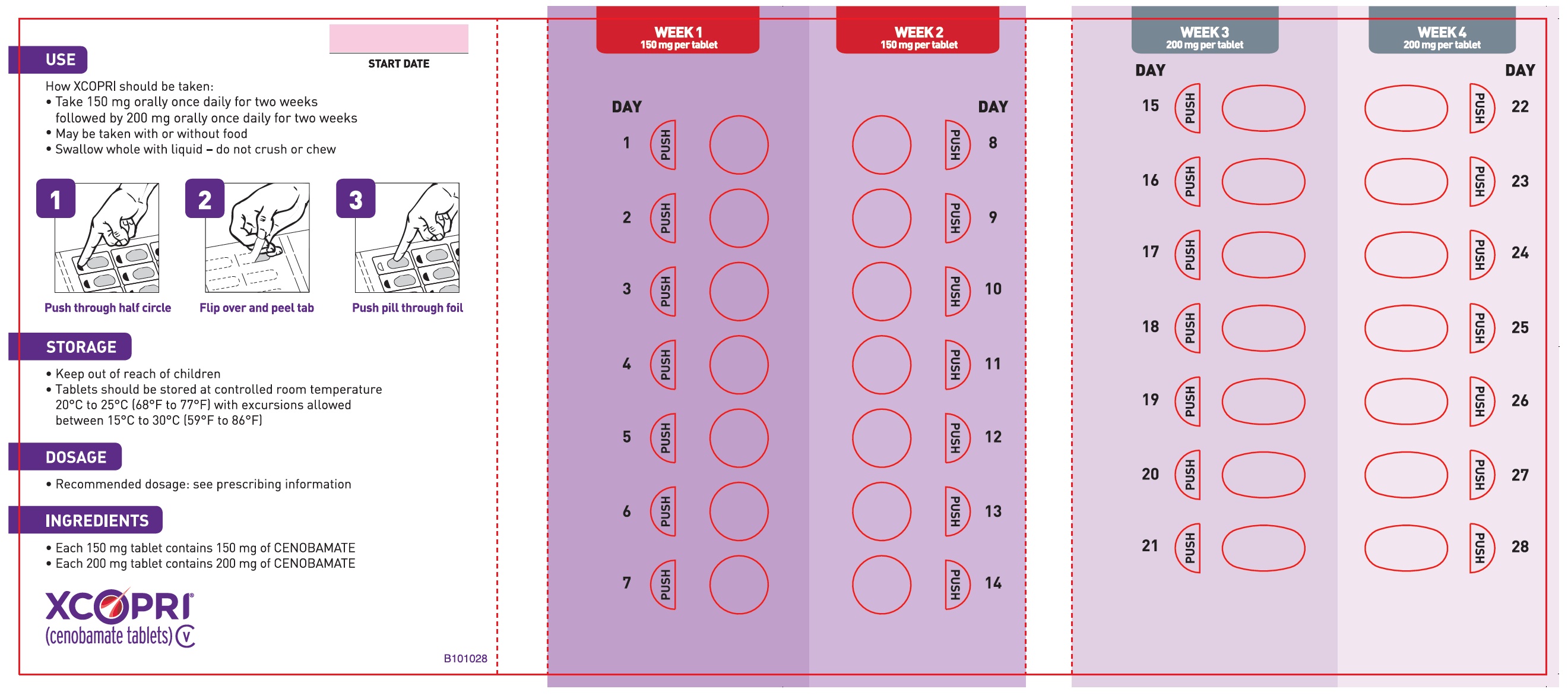
23PRINCIPAL DISPLAY PANEL - NDC: 71699-203-28 - 150 mg 14-count and 200 mg 14-count Titration Pack Label (Back)
150 mg 14-count and 200 mg 14-count Titration Pack Label (Back)
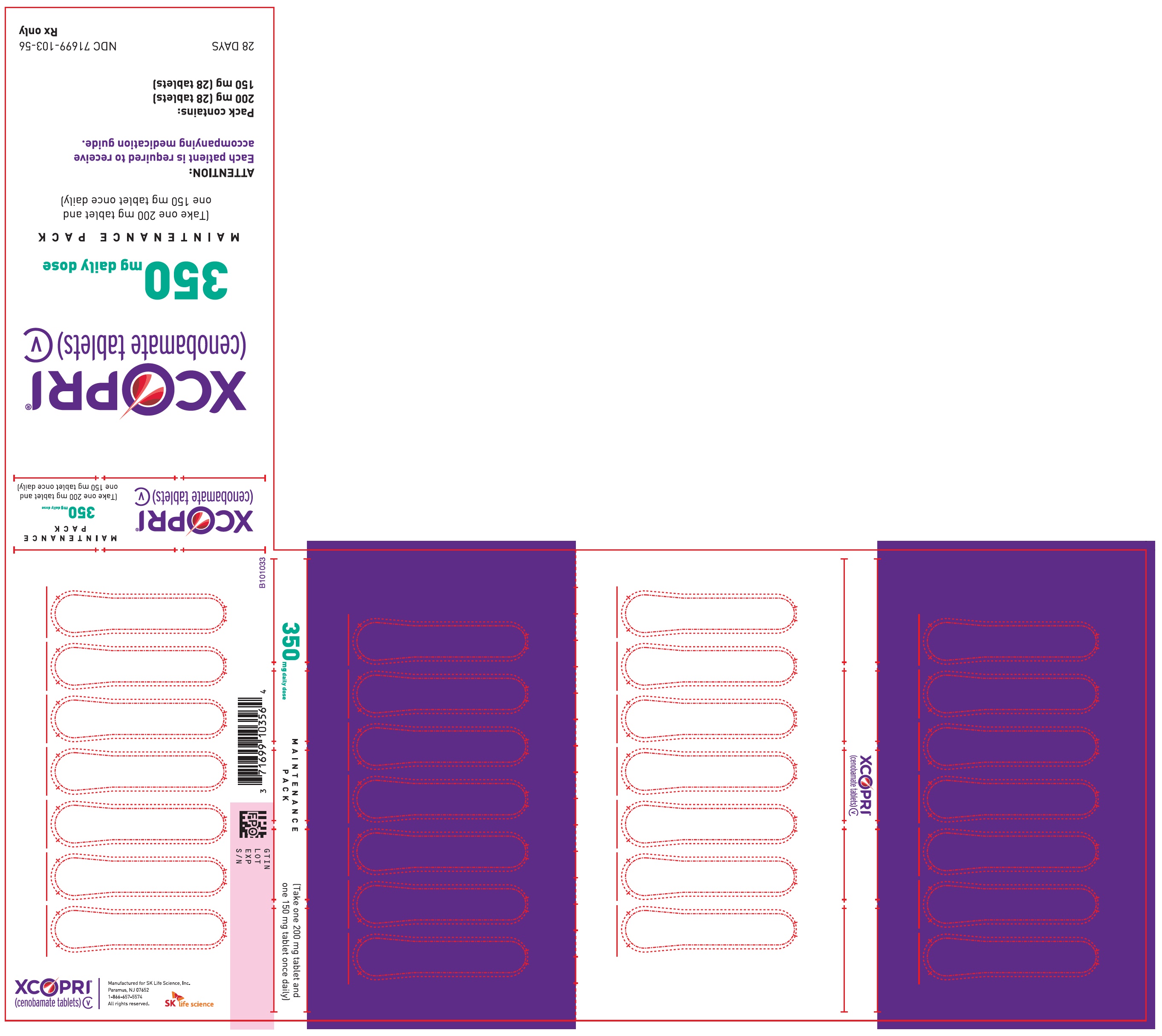
24PRINCIPAL DISPLAY PANEL - NDC: 71699-103-56 - 200 mg 28-count and 150 mg 28-count Maintenance Pack (Front)
150 mg 28-count and 200 mg 28-count Maintenance Pack (Front)
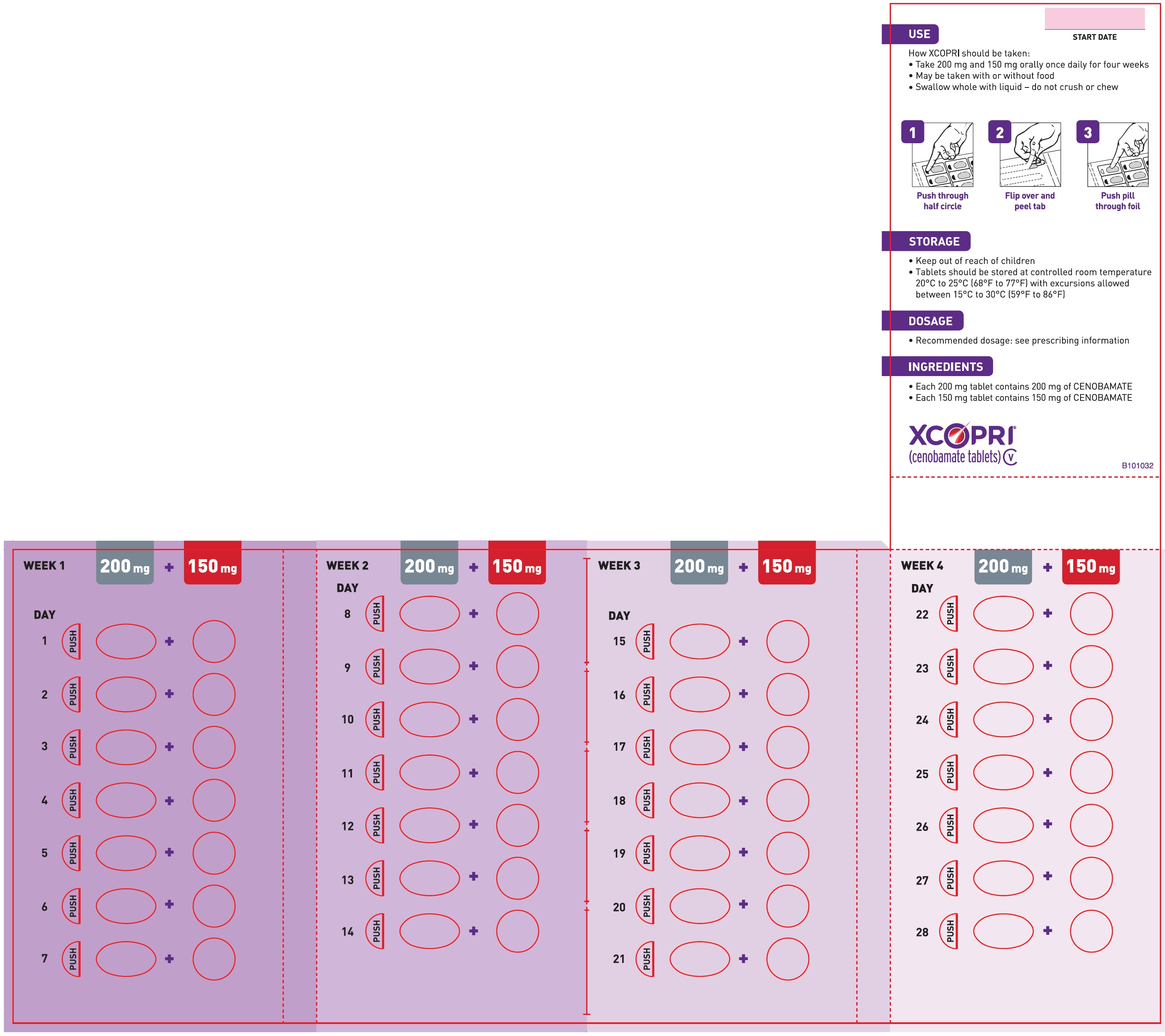
25PRINCIPAL DISPLAY PANEL - NDC: 71699-103-56 - 200 mg 28-count and 150 mg 28-count Maintenance Pack (Back)
150 mg 28-count and 200 mg 28-count Maintenance Pack (Back)
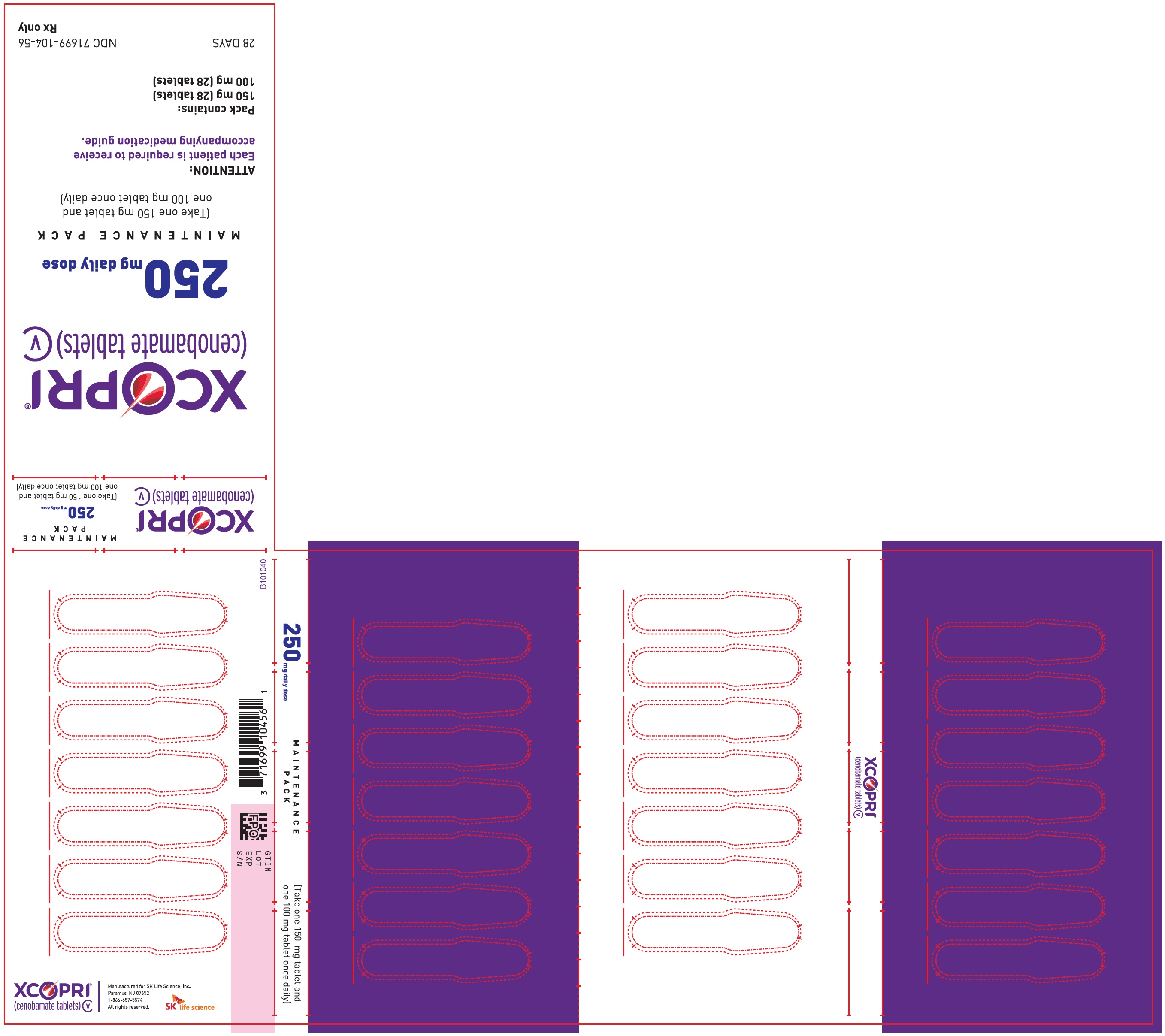
26PRINCIPAL DISPLAY PANEL - NDC: 71699-104-56 - 150 mg 28-count and 100 mg 28-count Maintenance Pack (Front)
150 mg 28-count and 100 mg 28-count Maintenance Pack (Front)
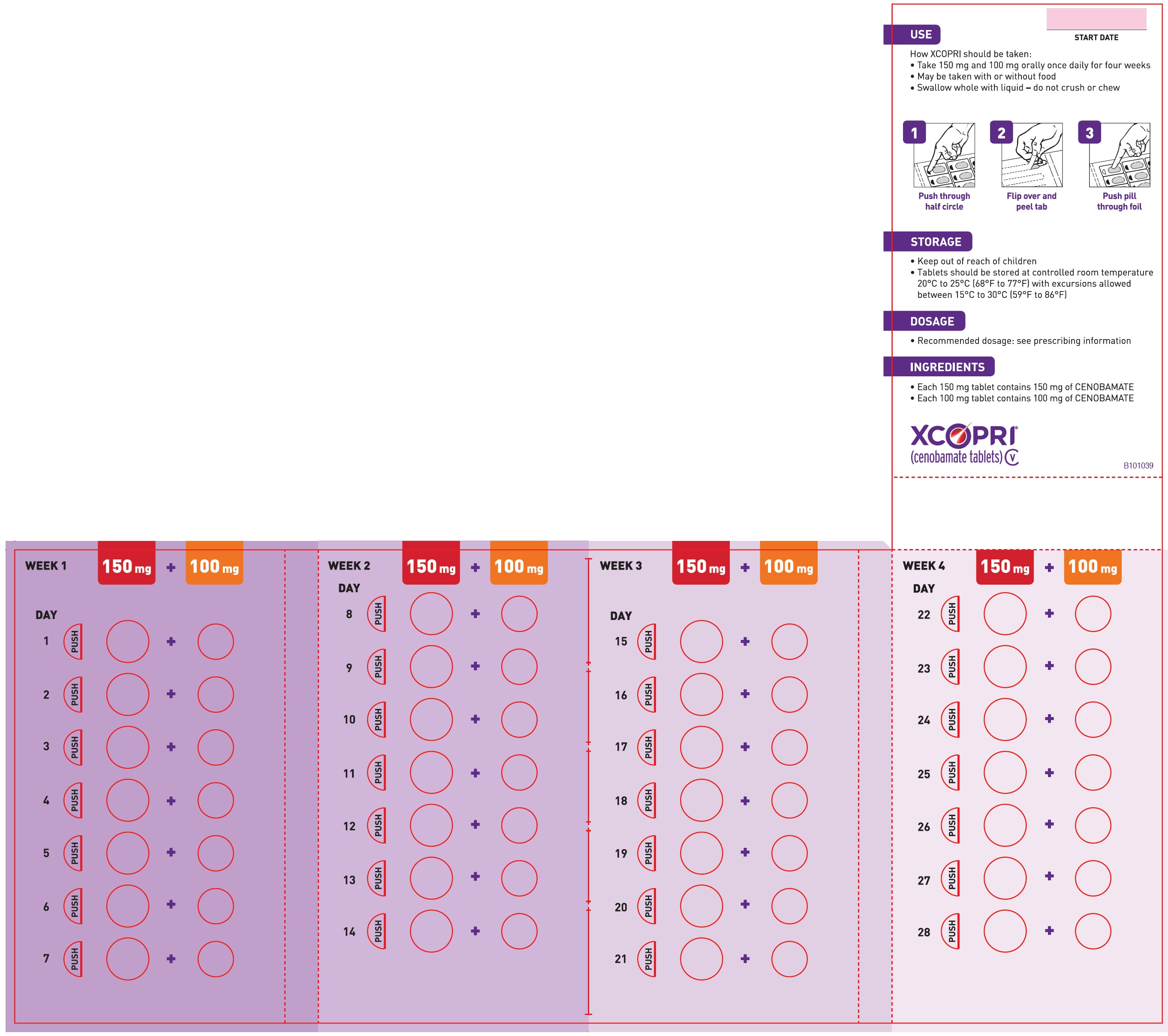
27PRINCIPAL DISPLAY PANEL - NDC: 71699-104-56 - 150 mg 28-count and 100 mg 28-count Maintenance Pack (Back)
150 mg 28-count and 100 mg 28-count Maintenance Pack (Back)
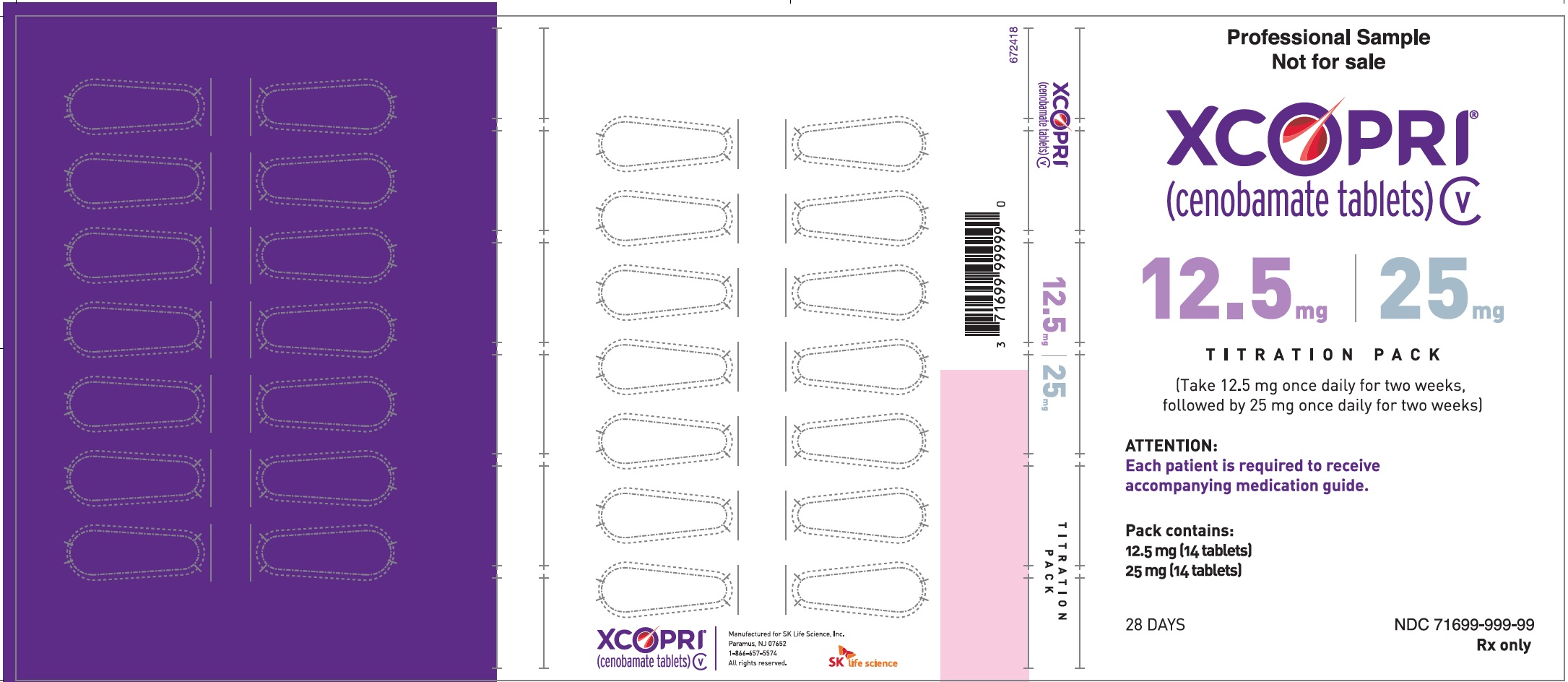
28PRINCIPAL DISPLAY PANEL - NDC: 71699-999-99 - 12.5 mg 14-count and 25 mg 14-count Titration Pack Label (Front)
12.5 mg 14-count and 25 mg 14-count Titration Pack Label (Front)
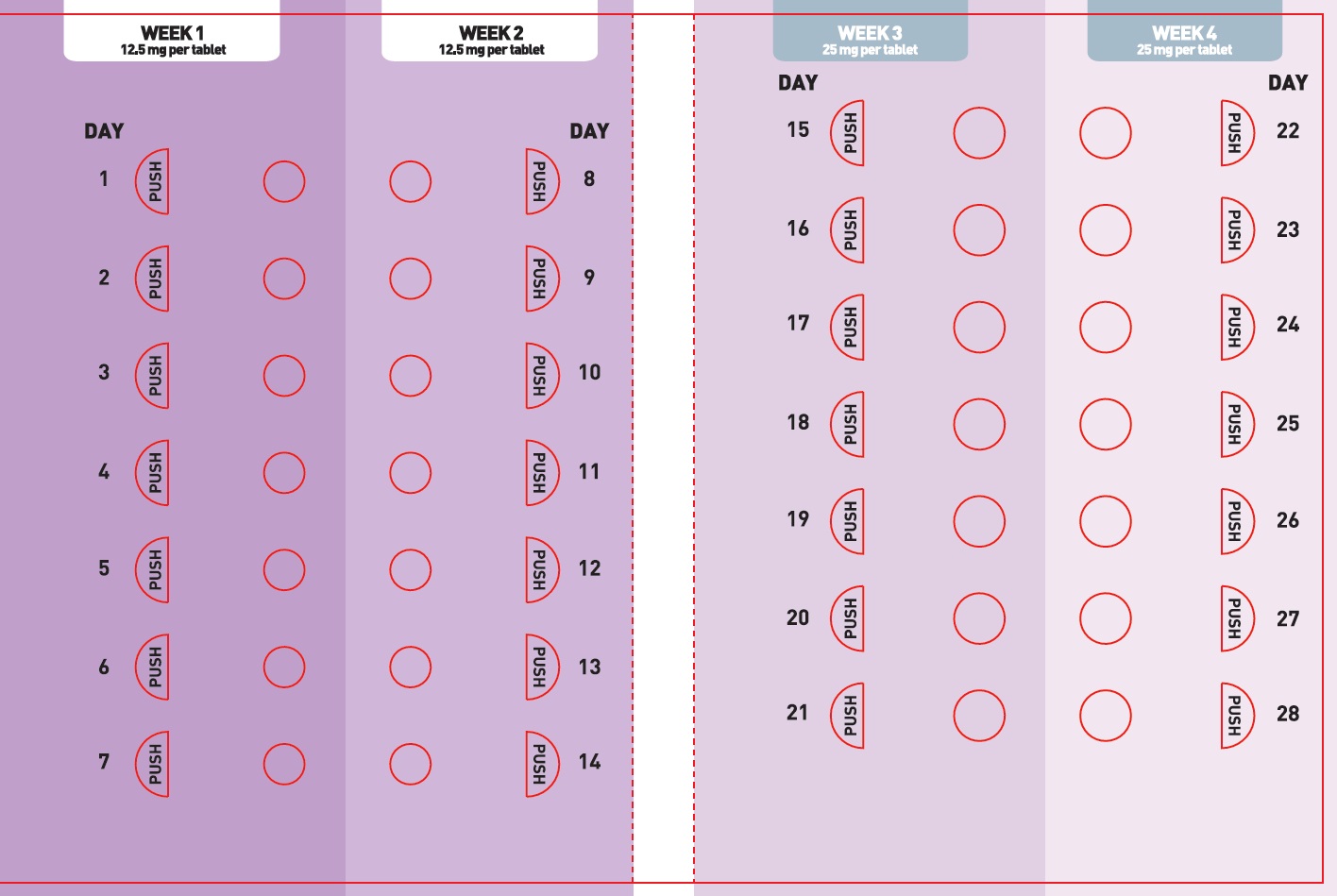
29PRINCIPAL DISPLAY PANEL - NDC: 71699-999-99 - 12.5 mg 14-count and 25 mg 14-count Titration Pack Label (Back)
12.5 mg 14-count and 25 mg 14-count Titration Pack Label (Back)
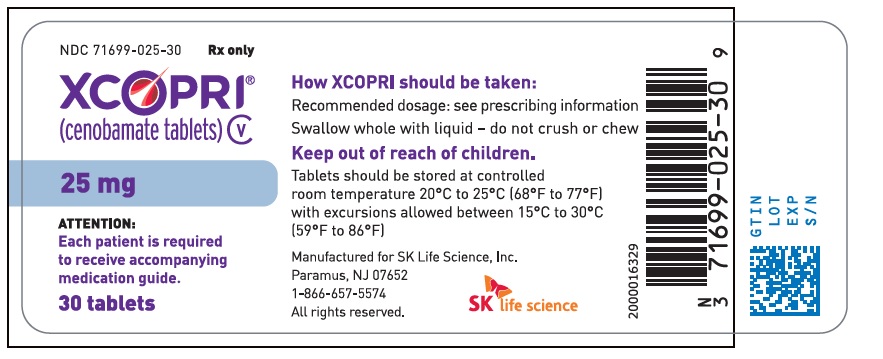
30PRINCIPAL DISPLAY PANEL - NDC: 71699-025-30 - 25 mg 30-count Bottle Label
25 mg 30-count Bottle Label
31PRINCIPAL DISPLAY PANEL - NDC: 71699-204-14 - 12.5 mg 14-count Titration Pack Label (Front)
12.5 mg 14-count Titration Pack Label
32PRINCIPAL DISPLAY PANEL - NDC: 71699-204-14 - 12.5 mg 14-count Titration Pack Label (Back)
12.5 mg 14-count Titration Pack Label