Brand Name
Tryvio
Generic Name
Aprocitentan
View Brand Information FDA approval date: November 10, 2023
Classification: Endothelin Receptor Antagonist
Form: Tablet
What is Tryvio (Aprocitentan)?
TRYVIO, in combination with other antihypertensive drugs, is indicated for the treatment of hypertension, to lower blood pressure in adult patients who are not adequately controlled on other drugs. Lowering BP reduces the risk of fatal and non-fatal cardiovascular events, primarily strokes and myocardial infarctions. These benefits have been seen in controlled trials of antihypertensive drugs from a wide variety of pharmacologic classes. There are no controlled trials demonstrating reduction of risk of these events with TRYVIO. Control of high BP should be part of comprehensive cardiovascular risk management, including, as appropriate, lipid control, diabetes management, antithrombotic therapy, smoking cessation, exercise, and limited sodium intake. Many patients will require more than one drug to achieve BP goals. For specific advice on goals and management, see published guidelines, such as those of the National High Blood Pressure Education Program's Joint National Committee on Prevention, Detection, Evaluation, and Treatment of High Blood Pressure . Numerous antihypertensive drugs, from a variety of pharmacologic classes and with different mechanisms of action, have been shown in randomized controlled trials to reduce cardiovascular morbidity and mortality, and it can be concluded that it is BP reduction, and not some other pharmacologic property of the drugs, that is largely responsible for those benefits. The largest and most consistent cardiovascular outcome benefit has been a reduction in the risk of stroke, but reductions in myocardial infarction and cardiovascular mortality also have been seen regularly. Elevated systolic or diastolic pressure causes increased cardiovascular risk, and the absolute risk increase per mmHg is greater at higher BPs, so that even modest reductions of severe hypertension can provide substantial benefit. Relative risk reduction from BP reduction is similar across populations with varying absolute risk, so the absolute benefit is greater in patients who are at higher risk independent of their hypertension , and such patients would be expected to benefit from more aggressive treatment to a lower BP goal. TRYVIO is an endothelin receptor antagonist indicated for the treatment of hypertension in combination with other antihypertensive drugs, to lower blood pressure in adult patients who are not adequately controlled on other drugs. Lowering blood pressure reduces the risk of fatal and non-fatal cardiovascular events, primarily strokes and myocardial infarctions.
Approved To Treat
Top Global Experts

Save this treatment for later
Not sure about your diagnosis?
Related Clinical Trials
There is no clinical trials being done for this treatment
Related Latest Advances
Brand Information
TRYVIO (Aprocitentan)
WARNING: EMBRYO-FETAL TOXICITY
- TRYVIO is contraindicated for use during pregnancy because it may cause fetal harm if used by pregnant patients. Therefore in patients who can become pregnant, exclude pregnancy prior to initiation of TRYVIO.
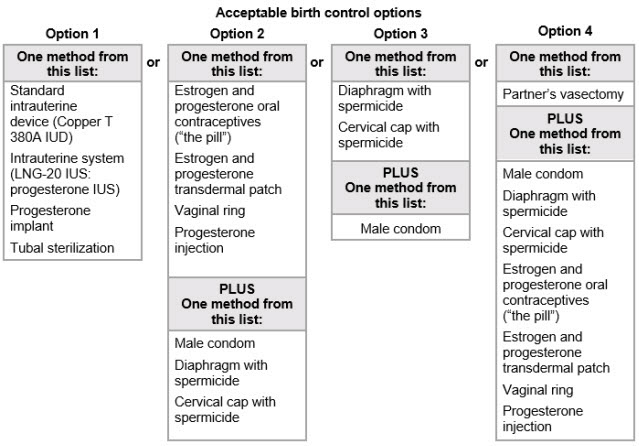
- Advise use of effective contraception before the start of TRYVIO, during treatment and for one month after stopping treatment.
- When pregnancy is detected, discontinue TRYVIO as soon as possible [see .
1INDICATIONS AND USAGE
TRYVIO, in combination with other antihypertensive drugs, is indicated for the treatment of hypertension, to lower blood pressure (BP) in adult patients who are not adequately controlled on other drugs. Lowering BP reduces the risk of fatal and non-fatal cardiovascular events, primarily strokes and myocardial infarctions. These benefits have been seen in controlled trials of antihypertensive drugs from a wide variety of pharmacologic classes. There are no controlled trials demonstrating reduction of risk of these events with TRYVIO.
Control of high BP should be part of comprehensive cardiovascular risk management, including, as appropriate, lipid control, diabetes management, antithrombotic therapy, smoking cessation, exercise, and limited sodium intake. Many patients will require more than one drug to achieve BP goals. For specific advice on goals and management, see published guidelines, such as those of the National High Blood Pressure Education Program's Joint National Committee on Prevention, Detection, Evaluation, and Treatment of High Blood Pressure (JNC).
Numerous antihypertensive drugs, from a variety of pharmacologic classes and with different mechanisms of action, have been shown in randomized controlled trials to reduce cardiovascular morbidity and mortality, and it can be concluded that it is BP reduction, and not some other pharmacologic property of the drugs, that is largely responsible for those benefits. The largest and most consistent cardiovascular outcome benefit has been a reduction in the risk of stroke, but reductions in myocardial infarction and cardiovascular mortality also have been seen regularly.
Elevated systolic or diastolic pressure causes increased cardiovascular risk, and the absolute risk increase per mmHg is greater at higher BPs, so that even modest reductions of severe hypertension can provide substantial benefit. Relative risk reduction from BP reduction is similar across populations with varying absolute risk, so the absolute benefit is greater in patients who are at higher risk independent of their hypertension (for example, patients with diabetes or hyperlipidemia), and such patients would be expected to benefit from more aggressive treatment to a lower BP goal.
2DOSAGE FORMS AND STRENGTHS
TRYVIO (aprocitentan) tablets are available as:
- 12.5 mg: yellow to orange round, film-coated tablet, debossed with "AN" on one side and plain on the other side.
3ADVERSE REACTIONS
Clinically significant adverse reactions that appear in other sections of the labeling include:
- Embryo-fetal toxicity
- Hepatotoxicity
- Fluid retention
- Hemoglobin decrease
- Decreased sperm counts
3.1Clinical Trials Experience
Because clinical trials are conducted under widely varying conditions, adverse reaction rates observed in the clinical trials of a drug cannot be directly compared to rates in the clinical trials of another drug and may not reflect the rates observed in practice.
The safety of TRYVIO was evaluated in a placebo-controlled phase 3 clinical study (PRECISION, NCT03541174) in adults with uncontrolled BP (systolic blood pressure [SBP] ≥140 mmHg) despite the use of at least three antihypertensive medications.
In this study, 724 patients received any dose of aprocitentan, with 633 patients treated for at least 26 weeks, 192 patients for at least 47 weeks, and 99 patients for at least 48 weeks.
The most frequently reported adverse reactions to TRYVIO during the 4-week double-blind placebo-controlled treatment period (part 1) of the PRECISION study are presented in Table 1.
Hypersensitivity Reactions
During the initial 4-week double-blind placebo-controlled treatment period (part 1), 0.8% of patients experienced an adverse reaction of hypersensitivity (i.e., rash, erythema, allergic edema) on TRYVIO compared to no reports in patients treated with placebo. One patient experienced allergic dermatitis requiring hospitalization while receiving aprocitentan 25 mg.
Laboratory Tests
Initiation of TRYVIO may cause an initial small decrease in estimated glomerular filtration rate (eGFR) that occurs within the first 6 weeks of starting therapy and then stabilizes.
In the initial 4-week double-blind treatment period, TRYVIO 12.5 mg caused a mean decrease of about 0.8 g/dL in hemoglobin compared to no change in the placebo patients.
4OVERDOSAGE
TRYVIO has been administered as a single dose of up to 600 mg, and as multiple doses of up to 100 mg daily, to healthy subjects (48 and 8 times the recommended dose, respectively). Adverse events of headache, nasal congestion, nausea, and upper respiratory tract infection were observed. In the event of an overdose, standard supportive measures should be taken, as required. Dialysis is unlikely to be effective because aprocitentan is highly protein-bound. Consult a Certified Poison Control Center for the most up-to-date information on the management of overdosage (1-800-222-1222 or www.poison.org).
5DESCRIPTION
TRYVIO (aprocitentan) is an endothelin receptor antagonist. The chemical name of aprocitentan is N-[5-(4-bromophenyl)-6- [2-[(5-bromo-2-pyrimidinyl)oxy]ethoxy]-4-pyrimidinyl]-sulfamide. It has a molecular formula of C
The structural formula is:
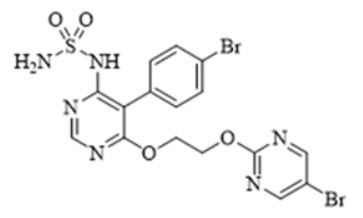
Aprocitentan is a white to off-white powder that is insoluble in water.
TRYVIO is available as film-coated 12.5 mg strength tablets for oral administration. The inactive ingredients in TRYVIO are croscarmellose sodium, hydroxypropyl cellulose, lactose monohydrate, magnesium stearate, and microcrystalline cellulose.
The film coating contains the following inactive ingredients: hydroxypropyl cellulose, iron oxide black, iron oxide red, iron oxide yellow, polyvinyl alcohol, silica colloidal hydrated, talc, titanium dioxide, and triethyl citrate.
6CLINICAL STUDIES
The efficacy of TRYVIO (aprocitentan) was evaluated in a multipart, phase 3 multicenter study (PRECISION, NCT03541174) in adults with SBP ≥140 mmHg who were prescribed at least three antihypertensive medications. The trial included a placebo run-in period, which was followed by three parts as described below. Prior to the placebo run-in period, all patients were switched to standard background antihypertensive therapy consisting of an angiotensin receptor blocker, a calcium channel blocker, and a diuretic, which was continued throughout the study. Patients with concomitant use of beta-blockers continued this treatment throughout the study.
Following the 4-week placebo run-in period, 730 patients were randomized equally to aprocitentan at either 12.5 mg, 25 mg, or placebo once daily during the initial 4-week double-blind (DB) treatment period (part 1). At the end of 4 weeks, all patients entered the single-blind treatment period (part 2) where they received 25 mg aprocitentan once daily for 32 weeks. At the end of the 32 weeks, patients were re-randomized to receive either 25 mg aprocitentan or placebo, once daily, during a 12-week DB-withdrawal period (part 3).
The primary efficacy endpoint was the change in sitting SBP (SiSBP) from baseline to Week 4 during part 1, measured at trough by unattended automated office blood pressure (uAOBP).
The key secondary endpoint was the change in SiSBP measured at trough by uAOBP from Week 36 (i.e., prior to randomized withdrawal to 25 mg aprocitentan or placebo in part 3) to Week 40.
Patients had a mean age of 62 years (range 24 to 84 years) and 60% were male. Patients were White (83%), African American (11%) or Asian (5%). Approximately 10% were Hispanic. The mean body mass index (BMI) was 34 kg/m
BP reductions compared to placebo based on uAOBP measurements at trough are shown in Table 2. TRYVIO 12.5 mg was statistically superior to placebo in reducing SiSBP at Week 4 (part 1). The treatment effect was consistent for sitting diastolic BP (SiDBP) (Table 2).
The persistence of the BP-lowering effect of TRYVIO was demonstrated in part 3 of the trial, in which patients on aprocitentan were re-randomized to placebo or 25 mg aprocitentan following a period during which all patients were treated with 25 mg. In patients re-randomized to placebo, the mean SiSBP increased, whereas in patients re-randomized to 25 mg aprocitentan the mean effect on SiSBP was maintained and was statistically superior to placebo at Week 40. The treatment effect was consistent for SiDBP.
Most of the BP-lowering effect occurred within the first two weeks of treatment with TRYVIO.
TRYVIO is not approved for use at a 25 mg dose. The 25 mg dose has not demonstrated a meaningful improvement in blood pressure reduction as compared to the 12.5 mg dose and had an increased risk of edema/fluid retention
TRYVIO's BP-lowering effect appeared consistent among subgroups defined by age, sex, race, BMI, baseline eGFR, baseline UACR, medical history of diabetes, and between BP measurement methodologies (uAOBP and ambulatory BP measurements).
7PATIENT COUNSELING INFORMATION
Advise the patient to read the FDA-approved patient labeling (Medication Guide).
Embryo-Fetal Toxicity
Counsel patients who can become pregnant to use effective methods of contraception before treatment with TRYVIO, during treatment with TRYVIO, and for one month after treatment discontinuation. Patients who can become pregnant should have a negative pregnancy test prior to initiation of TRYVIO,
Patients should be instructed to contact their healthcare provider if they suspect they may be pregnant. Patients should seek additional contraceptive advice from a gynecologist or similar expert as needed.
Educate and counsel patients who can become pregnant on the use of emergency contraception in the event of unprotected sex or contraceptive failure.
Advise pre-pubertal females and/or their guardian(s) to report any changes in their reproductive status immediately to their prescriber.
Lactation
Advise females not to breastfeed during treatment with TRYVIO
Hepatotoxicity
Educate patients on signs of hepatotoxicity. Advise patients that they should contact their healthcare provider if they have unexplained nausea, vomiting, right upper quadrant pain, fatigue, anorexia, jaundice, dark urine, fever, or itching.
Fluid Retention
Educate patients on signs of fluid retention. Advise patients that they should contact their healthcare provider if they have unusual weight increase or swelling of the ankles or legs.
8PRINCIPAL DISPLAY PANEL - 30 Tablet Bottle Carton
NDC 80491-8012-3
TRYVIO™
12.5 mg
Attention: Dispense the enclosed
Rx only
30 film-coated tablets
idorsia