Brand Name
Winrevair
Generic Name
Sotatercept-Csrk
View Brand Information FDA approval date: March 26, 2024
Form: Kit
What is Winrevair (Sotatercept-Csrk)?
WINREVAIR™ is indicated for the treatment of adults with pulmonary arterial hypertension (PAH, World Health Organization Group 1) to increase exercise capacity, improve WHO functional class , and reduce the risk of clinical worsening events. WINREVAIR is an activin signaling inhibitor indicated for the treatment of adults with pulmonary arterial hypertension to increase exercise capacity, improve WHO functional class and reduce the risk of clinical worsening events.
Approved To Treat


Save this treatment for later
Not sure about your diagnosis?
Related Clinical Trials
There is no clinical trials being done for this treatment
Related Latest Advances
Brand Information
WINREVAIR (SOTATERCEPT-CSRK)
1INDICATIONS AND USAGE
WINREVAIR™ is indicated for the treatment of adults with pulmonary arterial hypertension (PAH, Group 1 pulmonary hypertension) to improve exercise capacity and World Health Organization (WHO) functional class (FC), and reduce the risk of clinical worsening events including hospitalization for PAH, lung transplantation and death
2DOSAGE FORMS AND STRENGTHS
- For injection: 45 mg white to off-white lyophilized cake or powder appearance in a single-dose vial.
- For injection: 60 mg white to off-white lyophilized cake or powder appearance in a single-dose vial.
3CONTRAINDICATIONS
None.
4ADVERSE REACTIONS
The following clinically significant adverse reactions are described elsewhere in the labeling:
- Erythrocytosis
- Severe Thrombocytopenia
- Serious Bleeding
- Embryo-Fetal Toxicity
- Impaired Fertility
4.1Clinical Trials Experience
Because clinical trials are conducted under widely varying conditions, adverse reaction rates observed in the clinical trials of a drug cannot be directly compared to rates in the clinical trials of another drug and may not reflect the rates observed in practice.
STELLAR
The following data reflect exposure to WINREVAIR in the STELLAR trial. Adult PAH patients with WHO FC II or III (n=323) were randomized in a 1:1 ratio to receive WINREVAIR or placebo in combination with background standard of care therapies. Patients received a starting dose of 0.3 mg/kg via SC injection and the dose was increased to the target dose of 0.7 mg/kg administered once every 3 weeks for 24 weeks. After completing the primary 24-week treatment phase, patients continued into a long-term double-blind (LTDB) treatment period, maintaining their randomized treatment assignment, until all patients completed the primary treatment period. The median duration of treatment was 273 days in the placebo group and 313 days in the WINREVAIR group
The most common adverse reactions occurring in STELLAR (≥10% for WINREVAIR and at least 5% more than placebo) are shown in
Increased Hemoglobin
Increases in Hgb were managed by dose delays (10%), dose reductions (6%), or both (5%). Shifts in Hgb from normal to above normal levels occurred in 87 (53%) patients receiving WINREVAIR and in 23 (14%) patients receiving placebo.
Thrombocytopenia
Decreases in platelets were managed by dose delays (2%), dose reductions (2%), or both (2%). Shifts in platelet count from normal to below normal occurred in 40 (25%) patients receiving WINREVAIR and in 26 (16%) patients receiving placebo.
Telangiectasia
In patients exposed to WINREVAIR who experienced telangiectasia, the median time to onset was 36.1 weeks.
Increased Blood Pressure
In patients taking WINREVAIR, mean systolic/diastolic blood pressure increased from baseline by 2.2/4.9 mmHg at 24 weeks. In patients taking placebo, the change from baseline in mean blood pressure was -1.6/-0.6 mmHg.
Treatment Discontinuation
The incidences of treatment discontinuations due to an adverse reaction were 4% in the WINREVAIR group and 7% in the placebo group. No specific adverse reactions causing treatment discontinuations occurred with a frequency greater than 1% and more often in the WINREVAIR group.
ZENITH
The following data reflect exposure to WINREVAIR in the ZENITH trial. Adult PAH patients with WHO FC III or IV at high risk of mortality (n=172) were randomized in a 1:1 ratio to treatment with WINREVAIR or placebo in combination with background standard of care therapies. Patients who did not experience a primary endpoint event remained in the Double-Blind Placebo-Controlled (DBPC) Treatment Period, while patients who experienced an event of PAH worsening-related hospitalization of ≥24 hours were eligible to enroll into the open-label, long-term follow-up (LTFU) study SOTERIA. The median duration of exposure was longer in the WINREVAIR group (435 days) than in the placebo group (268 days)
The overall incidences of adverse reactions in both arms were higher in the ZENITH trial than in the STELLAR trial. Severe reduction in platelet count <50,000/mm
Uncontrolled Long-term Safety Data
Pooled long-term safety data are available from 431 patients who participated in multicenter phase 2 (PULSAR, SPECTRA) and phase 3 (STELLAR) clinical trials. A majority of these patients continued in SOTERIA, an ongoing, open-label follow-up study of the long-term safety and efficacy of WINREVAIR.
The safety profile with long-term exposure was generally similar to that observed in the STELLAR study. The mean duration of exposure to WINREVAIR was 173 weeks with a maximum exposure of 335 weeks.
Intrapulmonary Right-to-Left Shunting: Cases of intrapulmonary right-to-left shunting have been reported in a clinical trial with WINREVAIR. In SOTERIA, right-to-left intrapulmonary shunting has been reported in 3 participants (<0.7%) who developed worsening hypoxemia despite improved PAH hemodynamics. Post-marketing cases have also been reported.
Partial to complete improvement in oxygenation has been observed following discontinuation of WINREVAIR.
Additional Adverse Reactions from Clinical Trials
The following adverse reactions were reported in at least one adult patient receiving treatment with WINREVAIR. These adverse reactions are presented by system organ class and are ranked by frequency.
Skin and Subcutaneous Tissue Disorders:
1% and less than 10%: skin hypopigmentation
1% and less than 10%: skin hypopigmentation
Gastrointestinal Disorders:
1% and less than 10%: gastrointestinal tract bleeding (including gastrointestinal hemorrhage, upper gastrointestinal hemorrhage, hematemesis, lower gastrointestinal hemorrhage, hematochezia, rectal hemorrhage, melaena, gastritis hemorrhagic), colonic angioectasia
1% and less than 10%: gastrointestinal tract bleeding (including gastrointestinal hemorrhage, upper gastrointestinal hemorrhage, hematemesis, lower gastrointestinal hemorrhage, hematochezia, rectal hemorrhage, melaena, gastritis hemorrhagic), colonic angioectasia
4.2Post-marketing Experience
The following adverse reaction has been reported during post-approval use of WINREVAIR. Because these reactions are reported voluntarily from a population of uncertain size, it is generally not possible to reliably estimate their frequency or establish a causal relationship to drug exposure.
Cardiac disorders: pericardial effusion
General disorders and administration site conditions: injection site reactions
General disorders and administration site conditions: injection site reactions
5OVERDOSAGE
In healthy volunteers, WINREVAIR dosed at 1 mg/kg resulted in increases in Hgb associated with hypertension; both improved with phlebotomy. In the event of overdose, monitor closely for increases in Hgb and blood pressure, and provide supportive care as appropriate. WINREVAIR is not dialyzable.
6DESCRIPTION
Sotatercept-csrk is a homodimeric recombinant fusion protein consisting of the extracellular domain of the human activin receptor type IIA (ActRIIA) linked to the human IgG1 Fc domain. The molecular weight based on the amino acid sequence of sotatercept-csrk is approximately 78 kDa as a homodimer.
Sotatercept-csrk for injection is a sterile, preservative-free, white to off-white lyophilized cake or powder appearance in single-dose vials for subcutaneous administration after reconstitution.
Each 45 mg single-dose vial provides 45 mg of sotatercept-csrk and citric acid monohydrate (0.40 mg), polysorbate 80 (0.18 mg), sodium citrate (1.84 mg), and sucrose (72 mg) at pH 5.8. After reconstitution with 1 mL Sterile Water for Injection, the resulting concentration is 50 mg/mL of sotatercept-csrk and the nominal deliverable volume is 0.9 mL.
Each 60 mg single-dose vial provides 60 mg of sotatercept-csrk and citric acid monohydrate (0.53 mg), polysorbate 80 (0.24 mg), sodium citrate (2.45 mg), and sucrose (96 mg) at pH 5.8. After reconstitution with 1.3 mL Sterile Water for Injection, the resulting concentration is 50 mg/mL of sotatercept-csrk and the nominal deliverable volume is 1.2 mL.
7PATIENT COUNSELING INFORMATION
Advise patients to read the FDA-approved patient labeling (
Discuss the following with patients prior to and during treatment with WINREVAIR.
Erythrocytosis
Caution patients that WINREVAIR may raise Hgb to levels that increase their risk of thrombotic events. Inform patients that Hgb levels will be assessed before at least the first 5 doses and then periodically, as dosage may need to be adjusted
Severe Thrombocytopenia
Caution patients that WINREVAIR may cause platelet count to decrease, which if severe could cause bleeding. Inform patients that platelet count will be assessed before at least the first 5 doses and then periodically, as dosage may need to be adjusted
Serious Bleeding
Inform patients of the possibility of serious bleeding, which is more likely to occur if they have low platelet counts or while on prostacyclin background therapy and/or antithrombotic agents. Advise patients to notify their healthcare provider about signs and symptoms of bleeding
Embryo-Fetal Toxicity
Advise females of reproductive potential of the potential risk to a fetus. Advise females of reproductive potential to use effective contraception while receiving WINREVAIR and for at least 4 months after the final dose. Advise females to contact their healthcare provider if they become pregnant, or if pregnancy is suspected during treatment with WINREVAIR
Lactation
Advise females not to breastfeed during treatment with WINREVAIR and for 4 months after the final dose
Females and Males of Reproductive Potential
Advise females and males of reproductive potential that WINREVAIR may impair fertility
Administration by Patient or Caregiver
Review the IFU with the patient or caregiver step-by-step. Provide training to the patient or caregiver regarding proper preparation and administration of WINREVAIR and decide whether a patient or caregiver is capable of preparing and administering WINREVAIR independently
Make sure the patient or caregiver can do the following correctly:
- reconstitute the medicine,
- measure the correct amount of medicine according to the patient’s prescription,
- select and prepare a proper injection site, and
- inject the medicine subcutaneously.
Incorrect Dose or Missed Dose
Inform patients to call their healthcare provider for further instruction if they take more than or less than the correct dose. Advise them about signs/symptoms to monitor for and what to do if any of these signs/symptoms should occur. Advise them that additional laboratory tests may be required prior to the next scheduled dose to ensure that the next dose can be safely administered.
Instruct the patient that if they miss the prescribed dose of WINREVAIR, they should take it within 3 days and maintain the original schedule for the next dose. If not taken within 3 days, instruct them to call their healthcare provider for guidance
Manufactured by:
U.S. license number 0002
For patent information:
Copyright © 2024-2026 Merck & Co., Inc., Rahway, NJ, USA, and its affiliates.
uspi-mk7962-i-2608r006
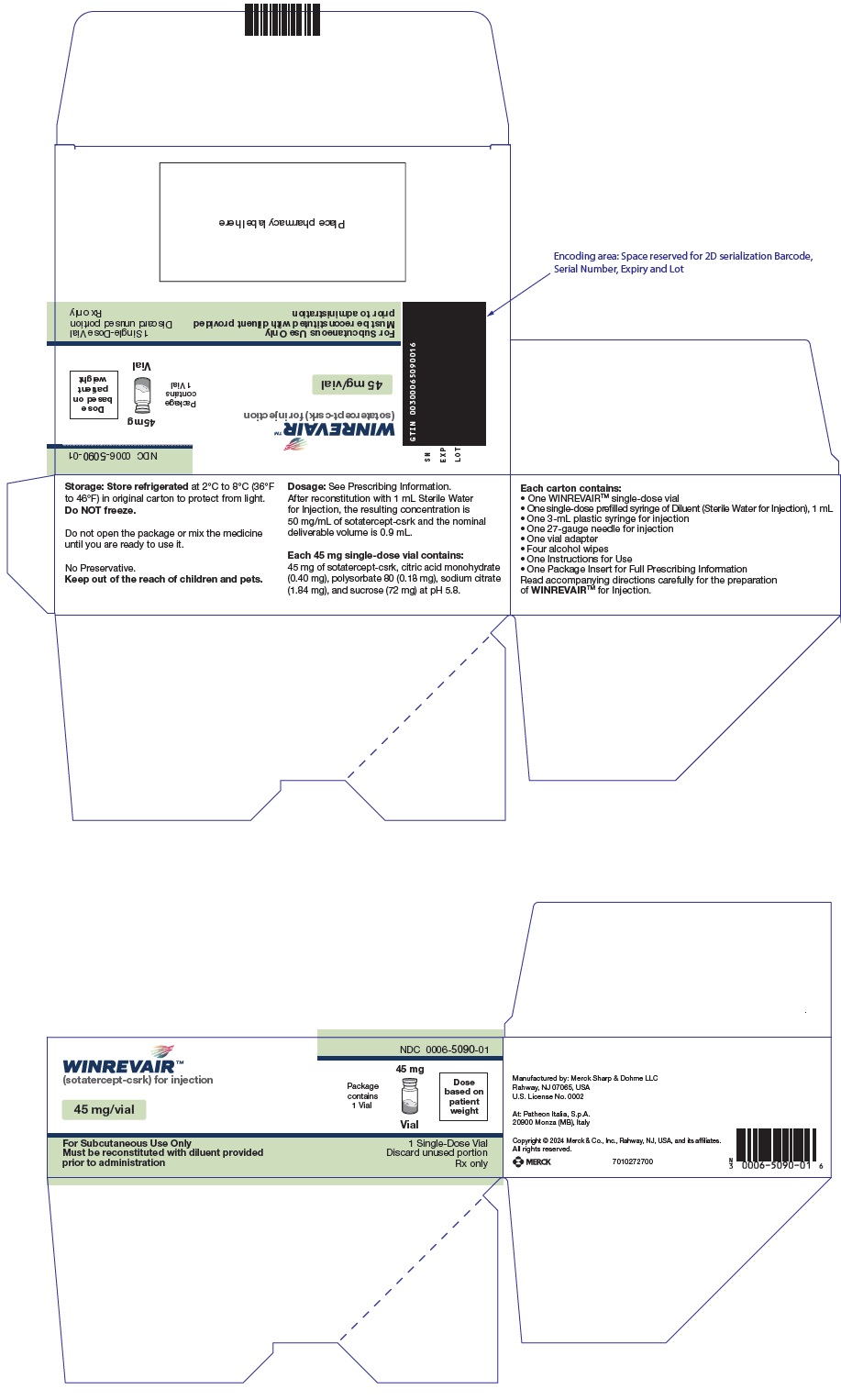
8PRINCIPAL DISPLAY PANEL - 45 mg Vial Kit Carton
NDC 0006-5090-01
WINREVAIR
(sotatercept-csrk) for injection
(sotatercept-csrk) for injection
45 mg/vial
Package
Dose
For Subcutaneous Use Only
1 Single-Dose Vial
Rx only
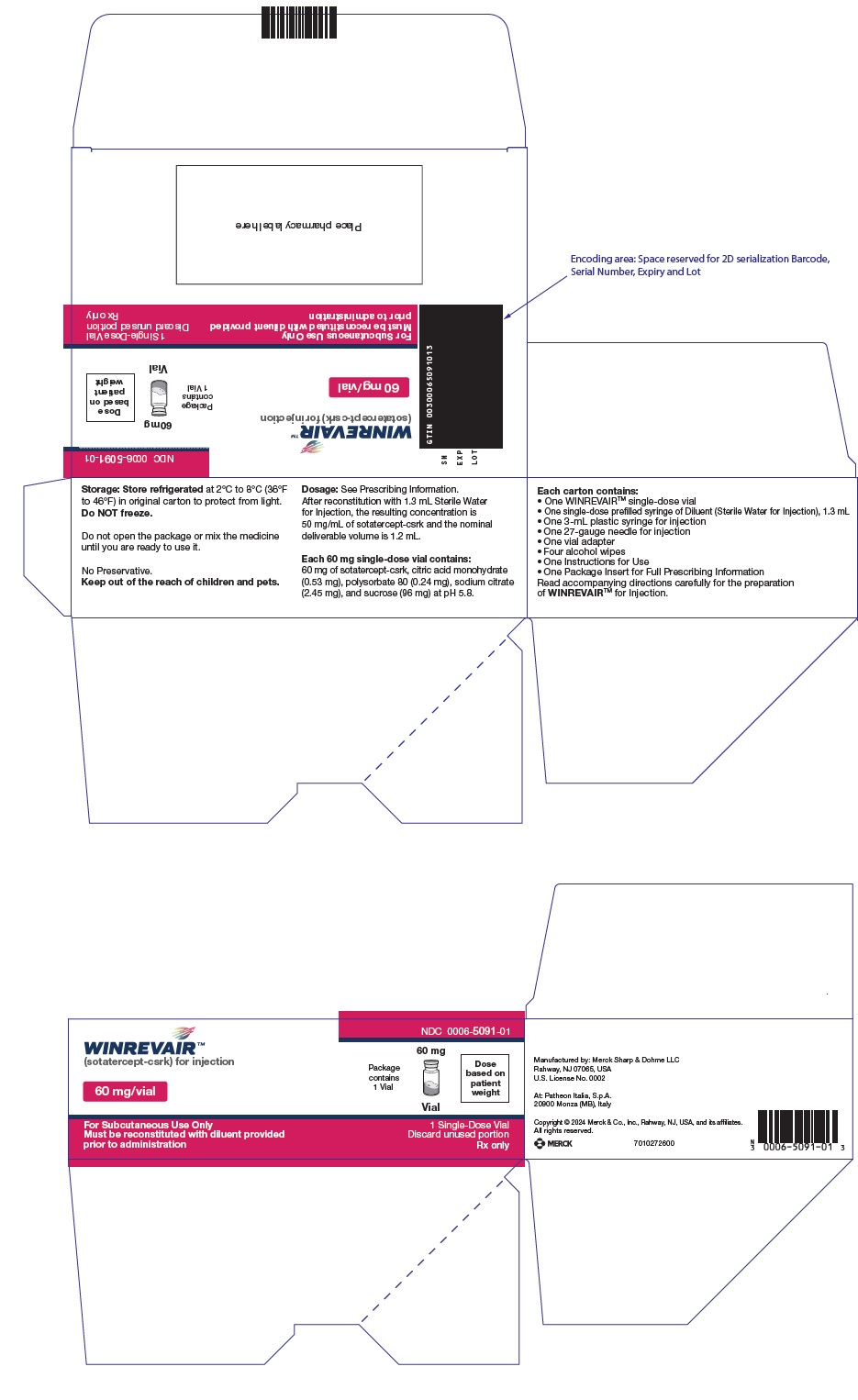
9PRINCIPAL DISPLAY PANEL - 60 mg Vial Kit Carton
NDC 0006-5091-01
WINREVAIR
(sotatercept-csrk) for injection
(sotatercept-csrk) for injection
60 mg/vial
Package
Dose
For Subcutaneous Use Only
1 Single-Dose Vial
Rx only
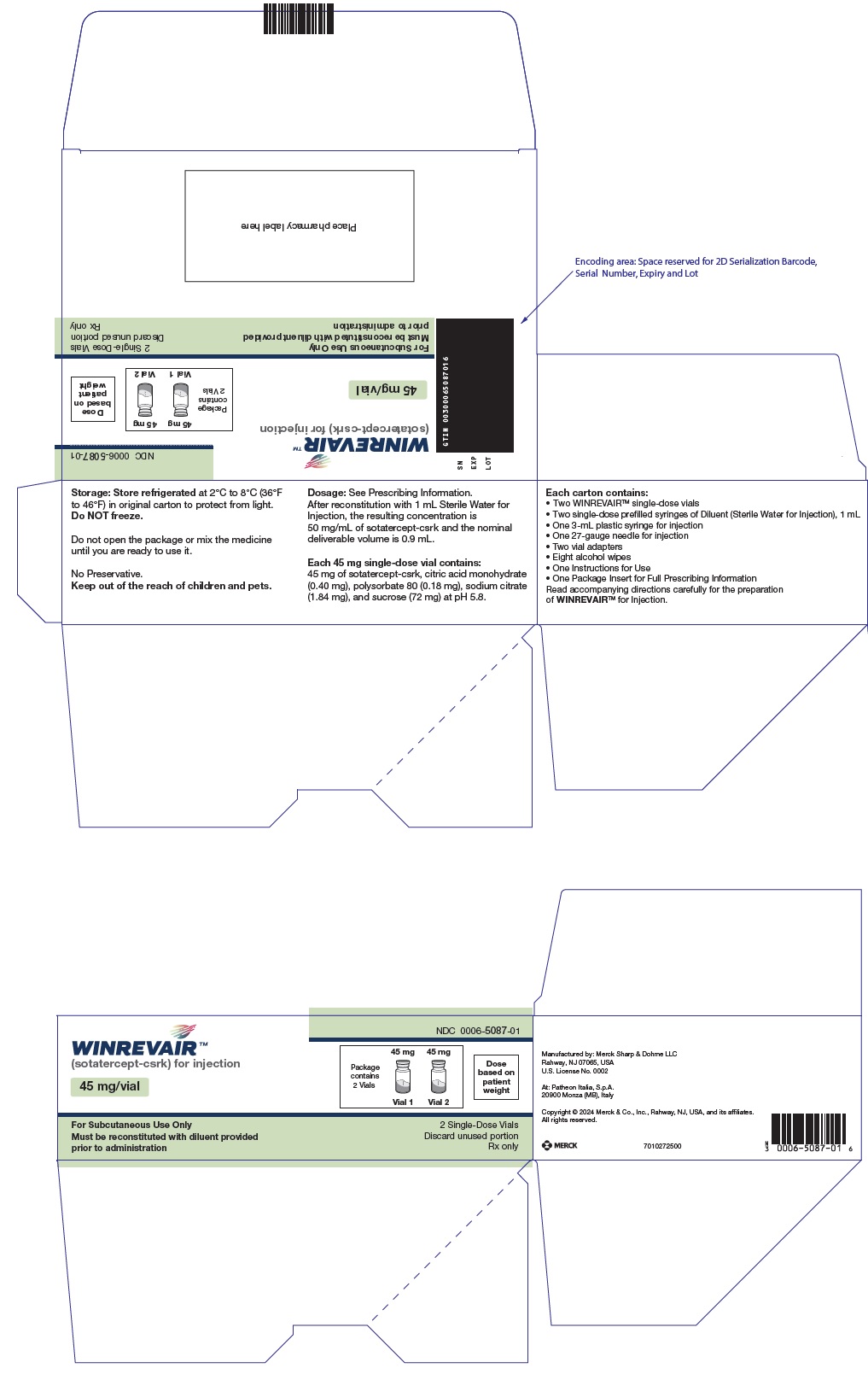
10PRINCIPAL DISPLAY PANEL - 45 mg 2 Vials Kit Carton
NDC 0006-5087-01
WINREVAIR
(sotatercept-csrk) for injection
(sotatercept-csrk) for injection
45 mg/vial
Package
Dose
For Subcutaneous Use Only
2 Single-Dose Vials
Rx only
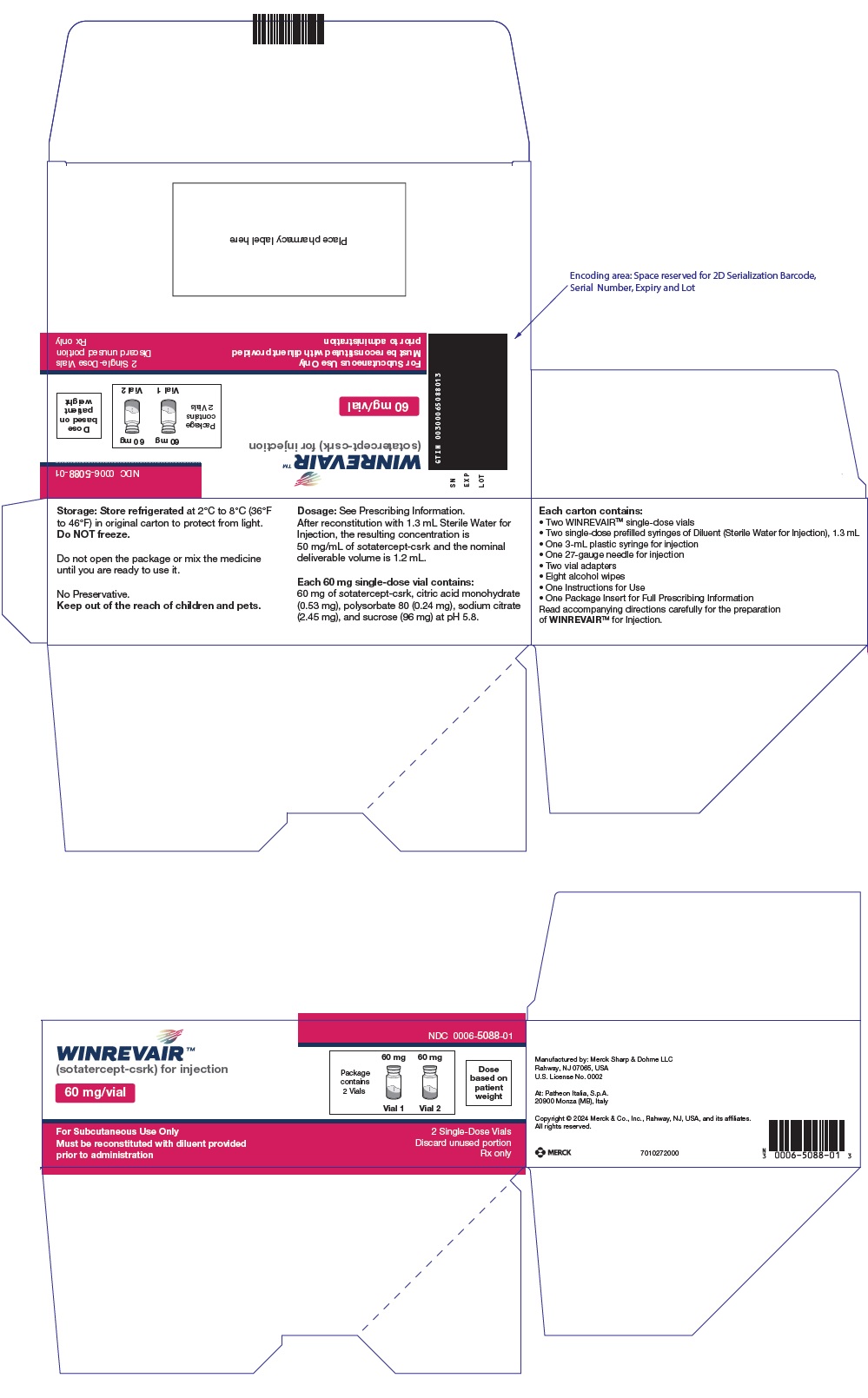
11PRINCIPAL DISPLAY PANEL - 60 mg 2 Vials Kit Carton
NDC 0006-5088-01
WINREVAIR
(sotatercept-csrk) for injection
(sotatercept-csrk) for injection
60 mg/vial
Package
Dose
For Subcutaneous Use Only
2 Single-Dose Vials
Rx only