Alprazolam
What is Xanax (Alprazolam)?
Feeling anxious, on edge, or overwhelmed is something most people experience occasionally. But for those living with anxiety disorders, these feelings can become persistent, intense, and disruptive to everyday life. Xanax (alprazolam) is a medication commonly prescribed to help people manage anxiety and panic symptoms so they can regain a sense of calm and stability.
Xanax belongs to a class of drugs called benzodiazepines, which act on the brain and nervous system to produce a calming effect. It is one of the most widely recognized medications for generalized anxiety disorder (GAD) and panic disorder, offering quick relief from acute anxiety episodes. Introduced in the early 1980s, Xanax has long been a cornerstone in short-term anxiety management, though it must be used carefully to avoid dependence.
When prescribed appropriately and taken under medical supervision, Xanax can make a meaningful difference in quality of life by easing overwhelming stress and helping patients function more comfortably in daily situations.
What does Xanax do?
Xanax is primarily used to treat anxiety disorders and panic disorder, both of which involve excessive fear, worry, and physical symptoms such as rapid heartbeat, trembling, or shortness of breath.
For people struggling with generalized anxiety disorder, Xanax helps reduce constant nervousness and tension. For those with panic disorder, it can prevent or lessen the intensity of sudden panic attacks, moments when fear becomes so overwhelming that it feels like a loss of control or even a heart attack.
The medication works relatively quickly, often providing relief within an hour of taking it. This rapid action makes it particularly helpful for short-term management or for situations where anxiety spikes unexpectedly. Clinical studies have shown that alprazolam effectively reduces both physical and emotional symptoms of anxiety, improving daily functioning and overall sense of well-being (NIH, 2024).
However, Xanax is not a cure for anxiety disorders. It is typically prescribed for short-term or intermittent use, often alongside therapy or other long-term anxiety treatments.
How does Xanax work?
Xanax works by affecting the gamma-aminobutyric acid (GABA) system, the brain’s main calming neurotransmitter. GABA helps reduce overactivity in the nervous system, promoting relaxation and emotional stability.
Alprazolam enhances the effects of GABA by binding to benzodiazepine receptors in the brain. This action increases the flow of chloride ions into nerve cells, which slows down brain activity and reduces feelings of anxiety, agitation, and panic.
In simpler terms, Xanax helps “quiet” the brain when it becomes overstimulated by stress or fear. This mechanism provides quick symptom relief, helping individuals feel calmer, more in control, and able to focus.
Clinically, this is important because chronic anxiety can strain both the mind and body, leading to insomnia, muscle tension, and even cardiovascular stress. By stabilizing the nervous system, Xanax can help restore balance and prevent the cycle of escalating anxiety symptoms.
Xanax side effects
While Xanax is effective, it also carries potential side effects that vary from person to person. Most are mild and temporary, but some require close attention.
Common side effects include:
- Drowsiness or fatigue
- Dizziness or lightheadedness
- Difficulty concentrating
- Dry mouth
- Coordination problems
Less common but serious side effects may include:
- Memory problems or confusion
- Depression or mood changes
- Hallucinations or agitation
- Difficulty breathing or severe drowsiness
- Signs of allergic reaction (rash, swelling, trouble breathing)
Xanax affects the central nervous system, causing drowsiness and impaired coordination, so avoid driving, operating machinery, or consuming alcohol. Long-term use can lead to physical dependence and withdrawal symptoms like rebound anxiety; therefore, doctors gradually taper the dose to minimize risk.
Who should avoid Xanax:
This medication should be used with caution or avoided by individuals with a history of substance abuse, severe liver disease, sleep apnea, or respiratory problems. Do not combine with opioids or other sedatives due to the risk of life-threatening breathing issues.
Seek immediate medical attention for severe weakness, fainting, confusion, or trouble breathing.
Xanax dosage
Xanax comes as tablets, orally disintegrating tablets, and extended-release tablets. Dosage varies by condition, age, and response, starting low to minimize side effects and dependence. Long-term use is not recommended due to tolerance and dependence risks; doctors may use CBT or other therapies. Regular monitoring ensures safety and effectiveness.
Special considerations:
- Older adults: Increased sensitivity to Xanax’s sedative effects, higher risk of falls/confusion.
- Liver problems: May require lower doses.
- Never share: Do not share this medication with others.
Always take Xanax as prescribed; sudden cessation can be harmful. Medical supervision ensures benefits outweigh risks.
Does Xanax have a generic version?
Yes. Alprazolam is the generic version of Xanax and is widely available and FDA-approved. Generic alprazolam contains the same active ingredient, strength, and effectiveness as the brand-name medication but is typically less expensive.
Xanax XR is a common extended-release formulation providing steady symptom control. Both brand-name and generic versions work similarly and meet the same safety and quality standards. Patients can confidently choose a generic option if recommended by their healthcare provider.
Conclusion
Xanax (alprazolam) is a trusted medication for the short-term management of anxiety and panic disorders, helping people regain control when overwhelming fear or stress takes hold. By enhancing the brain’s natural calming signals, it can provide meaningful relief and improve daily functioning.
Xanax requires responsible use under medical supervision due to dependence and withdrawal risks. Regular healthcare provider check-ins are vital for monitoring, dosage adjustments, and safe discontinuation. When prescribed and combined with therapy or lifestyle support, Xanax can effectively manage anxiety, providing relief and fostering calm, confidence, and emotional balance.
References
- U.S. Food and Drug Administration (FDA). (2024). Xanax (alprazolam) prescribing information. Retrieved from https://www.accessdata.fda.gov
- Mayo Clinic. (2024). Alprazolam (oral route) drug information. Retrieved from https://www.mayoclinic.org
- MedlinePlus. (2024). Alprazolam: Uses, side effects, and precautions. National Library of Medicine. Retrieved from https://medlineplus.gov
- National Institutes of Health (NIH). (2024). Anxiety and benzodiazepine treatment overview. Retrieved from https://www.nih.gov
Approved To Treat
Top Global Experts
There are no experts for this drug
Related Clinical Trials
There is no clinical trials being done for this treatment
Related Latest Advances
There is no latest advances for this treatment
Brand Information
- Concomitant use of benzodiazepines and opioids may result in profound sedation, respiratory depression, coma, and death. Reserve concomitant prescribing of these drugs for patients for whom alternative treatment options are inadequate. Limit dosages and durations to the minimum required. Follow patients for signs and symptoms of respiratory depression and sedation
- The use of benzodiazepines, including XANAX, exposes users to risks of abuse, misuse, and addiction, which can lead to overdose or death. Abuse and misuse of benzodiazepines commonly involve concomitant use of other medications, alcohol, and/or illicit substances, which is associated with an increased frequency of serious adverse outcomes. Before prescribing XANAX and throughout treatment, assess each patient’s risk for abuse, misuse, and addiction
- The continued use of benzodiazepines, including XANAX, may lead to clinically significant physical dependence. The risks of dependence and withdrawal increase with longer treatment duration and higher daily dose. Abrupt discontinuation or rapid dosage reduction of XANAX after continued use may precipitate acute withdrawal reactions, which can be life-threatening. To reduce the risk of withdrawal reactions, use a gradual taper to discontinue XANAX or reduce the dosage
- acute treatment of generalized anxiety disorder (GAD) in adults.
- treatment of panic disorder (PD), with or without agoraphobia in adults.
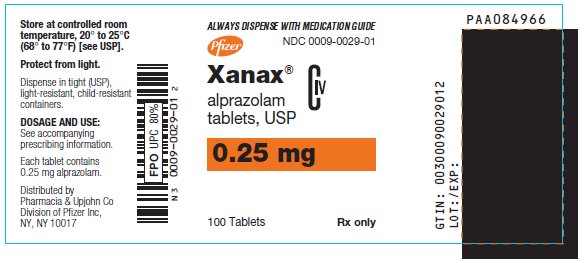
- 0.25 mg: white, oval, scored, imprinted “XANAX 0.25”
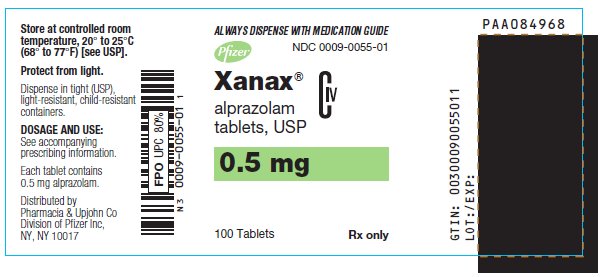
- 0.5 mg: peach, oval, scored, imprinted “XANAX 0.5”
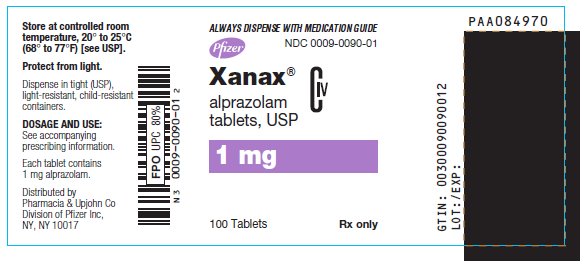
- 1 mg: blue, oval, scored, imprinted “XANAX 1.0”
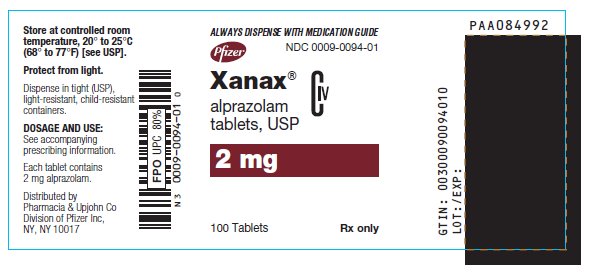
- 2 mg: white, oblong, multi-scored, imprinted “XANAX ” on one side and “2” on the reverse side
- with known hypersensitivity to alprazolam or other benzodiazepines. Angioedema has been reported
- taking strong cytochrome P450 3A (CYP3A) inhibitors (e.g., ketoconazole, itraconazole), except ritonavir
- Risks from Concomitant Use with Opioids
- Abuse, Misuse, and Addiction
- Dependence and Withdrawal Reactions
- Effects on Driving and Operating Machinery
- Patients with Depression
- Neonatal Sedation and Withdrawal Syndrome
- Risks in Patients with Impaired Respiratory Function
- 4-week placebo-controlled clinical studies with XANAX dosages up to 4 mg per day for the acute treatment of generalized anxiety disorder (Table 1)
- Short-term (up to 10 weeks) placebo-controlled clinical studies with XANAX dosages up to 10 mg per day for panic disorder, with or without agoraphobia (Table 2).

See accompanying
prescribing information.
See accompanying
prescribing information.
See accompanying
prescribing information.
See accompanying
prescribing information.