Brand Name
Ponvory
Generic Name
Ponesimod
View Brand Information FDA approval date: March 18, 2021
Classification: Sphingosine 1-phosphate Receptor Modulator
Form: Tablet, Kit
What is Ponvory (Ponesimod)?
PONVORY is indicated for the treatment of relapsing forms of multiple sclerosis , to include clinically isolated syndrome, relapsing-remitting disease, and active secondary progressive disease, in adults. PONVORY is a sphingosine 1-phosphate receptor modulator indicated for the treatment of relapsing forms of multiple sclerosis , to include clinically isolated syndrome, relapsing-remitting disease, and active secondary progressive disease, in adults.
Approved To Treat
Top Global Experts
There are no experts for this drug
Save this treatment for later
Not sure about your diagnosis?
Related Clinical Trials
There is no clinical trials being done for this treatment
Related Latest Advances
There is no latest advances for this treatment
Brand Information
PONVORY (Ponesimod)
1INDICATIONS AND USAGE
PONVORY is indicated for the treatment of relapsing forms of multiple sclerosis (MS), to include clinically isolated syndrome, relapsing-remitting disease, and active secondary progressive disease, in adults.
2DOSAGE FORMS AND STRENGTHS
PONVORY is available as round, biconvex, film-coated tablets for oral use. PONVORY contains ponesimod in the following dosage strengths (see
Table 2: Dosage Form and Strengths for PONVORY
3CONTRAINDICATIONS
PONVORY is contraindicated in patients who:
- In the last 6 months, have experienced myocardial infarction, unstable angina, stroke, transient ischemic attack (TIA), decompensated heart failure requiring hospitalization, or Class III or IV heart failure
- Have presence of Mobitz type II second-degree, third-degree AV block, sick sinus syndrome, or sino-atrial block, unless patient has a functioning pacemaker
4ADVERSE REACTIONS
The following serious adverse reactions are described elsewhere in labeling:
- Infections
- Bradyarrhythmia and Atrioventricular Conduction Delays
- Respiratory Effects
- Liver Injury
- Increased Blood Pressure
- Cutaneous Malignancies
- Fetal Risk
- Macular Edema
- Posterior Reversible Encephalopathy Syndrome
- Unintended Additive Immunosuppressive Effects From Prior Treatment With Immunosuppressive or Immune-Modulating Therapies
- Severe Increase in Disability After Stopping PONVORY
- Immune System Effects After Stopping PONVORY
4.1Clinical Trials Experience
Because clinical trials are conducted under widely varying conditions, adverse reaction rates observed in the clinical trials of a drug cannot be directly compared to rates in the clinical trials of another drug and may not reflect the rates observed in practice.
A total of 1438 MS patients have received PONVORY at doses of at least 2 mg daily. These patients were included in Study 1 (2-year active-controlled versus teriflunomide 14 mg)
In Study 1, 82% of PONVORY-treated patients completed 2 years of study treatment, compared to 82.2% of patients receiving teriflunomide 14 mg. Adverse events led to discontinuation of treatment in 8.7% of PONVORY-treated patients, compared to 6% of patients receiving teriflunomide 14 mg. The most common adverse reactions (incidence at least 10%) in PONVORY-treated patients in Study 1 were upper respiratory tract infection, hepatic transaminase elevation, and hypertension.
In Study 1, the following adverse reactions occurred in less than 2% of PONVORY-treated patients, but at a rate at least 1% higher than in patients receiving teriflunomide 14 mg: viral infection, herpes zoster, hyperkalemia, lymphopenia
Adverse reactions in patients treated with PONVORY in an additional 6-month placebo-controlled study were generally similar to those in Study 1. The following additional adverse reactions occurred in at least 2% of PONVORY 20 mg-treated patients and at a higher rate than in patients receiving placebo (but did not meet the reporting rate criteria for inclusion in Study 1): rhinitis, fatigue, chest discomfort, peripheral edema, joint swelling, blood cholesterol increased, migraine, insomnia, depression, dyspepsia, dry mouth, bradycardia, back pain, and sinusitis.
Additionally, in uncontrolled extension trials, the adverse reaction of pneumonia was reported.
Seizures
In Study 1, cases of seizures were reported in 1.4% of PONVORY-treated patients, compared to 0.2% in patients receiving teriflunomide 14 mg. It is not known whether these events were related to the effects of MS, to PONVORY, or to a combination of both.
Respiratory Effects
In Study 1, dose-dependent reductions in FEV
Malignancies
In Study 1, two cases of basal cell carcinoma (0.4%) were reported in PONVORY-treated patients, compared to one case of basal cell carcinoma (0.2%) in patients receiving teriflunomide 14 mg, and a case of malignant melanoma was reported in a PONVORY-treated patient. An increased risk of cutaneous malignancies has been reported in association with other S1P receptor modulators, including PONVORY
5OVERDOSAGE
Symptoms and Signs
In patients with overdosage of PONVORY, especially upon initiation/reinitiation of treatment, it is important to observe for signs and symptoms of bradycardia as well as AV conduction blocks, which may include overnight monitoring. Regular measurements of pulse rate and blood pressure are required, and ECGs should be performed
Treatment
There is no specific antidote to ponesimod. Neither dialysis nor plasma exchange would result in meaningful removal of ponesimod from the body. The decrease in heart rate induced by PONVORY can be reversed by atropine.
In the event of overdose, PONVORY should be discontinued, and general supportive treatment given until clinical toxicity has been diminished or resolved. It is advisable to contact a poison control center to obtain the latest recommendations for the management of an overdose.
6DESCRIPTION
PONVORY (ponesimod) is a sphingosine 1-phosphate receptor modulator.
The chemical name for ponesimod is (2Z,5Z)-5-[3-chloro-4-[(2
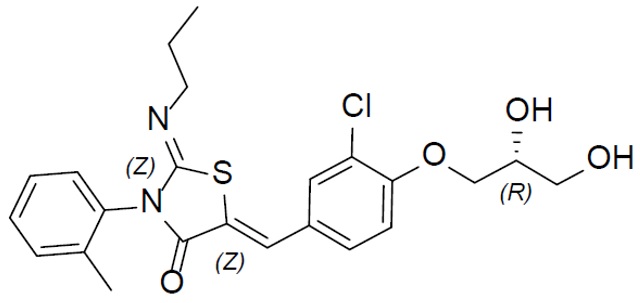
Ponesimod is a white to light yellowish powder that is practically insoluble or insoluble in water.
PONVORY
Each tablet contains the following inactive ingredients: croscarmellose sodium, lactose monohydrate, magnesium stearate, microcrystalline cellulose, povidone K30, silica colloidal anhydrous, and sodium lauryl sulfate.
Each tablet coating contains ferrosoferric oxide (included in 4 mg, 5 mg, 8 mg, and 9 mg film-coated tablets), hydroxypropyl methylcellulose 2910, iron oxide red (included in 3 mg, 4 mg, 7 mg, 8 mg, 9 mg, and 10 mg film-coated tablets), iron oxide yellow (included in 3 mg, 5 mg, 7 mg, 9 mg, 10 mg, and 20 mg film-coated tablets), lactose monohydrate, polyethylene glycol 3350, titanium dioxide, and triacetin.
7CLINICAL STUDIES
The efficacy of PONVORY was demonstrated in Study 1, a randomized, double-blind, parallel group, active-controlled superiority study in patients with relapsing forms of MS (NCT02425644). Patients were treated for 108 weeks. This study included patients who had an Expanded Disability Status Scale (EDSS) score of 0 to 5.5 at baseline, had experienced at least one relapse within the year prior, or two relapses within the prior 2 years, or who had at least one gadolinium-enhancing (Gd-enhancing) lesion on a brain MRI within the prior 6 months or at baseline. Patients with primary progressive MS were excluded.
Patients were randomized to receive either once daily PONVORY, beginning with a 14-day dose titration
The primary endpoint was the annualized relapse rate (ARR) over the study period. Additional outcome measures included: 1) the number of new Gd-enhancing T1 lesions from baseline to Week 108, 2) the number of new or enlarging T2 lesions (without double-counting of lesions) from baseline to Week 108, and 3) the time to 3-month and 6-month confirmed disability progression. A confirmed disability progression was defined as an increase of at least 1.5 in EDSS for patients with a baseline EDSS score of 0, an increase of at least 1.0 in EDSS for patients with a baseline EDSS score of 1.0 to 5.0, or an increase of at least 0.5 in EDSS for patients with a baseline EDSS score at least 5.5, which was confirmed after 3 months and 6 months.
A total of 1133 patients were randomized to either PONVORY (N=567) or teriflunomide 14 mg (N=566); 86.4% of PONVORY-treated patients and 87.5% of teriflunomide 14 mg-treated patients completed the study as per protocol. At baseline, the mean age of patients was 37 years, 97% were White, and 65% were female. The mean disease duration was 7.6 years, the mean number of relapses in the previous year was 1.3, and the mean EDSS score was 2.6; 57% of patients had not received any prior non-steroid treatments for MS. At baseline, 42.6% of patients had one or more Gd-enhancing T1 lesions (mean 2.0) on their baseline MRI scan.
The ARR was statistically significantly lower in patients treated with PONVORY than in patients who received teriflunomide 14 mg. The number of Gd-enhancing T1 lesions and the number of new or enlarging T2 lesions were statistically significantly lower in patients treated with PONVORY than in patients who received teriflunomide 14 mg.
There was no statistically significant difference in the 3-month and 6-month confirmed disability progression outcomes between PONVORY- and teriflunomide 14 mg-treated patients over 108 weeks.
The efficacy results for Study 1 are presented in
Table 4: Clinical and MRI Endpoints from Study 1
A similar effect of PONVORY on the ARR and secondary MRI outcomes compared to teriflunomide 14 mg was observed in exploratory subgroups defined by age, gender, prior non-steroid therapy for MS, and baseline disease activity.
8PATIENT COUNSELING INFORMATION
Advise the patient to read the FDA-approved patient labeling (
Administration
Tell patients not to discontinue PONVORY without first discussing this with the prescribing healthcare provider. Advise patients to contact their healthcare provider if they accidently take more PONVORY than prescribed.
Instruct patients to administer tablets whole.
Risk of Infections
Inform patients that they may have an increased risk of infections, some of which could be life-threatening, when taking PONVORY and for 1 to 2 weeks after stopping it, and that they should contact their healthcare provider if they develop symptoms of infection
Inform patients that cases of progressive multifocal leukoencephalopathy (PML) have occurred in patients treated with S1P receptor modulators. Inform the patient that PML is characterized by a progression of deficits and usually leads to death or severe disability over weeks or months. Instruct the patient of the importance of contacting their doctor if they develop any symptoms suggestive of PML. Inform the patient that typical symptoms associated with PML are diverse, progress over days to weeks, and include progressive weakness on one side of the body or clumsiness of limbs, disturbance of vision, and changes in thinking, memory, and orientation leading to confusion and personality changes
Cardiac Effects
Advise patients that initiation of PONVORY treatment results in transient decrease in heart rate
Respiratory Effects
Advise patients that they should contact their healthcare provider if they experience new onset or worsening of dyspnea
Liver Injury
Inform patients that PONVORY may increase liver enzymes. Advise patient that they should contact their healthcare provider if they experience any unexplained nausea, vomiting, abdominal pain, fatigue, anorexia, or jaundice and/or dark urine during treatment
Cutaneous Malignancies
Inform patients that the risk of basal cell carcinoma is increased with the use of PONVORY and that cases of melanoma and squamous cell carcinoma have been reported. Advise patients that any suspicious skin lesions should be promptly evaluated. Advise patients to limit exposure to sunlight and ultraviolet light by wearing protective clothing and using a sunscreen with high protection factor
Pregnancy and Fetal Risk
Inform patients that, based on animal studies, PONVORY may cause fetal harm. Discuss with women of childbearing age whether they are pregnant, might be pregnant, or are trying to become pregnant. Advise women of childbearing potential of the need for effective contraception during treatment with PONVORY and for one week after stopping PONVORY. Advise a female patient to immediately inform her healthcare provider if she is pregnant or planning to become pregnant
Macular Edema
Advise patients that PONVORY may cause macular edema, and that they should obtain an eye exam near the start of treatment with PONVORY, have their eyes monitored periodically by an eye care professional while receiving therapy, and contact their healthcare provider if they experience any changes in their vision while taking PONVORY
Posterior Reversible Encephalopathy Syndrome
Advise patients to immediately report to their healthcare provider any symptoms involving sudden onset of severe headache, altered mental status, visual disturbances, or seizure. Inform patients that delayed treatment could lead to permanent neurological sequelae
Severe Increase in Disability After Stopping PONVORY
Inform patients that severe increase in disability has been reported after discontinuation of another S1P receptor modulator like PONVORY. Advise patients to contact their healthcare provider if they develop worsening symptoms of MS following discontinuation of PONVORY
Immune System Effects After Stopping PONVORY
Advise patients that PONVORY continues to have effects, such as lowering effects on peripheral lymphocyte count, for 1 to 2 weeks after the last dose
Active ingredient made in Austria.
Distributed by:
© 2024 Vanda Pharmaceuticals, Inc.
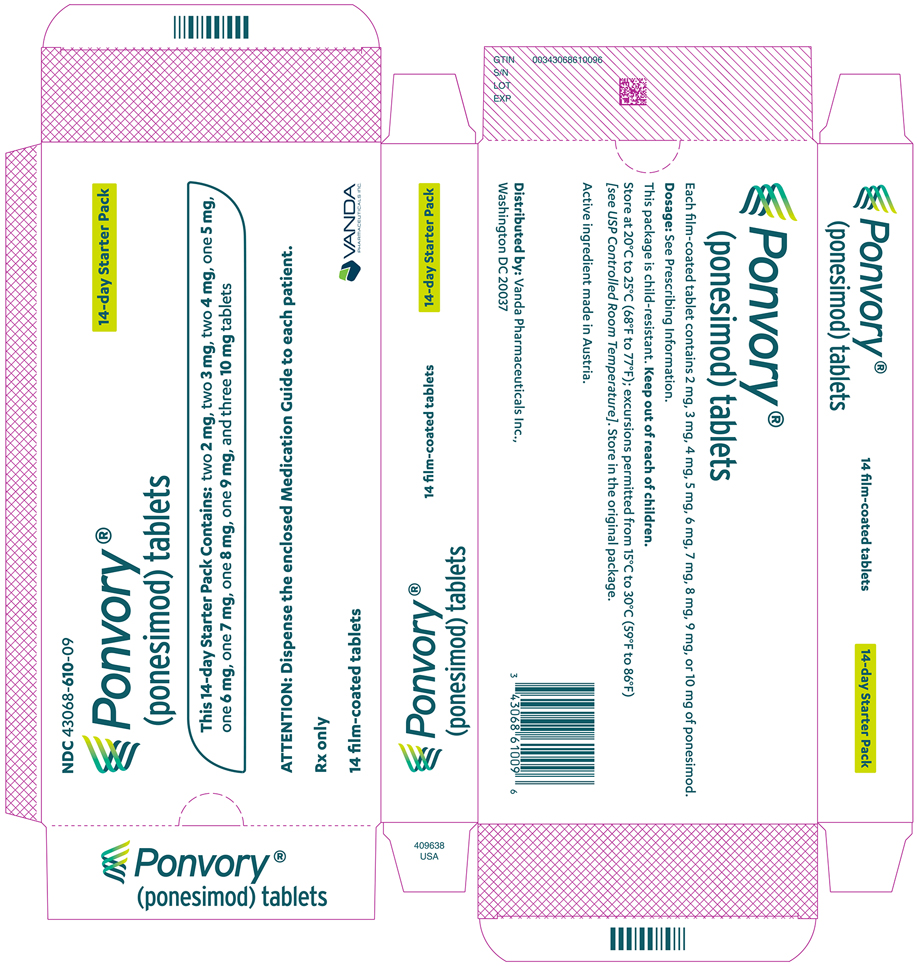
9PRINCIPAL DISPLAY PANEL - NDC: 43068-610-09 - KIT Carton Label
10PRINCIPAL DISPLAY PANEL - NDC: 43068-610-09 - 14 Day Starter Pack Film-coated Tablets - KIT Label
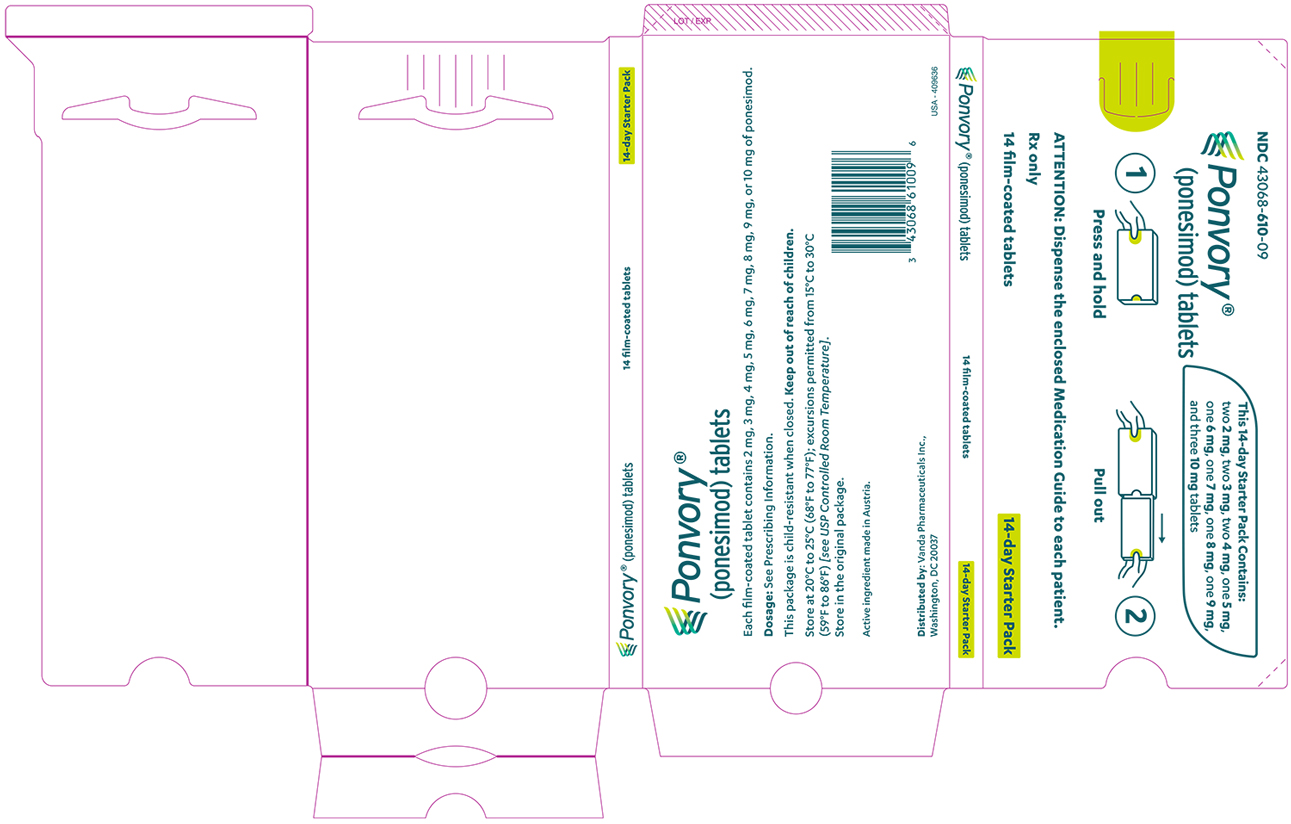
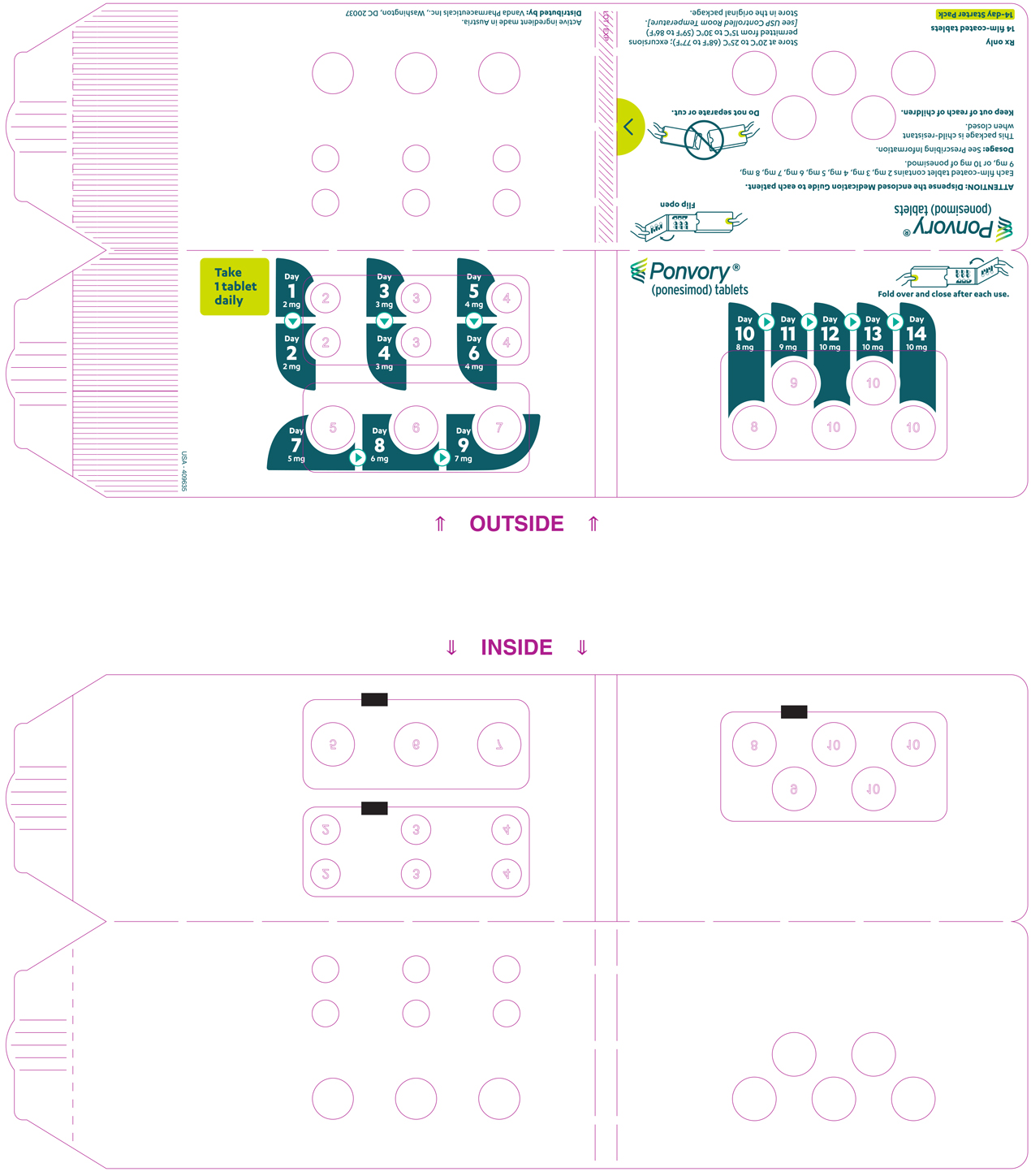
11PRINCIPAL DISPLAY PANEL - NDC: 43068-610-09 - 14 Day Starter Pack Film-coated Tablets - Outside/Inside Label
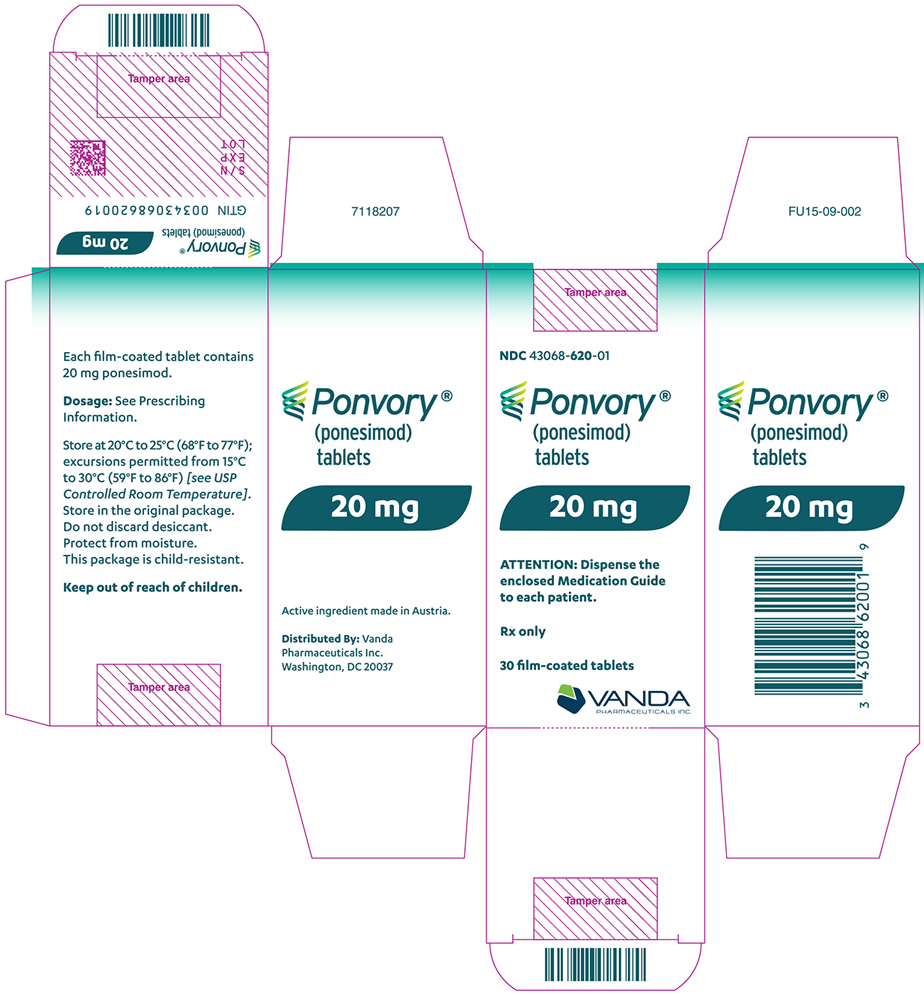
12PRINCIPAL DISPLAY PANEL - NDC: 43068-620-01 - 30 Count Tablet Bottle Carton Label
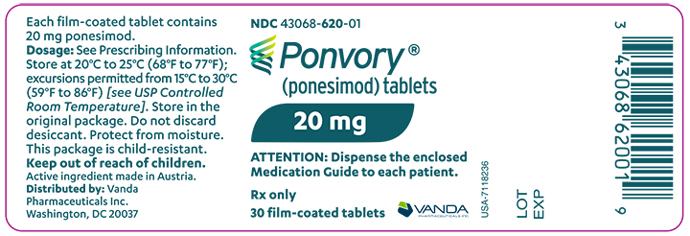
13PRINCIPAL DISPLAY PANEL - NDC: 43068-620-01 - 30 Count Tablet Bottle Label