Brand Name
Seroquel
Generic Name
Quetiapine
View Brand Information FDA approval date: October 01, 1997
Classification: Atypical Antipsychotic
Form: Tablet
What is Seroquel (Quetiapine)?
Quetiapine fumarate tablet is an atypical antipsychotic indicated for the treatment of: Schizophrenia.
Approved To Treat
Top Global Experts
There are no experts for this drug
Save this treatment for later
Not sure about your diagnosis?
Related Clinical Trials
There is no clinical trials being done for this treatment
Related Latest Advances
There is no latest advances for this treatment
Brand Information
SEROQUEL (quetiapine)
WARNING: INCREASED MORTALITY IN ELDERLY PATIENTS WITH DEMENTIA-RELATED PSYCHOSIS; and SUICIDAL THOUGHTS AND BEHAVIORS
Increased Mortality in Elderly Patients with Dementia-Related Psychosis
Elderly patients with dementia-related psychosis treated with antipsychotic drugs are at an increased risk of death
Suicidal Thoughts and Behaviors
Antidepressants increased the risk of suicidal thoughts and behavior in children, adolescents, and young adults in short-term studies. These studies did not show an increase in the risk of suicidal thoughts and behavior with antidepressant use in patients over age 24; there was a reduction in risk with antidepressant use in patients aged 65 and older
In patients of all ages who are started on antidepressant therapy, monitor closely for worsening, and for emergence of suicidal thoughts and behaviors. Advise families and caregivers of the need for close observation and communication with the prescriber [
SEROQUEL is not approved for use in pediatric patients under ten years of age
1DOSAGE FORMS AND STRENGTHS
- 25 mg tablets are peach, round, biconvex, film-coated tablets, identified with 'SEROQUEL' and ‘25’ on one side and plain on the other side
- 50 mg tablets are white, round, biconvex, film-coated tablets, identified with 'SEROQUEL' and ‘50’ on one side and plain on the other side
- 100 mg tablets are yellow, round, biconvex, film-coated tablets, identified with 'SEROQUEL' and ‘100’ on one side and plain on the other side
- 200 mg tablets are white, round, biconvex, film-coated tablets, identified with ‘SEROQUEL’ and ‘200’ on one side and plain on the other side
- 300 mg tablets are white, capsule-shaped, biconvex, film-coated tablets, intagliated with ‘SEROQUEL’ on one side and ‘300’ on the other side
- 400 mg tablets are yellow, capsule-shaped, biconvex, film-coated tablets, intagliated with ‘SEROQUEL’ on one side and ‘400’ on the other side
2CONTRAINDICATIONS
Hypersensitivity to quetiapine or to any excipients in the SEROQUEL formulation. Anaphylactic reactions have been reported in patients treated with SEROQUEL.
3ADVERSE REACTIONS
The following adverse reactions are discussed in more detail in other sections of the labeling:
- Increased mortality in elderly patients with dementia-related psychosis
- Suicidal thoughts and behaviors in adolescents and young adults
- Cerebrovascular adverse reactions, including stroke in elderly patients with dementia-related psychosis
- Neuroleptic Malignant Syndrome (NMS)
- Metabolic changes (hyperglycemia, dyslipidemia, weight gain)
- Tardive dyskinesia
- Hypotension
- Falls
- Increases in blood pressure (children and adolescents)
- Leukopenia, neutropenia and agranulocytosis
- Cataracts
- QT Prolongation
- Seizures
- Hypothyroidism
- Hyperprolactinemia
- Potential for cognitive and motor impairment
- Body temperature regulation
- Dysphagia
- Discontinuation Syndrome
- Anticholinergic (antimuscarinic) Effects
3.1Clinical Study Experience
Because clinical studies are conducted under widely varying conditions, adverse reaction rates observed in the clinical studies of a drug cannot be directly compared to rates in the clinical studies of another drug and may not reflect the rates observed in practice.
Adults:
The information below is derived from a clinical trial database for SEROQUEL consisting of over 4300 patients. This database includes 698 patients exposed to SEROQUEL for the treatment of bipolar depression, 405 patients exposed to SEROQUEL for the treatment of acute bipolar mania (monotherapy and adjunct therapy), 646 patients exposed to SEROQUEL for the maintenance treatment of bipolar I disorder as adjunct therapy, and approximately 2600 patients and/or normal subjects exposed to 1 or more doses of SEROQUEL for the treatment of schizophrenia.
Of these approximately 4,300 subjects, approximately 4000 (2300 in schizophrenia, 405 in acute bipolar mania, 698 in bipolar depression, and 646 for the maintenance treatment of bipolar I disorder) were patients who participated in multiple dose effectiveness trials, and their experience corresponded to approximately 2400 patient-years. The conditions and duration of treatment with SEROQUEL varied greatly and included (in overlapping categories) open-label and double-blind phases of studies, inpatients and outpatients, fixed-dose and dose-titration studies, and short-term or longer-term exposure. Adverse reactions were assessed by collecting adverse reactions, results of physical examinations, vital signs, weights, laboratory analyses, ECGs, and results of ophthalmologic examinations.
The stated frequencies of adverse reactions represent the proportion of individuals who experienced, at least once, an adverse reaction of the type listed.
Adverse Reactions Associated with Discontinuation of Treatment in Short-Term, Placebo-Controlled Trials
Schizophrenia: Overall, there was little difference in the incidence of discontinuation due to adverse reactions (4% for SEROQUEL vs. 3% for placebo) in a pool of controlled trials. However, discontinuations due to somnolence (0.8% SEROQUEL vs. 0% placebo) and hypotension (0.4% SEROQUEL vs. 0% placebo) were considered to be drug related [see Warnings and Precautions (
Bipolar Disorder:
Mania: Overall, discontinuations due to adverse reactions were 5.7% for SEROQUEL vs. 5.1% for placebo in monotherapy and 3.6% for SEROQUEL vs. 5.9% for placebo in adjunct therapy.
Depression: Overall, discontinuations due to adverse reactions were 12.3% for SEROQUEL 300 mg vs. 19.0% for SEROQUEL 600 mg and 5.2% for placebo.
Commonly Observed Adverse Reactions in Short-Term, Placebo-Controlled Trials:
In the acute therapy of schizophrenia (up to 6 weeks) and bipolar mania (up to 12 weeks) trials, the most commonly observed adverse reactions associated with the use of SEROQUEL monotherapy (incidence of 5% or greater) and observed at a rate on SEROQUEL at least twice that of placebo were somnolence (18%), dizziness (11%), dry mouth (9%), constipation (8%), ALT increased (5%), weight gain (5%), and dyspepsia (5%).
Adverse Reactions Occurring at an Incidence of 2% or More Among SEROQUEL Treated Patients in Short-Term, Placebo-Controlled Trials:
The prescriber should be aware that the figures in the tables and tabulations cannot be used to predict the incidence of side effects in the course of usual medical practice where patient characteristics and other factors differ from those that prevailed in the clinical trials. Similarly, the cited frequencies cannot be compared with figures obtained from other clinical investigations involving different treatments, uses, and investigators. The cited figures, however, do provide the prescribing physician with some basis for estimating the relative contribution of drug and non-drug factors to the side effect incidence in the population studied.
Table 9 enumerates the incidence, rounded to the nearest percent, of adverse reactions that occurred during acute therapy of schizophrenia (up to 6 weeks) and bipolar mania (up to 12 weeks) in 2% or more of patients treated with SEROQUEL (doses ranging from 75 to 800 mg/day) where the incidence in patients treated with SEROQUEL was greater than the incidence in placebo-treated patients.
In the acute adjunct therapy of bipolar mania (up to 3 weeks) studies, the most commonly observed adverse reactions associated with the use of SEROQUEL (incidence of 5% or greater) and observed at a rate on SEROQUEL at least twice that of placebo were somnolence (34%), dry mouth (19%), asthenia (10%), constipation (10%), abdominal pain (7%), postural hypotension (7%), pharyngitis (6%), and weight gain (6%).
Table 10 enumerates the incidence, rounded to the nearest percent, of adverse reactions that occurred during therapy (up to 3 weeks) of acute mania in 2% or more of patients treated with SEROQUEL (doses ranging from 100 to 800 mg/day) used as adjunct therapy to lithium and divalproex where the incidence in patients treated with SEROQUEL was greater than the incidence in placebo-treated patients.
In bipolar depression studies (up to 8 weeks), the most commonly observed adverse reactions associated with the use of SEROQUEL (incidence of 5% or greater) and observed at a rate on SEROQUEL at least twice that of placebo were somnolence (57%), dry mouth (44%), dizziness (18%), constipation (10%), and lethargy (5%).
Table 11 enumerates the incidence, rounded to the nearest percent, of adverse reactions that occurred during therapy (up to 8 weeks) of bipolar depression in 2% or more of patients treated with SEROQUEL (doses of 300 and 600 mg/day) where the incidence in patients treated with SEROQUEL was greater than the incidence in placebo-treated patients.
Explorations for interactions on the basis of gender, age, and race did not reveal any clinically meaningful differences in the adverse reaction occurrence on the basis of these demographic factors.
Dose Dependency of Adverse Reactions in Short-Term, Placebo-Controlled Trials
Dose-related Adverse Reactions: Spontaneously elicited adverse reaction data from a study of schizophrenia comparing five fixed doses of SEROQUEL (75 mg, 150 mg, 300 mg, 600 mg, and 750 mg/day) to placebo were explored for dose-relatedness of adverse reactions. Logistic regression analyses revealed a positive dose response (p<0.05) for the following adverse reactions: dyspepsia, abdominal pain, and weight gain.
Adverse Reactions in clinical trials with quetiapine and not listed elsewhere in the label:
The following adverse reactions have also been reported with quetiapine: nightmares, hypersensitivity, and elevations in serum creatine phosphokinase (not associated with NMS), galactorrhea, bradycardia (which may occur at or near initiation of treatment and be associated with hypotension and/or syncope) decreased platelets, somnambulism (and other related events), elevations in gamma-GT levels, hypothermia, dyspnea, eosinophilia, urinary retention, intestinal obstruction and priapism.
Extrapyramidal Symptoms (EPS):
Dystonia
Class Effect: Symptoms of dystonia, prolonged abnormal contractions of muscle groups, may occur in susceptible individuals during the first few days of treatment. Dystonic symptoms include: spasm of the neck muscles, sometimes progressing to tightness of the throat, swallowing difficulty, difficulty breathing, and/or protrusion of the tongue. While these symptoms can occur at low doses, they occur more frequently and with greater severity with high potency and at higher doses of first generation antipsychotic drugs. An elevated risk of acute dystonia is observed in males and younger age groups.
Four methods were used to measure EPS: (1) Simpson-Angus total score (mean change from baseline) which evaluates Parkinsonism and akathisia, (2) Barnes Akathisia Rating Scale (BARS) Global Assessment Score, (3) incidence of spontaneous complaints of EPS (akathisia, akinesia, cogwheel rigidity, extrapyramidal syndrome, hypertonia, hypokinesia, neck rigidity, and tremor), and (4) use of anticholinergic medications to treat EPS.
Adults: Data from one 6-week clinical trial of schizophrenia comparing five fixed doses of SEROQUEL (75, 150, 300, 600, 750 mg/day) provided evidence for the lack of extrapyramidal symptoms (EPS) and dose-relatedness for EPS associated with SEROQUEL treatment. Three methods were used to measure EPS: (1) Simpson-Angus total score (mean change from baseline) which evaluates Parkinsonism and akathisia, (2) incidence of spontaneous complaints of EPS (akathisia, akinesia, cogwheel rigidity, extrapyramidal syndrome, hypertonia, hypokinesia, neck rigidity, and tremor), and (3) use of anticholinergic medications to EPS.
In Table 12, dystonic event included nuchal rigidity, hypertonia, dystonia, muscle rigidity, oculogyration; parkinsonism included cogwheel rigidity, tremor, drooling, hypokinesia; akathisia included akathisia, psychomotor agitation; dyskinetic event included tardive dyskinesia, dyskinesia, choreoathetosis; and other extrapyramidal event included restlessness, extrapyramidal disorder, movement disorder.
Parkinsonism incidence rates as measured by the Simpson-Angus total score for placebo and the five fixed doses (75, 150, 300, 600, 750 mg/day) were: -0.6; -1.0, -1.2; -1.6; -1.8, and -1.8. The rate of anticholinergic medication use to treat EPS for placebo and the five fixed doses was: 14%; 11%; 10%; 8%; 12%, and 11%.
In six additional placebo-controlled clinical trials (3 in acute mania and 3 in schizophrenia) using variable doses of SEROQUEL, there were no differences between the SEROQUEL and placebo treatment groups in the incidence of EPS, as assessed by Simpson-Angus total scores, spontaneous complaints of EPS and the use of concomitant anticholinergic medications to treat EPS.
In two placebo-controlled clinical trials for the treatment of bipolar depression using 300 mg and 600 mg of SEROQUEL, the incidence of adverse reactions potentially related to EPS was 12% in both dose groups and 6% in the placebo group. In these studies, the incidence of the individual adverse reactions (akathisia, extrapyramidal disorder, tremor, dyskinesia, dystonia, restlessness, muscle contractions involuntary, psychomotor hyperactivity, and muscle rigidity) were generally low and did not exceed 4% in any treatment group.
The 3 treatment groups were similar in mean change in SAS total score and BARS Global Assessment score at the end of treatment. The use of concomitant anticholinergic medications was infrequent and similar across the three treatment groups.
Children and Adolescents
The information below is derived from a clinical trial database for SEROQUEL consisting of over 1000 pediatric patients. This database includes 677 patients exposed to SEROQUEL for the treatment of schizophrenia and 393 children and adolescents (10-17 years old) exposed to SEROQUEL for the treatment of acute bipolar mania.
Adverse Reactions Associated with Discontinuation of Treatment in Short-Term, Placebo-Controlled Trials
Schizophrenia: The incidence of discontinuation due to adverse reactions for quetiapine-treated and placebo-treated patients was 8.2% and 2.7%, respectively. The adverse event leading to discontinuation in 1% or more of patients on SEROQUEL and at a greater incidence than placebo was somnolence (2.7% and 0% for placebo).
Bipolar I Mania: The incidence of discontinuation due to adverse reactions for quetiapine-treated and placebo-treated patients was 11.4% and 4.4%, respectively. The adverse reactions leading to discontinuation in 2% or more of patients on SEROQUEL and at a greater incidence than placebo were somnolence (4.1% vs. 1.1%) and fatigue (2.1% vs. 0).
Commonly Observed Adverse Reactions in Short-Term, Placebo-Controlled Trials
In therapy for schizophrenia (up to 6 weeks), the most commonly observed adverse reactions associated with the use of quetiapine in adolescents (incidence of 5% or greater and quetiapine incidence at least twice that for placebo) were somnolence (34%), dizziness (12%), dry mouth (7%), tachycardia (7%).
In bipolar mania therapy (up to 3 weeks) the most commonly observed adverse reactions associated with the use of quetiapine in children and adolescents (incidence of 5% or greater and quetiapine incidence at least twice that for placebo) were somnolence (53%), dizziness (18%), fatigue (11%), increased appetite (9%), nausea (8%), vomiting (8%), tachycardia (7%), dry mouth (7%), and weight increased (6%).
In an acute (8-week) SEROQUEL XR trial in children and adolescents (10-17 years of age) with bipolar depression, in which efficacy was not established, the most commonly observed adverse reactions associated with the use of SEROQUEL XR (incidence of 5% or greater and at least twice that for placebo) were dizziness 7%, diarrhea 5%, fatigue 5%, and nausea 5%.
Adverse Reactions Occurring at an Incidence of ≥ 2% among SEROQUEL Treated Patients in Short-Term, Placebo-Controlled Trials
Schizophrenia (Adolescents, 13-17 years old)
The following findings were based on a 6-week placebo-controlled trial in which quetiapine was administered in either doses of 400 or 800 mg/day.
Table 13 enumerates the incidence, rounded to the nearest percent, of adverse reactions that occurred during therapy (up to 6 weeks) of schizophrenia in 2% or more of patients treated with SEROQUEL (doses of 400 or 800 mg/day) where the incidence in patients treated with SEROQUEL was at least twice the incidence in placebo-treated patients.
Adverse reactions that were potentially dose-related with higher frequency in the 800 mg group compared to the 400 mg group included dizziness (8% vs. 15%), dry mouth (4% vs. 10%), and tachycardia (6% vs. 11%).
Bipolar I Mania (Children and Adolescents 10-17 years old)
The following findings were based on a 3-week placebo-controlled trial in which quetiapine was administered in either doses of 400 or 600 mg/day.
Commonly Observed Adverse Reactions
In bipolar mania therapy (up to 3 weeks) the most commonly observed adverse reactions associated with the use of quetiapine in children and adolescents (incidence of 5% or greater and quetiapine incidence at least twice that for placebo) were somnolence (53%), dizziness (18%), fatigue (11%), increased appetite (9%), nausea (8%), vomiting (8%), tachycardia (7%), dry mouth (7%), and weight increased (6%).
Table 14 enumerates the incidence, rounded to the nearest percent, of adverse reactions that occurred during therapy (up to 3 weeks) of bipolar mania in 2% or more of patients treated with SEROQUEL (doses of 400 or 600 mg/day) where the incidence in patients treated with SEROQUEL was greater than the incidence in placebo-treated patients.
Adverse reactions that were potentially dose-related with higher frequency in the 600 mg group compared to the 400 mg group included somnolence (50% vs. 57%), nausea (6% vs. 10%), and tachycardia (6% vs. 9%).
Extrapyramidal Symptoms:
In a short-term placebo-controlled monotherapy trial in adolescent patients with schizophrenia (6-week duration), the aggregated incidence of extrapyramidal symptoms was 12.9% (19/147) for SEROQUEL and 5.3% (4/75) for placebo, though the incidence of the individual adverse reactions (akathisia, tremor, extrapyramidal disorder, hypokinesia, restlessness, psychomotor hyperactivity, muscle rigidity, dyskinesia) did not exceed 4.1% in any treatment group. In a short-term placebo-controlled monotherapy trial in children and adolescent patients with bipolar mania (3-week duration), the aggregated incidence of extrapyramidal symptoms was 3.6% (7/193) or SEROQUEL and 1.1% (1/90) for placebo.
Table 15 presents a listing of patients with adverse reactions potentially associated with extrapyramidal symptoms in the short-term placebo-controlled monotherapy trial in adolescent patients with schizophrenia (6-week duration).
In Tables 15-16, dystonic event included nuchal rigidity, hypertonia, and muscle rigidity; parkinsonism included cogwheel rigidity and tremor; akathisia included akathisia only; dyskinetic event included tardive dyskinesia, dyskinesia, and choreoathetosis; and other extrapyramidal event included restlessness and extrapyramidal disorder.
Table 16 presents a listing of patients with adverse reactions associated with extrapyramidal symptoms in a short-term placebo-controlled monotherapy trial in children and adolescent patients with bipolar mania (3-week duration).
Laboratory, ECG, and vital sign changes observed in clinical studies
Laboratory Changes:
Neutrophil Counts
Adults: In placebo-controlled monotherapy clinical trials involving 3368 patients on quetiapine and 1515 on placebo, the incidence of at least one occurrence of neutrophil count <1.0 x 10⁹/L among patients with a normal baseline neutrophil count and at least one available follow up laboratory measurement was 0.3% (10/2967) in patients treated with quetiapine, compared to 0.1% (2/1349) in patients treated with placebo [see Warnings and Precautions (5.10)].
Transaminase Elevations
Adults: Asymptomatic, transient, and reversible elevations in serum transaminases (primarily ALT) have been reported. In schizophrenia trials in adults, the proportions of patients with transaminase elevations of >3 times the upper limits of the normal reference range in a pool of 3- to 6-week placebo-controlled trials were approximately 6% (29/483) for SEROQUEL compared to 1% (3/194) for placebo. In acute bipolar mania trials in adults, the proportions of patients with transaminase elevations of >3 times the upper limits of the normal reference range in a pool of 3- to 12-week placebo-controlled trials were approximately 1% for both SEROQUEL (3/560) and placebo (3/294). These hepatic enzyme elevations usually occurred within the first 3 weeks of drug treatment and promptly returned to pre-study levels with ongoing treatment with SEROQUEL. In bipolar depression trials, the proportions of patients with transaminase elevations of >3 times the upper limits of the normal reference range in two 8-week placebo-controlled trials was 1% (5/698) for SEROQUEL and 2% (6/347) for placebo.
Decreased Hemoglobin
Adults: In short-term placebo-controlled trials, decreases in hemoglobin to ≤13 g/dL males, ≤12 g/dL females on at least one occasion occurred in 8.3% (594/7155) of quetiapine-treated patients compared to 6.2% (219/3536) of patients treated with placebo. In a database of controlled and uncontrolled clinical trials, decreases in hemoglobin to ≤13 g/dL males, ≤12 g/dL females on at least one occasion occurred in 11% (2277/20729) of quetiapine-treated patients.
Interference with Urine Drug Screens
There have been literature reports suggesting false positive results in urine enzyme immunoassays for methadone and tricyclic antidepressants in patients who have taken quetiapine. Caution should be exercised in the interpretation of positive urine drug screen results for these drugs, and confirmation by alternative analytical technique (e.g., chromatographic methods) should be considered.
ECG Changes
Adults: Between-group comparisons for pooled placebo-controlled trials revealed no statistically significant SEROQUEL/placebo differences in the proportions of patients experiencing potentially important changes in ECG parameters, including QT, QTc, and PR intervals. However, the proportions of patients meeting the criteria for tachycardia were compared in four 3- to 6-week placebo-controlled clinical trials for the treatment of schizophrenia revealing a 1% (4/399) incidence for SEROQUEL compared to 0.6% (1/156) incidence for placebo. In acute (monotherapy) bipolar mania trials the proportions of patients meeting the criteria for tachycardia was 0.5% (1/192) for SEROQUEL compared to 0% (0/178) incidence for placebo. In acute bipolar mania (adjunct) trials the proportions of patients meeting the same criteria was 0.6% (1/166) for SEROQUEL compared to 0% (0/171) incidence for placebo. In bipolar depression trials, no patients had heart rate increases to >120 beats per minute. SEROQUEL use was associated with a mean increase in heart rate, assessed by ECG, of 7 beats per minute compared to a mean increase of 1 beat per minute among placebo patients. This slight tendency to tachycardia in adults may be related to SEROQUEL's potential for inducing orthostatic changes [see Warnings and Precautions (5.7)].
Children and Adolescents: In the acute (6-week) schizophrenia trial in adolescents, increases in heart rate (>110 bpm) occurred in 5.2% (3/73) of patients receiving SEROQUEL 400 mg and 8.5% (5/74) of patients receiving SEROQUEL 800 mg compared to 0% (0/75) of patients receiving placebo. Mean increases in heart rate were 3.8 bpm and 11.2 bpm for SEROQUEL 400 mg and 800 mg groups, respectively, compared to a decrease of 3.3 bpm in the placebo group [see Warnings and Precautions (5.7)].
In the acute (3-week) bipolar mania trial in children and adolescents, increases in heart rate (>110 bpm) occurred in 1.1% (1/89) of patients receiving SEROQUEL 400 mg and 4.7% (4/85) of patients receiving SEROQUEL 600 mg compared to 0% (0/98) of patients receiving placebo. Mean increases in heart rate were 12.8 bpm and 13.4 bpm for SEROQUEL 400 mg and 600 mg groups, respectively, compared to a decrease of 1.7 bpm in the placebo group
In an acute (8-week) SEROQUEL XR trial in children and adolescents (10-17 years of age) with bipolar depression, in which efficacy was not established, increases in heart rate (>110 bpm 10-12 years and 13-17 years) occurred in 0% of patients receiving SEROQUEL XR and 1.2% of patients receiving placebo. Mean increases in heart rate were 3.4 bpm for SEROQUEL XR, compared to 0.3 bpm in the placebo group
3.2Postmarketing Experience
The following adverse reactions were identified during post approval of SEROQUEL. Because these reactions are reported voluntarily from a population of uncertain size, it is not always possible to reliably estimate their frequency or establish a causal relationship to drug exposure.
Adverse reactions reported since market introduction which were temporally related to quetiapine therapy include anaphylactic reaction, cardiomyopathy, drug reaction with eosinophilia and systemic symptoms (DRESS), hyponatremia, myocarditis, nocturnal enuresis, pancreatitis, retrograde amnesia, rhabdomyolysis, syndrome of inappropriate antidiuretic hormone secretion (SIADH), Stevens-Johnson syndrome (SJS), toxic epidermal necrolysis (TEN), decreased platelet count, serious liver reactions (including hepatitis, liver necrosis, and hepatic failure), agranulocytosis, intestinal obstruction, ileus, colon ischemia, urinary retention, sleep apnea, acute generalized exanthematous pustulosis (AGEP), confusional state and cutaneous vasculitis, and fecal incontinence.
4DESCRIPTION
SEROQUEL
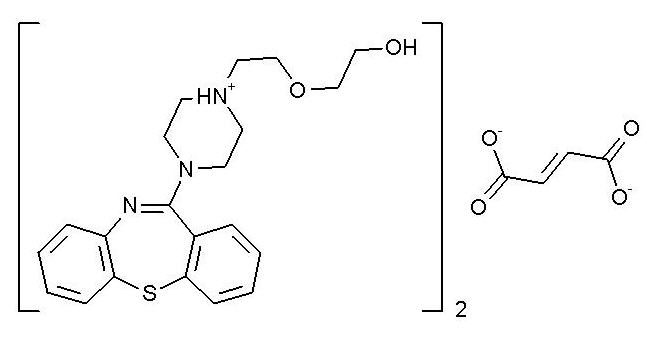
Quetiapine fumarate is a white to off-white crystalline powder which is moderately soluble in water.
SEROQUEL is supplied for oral administration as 25 mg (round, peach), 50 mg (round, white), 100 mg (round, yellow), 200 mg (round, white), 300 mg (capsule-shaped, white), and 400 mg (capsule-shaped, yellow) tablets.
Inactive ingredients are povidone, dibasic dicalcium phosphate dihydrate, microcrystalline cellulose, sodium starch glycolate, lactose monohydrate, magnesium stearate, hypromellose, polyethylene glycol, and titanium dioxide.
The 25 mg tablets contain red ferric oxide and yellow ferric oxide and the 100 mg and 400 mg tablets contain only yellow ferric oxide.
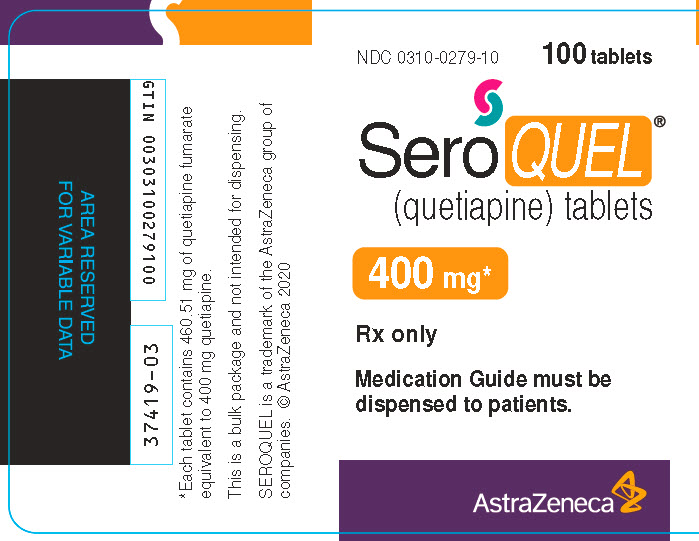
Each 25 mg tablet contains 28.78 mg of quetiapine fumarate equivalent to 25 mg quetiapine. Each 50 mg tablet contains 57.56 mg of quetiapine fumarate equivalent to 50 mg quetiapine. Each 100 mg tablet contains 115.13 mg of quetiapine fumarate equivalent to 100 mg quetiapine. Each 200 mg tablet contains 230.26 mg of quetiapine fumarate equivalent to 200 mg quetiapine. Each 300 mg tablet contains 345.39 mg of quetiapine fumarate equivalent to 300 mg quetiapine. Each 400 mg tablet contains 460.51 mg of quetiapine fumarate equivalent to 400 mg quetiapine.
5HOW SUPPLIED/STORAGE AND HANDLING
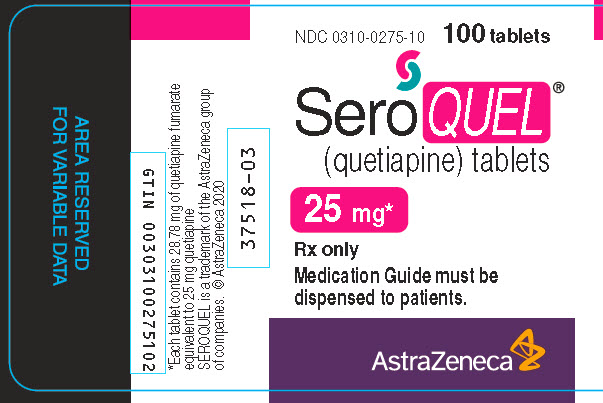
25 mg Tablets (NDC 0310-0275-10) peach, round, biconvex, film coated tablets, identified with ‘SEROQUEL’ and ‘25’ on one side and plain on the other side, are supplied in bottles of 100 tablets.
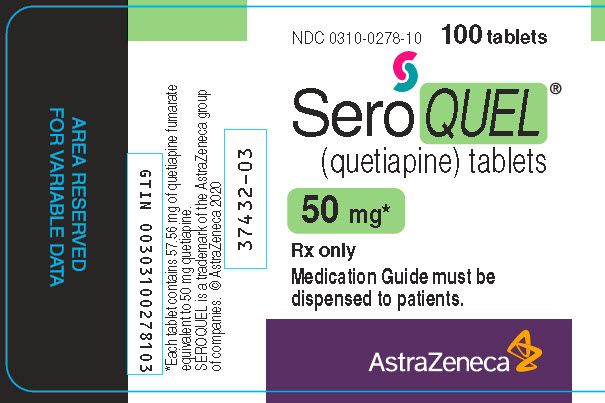
50 mg Tablets (NDC 0310-0278-10) white, round, biconvex, film coated tablets, identified with ‘SEROQUEL’ and ‘50’ on one side and plain on the other side, are supplied in bottles of 100 tablets.
100 mg Tablets (NDC 0310-0271-10) yellow, round, biconvex film coated tablets, identified with ‘SEROQUEL’ and ‘100’ on one side and plain on the other side, are supplied in bottles of 100 tablets.
200 mg Tablets (NDC 0310-0272-10) white, round, biconvex, film coated tablets, identified with ‘SEROQUEL’ and ‘200’ on one side and plain on the other side, are supplied in bottles of 100 tablets.
300 mg Tablets (NDC 0310-0274-60) white, capsule-shaped, biconvex, film coated tablets, intagliated with ‘SEROQUEL’ on one side and ‘300’ on the other side, are supplied in bottles of 60 tablets.
400 mg Tablets (NDC 0310-0279-10) yellow, capsule-shaped, biconvex, film coated tablets, intagliated with ‘SEROQUEL’ on one side and ‘400’ on the other side, are supplied in bottles of 100 tablets.
Store at 25ºC (77ºF); excursions permitted to 15-30ºC (59-86ºF) [See USP].
6PATIENT COUNSELING INFORMATION
Advise the patient to read the FDA-approved patient labeling (Medication Guide).
Patients should be advised of the following issues and asked to alert their prescriber if these occur while taking SEROQUEL.
Increased Mortality in Elderly Patients with Dementia-Related Psychosis
Patients and caregivers should be advised that elderly patients with dementia-related psychosis treated with atypical antipsychotic drugs are at increased risk of death compared with placebo. Quetiapine is not approved for elderly patients with dementia-related psychosis
Suicidal Thoughts and Behaviors
Patients, their families, and their caregivers should be encouraged to be alert to the emergence of anxiety, agitation, panic attacks, insomnia, irritability, hostility, aggressiveness, impulsivity, akathisia (psychomotor restlessness), hypomania, mania, other unusual changes in behavior, worsening of depression, and suicidal ideation, especially early during antidepressant treatment and when the dose is adjusted up or down. Families and caregivers of patients should be advised to look for the emergence of such symptoms on a day-to-day basis, since changes may be abrupt. Such symptoms should be reported to the patient's prescriber or health professional, especially if they are severe, abrupt in onset, or were not part of the patient's presenting symptoms. Symptoms such as these may be associated with an increased risk for suicidal thinking and behavior and indicate a need for very close monitoring and possibly changes in the medication
Neuroleptic Malignant Syndrome (NMS)
Patients should be advised to report to their physician any signs or symptoms that may be related to NMS. These may include muscle stiffness and high fever
Hyperglycemia and Diabetes Mellitus
Patients should be aware of the symptoms of hyperglycemia (high blood sugar) and diabetes mellitus. Patients who are diagnosed with diabetes, those with risk factors for diabetes, or those that develop these symptoms during treatment should have their blood glucose monitored at the beginning of and periodically during treatment
Hyperlipidemia
Patients should be advised that elevations in total cholesterol, LDL-cholesterol and triglycerides and decreases in HDL-cholesterol may occur. Patients should have their lipid profile monitored at the beginning of and periodically during treatment
Weight Gain
Patients should be advised that they may experience weight gain. Patients should have their weight monitored regularly
Orthostatic Hypotension
Patients should be advised of the risk of orthostatic hypotension (symptoms include feeling dizzy or lightheaded upon standing, which may lead to falls), especially during the period of initial dose titration, and also at times of re-initiating treatment or increases in dose
Increased Blood Pressure in Children and Adolescents
Children and adolescent patients should have their blood pressure measured at the beginning of, and periodically during, treatment
Leukopenia/Neutropenia
Patients with a pre-existing low WBC or a history of drug induced leukopenia/neutropenia should be advised that they should have their CBC monitored while taking SEROQUEL. Patients should be advised to talk to their doctor as soon as possible if they have a fever, flu-like symptoms, sore throat, or any other infection as this could be a result of a very low WBC, which may require SEROQUEL to be stopped and/or treatment to be given
Interference with Cognitive and Motor Performance
Patients should be advised of the risk of somnolence or sedation (which may lead to falls), especially during the period of initial dose titration. Patients should be cautioned about performing any activity requiring mental alertness, such as operating a motor vehicle (including automobiles) or operating machinery, until they are reasonably certain quetiapine therapy does not affect them adversely
Heat Exposure and Dehydration
Patients should be advised regarding appropriate care in avoiding overheating and dehydration
Concomitant Medication
As with other medications, patients should be advised to notify their physicians if they are taking, or plan to take, any prescription or over-the-counter drugs
Pregnancy
Advise pregnant women to notify their healthcare provider if they become pregnant or intend to become pregnant during treatment with SEROQUEL. Advise patients that SEROQUEL may cause extrapyramidal and/or withdrawal symptoms (agitation, hypertonia, hypotonia, tremor, somnolence, respiratory distress, and feeding disorder) in a neonate. Advise patients that there is a pregnancy registry that monitors pregnancy outcomes in women exposed to SEROQUEL during pregnancy
Infertility
Advise females of reproductive potential that SEROQUEL may impair fertility due to an increase in serum prolactin levels. The effects on fertility are reversible
Need for Comprehensive Treatment Program
SEROQUEL is indicated as an integral part of a total treatment program for adolescents with schizophrenia and pediatric bipolar disorder that may include other measures (psychological, educational, and social). Effectiveness and safety of SEROQUEL have not been established in pediatric patients less than 13 years of age for schizophrenia or less than 10 years of age for bipolar mania. Appropriate educational placement is essential and psychosocial intervention is often helpful. The decision to prescribe atypical antipsychotic medication will depend upon the physician’s assessment of the chronicity and severity of the patient’s symptoms
7PACKAGE/LABEL PRINCIPAL DISPLAY PANEL – 25 mg
NDC 0310-0275-10
SeroQUEL
(quetiapine) tablets
25 mg*
Rx only
Medication Guide must be
dispensed to patients.
AstraZeneca
8PACKAGE/LABEL PRINCIPAL DISPLAY PANEL – 50 mg
NDC 0310-0278-10
SeroQUEL
(quetiapine) tablets
50 mg*
Rx only
Medication Guide must be
dispensed to patients.
AstraZeneca
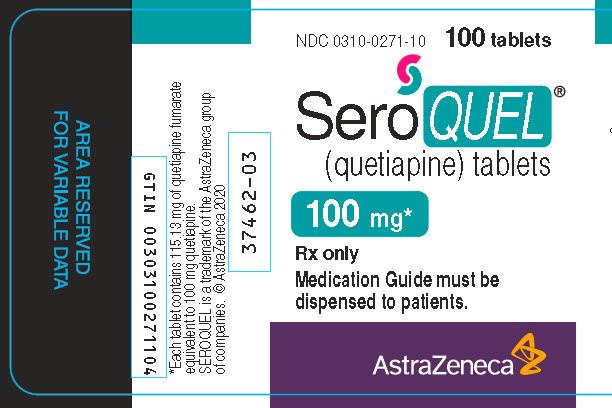
9PACKAGE/LABEL PRINCIPAL DISPLAY PANEL – 100 mg
NDC 0310-0271-10
SeroQUEL
(quetiapine) tablets
100 mg*
Rx only
Medication Guide must be
dispensed to patients.
AstraZeneca
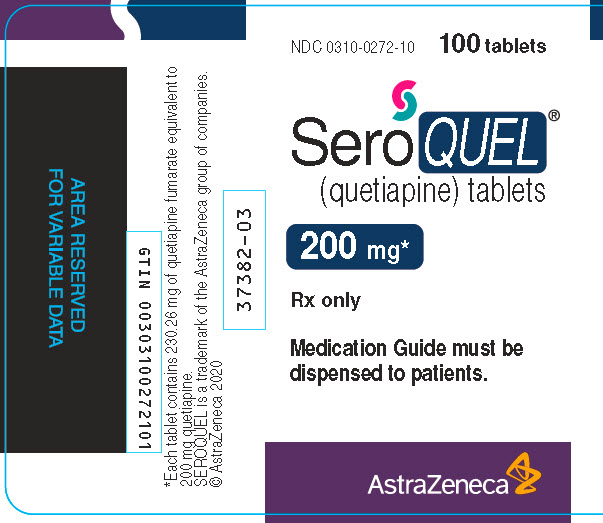
10PACKAGE/LABEL PRINCIPAL DISPLAY PANEL – 200 mg
NDC 0310-0272-10
SeroQUEL
(quetiapine) tablets
200 mg*
Rx only
Medication Guide must be
dispensed to patients.
AstraZeneca
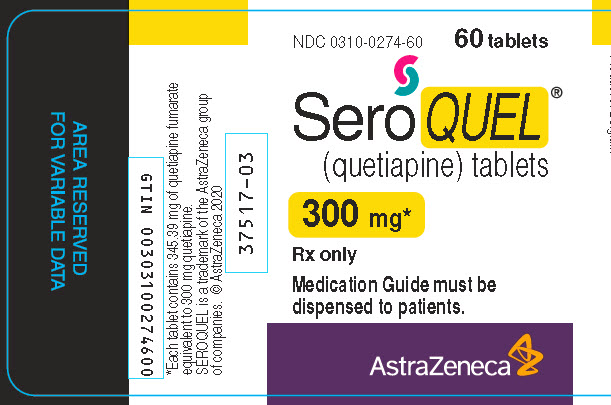
11PACKAGE/LABEL PRINCIPAL DISPLAY PANEL – 300 mg
NDC 0310-0274-60 60 tablets
SeroQUEL
(quetiapine) tablets
300 mg*
Rx only
Medication Guide must be
dispensed to patients.
AstraZeneca
12PACKAGE/LABEL PRINCIPAL DISPLAY PANEL – 400 mg
NDC 0310-0279-10 100 tablets
SeroQUEL
(quetiapine) tablets
400 mg*
Rx only
Medication Guide must be
dispensed to patients.
AstraZeneca