Coreg
What is Coreg (Carvedilol)?
A diagnosis of a heart condition like high blood pressure or heart failure can feel like a heavy weight. It’s a sign that your heart, the tireless engine of your body, is under strain. The daily concern about your health can be stressful, but it’s also the first step toward taking control. Fortunately, there are highly effective, well-established medications designed to protect your heart and help it work more efficiently. One of the cornerstones of modern heart care is Coreg, with the generic name carvedilol.
Coreg is a prescription medication that belongs to a class of drugs known as beta-blockers. However, it has a unique dual action that sets it apart from many others in its class. It is a first-line, foundational therapy used to manage chronic heart conditions. For millions of people, Coreg is a vital part of a daily routine that lowers blood pressure, eases the burden on the heart, and can ultimately lead to a longer, healthier life.
What does Coreg do?
Coreg is a versatile medication approved by the U.S. Food and Drug Administration (FDA) to treat several serious cardiovascular conditions. Its primary goal is to improve the heart’s function and protect it from further damage.
It is most prescribed for:
- Heart failure: Coreg reduces hospitalization and death risk for mild to severe chronic heart failure patients by improving the weakened heart’s pumping ability, alleviating shortness of breath, fatigue, and swelling.
- High blood pressure (Hypertension): Coreg lowers high blood pressure, preventing stroke, heart attack, and kidney disease. It can be used alone or with other medications.
- Left ventricular dysfunction after a heart attack: Coreg improves survival in post-heart attack patients by protecting the weakened left ventricle during recovery.
Coreg is a proven standard of care for heart failure. Clinical research shows it significantly improves patient outcomes and reduces mortality risk (GSK, 2017).
How does Coreg work?
Coreg’s power lies in its unique, dual-action mechanism. It works on two different fronts to help the heart.
First, it is a beta-blocker. Think of your heart as a car engine and adrenaline as the gas pedal. In conditions like heart failure and high blood pressure, the body often releases too much adrenaline, pushing the “engine” to work too hard and too fast. Coreg blocks some of the effects of adrenaline on the heart. This action is like gently applying the brakes, it slows the heart rate and reduces the force of its contractions. This gives the heart muscle a much-needed rest, allowing it to work more efficiently and heal over time.
Second, Coreg is an alpha-blocker, relaxes and widens blood vessels (vasodilation). This “opens up” the vessels, reducing resistance and making it easier for the heart to pump blood, thus lowering blood pressure.
This combined beta- and alpha-blocking effect provides comprehensive support for the cardiovascular system, making Coreg a particularly effective medication for complex heart conditions.
Coreg side effects
Like all medications that make powerful changes in the body, Coreg can cause side effects. Many of these are most noticeable when you first start the medication or when your dose is increased, and they often lessen over time.
Common side effects may include:
- Dizziness or light-headedness, especially when standing up
- Fatigue or weakness
- Slow heart rate (bradycardia)
- Low blood pressure (hypotension)
- Diarrhea
- Weight gain
Do not suddenly stop taking Coreg, as it can cause a rapid return of high blood pressure, chest pain, or even a heart attack. Your doctor will provide a schedule for slowly tapering the dose if you need to stop.
Less common but serious side effects like severe dizziness, fainting, shortness of breath, significant ankle/foot swelling, or unusually slow heartbeat require immediate medical attention. Coreg is unsuitable for those with severe asthma, very slow heart rates, or severe liver disease; your doctor will assess your medical history (Mayo Clinic, 2024).
Coreg dosage
Coreg is an oral medication that comes in two forms:
- Immediate-release tablets (Coreg): These are typically taken twice a day with food.
- Extended-release capsules (Coreg CR): This is a once-a-day formulation, also taken with food, usually in the morning.
Always take Coreg with food to prevent dizziness and light-headedness caused by lowered blood pressure from rapid drug absorption.
Your doctor will gradually increase your low starting dose every 1-2 weeks, allowing your body to adjust. Regular monitoring of blood pressure, heart rate, and weight (for fluid retention) is crucial, especially during dose adjustments.
Does Coreg have a generic version?
Yes, Coreg has a widely available and affordable generic version called carvedilol. The U.S. Food and Drug Administration holds generic drugs to the same strict standards as their brand-name counterparts, so you can be confident that carvedilol is just as safe and effective as Coreg (FDA, 2021). The extended-release version, Coreg CR, also has a generic available, known as carvedilol phosphate.
Conclusion
Coreg (carvedilol) is a proven and powerful medication that plays a life-saving role in the management of heart failure, high blood pressure, and recovery after a heart attack. Its unique dual action helps to protect the heart muscle and improve its function, allowing patients to feel better and live longer.
While it has potential side effects, they can be effectively managed through careful dosing and close monitoring by your healthcare provider. Adhering to your prescribed treatment plan and maintaining open communication with your doctor are essential steps in your journey toward better heart health. Taking Coreg is an active, positive step you can take every day to care for your body’s most vital organ.
References
- Food and Drug Administration (FDA). (2021). Generic Drug Facts. Retrieved from https://www.fda.gov/drugs/generic-drugs/generic-drug-facts
- GSK. (2017). COREG® (carvedilol) Prescribing Information. U.S. Food and Drug Administration. Retrieved from https://www.accessdata.fda.gov/drugsatfda_docs/label/2017/020297s036,020762s023lbl.pdf
- Mayo Clinic. (2024). Carvedilol (Oral Route). Retrieved from https://www.mayoclinic.org/drugs-supplements/carvedilol-oral-route/side-effects/drg-20069123
Approved To Treat
Top Global Experts
There are no experts for this drug
Related Clinical Trials
There is no clinical trials being done for this treatment
Related Latest Advances
There is no latest advances for this treatment
Brand Information
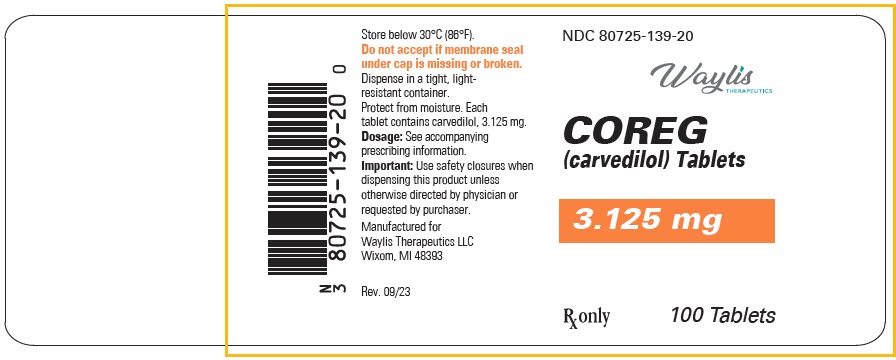
- 3.125 mg – engraved with "39" and "WP"
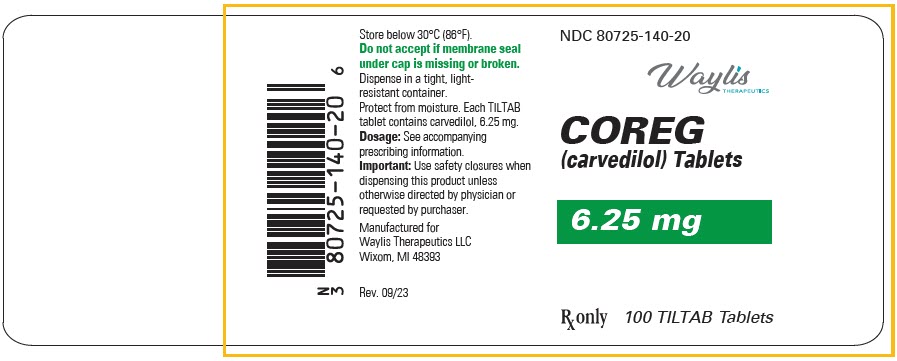
- 6.25 mg – engraved with "4140" and "WP"
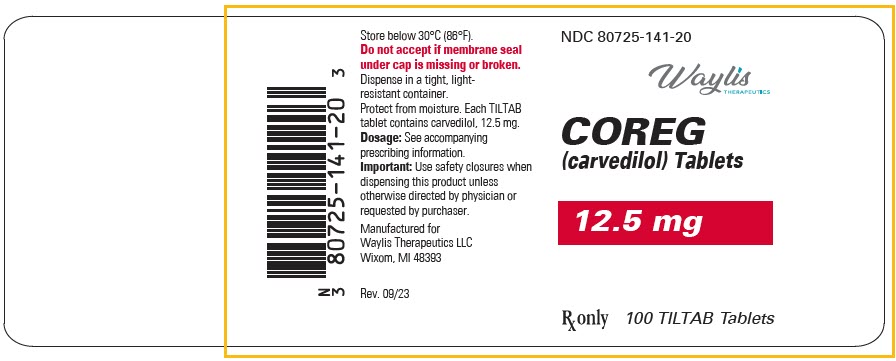
- 12.5 mg – engraved with "4141" and "WP"
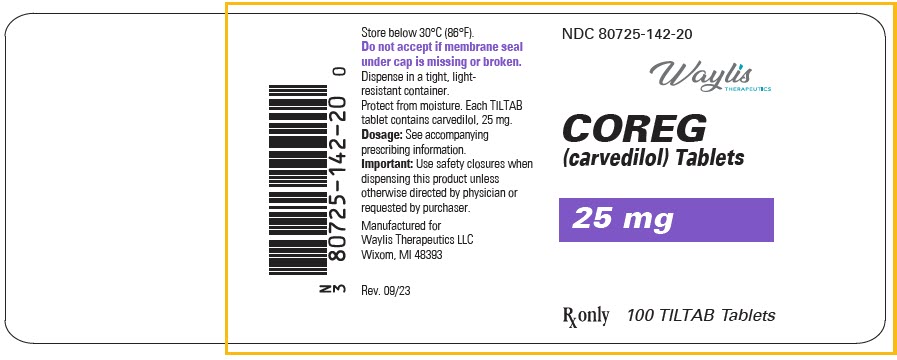
- 25 mg – engraved with "4142" and "WP"
- Bronchial asthma or related bronchospastic conditions. Deaths from status asthmaticus have been reported following single doses of COREG.
- Second- or third-degree AV block.
- Sick sinus syndrome.
- Severe bradycardia (unless a permanent pacemaker is in place).
- Patients with cardiogenic shock or who have decompensated heart failure requiring the use of intravenous inotropic therapy. Such patients should first be weaned from intravenous therapy before initiating COREG.
- Patients with severe hepatic impairment.
- Patients with a history of a serious hypersensitivity reaction (e.g., Stevens-Johnson syndrome, anaphylactic reaction, angioedema) to any component of this medication or other medications containing carvedilol.
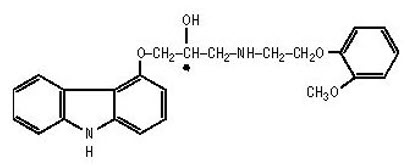
- 3.125 mg – engraved with "39" and "WP"
- 6.25 mg – engraved with "4140" and "WP"
- 12.5 mg – engraved with "4141" and "WP"
- 25 mg – engraved with "4142" and "WP"
- 3.125 mg bottles of 100: NDC 80725-139-20
- 6.25 mg bottles of 100: NDC 80725-140-20
- 12.5 mg bottles of 100: NDC 80725-141-20
- 25 mg bottles of 100: NDC 80725 142-20
- Patients should take COREG with food.
- Patients should not interrupt or discontinue using COREG without a physician's advice.
- Patients with heart failure should consult their physician if they experience signs or symptoms of worsening heart failure such as weight gain or increasing shortness of breath.
- Patients may experience a drop in blood pressure when standing, resulting in dizziness and, rarely, fainting. Patients should sit or lie down when these symptoms of lowered blood pressure occur.
- If experiencing dizziness or fatigue, patients should avoid driving or hazardous tasks.
- Patients should consult a physician if they experience dizziness or faintness, in case the dosage should be adjusted.
- Inform patients or caregivers that there is a risk of hypoglycemia when COREG is given to patients who are fasting or who are vomiting. Instruct patients or caregivers how to monitor for signs of hypoglycemia
- Contact lens wearers may experience decreased lacrimation.
- to treat patients with certain types of heart failure
- to treat patients who had a heart attack that worsened how well the heart pumps
- to treat patients with high blood pressure (hypertension)
- have severe heart failure and are hospitalized in the intensive care unit or require certain intravenous medications that help support circulation (inotropic medications).
- are prone to asthma or other breathing problems.
- have a slow heartbeat or a heart that skips a beat (irregular heartbeat).
- have liver problems.
- are allergic to any of the ingredients in COREG. The active ingredient is carvedilol. See the end of this leaflet for a list of all the ingredients in COREG.
- have asthma or other lung problems (such as bronchitis or emphysema).
- have problems with blood flow in your feet and legs (peripheral vascular disease). COREG can make some of your symptoms worse.
- have diabetes.
- have thyroid problems.
- have a condition called pheochromocytoma.
- have had severe allergic reactions.
- are pregnant or trying to become pregnant. It is not known if COREG is safe for your unborn baby. You and your doctor should talk about the best way to control your high blood pressure during pregnancy.
- are breastfeeding. It is not known if COREG passes into your breast milk. Talk with your doctor about the best way to feed your baby if you are taking COREG.
- are scheduled for surgery and will be given anesthetic agents.
- are scheduled for cataract surgery and have taken or are currently taking COREG.
- are taking prescription or over-the-counter medicines, vitamins, and herbal supplements. COREG and certain other medicines can affect each other and cause serious side effects. COREG may affect the way other medicines work. Also, other medicines may affect how well COREG works.
- Take COREG exactly as prescribed. Your doctor will tell you how many tablets to take and how often. In order to minimize possible side effects, your doctor might begin with a low dose and then slowly increase the dose.
- Tell your doctor if you gain weight or have trouble breathing while taking COREG.
- Take COREG with food.
- If you miss a dose of COREG, take your dose as soon as you remember, unless it is time to take your next dose. Take your next dose at the usual time. Do not take 2 doses at the same time.
- If you take too much COREG, call your doctor or poison control center right away.
- COREG can cause you to feel dizzy, tired, or faint. Do not drive a car, use machinery, or do anything that needs you to be alert if you have these symptoms.
- Low blood pressure (which may cause dizziness or fainting when you stand up).
If these happen, sit or lie down right away and tell your doctor. - Tiredness. If you feel tired or dizzy you should not drive, use machinery, or do anything that needs you to be alert.
- Slow heartbeat.
- Changes in your blood sugar. If you have diabetes, tell your doctor if you have any changes in your blood sugar levels.
- COREG may hide some of the symptoms of low blood sugar, especially a fast heartbeat.
- COREG may mask the symptoms of hyperthyroidism (overactive thyroid).
- Worsening of severe allergic reactions.
- Rare but serious allergic reactions (including hives or swelling of the face, lips, tongue, and/or throat that may cause difficulty in breathing or swallowing) have happened in patients who were on COREG. These reactions can be life-threatening.
- Store COREG at less than 86°F (30°C). Keep the tablets dry.
- Safely, throw away COREG that is out of date or no longer needed.
- Keep COREG and all medicines out of the reach of children.