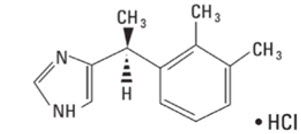
DEXmedetomidine
What is Igalmi (DEXmedetomidine)?
Approved To Treat
Top Global Experts


Related Clinical Trials
Summary: The supraclavicular brachial plexus block (BPB) is a frequently used anaesthetic method for upper limb surgeries, including distal radial fracture surgery. Adding liposomal bupivacaine to BPB has shown promise in enhancing postoperative pain control. A previous randomized controlled trial demonstrated that it reduced pain scores and OBAS compared to plain bupivacaine alone, especially on postopera...
Summary: This randomized controlled trial evaluates postoperative quality of recovery assessed with the Quality of Recovery-15 questionnaire in adult patients undergoing elective major urological surgery under opioid-free versus opioid-based general anesthesia. Opioid-free anesthesia is a multimodal anesthetic technique that avoids intraoperative opioids by combining non-opioid analgesic and sympatholytic ...
Summary: This is a clinical study for comparing the efficacy of two drugs i.e propofol and dexmedetomidine in prevention of a group of post operative abnormal behaviours that can occur after sevoflurane anesthesia in children and we will measure this by a special scale which is used to evaluate these behavioural changes.
Related Latest Advances
Brand Information
- Hypotension, Orthostatic Hypotension, and Bradycardia
- QT Interval Prolongation
- Somnolence
- Risk of Withdrawal Reactions
- Tolerance and Tachyphylaxis
- Blood and Lymphatic System Disorders: Anemia
- Cardiac Disorders: Arrhythmia, atrial fibrillation, atrioventricular block, bradycardia, cardiac arrest, cardiac disorder, extrasystoles, myocardial infarction, supraventricular tachycardia, tachycardia, ventricular arrhythmia, ventricular tachycardia
- Eye Disorders: Photopsia, visual impairment
- Gastrointestinal Disorders: Abdominal pain, diarrhea, nausea, vomiting
- General Disorders and Administration Site Conditions: Chills, hyperpyrexia, pain, pyrexia, thirst
- Hepatobiliary Disorders: Hepatic function abnormal, hyperbilirubinemia
- Investigations: Alanine aminotransferase increased, aspartate aminotransferase increased, blood alkaline phosphatase increased, blood urea increased, electrocardiogram T wave inversion, gammaglutamyltransferase increased, electrocardiogram QT prolonged
- Metabolism and Nutrition Disorders: Acidosis, hyperkalemia, hypoglycemia, hypovolemia, hypernatremia
- Nervous System Disorders: Convulsion, dizziness, headache, neuralgia, neuritis, speech disorder
- Psychiatric Disorders: Agitation, confusional state, delirium, hallucination, illusion
- Renal and Urinary Disorders: Oliguria, polyuria
- Respiratory, Thoracic and Mediastinal Disorders: Apnea, bronchospasm, dyspnea, hypercapnia, hypoventilation, hypoxia, pulmonary congestion, respiratory acidosis
- Skin and Subcutaneous Tissue Disorders: Hyperhidrosis, pruritus, rash, urticaria
- Surgical and Medical Procedures: Light anesthesia
- Vascular Disorders: Blood pressure fluctuation, hemorrhage, hypertension, hypotension
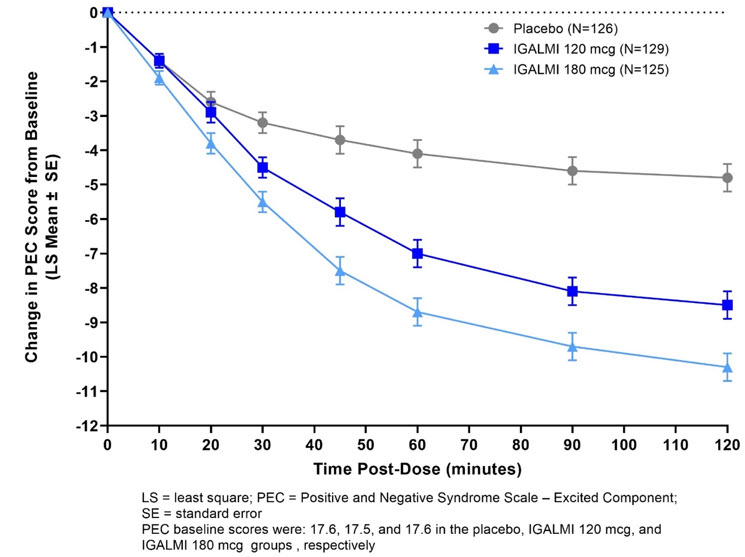
- Study 1 (NCT04268303) included 380 patients who met DSM-5 criteria for schizophrenia, schizoaffective or schizophreniform disorder. The population was 18 to 71 years of age (mean age was 46 years old); 37% female and 63% male; 78% Black, 20% White, 1% multiracial, and 1% Asian.
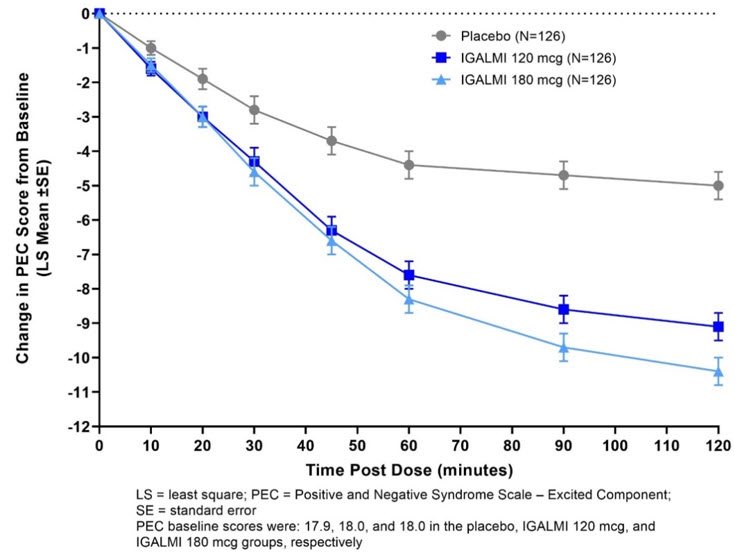
- Study 2 (NCT04276883) included 378 patients who met DSM-5 criteria for bipolar I or II disorder. The population was 18 to 70 years of age (mean age was 47 years old); 55% female and 45% male; 56% Black, 41% White, 1% Asian, 1% multiracial, and 1% other.