Otezla
What is Otezla (Apremilast)?
Living with an inflammatory condition like plaque psoriasis or psoriatic arthritis can be a relentless cycle of physical discomfort and emotional frustration. The visible skin plaques, persistent itching and debilitating joint pain can disrupt daily life and impact self-esteem. While injectable biologics have revolutionized treatment, they aren’t the only option. For those seeking an effective therapy that comes in a pill, Otezla (apremilast) offers a different approach.
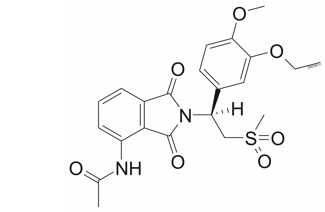
Otezla is a prescription oral medication used to treat several inflammatory conditions. It is not a biologic, a steroid, or a traditional immunosuppressant. Instead, it belongs to a newer class of drugs called phosphodiesterase 4 (PDE4) inhibitors. As a targeted therapy, it works inside the body’s cells to help control inflammation from within. Otezla is often prescribed for patients with moderate to severe disease, providing a convenient, injection-free option to manage symptoms and improve quality of life.
What does Otezla do?
Otezla is approved by the U.S. Food and Drug Administration (FDA) to treat several conditions driven by underlying inflammation:
- Plaque Psoriasis: Reduces redness, thickness and scaling of skin plaques in adults with moderate to severe plaque psoriasis eligible for phototherapy or systemic therapy.
- Psoriatic Arthritis: Otezla reduces joint pain, stiffness and swelling in adults with active psoriatic arthritis, improving physical function and comfort.
- Oral Ulcers Associated with Behçet’s Disease: For adults with this rare inflammatory disorder, which causes painful mouth sores and other body-wide problems.
Clinical studies have consistently shown that Otezla is effective. For example, in plaque psoriasis trials, a significant number of patients achieved clearer skin after just 16 weeks of treatment. Similarly, patients with psoriatic arthritis experienced meaningful improvements in their joint symptoms, allowing for greater mobility and less pain (Amgen Inc., 2024).
How does Otezla work?
To understand how Otezla works, it helps to imagine the inflammation process as an unbalanced scale inside your immune cells. On one side, you have pro-inflammatory signals that promote inflammation, and on the other, you have anti-inflammatory signals that reduce it. In conditions like psoriasis, this scale is tipped too far toward the pro-inflammatory side.
An enzyme called phosphodiesterase 4 (PDE4) is one of the key culprits responsible for this imbalance. When PDE4 is overactive, it breaks down a molecule that helps produce anti-inflammatory signals. At the same time, its activity leads to an increase in pro-inflammatory signals.
Otezla is a PDE4 inhibitor. It works by entering the immune cells and blocking the action of this overactive PDE4 enzyme. By inhibiting PDE4, Otezla helps to re-balance the scale. It increases the levels of anti-inflammatory signals and decreases the levels of pro-inflammatory signals. This action calms the overactive immune response from within the cell, leading to reduced inflammation in the skin and joints. This targeted, intracellular mechanism is what makes Otezla different from many other systemic treatments.
Otezla side effects
Like all medications, Otezla comes with potential side effects. Most are mild to moderate, and many tend to improve within the first few weeks as your body adjusts to the treatment. Your doctor will discuss what to expect and how to manage any issues that arise.
The most common side effects of Otezla include:
- Diarrhea
- Nausea
- Upper respiratory tract infection (like a common cold)
- Tension headache
Otezla may cause unexplained weight loss, so regular doctor check-ups are important. It can also cause or worsen depression; contact your doctor immediately if you experience new or worsening depression, suicidal thoughts or mood changes.
Serious side effects are rare. Seek immediate medical attention for severe allergic reactions like hives, breathing difficulties, or swelling of the face, lips, tongue or throat. Do not take Otezla if you have a history of apremilast allergy. (Mayo Clinic, 2024).
Otezla dosage
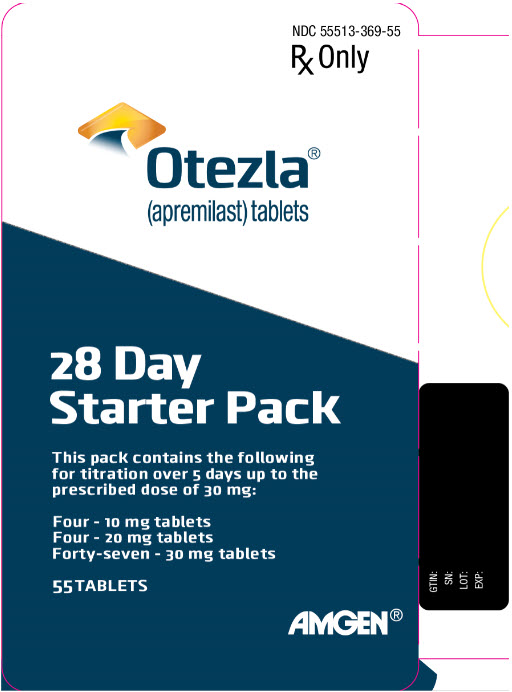
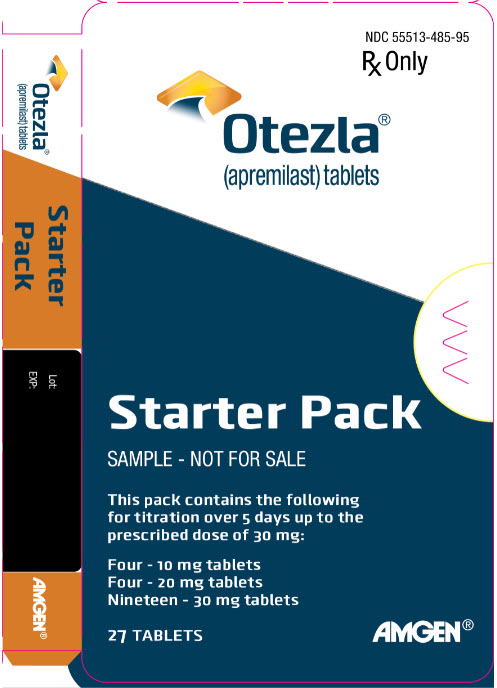
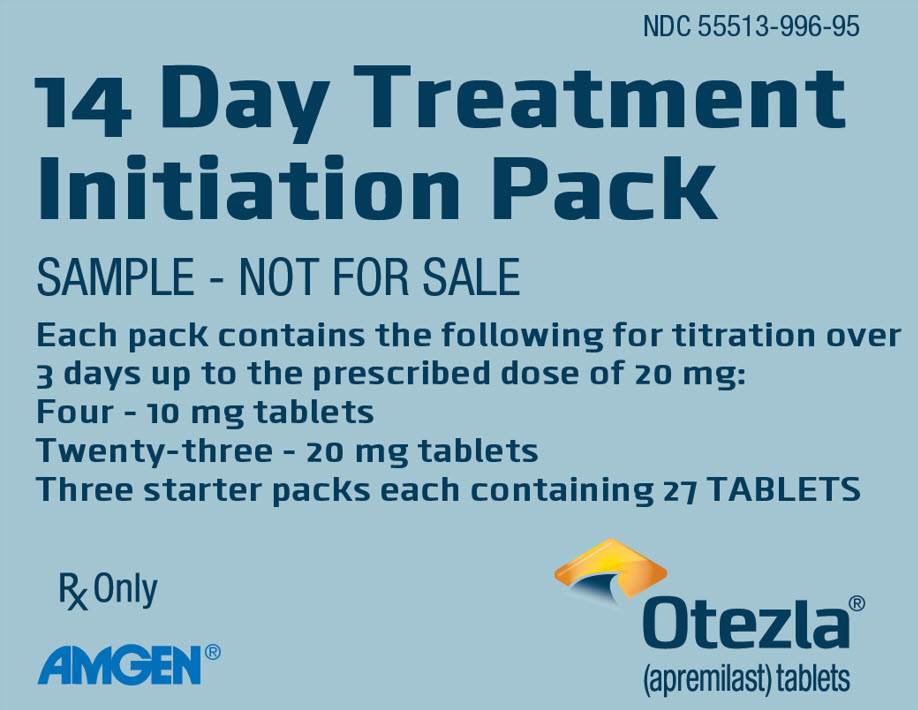
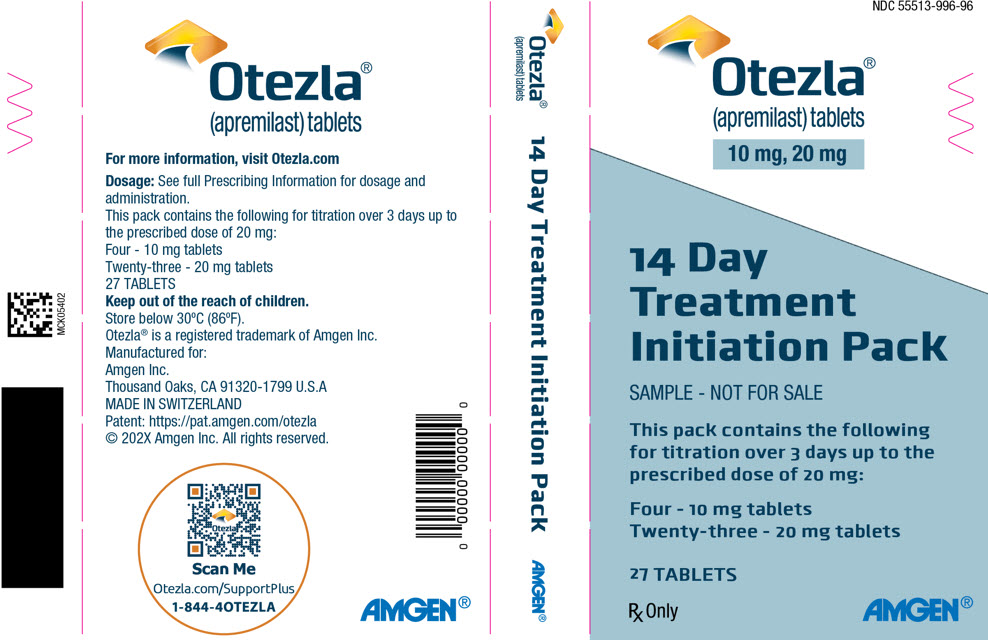
Otezla is an oral tablet taken twice daily. A starter pack gradually increases the dose over five days to minimize initial side effects like nausea and diarrhea.
After completing the starter pack, you will continue with the full maintenance dose. The tablets can be taken with or without food.
One of the significant advantages of Otezla is that it generally does not require routine laboratory monitoring, such as regular blood or liver function tests. However, your doctor will still want to see you for regular check-ups to monitor your progress, check your weight, and discuss any side effects or changes in your mood. For patients with severe kidney impairment, a lower dose may be necessary.
Does Otezla have a generic version?
Yes, FDA-approved generic versions of Otezla are now available. The generic name for Otezla is apremilast. The FDA requires generic drugs to meet the same strict standards for safety, effectiveness, and quality as the brand-name product (FDA, 2021). This means you can be confident that a generic apremilast is just as effective as Otezla. The availability of generics can help make this treatment more affordable and accessible for patients.
Conclusion
Otezla (apremilast) offers a valuable and convenient oral treatment for individuals dealing with plaque psoriasis, psoriatic arthritis and oral ulcers from Behçet’s disease. Its unique approach of inhibiting the PDE4 enzyme allows it to target and reduce inflammation at a cellular level, without the need for injections or routine blood monitoring.
While side effects are possible, most are manageable and often temporary. By working closely with your healthcare provider, you can determine if Otezla is a suitable choice for your treatment plan. Taking an active role in your care and maintaining open communication with your doctor are key steps on the path to effectively managing your condition and improving your overall well-being.
References
- Amgen Inc. (2024). OTEZLA® (apremilast) Prescribing Information. U.S. Food and Drug Administration. Retrieved from https://www.accessdata.fda.gov/drugsatfda_docs/label/2024/205437s021lbl.pdf
- Mayo Clinic. (2024). Apremilast (Oral Route). Retrieved from https://www.mayoclinic.org/drugs-supplements/apremilast-oral-route/side-effects/drg-20150424
- U.S. Food and Drug Administration (FDA). (2021). Generic Drug Facts. Retrieved from https://www.fda.gov/drugs/generic-drugs/generic-drug-facts
Approved To Treat
Top Global Experts
There are no experts for this drug
Related Clinical Trials
There is no clinical trials being done for this treatment
Related Latest Advances
There is no latest advances for this treatment
Brand Information
- 10-mg pink tablet engraved with "APR" on one side and "10" on the other side
- 20-mg brown tablet engraved with "APR" on one side and "20" on the other side
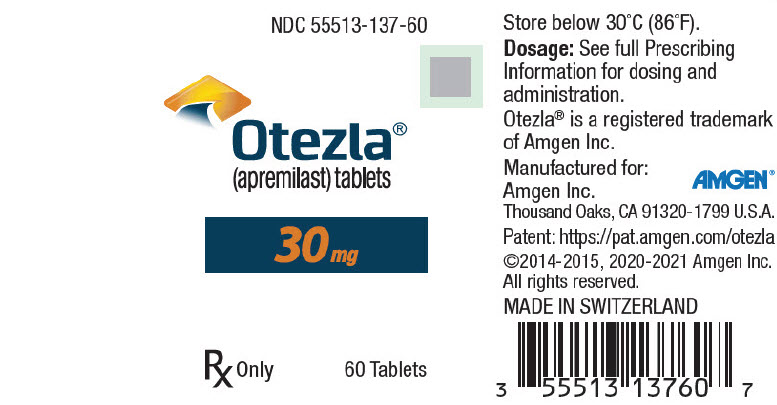
- 30-mg beige tablet engraved with "APR" on one side and "30" on the other side
- Hypersensitivity
- Diarrhea, Nausea, and Vomiting
- Depression
- Weight Decrease
- Drug Interactions
- Administration Instructions
Instruct patients to take OTEZLA/OTEZLA XR only as prescribed [see . Advise patients to take OTEZLA/OTEZLA XR with or without food. Instruct patients to swallow tablets whole and not to crush, split, or chew prior to swallowing [see . - Hypersensitivity
Inform patients that hypersensitivity reactions can occur following administration of OTEZLA/OTEZLA XR. Instruct patients to contact their healthcare provider if they experience symptoms of an allergic reaction [see . - Diarrhea, Nausea, and Vomiting
Advise patients of the potential complications of severe diarrhea, nausea, or vomiting and instruct them to contact their healthcare provider if they experience these adverse reactions, especially if the patient is 65 years of age or older [see . - Depression
Inform patients that treatment with OTEZLA/OTEZLA XR is associated with an increased incidence of depression. Advise patients, their caregivers, and families of the need to be alert for the emergence or worsening of depression, suicidal thoughts or other mood changes, and if such changes occur to contact their healthcare provider [see . - Weight Decrease
Inform patients that treatment with OTEZLA/OTEZLA XR is associated with potential weight loss. Instruct patients or caregivers to have their or their child's weight monitored regularly and, if unexplained or clinically significant weight loss occurs, to contact their healthcare provider for evaluation of the weight loss [see . - Pregnancy
Advise pregnant patients and patients of reproductive potential of the potential risk to a fetus. Advise patients to inform their prescriber of a known or suspected pregnancy [see . - Residual Tablet Shell
Patients receiving OTEZLA XR may notice an inert tablet shell passing in the stool or via colostomy. Patients should be informed that the active medication has already been absorbed by the time the patient sees the inert tablet shell.