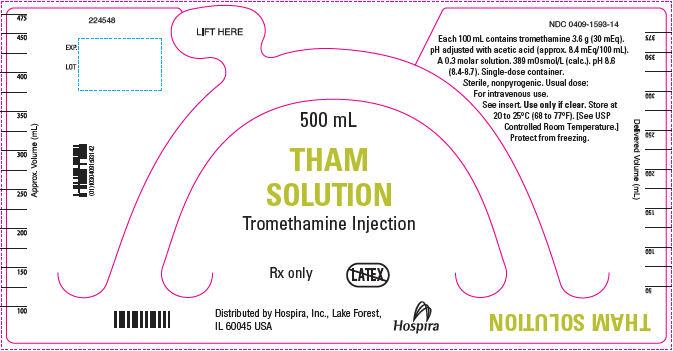
THAM
What is THAM (Tromethamine)?
Approved To Treat


Related Clinical Trials
Summary: The study objective of this project is to examine the mechanisms of the venous distension reflex (VDR) in humans. We hypothesize that COX blockade with ketorolac tromethamine, an intravenous NSAID, will attenuate the muscle sympathetic nerve activity (MSNA) response to limb venous distension. To gain further insight into whether the COX byproducts directly stimulate chemically-sensitive afferents,...
Summary: The goal of this randomized clinical trial is to learn if the use of a low-dose nonsteroidal anti-inflammatory drug (NSAID), ketorolac, reduces the rate of chronic opioid use in orthopaedic trauma patients. The main questions this study aims to answer are: 1. Are patients who are given scheduled ketorolac during the first five days of the perioperative period in combination with standard of care (...
Summary: The purpose of this study is to characterize the pharmacokinetic (PK) and safety profile of anesthetics and analgesics in children and adolescents.
Related Latest Advances
Brand Information

- Metabolic Acidosis Associated with Cardiac Bypass Surgery.
- Tham Solution has been found to be primarily beneficial in correcting metabolic acidosis which may occur during or immediately following cardiac bypass surgical procedures.
- Correction of Acidity of ACD Blood in Cardiac Bypass Surgery.
- It is well known that ACD blood is acidic and becomes more acidic on storage. Tromethamine effectively corrects this acidity. Tham Solution may be added directly to the blood used to prime the pump-oxygenator. When ACD blood is brought to a normal pH range the patient is spared an initial acid load. Additional tromethamine may be indicated during cardiac bypass surgery should metabolic acidosis appear.
- Metabolic Acidosis Associated with Cardiac Arrest.
- Acidosis is nearly always one of the consequences of cardiac arrest and, in some instances, may even be a causative factor in arrest. It is important therefore, that the correction of acidosis should be started promptly with other resuscitative efforts. By correcting acidosis, Tham Solution (tromethamine injection) has caused the arrested heart to respond to resuscitative efforts after standard methods alone had failed. In these cases, tromethamine was given intraventricularly. It is to be noted, however, that such precariously ill patients often have died subsequently of causes unrelated to the administration of tromethamine. With administration by the peripheral venous route, metabolic acidosis has been corrected in a majority of patients. The success in reinstitution of cardiac rhythm by this means probably has not been of the same order of magnitude as with the intraventricular route.
- Large doses of Tham Solution may depress ventilation, as a result of increased blood pH and reduced CO
- Care must be exercised to prevent perivascular infiltration since this can cause inflammation, necrosis and sloughing of tissue. Venospasm and intravenous thrombosis, which may occur during infusion, can be minimized by insuring that the injection needle is well within the largest available vein and that solutions are slowly infused. Intravenous catheters are recommended. If perivascular infiltration occurs, institute appropriate countermeasures (see
- Tham Solution (tromethamine injection) should be administered slowly and in amounts sufficient only to correct the existing acidosis, and to avoid overdosage and alkalosis. Overdosage in terms of total drug and/or too rapid administration, may cause hypoglycemia of a prolonged duration (several hours). Therefore, frequent blood glucose determinations should be made during and after therapy.
- Extreme care should be exercised in patients with renal disease or reduced urinary output because of potential hyperkalemia and the possibility of a decreased excretion of tromethamine. In such patients, the drug should be used cautiously with electrocardiographic monitoring and frequent serum potassium determinations.
- Because clinical experience has been limited generally to short-term use, the drug should not be administered for more than a period of one day except in a life-threatening situation.
- Blood pH, PCO
- While it has not been shown that the drug increases coagulation time in humans, this possibility should be kept in mind since this has been noted experimentally in dogs.