Tazobactam
What is Piperacillin (Tazobactam)?
Serious bacterial infections can quickly turn life-threatening if not treated effectively. For patients in hospitals or recovering from surgery, infections such as pneumonia, urinary tract infections, or abdominal infections can be particularly dangerous. Piperacillin (tazobactam) is a powerful antibiotic combination that helps doctors fight these severe infections and restore patients’ health safely and efficiently.
Piperacillin (tazobactam), often known by the brand name Zosyn, is a broad-spectrum antibiotic used to treat a wide range of bacterial infections. It belongs to the penicillin class of antibiotics, specifically the ureidopenicillin group, and is combined with tazobactam, a beta-lactamase inhibitor. This combination makes the drug especially effective against bacteria that have developed resistance to other antibiotics. It has been a cornerstone in hospital infection management for decades, trusted for its ability to treat complex infections while minimizing treatment failures.
What does Piperacillin do?
Piperacillin (tazobactam) is used to treat moderate to severe bacterial infections caused by susceptible organisms. It is commonly prescribed for infections in hospitalized patients, particularly when bacteria are resistant to simpler antibiotics.
Conditions treated include:
- Pneumonia (including hospital-acquired or ventilator-associated pneumonia)
- Intra-abdominal infections, such as appendicitis or peritonitis
- Skin and soft tissue infections, including diabetic foot infections
- Urinary tract infections (UTIs), including complicated cases
- Gynecologic infections, such as pelvic inflammatory disease or postpartum infections
- Sepsis and bloodstream infections
By effectively eliminating harmful bacteria, this medication helps reduce fever, pain, inflammation, and the spread of infection. Many patients experience clinical improvement within days once appropriate therapy begins. In medical studies, piperacillin-tazobactam has shown high cure rates and reduced hospital stays compared with other broad-spectrum antibiotics (NIH, 2024).
How does Piperacillin work?
The effectiveness of piperacillin (tazobactam) lies in its dual mechanism.
Piperacillin, the main antibiotic component, works by blocking bacterial cell wall synthesis. Bacteria need strong cell walls to survive, and when this process is disrupted, the bacteria weaken, burst, and die.
However, many bacteria have evolved to produce enzymes called beta-lactamases, which destroy antibiotics like piperacillin before they can work. That’s where tazobactam comes in, it’s a beta-lactamase inhibitor that protects piperacillin from being broken down. This means the combination can successfully kill a broader range of bacteria, including those resistant to many other antibiotics.
Clinically, this mechanism is significant because it helps doctors treat mixed and resistant infections effectively, even when the exact bacteria causing the infection are not immediately known. This “broad-spectrum” action makes piperacillin-tazobactam a vital option for treating severe or hospital-acquired infections.
Piperacillin side effects
Like all medications, piperacillin (tazobactam) can cause side effects. Most are mild and temporary, but serious reactions can occur in rare cases.
Common side effects may include:
- Diarrhea or loose stools
- Nausea or upset stomach
- Headache
- Rash or itching at the injection site
- Mild changes in liver enzyme levels
Serious side effects (less common):
- Allergic reactions such as swelling, rash, or difficulty breathing
- Severe diarrhea (possible Clostridioides difficile infection)
- Seizures (usually in patients with kidney disease or high doses)
- Decreased white blood cell count or platelet count
- Signs of liver problems, such as yellowing of the skin or eyes
Patients who are allergic to penicillin or cephalosporin antibiotics should inform their healthcare provider before taking this drug, as cross-allergies can occur.
Seek immediate medical attention if you experience severe rash, difficulty breathing, or swelling of the face or throat, these may indicate an allergic reaction.
Doctors typically monitor kidney and liver function, and blood counts, during treatment to ensure safety, especially for patients receiving prolonged therapy or with pre-existing health conditions.
Piperacillin dosage
Piperacillin (tazobactam) is administered via IV injection or infusion, typically in a hospital setting, as it requires direct bloodstream entry. Dosage and frequency depend on the infection’s type and severity, patient’s kidney function, and age/weight. For severe or critically ill patients, continuous infusion may be used to maintain consistent blood levels.
Healthcare providers monitor electrolyte levels, kidney function, and blood counts during piperacillin-tazobactam treatment, especially in patients with pre-existing organ disease. Dosage is adjusted for kidney impairment to prevent drug accumulation and side effects. Hydration is crucial to support kidney function and prevent drug crystallization.
Does Piperacillin have a generic version?
Yes. Piperacillin (tazobactam) is available in generic form and is widely used in hospitals worldwide. The FDA has approved several generic versions, which are considered just as safe and effective as the brand-name product Zosyn.
Generic forms reduce treatment costs and improve access, especially for long hospital stays or frequent intravenous antibiotic use. FDA-approved generics match the quality, purity, and potency of brand medications. Hospitals widely use generic piperacillin-tazobactam for severe infections due to its reliability, broad coverage, and cost-effectiveness.
Conclusion
Piperacillin (tazobactam) is one of the most trusted antibiotics in modern hospital medicine. By combining a powerful penicillin-type antibiotic with a beta-lactamase inhibitor, it provides broad protection against serious and resistant bacterial infections.
Properly used, this treatment prevents infections, shortens hospital stays, and aids recovery. Though side effects can occur, medical supervision ensures it is effective and well-tolerated.
Always follow your healthcare provider’s instructions, complete the full course, and report any side effects. Piperacillin (tazobactam), when used correctly, is a vital tool against bacterial infections.
References
- U.S. Food and Drug Administration (FDA). (2024). Piperacillin and Tazobactam Injection prescribing information. Retrieved from https://www.accessdata.fda.gov
- Mayo Clinic. (2024). Piperacillin and Tazobactam (injection route) drug information. Retrieved from https://www.mayoclinic.org
- MedlinePlus. (2024). Piperacillin and Tazobactam injection: Uses and precautions. National Library of Medicine. Retrieved from https://medlineplus.gov
- National Institutes of Health (NIH). (2024). Beta-lactam/beta-lactamase inhibitor combinations in bacterial infection management. Retrieved from https://www.nih.gov
Approved To Treat
Top Global Experts
There are no experts for this drug
Related Clinical Trials
There is no clinical trials being done for this treatment
Related Latest Advances
There is no latest advances for this treatment
Brand Information
- Hypersensitivity Adverse Reactions
- Severe Cutaneous Adverse Reactions
- Hemophagocytic Lymphohistiocytosis
- Rhabdomyolysis [
- Hematologic Adverse Reactions
- Central Nervous System Adverse Reactions
- Nephrotoxicity in Critically Ill Patients
- Clostridioides difficile-Associated Diarrhea [see Warnings and Precautions (5.9)]
During the initial clinical investigations, 2621 patients worldwide were treated with piperacillin and tazobactam in phase 3 trials. In the key North American monotherapy clinical trials (n=830 patients), 90% of the adverse events reported were mild to moderate in severity and transient in nature. However, in 3.2% of the patients treated worldwide, piperacillin and tazobactam was discontinued because of adverse events primarily involving the skin (1.3%), including rash and pruritus; the gastrointestinal system (0.9%), including diarrhea, nausea, and vomiting; and allergic reactions (0.5%).
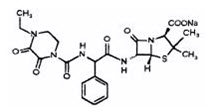
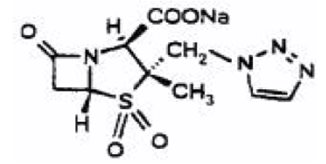
- Pharmacy Bulk Bottle
- Each pharmacy bulk package bottle provides piperacillin sodium equivalent to 36 grams of piperacillin and tazobactam sodium equivalent to 4.5 grams of tazobactam. Each pharmacy bulk package bottle contains 84.6 mEq (1,945 mg) of sodium.
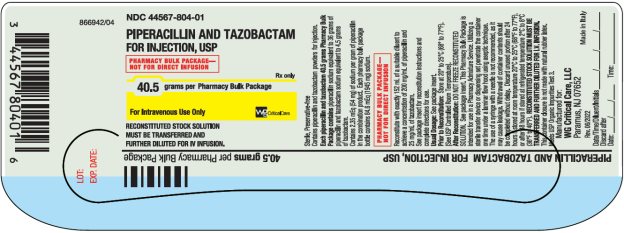
PIPERACILLIN AND TAZOBACTAM
Pharmacy Bulk Package-
Rx only