Generic Name

Loteprednol Etabonate

Brand Names
Alrex, Zylet, Eysuvis, Inveltys, Lotemax
FDA approval date: March 09, 1998
Classification: Corticosteroid
Form: Ointment, Suspension, Gel

What is Alrex (Loteprednol Etabonate)?

Loteprednol Etabonate Ophthalmic Gel is a corticosteroid indicated for the treatment of post-operative inflammation and pain following ocular surgery. Loteprednol Etabonate Ophthalmic Gel is a corticosteroid indicated for the treatment of postoperative inflammation and pain following ocular surgery.

Related Clinical Trials

A Randomized Controlled Trial Comparing Antibiotic Cement Bead Pouch Versus Negative Pressure Wound Therapy for the Management of Severe Open Tibia Fracture Wounds

Summary: The Beads vs Vac trial is a multi-centre randomized controlled trial of 312 participants with a severe open tibia fracture requiring multiple irrigation and debridement surgeries. Eligible participants will be randomized to receive either an antibiotic bead pouch or negative pressure wound therapy (NPWT) for their temporary open fracture wound management. Outcomes will be assessed at 6 weeks, 3 mo...

Antibiotic Impregnated Bone Graft to Reduce Infection in Hip Replacement. The ABOGRAFT Trial

Summary: Total hip replacement is the most successful treatment modern healthcare can offer patients to regain quality of life. Periprosthetic joint infection (PJI) is the most common and devastating complication after total hip replacement (THR). Between 0.5 to 2% of primary THR (first time hip replacement), and 8-10% of revision THR (replacement of a hip prosthesis) will become infected.1 The introductio...

Brand Information

    Alrex (loteprednol etabonate)
    1DESCRIPTION
    ALREX
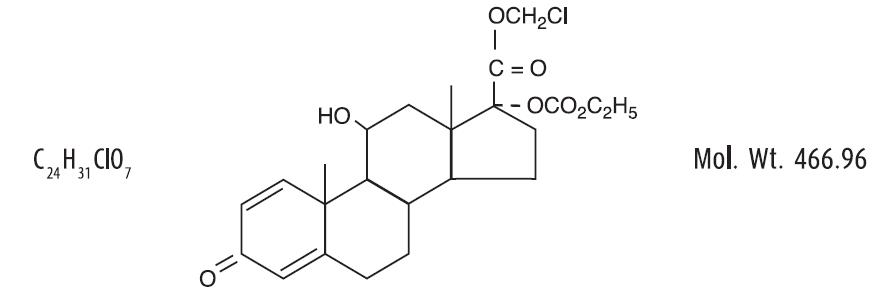
    Loteprednol etabonate is represented by the following structural formula:
    Alrex chemical formula
    Chemical Name:
    Each mL contains:
    ACTIVE: Loteprednol Etabonate 2 mg (0.2%);
    INACTIVES: Edetate Disodium, Glycerin, Povidone, Purified Water and Tyloxapol. Hydrochloric Acid and/or Sodium Hydroxide may be added to adjust the pH. The suspension is essentially isotonic with a tonicity of 250 to 310 mOsmol/kg.
    PRESERVATIVE ADDED: Benzalkonium Chloride 0.01%.
    2CLINICAL PHARMACOLOGY
    Corticosteroids inhibit the inflammatory response to a variety of inciting agents and probably delay or slow healing. They inhibit the edema, fibrin deposition, capillary dilation, leukocyte migration, capillary proliferation, fibroblast proliferation, deposition of collagen, and scar formation associated with inflammation. There is no generally accepted explanation for the mechanism of action of ocular corticosteroids. However, corticosteroids are thought to act by the induction of phospholipase A
    Loteprednol etabonate is structurally similar to other corticosteroids. However, the number 20 position ketone group is absent. It is highly lipid soluble which enhances its penetration into cells. Loteprednol etabonate is synthesized through structural modifications of prednisolone-related compounds so that it will undergo a predictable transformation to an inactive metabolite. Based upon
    Results from a bioavailability study in normal volunteers established that plasma levels of loteprednol etabonate and Δ
    2.1Clinical Studies:
    In two double-masked, placebo-controlled six-week environmental studies of 268 patients with seasonal allergic conjunctivitis, ALREX, when dosed four times per day was superior to placebo in the treatment of the signs and symptoms of seasonal allergic conjunctivitis. ALREX provided reduction in bulbar conjunctival injection and itching, beginning approximately 2 hours after instillation of the first dose and throughout the first 14 days of treatment.
    3INDICATIONS AND USAGE
    ALREX ophthalmic suspension is indicated for the temporary relief of the signs and symptoms of seasonal allergic conjunctivitis.
    4CONTRAINDICATIONS
    ALREX, as with other ophthalmic corticosteroids, is contraindicated in most viral diseases of the cornea and conjunctiva including epithelial herpes simplex keratitis (dendritic keratitis), vaccinia, and varicella, and also in mycobacterial infection of the eye and fungal diseases of ocular structures. ALREX is also contraindicated in individuals with known or suspected hypersensitivity to any of the ingredients of this preparation and to other corticosteroids.
    5WARNINGS
    Prolonged use of corticosteroids may result in glaucoma with damage to the optic nerve, defects in visual acuity and fields of vision, and in posterior subcapsular cataract formation. Steroids should be used with caution in the presence of glaucoma.
    Prolonged use of corticosteroids may suppress the host response and thus increase the hazard of secondary ocular infections. In those diseases causing thinning of the cornea or sclera, perforations have been known to occur with the use of topical steroids. In acute purulent conditions of the eye, steroids may mask infection or enhance existing infection.
    Use of ocular steroids may prolong the course and may exacerbate the severity of many viral infections of the eye (including herpes simplex). Employment of a corticosteroid medication in the treatment of patients with a history of herpes simplex requires great caution.
    6ADVERSE REACTIONS
    Reactions associated with ophthalmic steroids include elevated intraocular pressure, which may be associated with optic nerve damage, visual acuity and field defects, posterior subcapsular cataract formation, secondary ocular infection from pathogens including herpes simplex, and perforation of the globe where there is thinning of the cornea or sclera.
    Ocular adverse reactions occurring in 5-15% of patients treated with loteprednol etabonate ophthalmic suspension (0.2-0.5%) in clinical studies included abnormal vision/blurring, burning on instillation, chemosis, discharge, dry eyes, epiphora, foreign body sensation, itching, injection, and photophobia. Other ocular adverse reactions occurring in less than 5% of patients include conjunctivitis, corneal abnormalities, eyelid erythema, keratoconjunctivitis, ocular irritation/pain/discomfort, papillae, and uveitis. Some of these events were similar to the underlying ocular disease being studied.
    Non-ocular adverse reactions occurred in less than 15% of patients. These include headache, rhinitis and pharyngitis.
    In a summation of controlled, randomized studies of individuals treated for 28 days or longer with loteprednol etabonate, the incidence of significant elevation of intraocular pressure (≥10 mm Hg) was 2% (15/901) among patients receiving loteprednol etabonate, 7% (11/164) among patients receiving 1% prednisolone acetate and 0.5% (3/583) among patients receiving placebo. Among the smaller group of patients who were studied with ALREX, the incidence of clinically significant increases in IOP (≥10 mm Hg) was 1% (1/133) with ALREX and 1% (1/135) with placebo.
    To report SUSPECTED ADVERSE REACTIONS, contact Bausch & Lomb Incorporated at 1-800-553-5340 or FDA at 1-800-FDA-1088 or www.fda.gov/medwatch.
    7DOSAGE AND ADMINISTRATION
    SHAKE VIGOROUSLY BEFORE USING.
    8HOW SUPPLIED
    ALREX
    1. NDC 24208-353-05 5 mL in a 7.5 mL bottle
    2. NDC 24208-353-10 10 mL in a 10 mL bottle
    9Storage:
    Store upright between 15°C to 25°C (59°F to 77°F). DO NOT FREEZE.
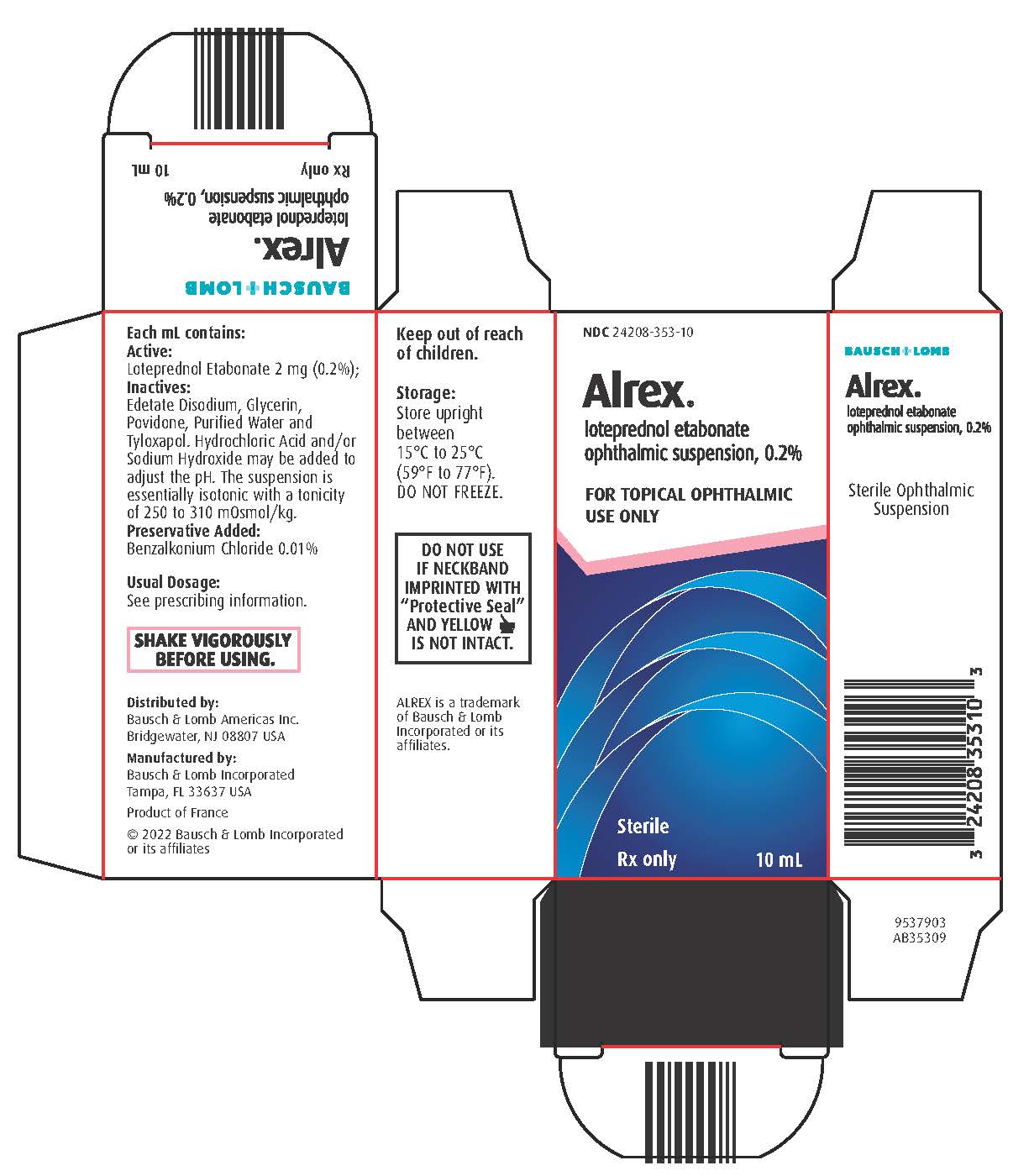
    10Principal Display Panel
    carton
    9537903
    NDC 24208-353-10
    Alrex®
    loteprednol etabonate
    ophthalmic suspension, 0.2%

    FOR OPHTHALMIC USE ONLY

    Sterile
    Rx only

    10 mL
    Alrex has been selected.