Generic Name

Vilanterol

Brand Names
Trelegy Ellipta, Breo Ellipta, Umeclidinium, Anoro Ellipta
FDA approval date: August 26, 2013
Classification: Corticosteroid
Form: Powder

What is Trelegy Ellipta (Vilanterol)?

ANORO ELLIPTA is indicated for the maintenance treatment of patients with chronic obstructive pulmonary disease . Limitations of Use ANORO ELLIPTA is NOT indicated for the relief of acute bronchospasm or for the treatment of asthma. The safety and effectiveness of ANORO ELLIPTA in asthma have not been established. ANORO ELLIPTA is a combination of umeclidinium, an anticholinergic, and vilanterol, a long-acting beta 2 -adrenergic agonist , indicated for the maintenance treatment of patients with chronic obstructive pulmonary disease . Limitations of Use: Not indicated for relief of acute bronchospasm or for the treatment of asthma. ( 1.
Save this treatment for later
Sign Up
Not sure about your diagnosis?
Check Your Symptoms

Related Clinical Trials

Differentiating the Effects of Long-acting Bronchodilators Administered by Nebulizer Versus Dry Powder Inhaler in Symptomatic Patients With Chronic Obstructive Pulmonary Disease

Summary: The purpose of this study is to compare the effectiveness of inhaled bronchodilators delivered via nebulizers vs. dry powder inhalers (DPIs) in symptomatic participants with Chronic Obstructive Pulmonary Disease (COPD) who have airflow obstruction (FEV1/FVC ≤ 70%) and show significant air trapping (RV ≥ 120% of predicted). The investigators hypothesize that, in patients with symptomatic COPD, ther...

Comparative Effects of Triple Inhaled Therapy With Budesonide/Glycopyrronium/Formoterol Versus Fluticasone Furoate/Umeclidinium/Vilanterol on Small Airway Disease in COPD Patients: A Randomized Crossover Study

Summary: The goal of this clinical trial is to determine if triple inhaled therapy with Budesonide/Glycopyrronium/Formoterol (BGF) and Fluticasone Furoate/Umeclidinium/Vilanterol (FUV) are effective in treating patients with stable chronic obstructive pulmonary disease (COPD). It will also assess the safety of both drugs. The main questions it aims to answer are: * Does BGF demonstrate a comparable effect ...

Brand Information

    Trelegy Ellipta (fluticasone furoate, umeclidinium bromide and vilanterol trifenatate)
    1DOSAGE FORMS AND STRENGTHS
    Inhalation powder:
    • 100 mcg fluticasone furoate, 62.5 mcg umeclidinium, and 25 mcg vilanterol (100/62.5/25 mcg) per actuation.
    • 200 mcg fluticasone furoate, 62.5 mcg umeclidinium, and 25 mcg vilanterol (200/62.5/25 mcg) per actuation.
    2CONTRAINDICATIONS
    TRELEGY ELLIPTA is contraindicated in the following conditions:
    • Primary treatment of status asthmaticus or other acute episodes of COPD or asthma where intensive measures are required [see Warnings and Precautions
    • Severe hypersensitivity to milk proteins or demonstrated hypersensitivity to fluticasone furoate, umeclidinium, vilanterol, or any of the excipients
    3ADVERSE REACTIONS
    The following clinically significant adverse reactions are described elsewhere in labeling:
    • Serious Asthma-Related Events – Hospitalizations, Intubations, Death
    • Oropharyngeal Candidiasis
    • Increased Risk of Pneumonia in COPD
    • Immunosuppression and Risk of Infections
    • Hypercorticism and Adrenal Suppression
    • Paradoxical Bronchospasm
    • Cardiovascular Effects
    • Reduction in Bone Mineral Density
    • Worsening of Narrow-Angle Glaucoma
    • Worsening of Urinary Retention
    Because clinical trials are conducted under widely varying conditions, adverse reaction rates observed in the clinical trials of a drug cannot be directly compared with rates in the clinical trials of another drug and may not reflect the rates observed in practice.
    3.1Clinical Trials Experience in Chronic Obstructive Pulmonary Disease
    The safety of TRELEGY ELLIPTA in COPD is based on the safety data from two 12-week treatment trials with coadministration of umeclidinium and the fixed-dose combination of fluticasone furoate/vilanterol and a 52-week long-term trial of TRELEGY ELLIPTA 100/62.5/25 mcg compared with the fixed-dose combinations of fluticasone furoate/vilanterol and umeclidinium/vilanterol
    Trials 1 and 2
    Two 12-week treatment trials (Trial 1 and Trial 2) evaluated the coadministration of umeclidinium + fluticasone furoate/vilanterol, the components of TRELEGY ELLIPTA, compared with placebo + fluticasone furoate/vilanterol. A total of 824 subjects with COPD across two 12-week, randomized, double-blind clinical trials received at least 1 dose of umeclidinium 62.5 mcg + fluticasone furoate/vilanterol 100/25 mcg or placebo + fluticasone furoate/vilanterol 100/25 mcg administered once daily (mean age: 64 years, 92% White, 66% male across all treatments)
    Trial 3 – Long-term Safety Data
    A 52-week trial (Trial 3) evaluated the long-term safety of TRELEGY ELLIPTA 100/62.5/25 mcg compared with the fixed-dose combinations of fluticasone furoate/vilanterol 100/25 mcg and umeclidinium/vilanterol 62.5/25 mcg. A total of 10,355 subjects with COPD with a history of moderate or severe exacerbations within the prior 12 months were randomized (2:2:1) to receive TRELEGY ELLIPTA 100/62.5/25 mcg, fluticasone furoate/vilanterol, or umeclidinium/vilanterol administered once daily in a double‑blind clinical trial (mean age: 65 years, 77% White, 66% male across all treatments)
    The incidence of adverse reactions in the long-term trial were consistent with those in Trials 1 and 2. However, in addition to the adverse reactions shown in
    3.2Clinical Trials Experience in Asthma
    The safety of TRELEGY ELLIPTA in asthma is based on a randomized, double-blind, parallel‑group, active-controlled trial of 24 to 52 weeks’ duration (Trial 4) that enrolled 2,436 adult subjects inadequately controlled on their current treatment of combination therapy (ICS plus a LABA)
    3.3Postmarketing Experience
    In addition to adverse reactions reported from clinical trials, the following adverse reactions have been identified during postapproval use of TRELEGY ELLIPTA. Because these reactions are reported voluntarily from a population of uncertain size, it is not always possible to reliably estimate their frequency or establish a causal relationship to drug exposure. These events have been chosen for inclusion due to either their seriousness, frequency of reporting, or causal connection to TRELEGY ELLIPTA or a combination of these factors.
    Cardiac Disorders
    Palpitations
    Eye Disorders
    Blurred vision, eye pain, glaucoma, and intraocular pressure increase
    Immune System Disorders
    Hypersensitivity reactions, including anaphylaxis, angioedema, rash, and urticaria
    Metabolism and Nutrition Disorders
    Hyperglycemia
    Musculoskeletal and Connective Tissue Disorders
    Muscle spasms
    Nervous System Disorders
    Tremor
    Psychiatric Disorders
    Anxiety
    Renal and Urinary Disorders
    Dysuria, urinary retention.
    4OVERDOSAGE
    TRELEGY ELLIPTA contains fluticasone furoate, umeclidinium, and vilanterol; therefore, the risks associated with overdosage for the individual components described below apply to TRELEGY ELLIPTA. Treatment of overdosage consists of discontinuation of TRELEGY ELLIPTA together with institution of appropriate symptomatic and/or supportive therapy. The judicious use of a cardioselective beta-receptor blocker may be considered, bearing in mind that such medicine can produce bronchospasm. Cardiac monitoring is recommended in cases of overdosage.
    Fluticasone Furoate
    Because of low systemic bioavailability (15.2%) and an absence of acute drug-related systemic findings in clinical trials, overdosage of fluticasone furoate is unlikely to require any treatment other than observation. If used at excessive doses for prolonged periods, systemic effects such as hypercorticism may occur
    Umeclidinium
    High doses of umeclidinium may lead to anticholinergic signs and symptoms.
    Vilanterol
    The expected signs and symptoms with overdosage of vilanterol are those of excessive beta‑adrenergic stimulation and/or occurrence or exaggeration of any of the signs and symptoms of beta-adrenergic stimulation (e.g., seizures, angina, hypertension or hypotension, tachycardia with rates up to 200 beats/min, arrhythmias, nervousness, headache, tremor, muscle cramps, dry mouth, palpitation, nausea, dizziness, fatigue, malaise, insomnia, hyperglycemia, hypokalemia, metabolic acidosis). As with all inhaled sympathomimetic medicines, cardiac arrest and even death may be associated with an overdose of vilanterol.
    5DESCRIPTION
    TRELEGY ELLIPTA is an inhalation powder drug product for delivery of a combination of fluticasone furoate (an ICS), umeclidinium (an anticholinergic), and vilanterol (a LABA) to patients by oral inhalation.
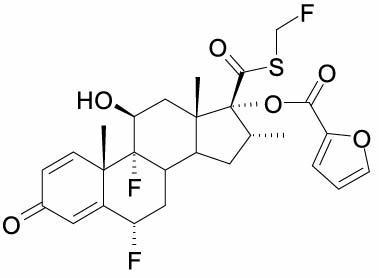
    Fluticasone furoate, a synthetic trifluorinated corticosteroid, has the chemical name (6α,11β,16α,17α)-6,9-difluoro-17-{[(fluoro-methyl)thio]carbonyl}-11-hydroxy-16-methyl-3-oxoandrosta-1,4-dien-17-yl 2-furancarboxylate and the following chemical structure:
    Fluticasone furoate chemical structure
    Fluticasone furoate is a white powder with a molecular weight of 538.6, and the empirical formula is C
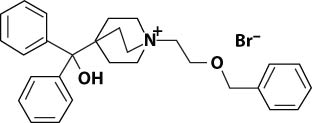
    Umeclidinium bromide has the chemical name 1-[2-(benzyloxy)ethyl]-4-(hydroxydiphenylmethyl)-1-azoniabicyclo[2.2.2]octane bromide and the following chemical structure:
    Umeclidinium chemical structure
    Umeclidinium bromide is a white powder with a molecular weight of 508.5, and the empirical formula is C
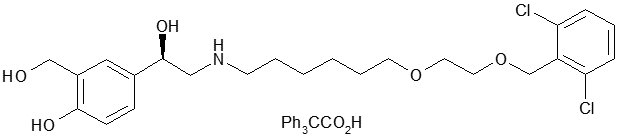
    Vilanterol trifenatate has the chemical name triphenylacetic acid-4-{(1
    Vilanterol chemical structure
    Vilanterol trifenatate is a white powder with a molecular weight of 774.8, and the empirical formula is C
    TRELEGY ELLIPTA is a light grey and beige plastic inhaler containing 2 foil blister strips. Each blister on one strip contains a white powder blend of micronized fluticasone furoate (100 or 200 mcg) and lactose monohydrate (12.4 or 12.3 mg) and each blister on the other strip contains a white powder blend of micronized umeclidinium bromide (74.2 mcg equivalent to 62.5 mcg of umeclidinium), micronized vilanterol trifenatate (40 mcg equivalent to 25 mcg of vilanterol), magnesium stearate (75 mcg), and lactose monohydrate (12.3 mg). The lactose monohydrate contains milk proteins. After the inhaler is activated, the powder within both blisters is exposed and ready for dispersion into the airstream created by the patient inhaling through the mouthpiece.
    Under standardized in vitro test conditions, TRELEGY ELLIPTA delivers 92 or 184 mcg of fluticasone furoate, 55 mcg of umeclidinium, and 22 mcg of vilanterol per dose when tested at a flow rate of 60 L/min for 4 seconds. At flow rates of 30, 60, and 90 L/min for 4 seconds under in vitro test conditions, TRELEGY ELLIPTA delivers ≥90% of the target dose for each component.
    In adult subjects with very severe COPD (FEV
    In adult subjects with severe asthma, mean peak inspiratory flow through the ELLIPTA inhaler was 96.6 L/min (range: 72.4 to 124.6 L/min).
    The actual amount of drug delivered to the lung will depend on patient factors, such as inspiratory flow profile.
    6HOW SUPPLIED/STORAGE AND HANDLING
    TRELEGY ELLIPTA is supplied as a disposable light grey and beige plastic inhaler containing 2 foil strips, each with 30 blisters (or 14 blisters for the institutional pack).
    One strip contains fluticasone furoate (100 or 200 mcg per blister), and the other strip contains a blend of umeclidinium and vilanterol (62.5 and 25 mcg per blister, respectively).
    A blister from each strip is used to create 1 dose. The inhaler is packaged within a moisture-protective foil tray with a desiccant and a peelable lid in the following packs:
    NDC 0173-0887-10     TRELEGY ELLIPTA 100/62.5/25 mcg     30 inhalations (60 blisters)
    NDC 0173-0887-14     TRELEGY ELLIPTA 100/62.5/25 mcg     14 inhalations (28 blisters), institutional pack
    NDC 0173-0893-10     TRELEGY ELLIPTA 200/62.5/25 mcg     30 inhalations (60 blisters)
    NDC 0173-0893-14     TRELEGY ELLIPTA 200/62.5/25 mcg     14 inhalations (28 blisters), institutional pack
    Store at room temperature between 68°F and 77°F (20°C and 25°C); excursions permitted from 59°F to 86°F (15°C to 30°C) [See USP Controlled Room Temperature]. Store in a dry place away from direct heat or sunlight. Keep out of reach of children.
    TRELEGY ELLIPTA should be stored inside the unopened moisture-protective foil tray and only removed from the tray immediately before initial use. Discard TRELEGY ELLIPTA 6 weeks after opening the foil tray or when the counter reads “0” (after all blisters have been used), whichever comes first. The inhaler is not reusable. Do not attempt to take the inhaler apart.
    7PATIENT COUNSELING INFORMATION
    Advise the patient to read the FDA-approved patient labeling (Patient Information and Instructions for Use).
    Serious Asthma-Related Events
    Inform patients with asthma that LABA when used alone increases the risk of asthma-related hospitalization or asthma-related death. Available data show that when ICS and LABA are used together, such as with TRELEGY ELLIPTA, there is not a significant increase in the risk of these events.
    Not for Acute Symptoms
    Inform patients that TRELEGY ELLIPTA is not meant to relieve acute symptoms of COPD or asthma and extra doses should not be used for that purpose. Advise patients to treat acute symptoms with an inhaled, short-acting beta
    Instruct patients to seek medical attention immediately if they experience any of the following:
    • Decreasing effectiveness of inhaled, short-acting beta
    • Need for more inhalations than usual of inhaled, short-acting beta
    • Significant decrease in lung function as outlined by the physician
    Tell patients they should not stop therapy with TRELEGY ELLIPTA without physician/provider guidance since symptoms may recur after discontinuation.
    Do Not Use Additional Long-acting Beta
    Instruct patients not to use other LABA for COPD and asthma.
    Oropharyngeal Candidiasis
    Inform patients that localized infections with
    Pneumonia
    Patients with COPD have a higher risk of pneumonia; instruct them to contact their healthcare providers if they develop symptoms of pneumonia.
    Immunosuppression and Risk of Infections
    Warn patients who are on immunosuppressant doses of corticosteroids to avoid exposure to chickenpox or measles and, if exposed, to consult their physicians without delay. Inform patients of potential worsening of existing tuberculosis; fungal, bacterial, viral, or parasitic infections; or ocular herpes simplex.
    Hypercorticism and Adrenal Suppression
    Advise patients that TRELEGY ELLIPTA may cause systemic corticosteroid effects of hypercorticism and adrenal suppression. Additionally, inform patients that deaths due to adrenal insufficiency have occurred during and after transfer from systemic corticosteroids. Patients should taper slowly from systemic corticosteroids if transferring to TRELEGY ELLIPTA.
    Paradoxical Bronchospasm
    As with other inhaled medicines, TRELEGY ELLIPTA can cause paradoxical bronchospasm. If paradoxical bronchospasm occurs, instruct patients to discontinue TRELEGY ELLIPTA and contact their healthcare provider right away.
    Hypersensitivity Reactions, including Anaphylaxis
    Advise patients that hypersensitivity reactions (e.g., anaphylaxis, angioedema, rash, urticaria) may occur after administration of TRELEGY ELLIPTA. Instruct patients to discontinue TRELEGY ELLIPTA if such reactions occur. There have been reports of anaphylactic reactions in patients with severe milk protein allergy after inhalation of other powder medications containing lactose; therefore, patients with severe milk protein allergy should not use TRELEGY ELLIPTA.
    Reduction in Bone Mineral Density
    Advise patients who are at an increased risk for decreased BMD that the use of corticosteroids may pose an additional risk.
    Glaucoma and Cataracts
    Advise patients that long-term use of ICS may increase the risk of some eye problems (cataracts or glaucoma); consider regular eye examinations.
    Instruct patients to be alert for signs and symptoms of acute narrow-angle glaucoma (e.g., eye pain or discomfort, blurred vision, visual halos or colored images in association with red eyes from conjunctival congestion and corneal edema). Instruct patients to consult a physician immediately if any of these signs or symptoms develop.
    Worsening of Urinary Retention
    Instruct patients to be alert for signs and symptoms of urinary retention (e.g., difficulty passing urine, painful urination). Instruct patients to consult a physician immediately if any of these signs or symptoms develop.
    Risks Associated with Beta-agonist Therapy
    Inform patients of adverse effects associated with beta
    Trademarks are owned by or licensed to the GSK group of companies.
    GlaxoSmithKline
    Durham, NC 27701
    ©2023 GSK group of companies or its licensor.
    TRL:9PI