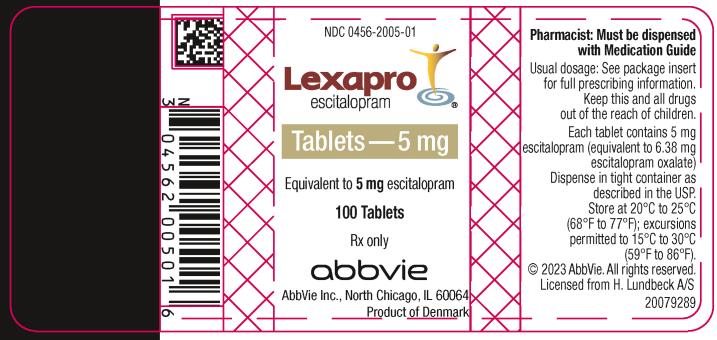
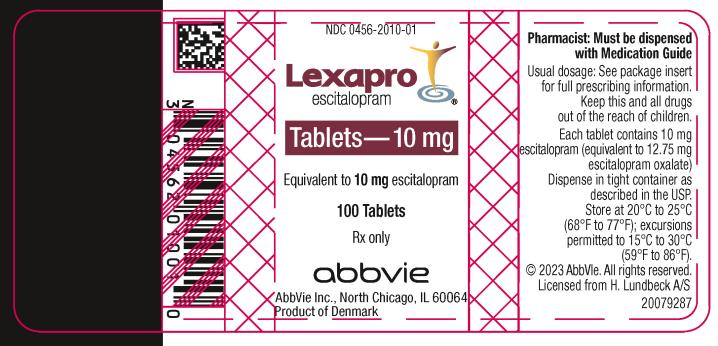
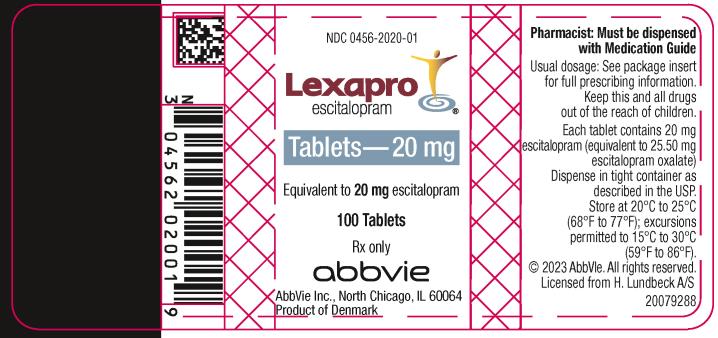
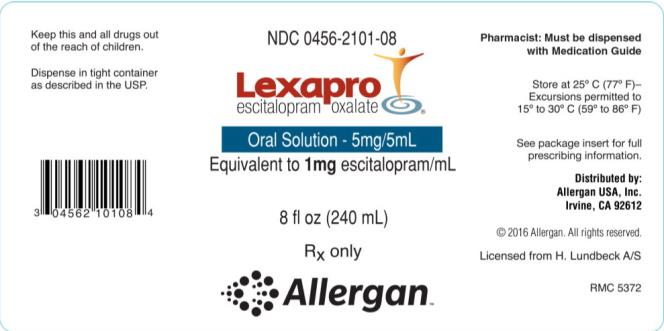
Lexapro
What is Lexapro (Escitalopram)?
Approved To Treat


Related Clinical Trials
Summary: This study will assess the efficacy of two active treatments with TEA and a chemical neuromodulator (escitalopram aka Lexapro) versus a sham comparator or control group on abdominal pain.
Summary: The effectiveness and efficacy of the combination of pharmacotherapy with the two new recovery-oriented programs, RECOVERYTRSGR for patients with treatment- resistant schizophrenia and RECOVERYTRSBDGR for patients with treatment- resistant bipolar disorder.
Summary: Schizophrenia, bipolar and major depressive disorders collectively affect over 10 million people across the EU and are associated with annual healthcare and societal costs in excess of 100 billion Euros. When diagnosed with one of these disorders, patients are prescribed psychotropic medication such as antidepressants, mood stabilisers or antipsychotics. It is unknown whether this first-line treat...
Related Latest Advances
Brand Information
- taking MAOIs with Lexapro or within 14 days of stopping treatment with Lexapro because of an increased risk of serotonin syndrome. The use of Lexapro within 14 days of stopping an MAOI intended to treat psychiatric disorders is also contraindicated
- taking pimozide
- with a hypersensitivity to escitalopram or citalopram or any of the inactive ingredients in Lexapro.
- Suicidal thoughts and behaviors in adolescents and young adults
- Serotonin syndrome
- Discontinuation syndrome
- Seizures
- Activation of mania or hypomania
- Hyponatremia
- Increased Risk of Bleeding
- Interference with Cognitive and Motor Performance
- Angle-closure glaucoma
- Use in Patients with Concomitant Illness
- Sexual Dysfunction
Adverse reactions information for Lexapro was collected from 715 patients with major depressive disorder who were exposed to escitalopram and from 592 patients who were exposed to placebo in double-blind, placebo-controlled trials. An additional 284 patients with major depressive disorder were newly exposed to escitalopram in open-label trials. The adverse reaction information for Lexapro in patients with GAD was collected from 429 patients exposed to escitalopram and from 427 patients exposed to placebo in double-blind, placebo-controlled trials.
Among the 715 depressed patients who received Lexapro in placebo-controlled trials, 6% discontinued treatment due to an adverse event, as compared to 2% of 592 patients receiving placebo. In two fixed-dose studies, the rate of discontinuation for adverse reactions in patients receiving 10 mg/day Lexapro was not significantly different from the rate of discontinuation for adverse reactions in patients receiving placebo. The rate of discontinuation for adverse reactions in patients assigned to a fixed dose of 20 mg/day Lexapro was 10%, which was significantly different from the rate of discontinuation for adverse reactions in patients receiving 10 mg/day Lexapro (4%) and placebo (3%). Adverse reactions that were associated with the discontinuation of at least 1% of patients treated with Lexapro, and for which the rate was at least twice that of placebo, were nausea (2%) and ejaculation disorder (2% of male patients).
Among the 429 GAD patients who received Lexapro 10 to 20 mg/day in placebo-controlled trials, 8% discontinued treatment due to an adverse event, as compared to 4% of 427 patients receiving placebo. Adverse reactions that were associated with the discontinuation of at least 1% of patients treated with Lexapro, and for which the rate was at least twice the placebo rate, were nausea (2%), insomnia (1%), and fatigue (1%).
2Denominator used was for males only (N=225 Lexapro; N=188 placebo).
3Denominator used was for females only (N=490 Lexapro; N=404 placebo).
2Denominator used was for males only (N=182 Lexapro; N=195 placebo).
3Denominator used was for females only (N=247 Lexapro; N=232 placebo).
The potential dose dependency of common adverse reactions (defined as an incidence rate of ≥5% in either the 10 mg or 20 mg Lexapro groups) was examined on the basis of the combined incidence of adverse reactions in two fixed-dose trials. The overall incidence rates of adverse reactions in 10 mg Lexapro-treated patients (66%) was similar to that of the placebo-treated patients (61%), while the incidence rate in 20 mg/day Lexapro-treated patients was greater (86%). Table 4 shows common adverse reactions that occurred in the 20 mg/day Lexapro group with an incidence that was approximately twice that of the 10 mg/day Lexapro group and approximately twice that of the placebo group.
Although changes in sexual desire, sexual performance, and sexual satisfaction often occur as manifestations of a psychiatric disorder, they may also be a consequence of pharmacologic treatment. In particular, some evidence suggests that SSRIs can cause such untoward sexual experiences.
Lexapro and placebo groups were compared with respect to (1) mean change from baseline in vital signs (pulse, systolic blood pressure, and diastolic blood pressure) and (2) the incidence of patients meeting criteria for potentially clinically significant changes from baseline in these variables. These analyses did not reveal any clinically important changes in vital signs associated with Lexapro treatment. In addition, a comparison of supine and standing vital sign measures in subjects receiving Lexapro indicated that Lexapro treatment is not associated with orthostatic changes.
Patients treated with Lexapro in controlled trials did not differ from placebo-treated patients with regard to clinically important change in body weight.
Lexapro and placebo groups were compared with respect to (1) mean change from baseline in various serum chemistry, hematology, and urinalysis variables, and (2) the incidence of patients meeting criteria for potentially clinically significant changes from baseline in these variables. These analyses revealed no clinically important changes in laboratory test parameters associated with Lexapro treatment.
Electrocardiograms from Lexapro (N=625) and placebo (N=527) groups were compared with respect to outliers defined as subjects with QTc changes over 60 msec from baseline or absolute values over 500 msec post-dose, and subjects with heart rate increases to over 100 bpm or decreases to less than 50 bpm with a 25% change from baseline (tachycardic or bradycardic outliers, respectively). None of the patients in the Lexapro group had a QTcF interval >500 msec or a prolongation >60 msec compared to 0.2% of patients in the placebo group. The incidence of tachycardic outliers was 0.2% in the Lexapro and the placebo group. The incidence of bradycardic outliers was 0.5% in the Lexapro group and 0.2% in the placebo group.
Following is a list of treatment-emergent adverse reactions, as defined in the introduction to the ADVERSE REACTIONS section, reported by the 1428 patients treated with Lexapro for periods of up to one year in double-blind or open-label clinical trials during its premarketing evaluation. The listing does not include those reactions already listed in Tables 2 & 3, those reactions for which a drug cause was remote and at a rate less than 1% or lower than placebo, those reactions which were so general as to be uninformative, and those reactions reported only once which did not have a substantial probability of being acutely life threatening. Reactions are categorized by body system. Reactions of major clinical importance are described in the Warnings and Precautions section (5).
The following adverse reactions have been identified during post-approval use of Lexapro. Because these reactions are reported voluntarily from a population of uncertain size, it is not always possible to reliably estimate their frequency or establish a causal relationship to drug exposure.
General Disorders and Administration Site Conditions: abnormal gait, asthenia, edema, fall, feeling abnormal, malaise.
- Seizures, which may be delayed, and altered mental status including coma.
- Cardiovascular toxicity, which may be delayed, including QRS and QTc interval prolongation, wide complex tachyarrhythmias, and torsade de pointes. Hypertension most commonly seen, but rarely can see hypotension alone or with co-ingestants including alcohol.
- Serotonin syndrome (patients with a multiple drug overdosage with other proserotonergic drugs may have a higher risk).
![The following structural formula for Lexapro® (escitalopram oxalate) is an orally administered selective serotonin reuptake inhibitor (SSRI). Escitalopram is the pure S-enantiomer (single isomer) of the racemic bicyclic phthalane derivative citalopram. Escitalopram oxalate is designated S-(+)-1-[3-(dimethyl-amino)propyl]-1-(p-fluorophenyl)-5-phthalancarbonitrile oxalate.](https://dailymed.nlm.nih.gov/dailymed/image.cfm?name=lexapro-01.jpg&setid=13bb8267-1cab-43e5-acae-55a4d957630a)
Caution patients about the risk of serotonin syndrome, particularly with the with the concomitant use of Lexapro with other serotonergic drugs including triptans, tricyclic antidepressants, opioids, lithium, tryptophan, buspirone, amphetamines, and St. John’s Wort, and with drugs that impair metabolism of serotonin (in particular, MAOIs, both those intended to treat psychiatric disorders and also others, such as linezolid). Instruct patients to contact their health care provider or report to the emergency room if they experience signs or symptoms of serotonin syndrome [see Warnings and Precautions (5.2), Drug Interactions (7)].
Advise patients and their caregivers to observe for signs of activation of mania/hypomania and instruct them to report such symptoms to the healthcare provider [see Warnings and Precautions (5.5)].
Advise patients that taking Lexapro can cause mild pupillary dilation, which in susceptible individuals, can lead to an episode of angle closure glaucoma. Pre-existing glaucoma is almost always open-angle glaucoma because angle closure glaucoma, when diagnosed, can be treated definitively with iridectomy. Open-angle glaucoma is not a risk factor for angle closure glaucoma. Patients may wish to be examined to determine whether they are susceptible to angle closure, and have a prophylactic procedure (e.g., iridectomy), if they are susceptible [see Warnings and Precautions (5.9)].
Advise patients that use of Lexapro may cause symptoms of sexual dysfunction in both male and female patients. Inform patients that they should discuss any changes in sexual function and potential management strategies with their healthcare provider [see Warnings and Precautions (5.11)].
Since escitalopram is the active isomer of racemic citalopram (Celexa), the two agents should not be coadministered. Patients should be advised to inform their physician if they are taking, or plan to take, any prescription or over-the-counter drugs, as there is a potential for interactions.
Because psychoactive drugs may impair judgment, thinking, or motor skills, patients should be cautioned about operating hazardous machinery, including automobiles, until they are reasonably certain that Lexapro therapy does not affect their ability to engage in such activities.
Patients should be told that, although Lexapro has not been shown in experiments with normal subjects to increase the mental and motor skill impairments caused by alcohol, the concomitant use of Lexapro and alcohol in depressed patients is not advised.
Advise pregnant women to notify their healthcare providers if they become pregnant or intend to become pregnant during treatment with LEXAPRO.
Advise breastfeeding women using LEXAPRO to monitor infants for excess sedation, restlessness, agitation, poor feeding and poor weight gain and to seek medical care if they notice these signs [see Use in Specific Populations (8.2)].