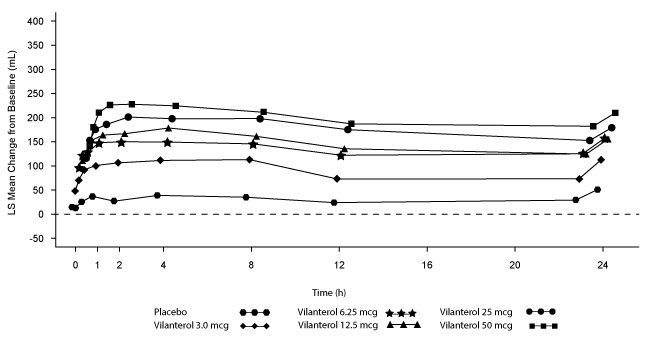
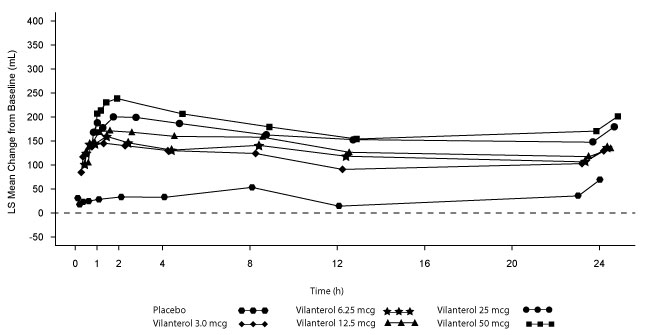
Lung Function
The clinical development program for ANORO ELLIPTA included two 6-month, randomized, double-blind, placebo-controlled, parallel-group trials; two 6-month active-controlled trials; and two 12-week crossover trials in subjects with COPD designed to evaluate the efficacy of ANORO ELLIPTA on lung function. The 6-month trials treated 4,733 subjects that had a clinical diagnosis of COPD, were 40 years of age or older, had a history of smoking ≥10 pack-years, had a post-albuterol FEV
Trial 1 (NCT01313650) evaluated ANORO ELLIPTA (umeclidinium/vilanterol 62.5/25 mcg), umeclidinium 62.5 mcg, vilanterol 25 mcg, and placebo. The primary endpoint was change from baseline in trough (predose) FEV
Trial 2 (NCT01313637) had a similar study design as Trial 1 but evaluated umeclidinium/vilanterol 125/25 mcg, umeclidinium 125 mcg, vilanterol 25 mcg, and placebo. Results for umeclidinium/vilanterol 125/25 mcg in Trial 2 were similar to those observed for ANORO ELLIPTA in Trial 1.
Results from the 2 active-controlled trials and the two 12-week trials provided additional support for the efficacy of ANORO ELLIPTA in terms of change from baseline in trough FEV
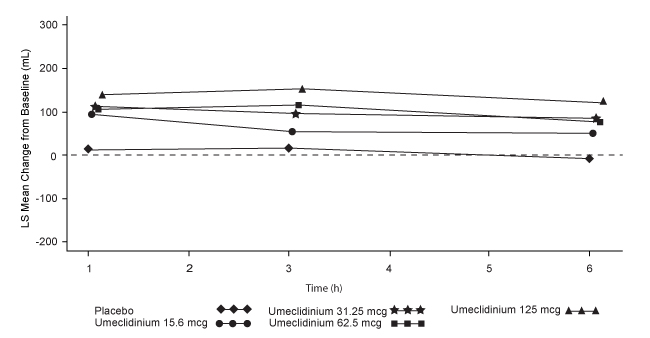
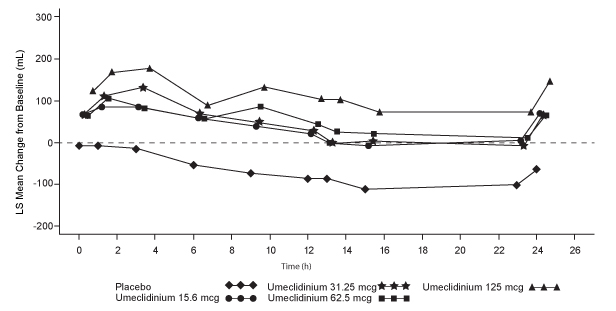
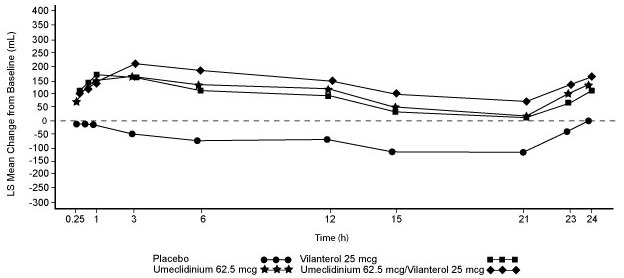
Serial spirometric evaluations throughout the 24-hour dosing interval were performed in a subset of subjects (n = 197) at Days 1, 84, and 168 in Trial 1. Results from Trial 1 at Day 1 and Day 168 are shown in Figure 5.
Figure 5. Least Squares (LS) Mean Change from Baseline in FEV
Day 1
Day 168
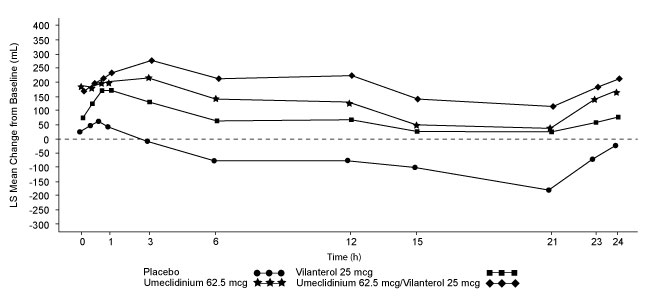
The peak FEV
Exacerbations
In Trial 6 (NCT02164513), a total of 10,355 subjects with COPD with a history of 1 or more moderate or severe exacerbations in the prior 12 months were randomized (1:2:2) to receive ANORO ELLIPTA (n = 2,070), fluticasone furoate/umeclidinium/vilanterol 100/62.5/25 mcg (n = 4,151), or fluticasone furoate/vilanterol 100/25 mcg (n = 4,134) administered once daily in a 12-month trial. The population demographics across all treatments were: mean age of 65 years, 77% white, 66% male, and an average smoking history of 46.6 pack-years, with 35% identified as current smokers. At trial entry, the most common COPD medications were ICS + anticholinergic + LABA (34%), ICS + LABA (26%), anticholinergic + LABA (8%), and anticholinergic (7%). The mean postbronchodilator percent predicted FEV
The primary endpoint was annual rate of on-treatment moderate and severe exacerbations in subjects treated with fluticasone furoate/umeclidinium/vilanterol compared with the fixed-dose combinations of fluticasone furoate/vilanterol and ANORO ELLIPTA. Exacerbations were defined as worsening of 2 or more major symptoms (dyspnea, sputum volume, and sputum purulence) or worsening of any 1 major symptom together with any 1 of the following minor symptoms: sore throat, colds (nasal discharge and/or nasal congestion), fever without other cause, and increased cough or wheeze for at least 2 consecutive days. Exacerbations were considered to be of moderate severity if treatment with systemic corticosteroids and/or antibiotics was required and were considered to be severe if resulted in hospitalization or death.
Contribution of Umeclidinium on COPD Exacerbations: Evidence of efficacy for ANORO ELLIPTA on COPD exacerbations was established by the efficacy of the umeclidinium component of fluticasone furoate/umeclidinium/vilanterol in Trial 6. Treatment with fluticasone furoate/umeclidinium/vilanterol statistically significantly reduced the on-treatment annual rate of moderate/severe exacerbations by 15% compared with fluticasone furoate/vilanterol (Table 3). A reduction in risk of on-treatment moderate/severe exacerbation (as measured by time to first) was also observed for the same comparison. The benefit of umeclidinium on exacerbations is not expected to diminish when combined with vilanterol in ANORO ELLIPTA.
ANORO ELLIPTA and COPD Exacerbations: In Trial 6, the primary efficacy analysis of the rate of moderate/severe exacerbations, treatment with fluticasone furoate/umeclidinium/vilanterol statistically significantly reduced the on-treatment annual rate of moderate/severe exacerbations by 25% compared with ANORO ELLIPTA (Table 3).