Generic Name

OnabotulinumtoxinA

Brand Names
Botox, Dysport, Daxxify, Jeuveau, Xeomin
FDA approval date: December 15, 1989
Classification: Neuromuscular Blocker
Form: Injection, Powder

What is Botox (OnabotulinumtoxinA)?

DYSPORT is an acetylcholine release inhibitor and a neuromuscular blocking agent indicated for: The treatment of cervical dystonia in adults.
Save this treatment for later
Sign Up
Not sure about your diagnosis?
Check Your Symptoms

Related Clinical Trials

Evaluation of the Analgesic Effect of Intramyometrial Botulinum Toxin Injection Via Hysteroscopy in Severe Primary Dysmenorrhea: a Prospective, Multicenter, Randomized, Double-blind, Placebo-controlled Study

Summary: The objective of the study is to evaluate the global impression of improvement at 3 months following intramyometrial botulinum toxin injections via hysteroscopy in women with severe primary dysmenorrhea who have failed first-line medical treatment, compared to intramyometrial placebo injections.

Intradetrusor Onabotulinumtoxin A (Botox) at the Time of Transurethral Resection of the Prostate or Transurethral Waterjet Ablation of the Prostate for Mixed Lower Urinary Tract Symptoms

Summary: Patients with longstanding obstructive lower urinary tract symptoms (LUTS) due to benign prostatic hypertrophy (BPH) can also develop symptoms of overactive bladder syndrome (OAB). Transurethral resection of the prostate (TURP) and Transurethral Waterjet Ablation of the Prostate (Aquablation) are amongst the gold standard surgical treatments for BPH. However, in the immediate post-operative period...

A Phase 3, Randomized, Double-blind, Placebo-controlled, Multicenter, Clinical Trial With Extension Period to Evaluate the Efficacy and Safety of Xeomin® Injections for the Prevention of Chronic Migraine

Summary: In this clinical trial, participants with chronic migraine will receive injections with Xeomin or Placebo into muscles of the head and neck. The purpose is to measure the change in monthly migraine days with Xeomin injections compared to Placebo injections. Trial details include: * Trial duration: 52 to 55 weeks; * Screening period: 4 to 5 weeks; * Treatment duration: 4 treatments, each about 12 w...

Brand Information

    BOTOX (onabotulinumtoxinA)
    WARNING: DISTANT SPREAD OF TOXIN EFFECT
    Postmarketing reports indicate that the effects of BOTOX and all botulinum toxin products may spread from the area of injection to produce symptoms consistent with botulinum toxin effects. These may include asthenia, generalized muscle weakness, diplopia, ptosis, dysphagia, dysphonia, dysarthria, urinary incontinence and breathing difficulties. These symptoms have been reported hours to weeks after injection. Swallowing and breathing difficulties can be life threatening and there have been reports of death. The risk of symptoms is probably greatest in children treated for spasticity but symptoms can also occur in adults treated for spasticity and other conditions, particularly in those patients who have an underlying condition that would predispose them to these symptoms. In unapproved uses and in approved indications, cases of spread of effect have been reported at doses comparable to those used to treat cervical dystonia and spasticity and at lower doses[see Warnings and Precautions (5.1)].
    1DOSAGE FORMS AND STRENGTHS
    For Injection: sterile 100 Units or 200 Units vacuum-dried powder in single-dose vials for reconstitution only with sterile, preservative-free 0.9% Sodium Chloride Injection, USP prior to injection.
    2CONTRAINDICATIONS
    BOTOX is contraindicated:
    • In patients who are hypersensitive to any botulinum toxin product or to any of the components in the formulation
    • In the presence of infection at the proposed injection site(s).
    • For intradetrusor injection in patients with a urinary tract infection; or in patients with urinary retention or post-void residual (PVR) urine volume >200 mL who are not routinely performing clean intermittent self-catheterization (CIC)
    3ADVERSE REACTIONS
    The following adverse reactions to BOTOX (onabotulinumtoxinA) for injection are discussed in greater detail in other sections of the labeling:
    • Spread of Toxin Effects
    • Serious Adverse Reactions with Unapproved Use
    • Hypersensitivity Reactions 
    • Increased Risk of Clinically Significant Effects with Pre-Existing Neuromuscular Disorders
    • Dysphagia and Breathing Difficulties
    • Pulmonary Effects of BOTOX in Patients with Compromised Respiratory Status Treated for Spasticity or for Detrusor Overactivity Associated with a Neurologic Condition
    • Corneal Exposure and Ulceration in Patients Treated with BOTOX for Blepharospasm
    • Retrobulbar Hemorrhages in Patients Treated with BOTOX for Strabismus
    • Bronchitis and Upper Respiratory Tract Infections in Patients Treated for Spasticity
    • Autonomic Dysreflexia in Patients Treated for Detrusor Overactivity Associated with a Neurologic Condition
    • Urinary Tract Infections in Patients with Overactive Bladder
    • Urinary Retention in Patients Treated for Bladder Dysfunction
    3.1Clinical Trials Experience
    Because clinical trials are conducted under widely varying conditions, the adverse reaction rates observed in the clinical trials of a drug cannot be directly compared to rates in the clinical trials of another drug and may not reflect the rates observed in clinical practice.
    BOTOX and BOTOX Cosmetic contain the same active ingredient in the same formulation, but with different labeled Indications and Usage. Therefore, adverse reactions observed with the use of BOTOX Cosmetic also have the potential to be observed with the use of BOTOX.
    In general, adverse reactions occur within the first week following injection of BOTOX and, while generally transient, may have a duration of several months or longer. Localized pain, infection, inflammation, tenderness, swelling, erythema, and/or bleeding/bruising may be associated with the injection. Symptoms associated with flu-like symptoms (e.g., nausea, fever, myalgia) have been reported after treatment. Needle-related pain and/or anxiety may result in vasovagal responses (including syncope, hypotension), which may require appropriate medical therapy.
    Local weakness of the injected muscle(s) represents the expected pharmacological action of botulinum toxin. However, weakness of nearby muscles may also occur due to spread of toxin
    Overactive Bladder
    Table 14 presents the most frequently reported adverse reactions in double-blind, placebo-controlled clinical trials for overactive bladder occurring within 12 weeks of the first BOTOX treatment.
    *Elevated PVR not requiring catheterization. Catheterization was required for PVR ≥350 mL regardless of symptoms, and for PVR ≥200 mL to <350 mL with symptoms (e.g., voiding difficulty). 
    A higher incidence of urinary tract infection was observed in patients with diabetes mellitus treated with BOTOX 100 Units and placebo than in patients without diabetes, as shown in Table 15. 
    The incidence of UTI increased in patients who experienced a maximum post-void residual (PVR) urine volume ≥200 mL following BOTOX injection compared to those with a maximum PVR <200 mL following BOTOX injection, 44% versus 23%, respectively.
    No change was observed in the overall safety profile with repeat dosing during an open-label, uncontrolled extension trial.
    Adult Detrusor Overactivity associated with a Neurologic Condition
    Table 16 presents the most frequently reported adverse reactions in the double-blind, placebo-controlled studies within 12 weeks of injection for patients with detrusor overactivity associated with a neurologic condition treated with BOTOX 200 Units.
    The following adverse reactions with BOTOX 200 Units were reported at any time following initial injection and prior to re-injection or study exit (median duration of exposure was 44 weeks): urinary tract infections (49%), urinary retention (17%), constipation (4%), muscular weakness (4%), dysuria (4%), fall (3%), gait disturbance (3%), and muscle spasm (2%).
    In the Multiple Sclerosis (MS) patients enrolled in the double-blind, placebo-controlled trials, the MS exacerbation annualized rate (i.e., number of MS exacerbation events per patient-year) was 0.23 for BOTOX and 0.20 for placebo.
    No change was observed in the overall safety profile with repeat dosing.
    Table 17 presents the most frequently reported adverse reactions in a placebo-controlled, double-blind post-approval 52 week study with BOTOX 100 Units (Study NDO-3) conducted in MS patients with urinary incontinence due to detrusor overactivity associated with a neurologic condition. These patients were not adequately managed with at least one anticholinergic agent and not catheterized at baseline. The table below presents the most frequently reported adverse reactions within 12 weeks of injection.
    * Elevated PVR  not requiring catheterization. Catheterization was required for PVR ≥350 mL regardless of symptoms, and for PVR ≥200 mL to <350 mL with symptoms (e.g., voiding difficulty).
    The following adverse events with BOTOX 100 Units were reported at any time following initial injection and prior to re-injection or study exit (median duration of exposure was 51 weeks): urinary tract infections (39%), bacteriuria (18%), urinary retention (17%), residual urine volume* (17%), dysuria (9%), and hematuria (5%).
    No difference in the MS exacerbation annualized rate (i.e., number of MS exacerbating events per patient-year) was observed (BOTOX =0, placebo =0.07).
    Pediatric Detrusor Overactivity associated with a Neurologic Condition
    Table 18 presents the most frequently reported adverse reactions in Study 191622-120, a double-blind, parallel-group study conducted in pediatric patients with detrusor overactivity associated with a neurologic condition. These patients were not adequately managed with at least one anticholinergic agent and were using clean intermittent catheterization at baseline 
    No change was observed in the overall safety profile with repeat dosing. 
    The most common adverse reactions in patients who received BOTOX 6 U/kg and less than a total dose of 200 U in Study 191622-120 were urinary tract infection (UTI), bacteriuria and hematuria.
    Chronic Migraine
    In double-blind, placebo-controlled chronic migraine efficacy trials (Study 1 and Study 2), the discontinuation rate was 12% in the BOTOX treated group and 10% in the placebo-treated group. Discontinuations due to an adverse event were 4% in the BOTOX group and 1% in the placebo group. The most frequent adverse events leading to discontinuation in the BOTOX group were neck pain, headache, worsening migraine, muscular weakness and eyelid ptosis.
    The most frequently reported adverse reactions following injection of BOTOX for chronic migraine appear in Table 19.
    Other adverse reactions that occurred more frequently in the BOTOX group compared to the placebo group at a frequency less than 1% and potentially BOTOX related include: vertigo, dry eye, eyelid edema, dysphagia, eye infection, and jaw pain. Severe worsening of migraine requiring hospitalization occurred in approximately 1% of BOTOX treated patients in Study 1 and Study 2, usually within the first week after treatment, compared to 0.3% of placebo-treated patients.
    Adult Upper Limb Spasticity
    The most frequently reported adverse reactions following injection of BOTOX for adult upper limb spasticity appear in Table 20.
    Twenty-two adult patients, enrolled in double-blind placebo controlled studies, received 400 Units or higher of BOTOX for treatment of upper limb spasticity. In addition, 44 adults received 400 Units of BOTOX or higher for four consecutive treatments over approximately one year for treatment of upper limb spasticity. The type and frequency of adverse reactions observed in patients treated with 400 Units of BOTOX were similar to those reported in patients treated for upper limb spasticity with 360 Units of BOTOX.
    Adult Lower Limb Spasticity
    The most frequently reported adverse reactions following injection of BOTOX for adult lower limb spasticity appear in Table 21. Two hundred thirty-one patients enrolled in a double-blind placebo controlled study (Study 7) received 300 Units to 400 Units of BOTOX, and were compared with 233 patients who received placebo. Patients were followed for an average of 91 days after injection.
    Pediatric Upper Limb Spasticity
    The most frequently reported adverse reactions following injection of BOTOX in pediatric patients 2 to 17 years of age with upper limb spasticity appear in Table 22. In a double-blind, placebo-controlled trial (Study 1), 78 patients were treated with 3 Units/kg of BOTOX, and 77 patients received 6 Units/kg to a maximum dose of 200 Units of BOTOX, and were compared to 79 patients who received placebo
    *Includes upper respiratory tract infection and viral upper respiratory tract infection
    **Includes seizure and partial seizure
    Pediatric Lower Limb Spasticity
    The most frequently reported adverse reactions following injection of BOTOX in pediatric patients 2 to 17 years of age with lower limb spasticity appear in Table 23. In a double-blind, placebo-controlled trial (Study 2), 126 patients were treated with 4 Units/kg of BOTOX, and 128 patients received 8 Units/kg to a maximum dose of 300 Units of BOTOX, and were compared to 128 patients who received placebo
    Cervical Dystonia
    In cervical dystonia patients evaluated for safety in double-blind and open-label studies following injection of BOTOX, the most frequently reported adverse reactions were dysphagia (19%), upper respiratory infection (12%), neck pain (11%), and headache (11%).
    Other events reported in 2-10% of patients in any one study in decreasing order of incidence include: increased cough, flu syndrome, back pain, rhinitis, dizziness, hypertonia, soreness at injection site, asthenia, oral dryness, speech disorder, fever, nausea, and drowsiness. Stiffness, numbness, diplopia, ptosis, and dyspnea have been reported.
    Dysphagia and symptomatic general weakness may be attributable to an extension of the pharmacology of BOTOX resulting from the spread of the toxin outside the injected muscles
    The most common severe adverse reaction associated with the use of BOTOX injection in patients with cervical dystonia is dysphagia with about 20% of these cases also reporting dyspnea
    Additionally, reports in the literature include a case of a female patient who developed brachial plexopathy two days after injection of 120 Units of BOTOX for the treatment of cervical dystonia, and reports of dysphonia in patients who have been treated for cervical dystonia.
    Primary Axillary Hyperhidrosis
    The most frequently reported adverse reactions (3-10% of adult patients) following injection of BOTOX in double-blind studies included injection site pain and hemorrhage, non-axillary sweating, infection, pharyngitis, flu syndrome, headache, fever, neck or back pain, pruritus, and anxiety.
    The data reflect 346 patients exposed to BOTOX 50 Units and 110 patients exposed to BOTOX 75 Units in each axilla.
    Blepharospasm
    In a study of blepharospasm patients who received an average dose per eye of 33 Units (injected at 3 to 5 sites) of the currently manufactured BOTOX, the most frequently reported adverse reactions were ptosis (21%), superficial punctate keratitis (6%), and eye dryness (6%).
    Other events reported in prior clinical studies in decreasing order of incidence include: irritation, tearing, lagophthalmos, photophobia, ectropion, keratitis, diplopia, entropion, diffuse skin rash, and local swelling of the eyelid skin lasting for several days following eyelid injection.
    In two cases of VII nerve disorder, reduced blinking from BOTOX injection of the orbicularis muscle led to serious corneal exposure, persistent epithelial defect, corneal ulceration and a case of corneal perforation. Focal facial paralysis, syncope, and exacerbation of myasthenia gravis have also been reported after treatment of blepharospasm.
    Strabismus
    Extraocular muscles adjacent to the injection site can be affected, causing vertical deviation, especially with higher doses of BOTOX. The incidence rates of these adverse effects in 2058 adults who received a total of 3650 injections for horizontal strabismus was 17%.
    The incidence of ptosis has been reported to be dependent on the location of the injected muscles, 1% after inferior rectus injections, 16% after horizontal rectus injections and 38% after superior rectus injections.
    In a series of 5587 injections, retrobulbar hemorrhage occurred in 0.3% of cases.
    3.2Immunogenicity
    As with all therapeutic proteins, there is a potential for immunogenicity. The detection of antibody formation is highly dependent on the sensitivity and specificity of the assay. Additionally, the observed incidence of antibody (including neutralizing antibody) positivity in an assay may be influenced by several factors including assay methodology, sample handling, timing of sample collection, concomitant medications, and underlying disease. For these reasons, comparison of the incidence of antibodies to onabotulinumtoxinA
    In a long term, open-label study evaluating 326 cervical dystonia patients treated for an average of 9 treatment sessions with the current formulation of BOTOX, 4 (1.2%) patients had positive antibody tests. All 4 of these patients responded to BOTOX therapy at the time of the positive antibody test. However, 3 of these patients developed clinical resistance after subsequent treatment, while the fourth patient continued to respond to BOTOX therapy for the remainder of the study.
    One patient among the 445 hyperhidrosis patients (0.2%), two patients among the 380 adult upper limb spasticity patients (0.5%), and no patients among 406 migraine patients with analyzed specimens developed the presence of neutralizing antibodies.
    In one Phase 3 study and the open-label extension study in patients with pediatric lower limb spasticity, neutralizing antibodies developed in 2 of 264 patients (0.8%) treated with BOTOX for up to 5 treatment cycles. Both patients continued to experience clinical benefit following subsequent BOTOX treatments.
    In overactive bladder patients with analyzed specimens from the two phase 3 studies and the open-label extension study, neutralizing antibodies developed in 0 of 954 patients (0.0%) while receiving BOTOX 100 Unit doses and 3 of 260 patients (1.2%) after subsequently receiving at least one 150 Unit dose. Response to subsequent BOTOX treatment was not different following seroconversion in these three patients.
    In detrusor overactivity associated with neurologic condition patients with analyzable specimens in the adult drug development program (including the open-label extension study), neutralizing antibodies developed in 3 of 300 patients (1.0%) after receiving only BOTOX 200 Unit doses and 5 of 258 patients (1.9%) after receiving at least one 300 Unit dose. Following development of neutralizing antibodies in these 8 patients, 4 continued to experience clinical benefit, 2 did not experience clinical benefit, and the effect on the response to BOTOX in the remaining 2 patients is not known. In 99 pediatric patients who had a negative baseline result for binding antibodies or neutralizing antibodies and had at least one evaluable post-baseline value from one randomized double-blind study and one double-blind extension study, no patients developed neutralizing antibodies after receiving 50 Units to 200 Units of BOTOX.
    The data reflect the patients whose test results were considered positive for neutralizing activity to BOTOX in a mouse protection assay or negative based on a screening ELISA assay or mouse protection assay.
    Formation of neutralizing antibodies to botulinum toxin type A may reduce the effectiveness of BOTOX treatment by inactivating the biological activity of the toxin. The critical factors for neutralizing antibody formation have not been well characterized. The results from some studies suggest that BOTOX injections at more frequent intervals or at higher doses may lead to greater incidence of antibody formation. The potential for antibody formation may be minimized by injecting with the lowest effective dose given at the longest feasible intervals between injections.
    3.3PostmarketingExperience
    The following adverse reactions have been identified during post-approval use of BOTOX. Because these reactions are reported voluntarily from a population of uncertain size, it is not always possible to reliably estimate their frequency or establish a causal relationship to drug exposure. These reactions include: abdominal pain; alopecia, including madarosis; anorexia; brachial plexopathy; denervation/muscle atrophy; diarrhea; dry eye; eyelid edema (following periocular injection); hyperhidrosis; hypoacusis; hypoaesthesia; localized muscle twitching; malaise; Mephisto sign; paresthesia; peripheral neuropathy; radiculopathy; erythema multiforme, dermatitis psoriasiform, and psoriasiform eruption; strabismus; tinnitus; and visual disturbances.
    There have been spontaneous reports of death, sometimes associated with dysphagia, pneumonia, and/or other significant debility or anaphylaxis, after treatment with botulinum toxin
    There have also been reports of adverse events involving the cardiovascular system, including arrhythmia and myocardial infarction, some with fatal outcomes. Some of these patients had risk factors including cardiovascular disease. The exact relationship of these events to the botulinum toxin injection has not been established.
    New onset or recurrent seizures have also been reported, typically in patients who are predisposed to experiencing these events. The exact relationship of these events to the botulinum toxin injection has not been established.
    4OVERDOSAGE
    Excessive doses of BOTOX (onabotulinumtoxinA) for injection may be expected to produce neuromuscular weakness with a variety of symptoms.
    Symptoms of overdose are likely not to be present immediately following injection. Should accidental injection or oral ingestion occur or overdose be suspected, the person should be medically supervised for several weeks for signs and symptoms of systemic muscular weakness which could be local, or distant from the site of injection
    If the musculature of the oropharynx and esophagus are affected, aspiration may occur which may lead to development of aspiration pneumonia. If the respiratory muscles become paralyzed or sufficiently weakened, intubation and assisted respiration may be necessary until recovery takes place. Supportive care could involve the need for a tracheostomy and/or prolonged mechanical ventilation, in addition to other general supportive care.
    In the event of overdose, antitoxin raised against botulinum toxin is available from the Centers for Disease Control and Prevention (CDC) in Atlanta, GA. However, the antitoxin will not reverse any botulinum toxin-induced effects already apparent by the time of antitoxin administration. In the event of suspected or actual cases of botulinum toxin poisoning, please contact your local or state Health Department to process a request for antitoxin through the CDC. If you do not receive a response within 30 minutes, please contact the CDC directly at 1-770-488-7100. More information can be obtained at http://www.cdc.gov/mmwr/preview/mmwrhtml/mm5232a8.htm.
    5DESCRIPTION
    OnabotulinumtoxinA is a sterile, vacuum-dried purified botulinum toxin type A, produced from fermentation of Hall strain
    The primary release procedure for BOTOX uses a cell-based potency assay to determine the potency relative to a reference standard. The assay is specific to AbbVie’s products BOTOX and BOTOX Cosmetic. One Unit of BOTOX corresponds to the calculated median intraperitoneal lethal dose (LD
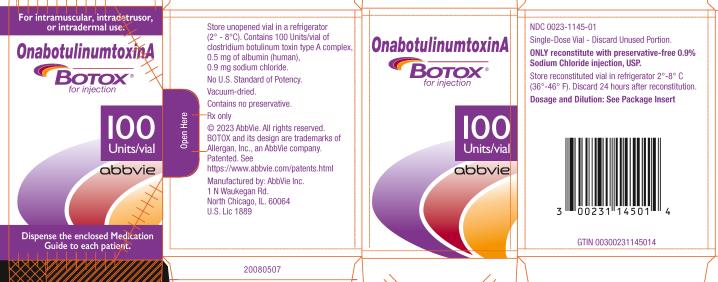
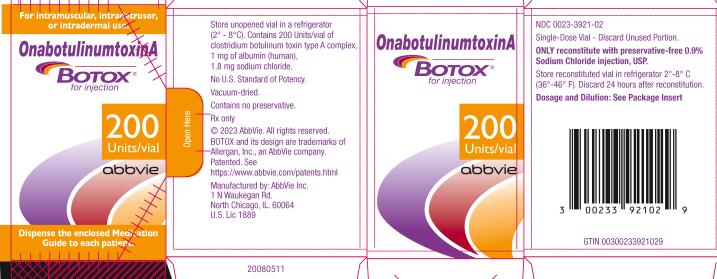
    Each vial of BOTOX (onabotulinumtoxinA) for injection contains either 100 Units of Clostridium botulinum type A neurotoxin complex, 0.5 mg of Albumin Human, and 0.9 mg of sodium chloride; or 200 Units of Clostridium botulinum type A neurotoxin complex, 1 mg of Albumin Human, and 1.8 mg of sodium chloride in a sterile, vacuum-dried form without a preservative.
    6PATIENT COUNSELING INFORMATION
    Advise the patient or caretaker to read the FDA-approved patient labeling (
    Swallowing, Speaking or Breathing Difficulties, or Other Unusual Symptoms
    Advise patients or their caretaker(s) to inform their doctor or pharmacist if they develop any unusual symptoms (including difficulty with swallowing, speaking, or breathing), or if any existing symptom worsens
    Ability to Operate Machinery or Vehicles
    Advise patients or their caretaker(s) that if loss of strength, muscle weakness, blurred vision, dizziness, or drooping eyelids occur, they should avoid driving a car or engaging in other potentially hazardous activities.
    Voiding Symptoms after Bladder Injections
    After bladder injections for urinary incontinence, advise patients to contact their physician if they experience difficulties in voiding or burning sensation upon voiding.
    Manufactured by: AbbVie Inc. 
    © 2023 AbbVie.
    Shape

Description automatically generated
    v11.0USPI1145
    7PRINCIPAL DISPLAY PANEL
    NDC 0023-1145-01
    abbvie
    PRINCIPAL DISPLAY PANEL
NDC 0023-1145-01
OnabotulinumtoxinA
BOTOX®
for injection
100 Units/vial
abbvie
    8PRINCIPAL DISPLAY PANEL
    NDC 0023-3921-02

    OnabotulinumtoxinA
    BOTOX®
    for injection
    200 Units/vial
    abbvie
    PRINCIPAL DISPLAY PANEL
NDC 0023-3921-02

OnabotulinumtoxinA
BOTOX®
for injection
200 Units/vial
abbvie