Generic Name

Sulbactam

Brand Names
Unasyn, Xacduro
FDA approval date: November 22, 1991
Classification: beta Lactamase Inhibitor
Form: Injection, Kit

What is Unasyn (Sulbactam)?

UNASYN is indicated for the treatment of infections due to susceptible strains of the designated microorganisms in the conditions listed below. Skin and Skin Structure Infections caused by beta-lactamase producing strains of Staphylococcus aureus, Escherichia coli, Efficacy for this organism in this organ system was studied in fewer than 10 infections. Klebsiella spp. , Proteus mirabilis, Bacteroides fragilis, Enterobacter spp., and Acinetobacter calcoaceticus. NOTE: For information on use in pediatric patients. Intra-Abdominal Infections caused by beta-lactamase producing strains of Escherichia coli, Klebsiella spp. , Bacteroides spp. , and Enterobacter spp. Gynecological Infections caused by beta-lactamase producing strains of Escherichia coli, and Bacteroides spp. . While UNASYN is indicated only for the conditions listed above, infections caused by ampicillin-susceptible organisms are also amenable to treatment with UNASYN due to its ampicillin content. Therefore, mixed infections caused by ampicillin-susceptible organisms and beta-lactamase producing organisms susceptible to UNASYN should not require the addition of another antibacterial. Appropriate culture and susceptibility tests should be performed before treatment in order to isolate and identify the organisms causing infection and to determine their susceptibility to UNASYN. Therapy may be instituted prior to obtaining the results from bacteriological and susceptibility studies when there is reason to believe the infection may involve any of the beta-lactamase producing organisms listed above in the indicated organ systems. Once the results are known, therapy should be adjusted if appropriate. To reduce the development of drug-resistant bacteria and maintain effectiveness of UNASYN and other antibacterial drugs, UNASYN should be used only to treat infections that are proven or strongly suspected to be caused by susceptible bacteria. When culture and susceptibility information are available, they should be considered in selecting or modifying antibacterial therapy. In the absence of such data, local epidemiology and susceptibility patterns may contribute to the empiric selection of therapy.

Approved To Treat

Save this treatment for later
Sign Up
Not sure about your diagnosis?
Check Your Symptoms

Related Clinical Trials

A Multicenter, Open-label, Phase 1b Study to Assess the Pharmacokinetics, Safety, and Tolerability of Sulbactam-Durlobactam in Hospitalized Pediatric Patients From Birth to <18 Years Who Are Receiving Systemic Antibiotic Therapy for Suspected or Confirmed Acinetobacter Baumannii-calcoaceticus Complex Infection

Summary: The goal of this clinical trial is to investigate the use of Sulbactam-Durlobactam (SUL-DUR) in pediatric patients and is being conducted to collect pharmacokinetic (PK) and safety data to enable the identification of appropriate pediatric dosing regimens for patients with Acinetobacter baumannii-calcoaceticus complex (ABC) infections

Short Versus Standard of Care Antibiotic Duration for Hospitalized Children With Uncomplicated Community-acquired Pneumonia: a Non-inferiority, Randomized Controlled Trial.

Summary: The goal of this open label, randomized, non-inferiority clinical trial is to compare the treatment success of a 5 day antibiotic course versus a standard antibiotic course (usually 7-14 days of antibiotics) in hospitalized children aged 3 months to 18 years, with uncomplicated community acquired pneumonia. The main questions it aims to answer are: * Does a 5 day course work as well as standard (l...

Cost Effectiveness in Alveolar Bone Grafting in Patients With Cleft Lip and Palate: A Randomized Clinical Trial

Summary: The purpose of this trial is to evaluate if the use of Bone Morphogenic Protein(BMP)/Demineralized Bone Matrix (DBM) versus the use of autologous Iliac Crest Bone Graft (ICBG) will result in an increase in total cost effectiveness for patients undergoing alveolar bone graft (ABG) for Cleft Lip and Palate (CLP) and to see if patients who are treated with DBM/BMP will have reduced post-operative pai...

Brand Information

    UNASYN (ampicillin sodium and sulbactam sodium)
    1DESCRIPTION
    UNASYN (ampicillin and sulbactam) for injection, USP is a sterile antibacterial fixed-combination drug product consisting of the semisynthetic antibacterial ampicillin sodium and the beta-lactamase inhibitor sulbactam sodium for intravenous and intramuscular administration.
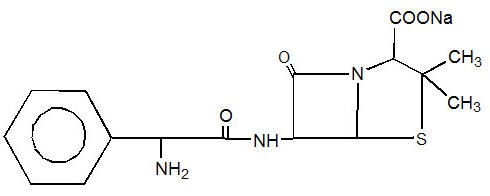
    Ampicillin sodium is derived from the penicillin nucleus, 6-aminopenicillanic acid. Chemically, it is monosodium (2S, 5R, 6R)-6-[(R)-2-amino-2-phenylacetamido]-3,3-dimethyl-7-oxo-4-thia-1-azabicyclo[3.2.0]heptane-2-carboxylate and has a molecular weight of 371.39. Its chemical formula is C
    Chemical Structure
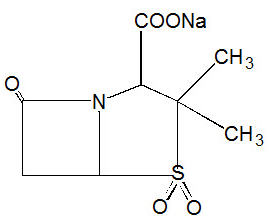
    Sulbactam sodium is a derivative of the basic penicillin nucleus. Chemically, sulbactam sodium is sodium penicillinate sulfone; sodium (2S, 5R)-3,3-dimethyl-7-oxo-4-thia-1-azabicyclo [3.2.0]heptane-2-carboxylate 4,4-dioxide. Its chemical formula is C
    Chemical Structure
    UNASYN is available as a white to off-white dry powder for reconstitution. UNASYN dry powder is freely soluble in aqueous diluents to yield pale yellow to yellow solutions. The pH of the solutions is between 8.0 and 10.0.
    Dilute solutions (up to 30 mg ampicillin and 15 mg sulbactam per mL) are essentially colorless to pale yellow. The pH of dilute solutions remains the same.
    UNASYN pharmacy bulk package is a vial containing a sterile preparation for parenteral use. The Pharmacy Bulk Package is for use in a pharmacy admixture setting; it provides many single doses of UNASYN for addition to suitable parenteral fluids in the preparation of admixtures for intravenous infusion (see
    Each 15 g vial contains ampicillin 10 g and sulbactam 5 g (equivalent to 10.627 g ampicillin sodium and 5.470 g sulbactam sodium).
    Each 1.5 g of UNASYN contains approximately 115 mg of sodium.
    2INDICATIONS AND USAGE
    UNASYN is indicated for the treatment of infections due to susceptible strains of the designated microorganisms in the conditions listed below.
    Skin and Skin Structure Infections caused by beta-lactamase producing strains of Staphylococcus aureus, Escherichia coli, Efficacy for this organism in this organ system was studied in fewer than 10 infections. Klebsiella spp. (including K. pneumoniae), Proteus mirabilis, Bacteroides fragilis, Enterobacter spp., and Acinetobacter calcoaceticus.
    NOTE: For information on use in pediatric patients (see
    Intra-Abdominal Infections caused by beta-lactamase producing strains of Escherichia coli, Klebsiella spp. (including K. pneumoniae), Bacteroides spp. (including B. fragilis), and Enterobacter spp.
    Gynecological Infections caused by beta-lactamase producing strains of Escherichia coli, and Bacteroides spp. (including B. fragilis).
    While UNASYN is indicated only for the conditions listed above, infections caused by ampicillin-susceptible organisms are also amenable to treatment with UNASYN due to its ampicillin content. Therefore, mixed infections caused by ampicillin-susceptible organisms and beta-lactamase producing organisms susceptible to UNASYN should not require the addition of another antibacterial.
    Appropriate culture and susceptibility tests should be performed before treatment in order to isolate and identify the organisms causing infection and to determine their susceptibility to UNASYN.
    Therapy may be instituted prior to obtaining the results from bacteriological and susceptibility studies when there is reason to believe the infection may involve any of the beta-lactamase producing organisms listed above in the indicated organ systems. Once the results are known, therapy should be adjusted if appropriate.
    To reduce the development of drug-resistant bacteria and maintain effectiveness of UNASYN and other antibacterial drugs, UNASYN should be used only to treat infections that are proven or strongly suspected to be caused by susceptible bacteria. When culture and susceptibility information are available, they should be considered in selecting or modifying antibacterial therapy. In the absence of such data, local epidemiology and susceptibility patterns may contribute to the empiric selection of therapy.
    3CONTRAINDICATIONS
    The use of UNASYN is contraindicated in individuals with a history of serious hypersensitivity reactions (e.g., anaphylaxis or Stevens-Johnson syndrome) to ampicillin, sulbactam or to other beta-lactam antibacterial drugs (e.g., penicillins and cephalosporins).
    UNASYN is contraindicated in patients with a previous history of cholestatic jaundice/hepatic dysfunction associated with UNASYN.
    4OVERDOSAGE
    Neurological adverse reactions, including convulsions, may occur with the attainment of high CSF levels of beta-lactams. Ampicillin may be removed from circulation by hemodialysis. The molecular weight, degree of protein binding and pharmacokinetics profile of sulbactam suggest that this compound may also be removed by hemodialysis.
    5DOSAGE AND ADMINISTRATION
    The pharmacy bulk package is for preparation of solutions for IV infusion only. UNASYN should be administered diluted with 50 mL to 100 mL of a compatible diluent as an intravenous infusion over 15–30 minutes.
    The recommended adult dosage of UNASYN is 1.5 g (ampicillin 1 g and sulbactam 0.5 g) to 3 g (ampicillin 2 g and sulbactam 1 g) every six hours. This 1.5 g to 3 g range represents the total of ampicillin content plus the sulbactam content of UNASYN, and corresponds to a range of 1 g ampicillin and 0.5 g sulbactam to 2 g ampicillin and 1 g sulbactam. The total dose of sulbactam should not exceed 4 g per day.
    5.1Pediatric Patients 1 Year of Age or Older
    The recommended daily dose of UNASYN in pediatric patients is 300 mg per kg of body weight administered via intravenous infusion in equally divided doses every 6 hours. This 300 mg/kg/day dosage represents the total ampicillin content plus the sulbactam content of UNASYN, and corresponds to 200 mg ampicillin and 100 mg sulbactam per kg per day. The safety and efficacy of UNASYN administered via intramuscular injection in pediatric patients have not been established. Pediatric patients weighing 40 kg or more should be dosed according to adult recommendations, and the total dose of sulbactam should not exceed 4 g per day. The course of intravenous therapy should not routinely exceed 14 days. In clinical trials, most pediatric patients received a course of oral antimicrobials following initial treatment with intravenous UNASYN. (see
    5.2Impaired Renal Function
    In patients with impairment of renal function the elimination kinetics of ampicillin and sulbactam are similarly affected, hence the ratio of one to the other will remain constant whatever the renal function. The dose of UNASYN in such patients should be administered less frequently in accordance with the usual practice for ampicillin and according to the following recommendations:
    When only serum creatinine is available, the following formula (based on sex, weight, and age of the patient) may be used to convert this value into creatinine clearance. The serum creatinine should represent a steady state of renal function.
    6COMPATIBILITY, RECONSTITUTION AND STABILITY
    When concomitant therapy with aminoglycosides is indicated, UNASYN and aminoglycosides should be reconstituted and administered separately, due to the
    7HOW SUPPLIED
    UNASYN (ampicillin and sulbactam) for injection, USP, a sterile off-white dry powder, is available in Pharmacy Bulk Package:
    Vials containing 15 g (ampicillin 10 g and sulbactam 5 g) NDC 0049-0024-28 (contains one of NDC 0049-0024-28).
    Vials containing 15 g (ampicillin 10 g and sulbactam 5 g) NDC 0049-1515-02 (contains one of NDC 0049-1515-01).
    7.1OTHER SIZE PACKAGES AVAILABLE
    UNASYN is also supplied in glass vial in the following package sizes:
    Carton of 10 single-dose vials containing 1.5 g (ampicillin 1 g and sulbactam 0.5 g) NDC 0049-0013-83 (10 of NDC 0049-0013-81).
    Carton of 10 single-dose vials containing 1.5 g (ampicillin 1 g and sulbactam 0.5 g) NDC 0049-0710-10 (10 of NDC 0049-0710-01).
    Carton of 10 single-dose vials containing 3 g (ampicillin 2 g and sulbactam 1 g) NDC 0049-0014-83 (10 of NDC 0049-0014-81).
    Carton of 10 single-dose vials containing 3 g (ampicillin 2 g and sulbactam 1 g) NDC 0049-3003-10 (10 of NDC 0049-3003-01).
    To report SUSPECTED ADVERSE REACTIONS, contact Pfizer Inc. at 1-800-438-1985 or FDA at 1-800-FDA-1088 or
    This product's labeling may have been updated. For the most recent prescribing information, please visit
    Rx only
    Logo
    LAB-0018-26.0
    8PRINCIPAL DISPLAY PANEL - 15 g Bulk Vial Label
    Pfizer
    NDC 0049-0024-28
    Unasyn
    15 g*
    Sterile
    PHARMACY BULK PACKAGE
    PRINCIPAL DISPLAY PANEL - 15 g Bulk Vial Label
    9PRINCIPAL DISPLAY PANEL - 15 g Bulk Carton
    NDC 0049-0024-28
    1 Bottle
    Unasyn
    15 g*
    PHARMACY BULK PACKAGE
    Sterile
    For Intravenous Use
    Pfizer
    PRINCIPAL DISPLAY PANEL - 15 g Bulk Carton
    10PRINCIPAL DISPLAY PANEL - 15 g Bulk Vial ampicillin and sulbactam
    Pfizer
    NDC 0049-1515-01
    Unasyn
    15 g*
    PHARMACY BULK PACKAGE
    Rx only
    PRINCIPAL DISPLAY PANEL - 15 g Bulk Vial ampicillin and sulbactam
    11PRINCIPAL DISPLAY PANEL - 15 g Bulk Carton ampicillin and sulbactam
    NDC 0049-1515-02
    1 Vial
    Unasyn
    15 g*
    PHARMACY BULK PACKAGE
    For Intravenous Use
    Pfizer
    Rx only
    PRINCIPAL DISPLAY PANEL - 15 g Bulk Carton ampicillin and sulbactam