Generic Name

Glycopyrrolate

Brand Names
Bevespi, Cuvposa, Glycate, Glyrx-Pf, Prevduo
FDA approval date: September 30, 1990
Classification: Cholinergic Muscarinic Antagonist
Form: Injection, Aerosol, Tablet, Liquid, Solution

What is Bevespi (Glycopyrrolate)?

BEVESPI AEROSPHERE is indicated for the maintenance treatment of patients with chronic obstructive pulmonary disease . Limitations of Use: BEVESPI AEROSPHERE is not indicated for the relief of acute bronchospasm or for the treatment of asthma [see Warnings and Precautions.
Save this treatment for later
Sign Up
Not sure about your diagnosis?
Check Your Symptoms

Related Clinical Trials

Pooled Analysis of Multi-country, Open-label Single-arm, Non-interventional, Multi-center, Cohort Studies of Real-world Outcomes in New Users of Budesonide/Glycopyrronium/Formoterol (BGF) in Routine Care Setting

Summary: The CHOROS pooled analysis is a retrospective secondary data use analysis of integrated individual participant data from a series of planned and on-going primary prospective, non-interventional, multi-center studies sponsored by AstraZeneca and conducted in the pulmonary/primary care practitioner setting in multiple countries and may include data from the following countries: United Kingdom, Germa...

A Phase IIb, Randomized, Double-blind, Placebo- Controlled, Parallel Group Study to Assess the Efficacy and Safety of Ensifentrine-glycopyrrolate Fixed-dose Combination at Two Dose Levels Compared to Glycopyrrolate or Ensifentrine Monotherapy in Subjects With COPD

Summary: This study will assess the safety and efficacy of fixed dose combinations of ensifentrine with two different glycopyrrolate dose levels compared to placebo and to the individual components of the fixed dose combinations, each administered twice a day via standard jet nebulizer, in adult subjects with chronic obstructive pulmonary disease (COPD).

Effect of Neuromuscular Reversal Agents on Time for Neurological Assessment After Endotracheal Intubation in Critically Ill Patients

Summary: The goal of this clinical trial is to compare the effect of use of reversal agents for neuromuscular blockade in critically ill patients on time for neurological assessment after endotracheal intubation The main questions it aims to answer are: * The use of reversal agents for neuromuscular blockade after endotracheal intubation may reduce the time for neurological assessment. * The types of rever...

Brand Information

    BEVESPI AEROSPHERE (Glycopyrrolate and formoterol fumarate)
    1INDICATIONS AND USAGE
    BEVESPI AEROSPHERE is indicated for the maintenance treatment of patients with chronic obstructive pulmonary disease (COPD).
    Limitations of Use:
    BEVESPI AEROSPHERE is not indicated for the relief of acute bronchospasm or for the treatment of asthma
    2DOSAGE FORMS AND STRENGTHS
    Inhalation aerosol: pressurized metered dose inhaler that delivers 9 mcg of glycopyrrolate and 4.8 mcg of formoterol fumarate per inhalation.
    3CONTRAINDICATIONS
    BEVESPI AEROSPHERE is contraindicated in:
    • use of a long-acting beta
    • patients with hypersensitivity to glycopyrrolate, formoterol fumarate, or to any component of the product
    4ADVERSE REACTIONS
    The following adverse reactions are described in greater detail elsewhere in the labeling:
    • Paradoxical bronchospasm
    • Hypersensitivity reactions including Anaphylaxis
    • Cardiovascular effects
    • Worsening of narrow-angle glaucoma
    • Worsening of urinary retention
    4.1Clinical Trials Experience
    Because clinical trials are conducted under widely varying conditions, adverse reaction rates observed in the clinical trials of a drug cannot be directly compared with rates in the clinical trials of another drug and may not reflect the rates observed in practice.
    The clinical program for BEVESPI AEROSPHERE included 4,911 subjects with COPD in two 24-week lung function trials, one long-term safety extension study of 28 weeks, and 10 other trials of shorter duration. A total of 1,302 subjects have received at least 1 dose of BEVESPI AEROSPHERE. The safety data described below are based on the two 24-week trials and the one 28-week long-term safety extension trial. Adverse reactions observed in the other trials were similar to those observed in these confirmatory trials.
    24-Week Trials
    The incidence of adverse reactions with BEVESPI AEROSPHERE in Table 1 is based on reports in two 24-week, placebo-controlled trials (Trials 1 and 2; n=2,100 and n=1,610, respectively). Of the 3,710 subjects, 56% were male and 91% were Caucasian. They had a mean age of 63 years and an average smoking history of 51 pack-years, with 54% identified as current smokers. At screening, the mean post-bronchodilator percent predicted forced expiratory volume in 1 second (FEV
    Subjects received one of the following treatments: BEVESPI AEROSPHERE, glycopyrrolate 18 mcg, formoterol fumarate 9.6 mcg, or placebo twice daily or active control.
    Table 1 - Adverse Reactions with BEVESPI AEROSPHERE ≥2% Incidence and More
    Common than with Placebo in Subjects with Chronic Obstructive Pulmonary Disease
    Other adverse reactions defined as events with an incidence of >1% but less than 2% with BEVESPI AEROSPHERE but more common than with placebo included the following: arthralgia, chest pain, tooth abscess, muscle spasms, headache, oropharyngeal pain, vomiting, pain in extremity, dizziness, anxiety, dry mouth, fall, influenza, fatigue, acute sinusitis, and contusion.
    Long-Term Safety Extension Trial
    In a 28-week long-term safety extension trial, 893 subjects who successfully completed Trial 1 or Trial 2 were treated for up to an additional 28 weeks for a total treatment period of up to 52 weeks with BEVESPI AEROSPHERE, glycopyrrolate 18 mcg, formoterol fumarate 9.6 mcg administered twice daily or active control. Because the subjects continued from Trial 1 or Trial 2 into the safety extension trial, the demographic and baseline characteristics of the long-term safety extension trial were similar to those of the placebo-controlled efficacy trials described above. The adverse reactions reported in the long-term safety trial were consistent with those observed in the 24-week placebo-controlled trials.
    Additional Adverse Reactions: Other adverse reactions that have been associated with the component formoterol fumarate include: hypersensitivity reactions, hyperglycemia, sleep disturbance, agitation, restlessness, tremor, nausea, tachycardia, palpitations, cardiac arrhythmias (atrial fibrillation, supraventricular tachycardia, and extrasystoles).
    4.2Postmarketing Experience
    The following adverse reactions have been identified during post approval use of BEVESPI AEROSPHERE. Because these reactions are reported voluntarily from a population of uncertain size, it is not always possible to reliably estimate their frequency or establish a causal relationship to drug exposure.
    In postmarketing experience with BEVESPI AEROSPHERE, hypersensitivity and urinary retention have been reported.
    5DRUG INTERACTIONS
    No formal drug interaction studies have been performed with BEVESPI AEROSPHERE.
    5.1Adrenergic Drugs
    If additional adrenergic drugs are to be administered by any route, they should be used with caution because the sympathetic effects of formoterol, a component of BEVESPI AEROSPHERE, may be potentiated 
    5.2Xanthine Derivatives, Steroids, or Diuretics
    Concomitant treatment with xanthine derivatives, steroids, or diuretics may potentiate any hypokalemic effect of beta
    5.3Non-Potassium Sparing Diuretics
    The ECG changes and/or hypokalemia that may result from the administration of non-potassium-sparing diuretics (such as loop or thiazide diuretics) can be acutely worsened by beta
    5.4Monoamine Oxidase Inhibitors, Tricyclic Antidepressants, QTc Prolonging Drugs
    BEVESPI AEROSPHERE, as with other beta
    5.5Beta-Blockers
    Beta-adrenergic receptor antagonists (beta-blockers) and BEVESPI AEROSPHERE may interfere with the effect of each other when administered concurrently. Beta-blockers not only block the therapeutic effects of beta
    5.6Anticholinergics
    There is a potential for an additive interaction with concomitantly used anticholinergic medications. Therefore, avoid coadministration of BEVESPI AEROSPHERE with other anticholinergic-containing drugs as this may lead to an increase in anticholinergic adverse effects 
    6OVERDOSAGE
    No cases of overdose have been reported with BEVESPI AEROSPHERE. BEVESPI AEROSPHERE contains both glycopyrrolate and formoterol fumarate; therefore, the risks associated with overdosage for the individual components described below apply to BEVESPI AEROSPHERE. Treatment of overdosage consists of discontinuation of BEVESPI AEROSPHERE together with institution of appropriate symptomatic and/or supportive therapy. The judicious use of a cardioselective beta-receptor blocker may be considered, bearing in mind that such medication can produce bronchospasm. Cardiac monitoring is recommended in case of overdosage.
    Glycopyrrolate
    High doses of glycopyrrolate, a component of BEVESPI AEROSPHERE, may lead to anticholinergic signs and symptoms such as nausea, vomiting, dizziness, lightheadedness, blurred vision, increased intraocular pressure (causing pain, vision disturbances or reddening of the eye), obstipation or difficulties in voiding.
    Formoterol Fumarate
    An overdose of formoterol fumarate would likely lead to an exaggeration of effects that are typical for beta
    7DESCRIPTION
    BEVESPI AEROSPHERE (glycopyrrolate and formoterol fumarate) Inhalation Aerosol is a pressurized metered-dose inhaler that contains a combination of micronized glycopyrrolate, an anticholinergic, and micronized formoterol fumarate, a long-acting beta
    Glycopyrrolate is a quaternary ammonium salt with the following chemical name: (
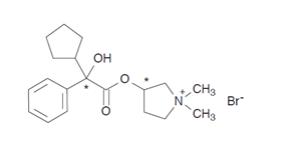
    The Structural Formula of Glycopyrrolate contains two chiral centers (denoted by * in structure above) and is a racemate of a 1:1 mixture of the R,S and S,R diastereomers.
    Glycopyrrolate contains two chiral centers (denoted by * in structure above) and is a racemate of a 1:1 mixture of the R,S and S,R diastereomers. The active moiety, glycopyrronium, is the positively charged ion of glycopyrrolate.
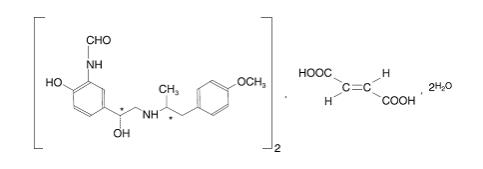
    Formoterol fumarate has the chemical name
    The Structural Formula of Formoterol fumarate contains two chiral centers (denoted by * in structure above), and consists of a single enantiomeric pair (a racemate of R,R and S,S).
    Formoterol fumarate contains two chiral centers (denoted by * in structure above), and consists of a single enantiomeric pair (a racemate of R,R and S,S).
    BEVESPI AEROSPHERE is formulated as a hydrofluoroalkane (HFA 134a) propelled pressurized metered dose inhaler containing 120 inhalations. The canister has an attached dose indicator and is supplied with a white plastic actuator body and mouthpiece with an orange dust cap.
    After priming each actuation of the inhaler meters 10.4 mcg of glycopyrrolate (equivalent to 8.3 mcg of glycopyrronium) and 5.5 mcg of formoterol fumarate from the valve which delivers 9 mcg of glycopyrrolate (equivalent to 7.2 mcg of glycopyrronium) and 4.8 mcg of formoterol fumarate from the actuator. The actual amount of drug delivered to the lung may depend on patient factors, such as the coordination between actuation of the device and inspiration through the delivery system. BEVESPI AEROSPHERE also contains porous particles that form a cosuspension with the drug crystals. The porous particles are comprised of the phospholipid, 1,2-Distearoyl-
    8CLINICAL STUDIES
    The safety and efficacy of BEVESPI AEROSPHERE was evaluated in a clinical development program that included 8 dose-ranging trials and two placebo-controlled lung function trials of 24-weeks duration that included a 28-week extension study to evaluate safety over 1 year. The efficacy of BEVESPI AEROSPHERE is based on the dose ranging trials in 822 subjects with COPD and the 2 placebo-controlled confirmatory trials in 3,705 subjects with COPD.
    8.1Dose-Ranging Trials
    Dose selection for BEVESPI AEROSPHERE for COPD was primarily based on data for the individual components, glycopyrrolate and formoterol fumarate, in COPD patients. Based on the findings from these studies, glycopyrrolate/formoterol fumarate 18/9.6 mcg administered twice-daily was evaluated in the confirmatory COPD trials.
    Glycopyrrolate
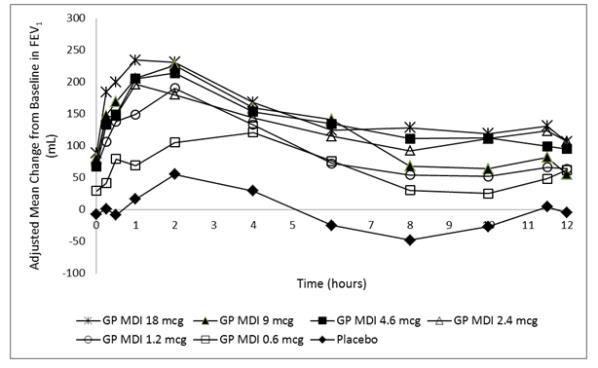
    Dose selection for glycopyrrolate was supported by a 14-day, randomized, double-blind, placebo-controlled, incomplete-block crossover trial evaluating 6 doses of glycopyrrolate (GP MDI 18 to 0.6 mcg) administered twice daily and an open-label active control in 140 subjects with COPD. A dose ordering was observed, with the glycopyrrolate 18 mcg demonstrating larger improvements in FEV
    Figure 1 - Mean Change from Baseline in FEV
    Figure 1 - Mean Change from Baseline in FEV1 over Time on Day 14 (MITT Population)
    The difference from placebo in change from baseline in trough FEV
    Evaluations of the appropriate dosing interval for glycopyrrolate were conducted by comparing to open-label ipratropium bromide inhalation aerosol administered four times daily. The results supported the selection of a twice-daily dosing interval for further evaluation in the confirmatory COPD trials.
    Formoterol Fumarate
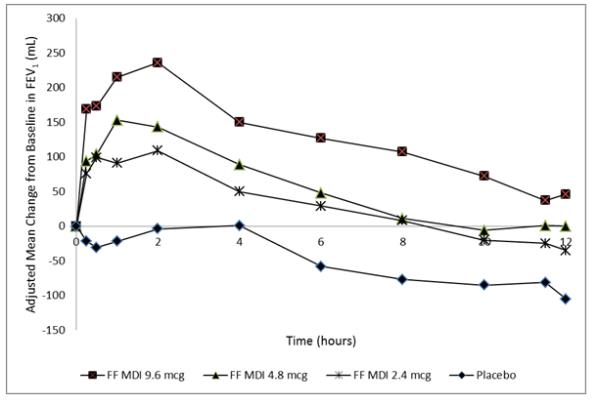
    Dose selection for formoterol fumarate was supported by a single-dose, randomized, double-blind, placebo-controlled, crossover trial evaluating 3 doses of formoterol fumarate (FF MDI 9.6, 4.8, and 2.4 mcg), an open-label active control, and placebo in 34 subjects with COPD. A dose ordering was observed with the formoterol fumarate 9.6 mcg dose demonstrating larger improvements in FEV
    Figure 2 - Mean Change from Baseline in FEV
    Figure 2 - Mean Change from Baseline in FEV1 over Time on Day 1
    The differences in mean change from baseline in normalized FEV
    8.2Confirmatory Trials
    The clinical development program for BEVESPI AEROSPHERE included two (Trial 1 and Trial 2) 24-week, randomized, double-blind, placebo-controlled, parallel-group trials in subjects with moderate to very severe COPD designed to evaluate the efficacy of BEVESPI AEROSPHERE on lung function. The 24-week trials included 3,699 subjects that had a clinical diagnosis of COPD, were between 40 and 80 years of age, had a history of smoking greater than or equal to 10 pack-years, had a post-albuterol FEV
    Trial 1 and Trial 2 evaluated BEVESPI AEROSPHERE (glycopyrrolate/formoterol fumarate) 18 mcg/9.6 mcg, glycopyrrolate 18 mcg, formoterol fumarate 9.6 mcg, and placebo administered twice daily (BID). Trial 1 also included an open-label active control. The primary endpoint was change from baseline in trough FEV
    Table 2 – Least Square (LS) Mean Change from Baseline in Morning Pre-dose Trough
    FEV
    With the limited data available, there were consistent improvements in trough FEV
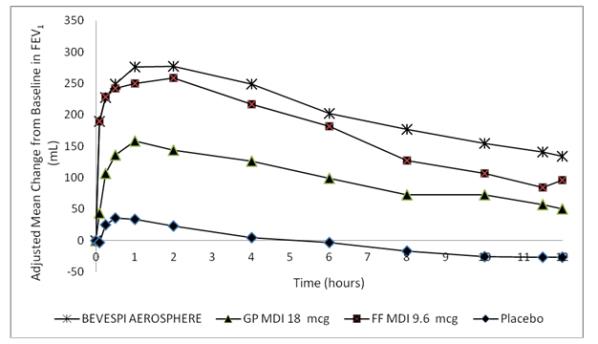
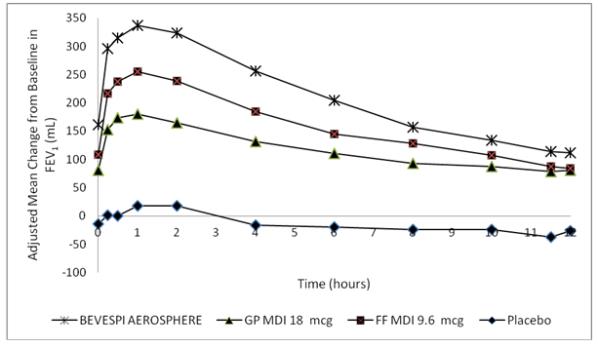
    In Trials 1 and 2, serial spirometric evaluations were performed throughout the 12-hour dosing interval in a subset of subjects (n=718 and n=585, respectively) at Day 1 and Week 12. Results from Trial 1 are shown in Figure 3. In Trial 2, the results for BEVESPI AEROSPHERE in FEV
    Figure 3 - Mean Change from Baseline in FEV
    Day 1
    Figure 3 - Mean Change from Baseline in FEV1 over Time at Day 1 and Week 12 (Trial 1) Day 1
    Week 12
    Week 12
    In both trials, peak FEV
    The St. George’s Respiratory Questionnaire (SGRQ) was assessed in Trials 1 and 2. In Trial 1, the SGRQ responder rate (defined as an improvement in score of 4 or more as threshold) was 37%, 30%, 35%, and 28% for BEVESPI AEROSPHERE, glycopyrrolate, formoterol fumarate, and placebo, respectively, with odds ratios of 1.4 (95% CI: 1.1, 1.8), 1.1 (95% CI: 0.9, 1.5), and 1.5 (95% CI: 1.1, 2.1), for BEVESPI AEROSPHERE vs. glycopyrrolate, BEVESPI AEROSPHERE vs. formoterol fumarate, and BEVESPI AEROSPHERE vs. placebo, respectively. In Trial 2, the trends were similar, with odds ratios of 1.2 (95% CI: 0.9, 1.6), 1.3 (95% CI: 1.0, 1.7), and 1.3 (95% CI: 0.9, 1.8), for BEVESPI AEROSPHERE vs. glycopyrrolate, BEVESPI AEROSPHERE vs. formoterol fumarate, and BEVESPI AEROSPHERE vs. placebo, respectively.
    9HOW SUPPLIED/STORAGE AND HANDLING
    BEVESPI AEROSPHERE Inhalation Aerosol:
    • 9 mcg glycopyrrolate and 4.8 mcg formoterol fumarate per inhalation
    • is supplied as a pressurized aluminum canister with an attached dose indicator, a white plastic actuator and mouthpiece, and an orange dust cap
    • each 120 inhalation canister has a net fill weight of 10.7 grams (NDC 0310-4600-12)
    • each canister is packaged in a foil pouch with desiccant sachet and is placed into a carton
    • each carton contains one canister and a Patient Information leaflet 
    The BEVESPI AEROSPHERE canister should only be used with the BEVESPI AEROSPHERE actuator, and the BEVESPI AEROSPHERE actuator should not be used with any other inhalation drug product.
    The correct amount of medication in each inhalation cannot be assured after the label number of inhalations from the canister have been used, when the dose indicator display window shows zero, even though the canister may not feel completely empty. BEVESPI AEROSPHERE should be discarded when the dose indicator display window shows zero or 3 months after removal from the foil pouch, whichever comes first. Never immerse the canister into water to determine the amount remaining in the canister (“float test”).
    Store at controlled room temperature 20° to 25°C (68° to 77°F); excursions permitted to 15° to 30°C (59° to 86°F) [see USP].
    For best results, the canister should be at room temperature before use. Shake well before using. Keep out of reach of children.
    CONTENTS UNDER PRESSURE
    Do not puncture. Do not use or store near heat or open flame. Exposure to temperatures above 49°C (120°F) may cause bursting. Never throw canister into fire or incinerator. Avoid spraying in eyes.
    10PATIENT COUNSELING INFORMATION
    Advise the patient to read the FDA-approved patient labeling (Patient Information and Instructions for Use)
    Serious Asthma-Related Events: Inform patients that LABAs, such as formoterol fumarate, one of the active ingredients in BEVESPI AEROSPHERE, when used alone (without an inhaled corticosteroid), increase the risk of serious asthma-related events, including asthma-related death. BEVESPI AEROSPHERE is not indicated for the treatment of asthma [see
    Not for Acute Symptoms: Inform patients that BEVESPI AEROSPHERE is not meant to relieve acute symptoms of COPD and extra doses should not be used for that purpose. Advise them to treat acute symptoms with a rescue inhaler such as albuterol. Provide patients with such medicine and instruct them in how it should be used [see Warnings and Precautions (5.2)].
    Instruct patients to seek medical attention immediately if they experience any of the following:
    • Symptoms get worse
    • Need for more inhalations than usual of their rescue inhaler
    Patients should not stop therapy with BEVESPI AEROSPHERE without physician/provider guidance since symptoms may recur after discontinuation.
    Do Not Use Additional Long-Acting Beta Instruct patients to not use other medicines containing a LABA. Patients should not use more than the recommended dose of BEVESPI AEROSPHERE [see Warnings and Precautions (5.3)].
    Instruct patients who have been taking inhaled, short-acting beta
    Paradoxical Bronchospasm: As with other inhaled medicines, BEVESPI AEROSPHERE can cause paradoxical bronchospasm. If paradoxical bronchospasm occurs, instruct patients to discontinue BEVESPI AEROSPHERE [see Warnings and Precautions (5.4)].
    Risks Associated With Beta Inform patients of adverse effects associated with beta2-agonists, such as palpitations, chest pain, rapid heart rate, tremor, or nervousness. Instruct patients to consult a physician immediately should any of these signs or symptoms develop [see Warnings and Precautions (5.6)].
    Worsening of Narrow Angle Glaucoma: Instruct patients to be alert for signs and symptoms of acute narrow-angle glaucoma (e.g., eye pain or discomfort, blurred vision, visual halos, or colored images in association with red eyes from conjunctival congestion and corneal edema). Instruct patients to consult a physician immediately should any of these signs or symptoms develop [see Warnings and Precautions (5.7)].
    Worsening of Urinary Retention: Instruct patients to be alert for signs and symptoms of urinary retention (e.g., difficulty passing urine, painful urination). Instruct patients to consult a physician immediately should any of these signs or symptoms develop [see Warnings and Precautions (5.8)].
    Instructions for Administering BEVESPI AEROSPHERE
    It is important for patients to understand how to correctly administer BEVESPI AEROSPHERE
    Inform patients to use 2 inhalations of BEVESPI AEROSPHERE orally twice daily (2 inhalations in the morning and 2 inhalations in the evening).
    Instruct patients to prime BEVESPI AEROSPHERE before using it for the first time. Instruct patients to prime BEVESPI AEROSPHERE by releasing 4 sprays into the air away from their face, shaking well before each spray. Inform patients that BEVESPI AEROSPHERE must be re-primed when the inhaler has not been used for more than 7 days. Instruct patients to re-prime BEVESPI AEROSPHERE by releasing 2 sprays into the air away from their face, shaking well before each spray.
    Inform patients that it is very important to clean BEVESPI AEROSPHERE 1 time each week so that medicine will not build up and block the spray through the mouthpiece
    Inform patients that if they miss a dose of BEVESPI AEROSPHERE, they should take their next dose at the usual time. Instruct patients to not use BEVESPI AEROSPHERE more often or more puffs than they have been prescribed.
    Instruct patients not to spray BEVESPI AEROSPHERE in their eyes. Inform patients that if they accidentally get BEVESPI AEROSPHERE in their eyes, to rinse their eyes with water, and if redness or irritation persists, to consult their healthcare provider.
    Distributed by: AstraZeneca Pharmaceuticals LP, Wilmington, DE 19850
    BEVESPI, AEROSPHERE and BEVESPI AEROSPHERE are registered trademarks of the AstraZeneca group of companies.
    ©AstraZeneca 2019
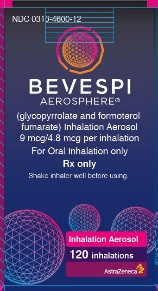
    11PRINCIPAL DISPLAY PANEL – 9 mcg/4.8 mcg per inhalation
    NDC 0310-4600-12
    AEROSPHERE
    (glycopyrrolate and formoterol
    fumarate) Inhalation Aerosol
    For Oral Inhalation only
    RX only
    Shake inhaler well before using
    Inhalation Aerosol
    120 inhalations
    AstraZeneca
    Bevespi 9 mcg/4.8 mcg per inhalation carton