Generic Name

Calcipotriene

Brand Names
Calcitrene, Calyxra, Cipotrex, Pellix, Sorilux, Trionex
FDA approval date: October 01, 1996
Classification: Vitamin D Analog
Form: Ointment, Cream, Aerosol, Kit, Solution

What is Calcitrene (Calcipotriene)?

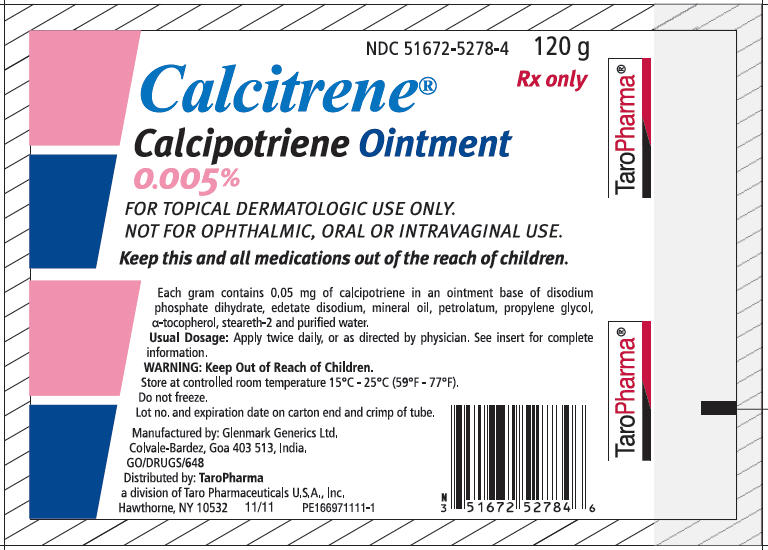
Calcitrene ® ointment.

Approved To Treat

Save this treatment for later
Sign Up
Not sure about your diagnosis?
Check Your Symptoms

Related Clinical Trials

Phase I, Dual Arm, Open-Label, Trial of Intralesional 5-Fluorouracil (5FU) and Intralesional 5FU Combined With Topical Calcipotriene in Patients With Squamous Cell Carcinoma (SCC) of the Lower Extremities

Summary: This clinical trial proposes to evaluate a relatively unexplored approach to treatment of squamous cell carcinoma (SCC) on the lower extremities. The strategy is to directly and specifically deliver drug to the tumor. For the proposed phase I clinical trial, the investigators will perform intralesional injections of a well characterized, potent chemotherapeutic agent 5-fluorouracil (5FU) with and ...

A Pilot Clinical Trial Comparing Topical Fluorouracil to Fluorouracil Plus Calcipotriene Field Treatments in Patients With Multiple Actinic Keratoses

Summary: The goal of this clinical research study is to compare the effects of topical fluorouracil alone to topical fluorouracil plus topical calcipotriene in patients with multiple actinic keratoses. Topical means the medication is applied directly to the skin.

Combination of 5-Fluorouracil and Calcipotriene in the Treatment of Superficial Basal Cell Carcinomas and Squamous Cell Carcinomas in Situ

Summary: The investigators will compare the application of two different creams for the treatment of low-risk skin cancers-superficial basal cell carcinoma (sBCC) and squamous cell carcinoma in situ (SCCis). 5-Fluorouracil cream is currently FDA approved for the treatment of superficial basal cell carcinoma and is routinely used by dermatologists across the country and at Boston Medical Center (BMC) for SC...

Brand Information

    Calcitrene (Calcipotriene)
    1DESCRIPTION
    Calcitrene
    Chemically, calcipotriene is (5Z,7E,22E,24S)-24-cyclopropyl-9,10-secochola-5,7,10(19),22-tetraene-1α,3β,24-triol-, with the empirical formula C
    Chemical Structure
    Calcipotriene is a white or off-white crystalline substance. Calcitrene
    2CLINICAL PHARMACOLOGY
    In humans, the natural supply of vitamin D depends mainly on exposure to the ultraviolet rays of the sun for conversion of 7-dehydrocholesterol to vitamin D
    Clinical studies with radiolabelled ointment indicate that approximately 6% (± 3%, SD) of the applied dose of calcipotriene is absorbed systemically when the ointment is applied topically to psoriasis plaques or 5% (± 2.6%, SD) when applied to normal skin, and much of the absorbed active is converted to inactive metabolites within 24 hours of application.
    Vitamin D and its metabolites are transported in the blood, bound to specific plasma proteins. The active form of the vitamin, 1,25-dihyroxy vitamin D
    There is evidence that maternal 1,25-dihydroxy vitamin D
    3CLINICAL STUDIES
    Adequate and well-controlled trials of patients treated with Calcitrene
    Subtracting percentages of patients using placebo (vehicle only) from percentages of patients using calcipotriene who had at least marked improvements after 8 weeks yields 39.9% for once daily and 49.6% for twice daily. This adjustment for placebo effect indicated that what might appear to be differences between once and twice daily use may reflect differences in the studies independent from the frequency of dosing. Although there was a numerical difference in comparison across studies, twice daily dosing has not been shown to be superior in efficacy to once daily dosing.
    Over 400 patients have been treated in open label clinical studies of calcipotriene for periods of up to one year. In half of these studies, patients who previously had not responded well to calcipotriene were excluded. The adverse events in these extended studies included skin irritation in approximately 25% of patients and worsening of psoriasis in approximately 10% of patients. In one of these open label studies, half of the patients no longer required calcipotriene by 16 weeks of treatment, because of satisfactory therapeutic results.
    4INDICATIONS AND USAGE
    Calcitrene
    5CONTRAINDICATIONS
    Calcitrene
    6ADVERSE REACTIONS
    In controlled clinical trials, the most frequent adverse reactions reported for calcipotriene were burning, itching and skin irritation, which occurred in approximately 10-15% of patients. Erythema, dry skin, peeling, rash, dermatitis, worsening of psoriasis including development of facial/scalp psoriasis were reported in 1 to 10% of patients. Other experiences reported in less than 1% of patients included skin atrophy, hyperpigmentation, hypercalcemia, and folliculitis. Once daily dosing has not been shown to be superior in safety to twice daily dosing.
    7OVERDOSAGE
    Topically applied calcipotriene can be absorbed in sufficient amounts to produce systemic effects. Elevated serum calcium has been observed with excessive use of Calcitrene
    8DOSAGE AND ADMINISTRATION
    Apply a thin layer of Calcitrene
    9HOW SUPPLIED
    Calcitrene
    60 gram aluminum tube
    9.1STORAGE
    Store at controlled room temperature 15°C-25°C (59°F-77°F). Do not freeze.
    10PRINCIPAL DISPLAY PANEL - 120 g Tube Carton
    NDC 51672-5278-4
    120 g
    Calcitrene®
    Calcipotriene Ointment
    Rx only
    TaroPharma®
    FOR TOPICAL DERMATOLIGIC USE ONLY.
    Keep this and all medications out of the reach of children.
    TaroPharma®
    Principal Display Panel - 120 g Tube Carton