Trimethoprim
What is Bactrim (Trimethoprim)?
Approved To Treat
Top Global Experts


Related Clinical Trials
Summary: The purpose of this study is to study a radioactive tracer, a type of imaging drug that is injected into the body to see how it is taken up in sites of active infection using an imaging procedure called Positron Emission Tomography/Computed Tomography (PET/CT).
Summary: BALANCE+ is a perpetual multiple domain randomized controlled platform trial to evaluate various treatment strategies for Gram-negative bloodstream infections (GN BSIs). Each domain addresses critical questions in the management of GN BSIs, aiming to refine treatment strategies, enhance patient outcomes, and reduce antimicrobial resistance. The initial vanguard pilot RCT (NCT05893147) started on 2...
Summary: Age-related macular degeneration (AMD) is an eye disease which causes people to lose their sharp central vision over time. Aging damages the macula, which is in the middle of the retina - the light-sensitive part at the back of the eye. There are 2 types of AMD - wet AMD and dry AMD. The advanced stage of dry AMD causes vision loss. This is known as geographic atrophy. AMD makes everyday tasks lik...
Related Latest Advances
Brand Information
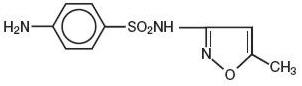
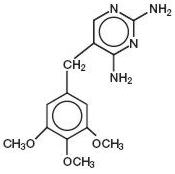
- a known hypersensitivity to trimethoprim or sulfonamides
- history of drug-induced immune thrombocytopenia with use of trimethoprim and/or sulfonamides
- documented megaloblastic anemia due to folate deficiency
- pediatric patients less than 2 months of age
- marked hepatic damage
- severe renal insufficiency when renal function status cannot be monitored
- concomitant administration with dofetilide (see
The usual adult dosage in the treatment of acute exacerbations of chronic bronchitis is 1 BACTRIM DS (double strength) tablet or 2 BACTRIM tablets every 12 hours for 14 days.
Treatment
The recommended dosage for treatment of patients with documented Pneumocystis jiroveciipneumonia is 75 to 100 mg/kg sulfamethoxazole and 15 to 20 mg/kg trimethoprim per 24 hours given in equally divided doses every 6 hours for 14 to 21 days. 12The following table is a guideline for the upper limit of this dosage:
Adults:
For children, the recommended dose is 750 mg/m 2/day sulfamethoxazole with 150 mg/m 2/day trimethoprim given orally in equally divided doses twice a day, on 3 consecutive days per week. The total daily dose should not exceed 1600 mg sulfamethoxazole and 320 mg trimethoprim. 14The following table is a guideline for the attainment of this dosage in children:
For the treatment of traveler’s diarrhea, the usual adult dosage is 1 BACTRIM DS (double strength) tablet or 2 BACTRIM tablets every 12 hours for 5 days.
- Kremers P, Duvivier J, Heusghem C. Pharmacokinetic Studies of Co-Trimoxazole in Man after Single and Repeated Doses.
- Kaplan SA, et al. Pharmacokinetic Profile of Trimethoprim-Sulfamethoxazole in Man.
- Varoquaux O, et al. Pharmacokinetics of the trimethoprim-sulfamethoxazole combination in the elderly.
- Safrin S, Lee BL, Sande MA. Adjunctive folinic acid with trimethoprim-sulfamethoxazole for
- Marinella Mark A. 1999. Trimethoprim-induced hyperkalemia: An analysis of reported cases.
- Margassery, S. and B. Bastani. 2002. Life threatening hyperkalemia and acidosis secondary to trimethoprim-sulfamethoxazole treatment.
- Moh R, et al. Haematological changes in adults receiving a zidovudine-containing HAART regimen in combination with cotrimoxazole in Côte d’Ivoire.
- Al-Khatib SM, LaPointe N, Kramer JM, Califf RM. What Clinicians Should Know About the QT Interval.
- Boyer EW, Stork C, Wang RY. Review: The Pharmacology and Toxicology of Dofetilide.
- Kosoglou T, Rocci ML Jr, Vlasses PH. Trimethoprim alters the disposition of procainamide and
- Brumfitt W, Pursell R. Trimethoprim/Sulfamethoxazole in the Treatment of Bacteriuria in Women.
- Masur H. Prevention and treatment of
- Recommendations for prophylaxis against
- CDC Guidelines for prophylaxis against