Brand Name
Fenopron
Generic Name
Fenoprofen
View Brand Information FDA approval date: August 01, 2022
Classification: Nonsteroidal Anti-inflammatory Drug
Form: Capsule
What is Fenopron (Fenoprofen)?
FENOPRON TM is indicated for: Relief of mild to moderate pain in adults Relief of the signs and symptoms of rheumatoid arthritis Relief of the signs and symptoms of osteoarthritis Fenoprofen calcium is a nonsteroidal anti-inflammatory drug indicated for: Relief of mild to moderate pain in adults. Relief of the signs and symptoms of rheumatoid arthritis. Relief of the signs and symptoms of osteoarthritis.
Approved To Treat

Save this treatment for later
Not sure about your diagnosis?
Related Clinical Trials
There is no clinical trials being done for this treatment
Related Latest Advances
Brand Information
FENOPRON (FENOPROFEN CALCIUM)
WARNING: RISK OF SERIOUS CARDIOVASCULAR AND GASTROINTESTINAL EVENTS
Cardiovascular Thrombic Events
- Non-Steroidal Anti-Inflammatory drugs (NSAIDs) cause an increased risk of serious cardiovascular thrombotic events, including myocardial infarction and stroke, which can be fatal. This risk may occur early in treatment and may increase with duration of use
- FENOPRON
Gastrointestinal Bleeding, Ulceration, and Perforation
- NSAIDs cause an increased risk of serious gastrointestinal (GI) adverse events including bleeding, ulceration, and perforation of stomach or intestines, which can be fatal. These events can occur at any time during use and without warning symptoms. Elderly patients and patients with a prior history of peptic ulcer disease and/or GI bleeding are at greater risk for serious GI events [
1INDICATIONS AND USAGE
FENOPRON
- Relief of mild to moderate pain in adults
- Relief of the signs and symptoms of rheumatoid arthritis
- Relief of the signs and symptoms of osteoarthritis
2DOSAGE FORMS AND STRENGTHS
FENOPRON
- The 200 mg capsule is hard gelatin capsule with orange opaque cap and white opaque body, imprinted with “R” on the cap in white ink.
- The 300 mg capsule is hard gelatin capsule with orange opaque cap and yellow opaque body, imprinted with “R” on the cap and “8” on the body in black ink.
- The 400 mg capsule is opaque green cap and opaque blue body, imprinted with “SUVEN” on the cap and “400 mg” on the body.
3CONTRAINDICATIONS
FENOPRON
- Known hypersensitivity (e.g., anaphylactic reactions and serious skin reactions) to fenoprofen or any components of the drug product
- History of asthma, urticaria, or other allergic-type reactions after taking aspirin or other NSAIDs. Severe, sometimes fatal, anaphylactic reactions to NSAIDs have been reported in such patients
- In the setting of coronary artery bypass graft (CABG) surgery
4ADVERSE REACTIONS
The following adverse reactions are discussed in greater detail in other sections of the labeling:
- Cardiovascular Thrombotic Events
- GI Bleeding, Ulceration and Perforation
- Hepatotoxicity
- Hypertension
- Heart Failure and Edema
- Renal Toxicity and Hyperkalemia
- Anaphylactic Reactions
- Serious Skin Reactions
- Hematologic Toxicity
4.1Clinical Trials Experience
Because clinical trials are conducted under widely varying conditions, adverse reaction rates observed in the clinical trials of a drug cannot be directly compared to rates in the clinical trials of another drug and may not reflect the rates observed in practice.
During clinical studies for rheumatoid arthritis, osteoarthritis, or mild to moderate pain and studies of pharmacokinetics, complaints were compiled from a checklist of potential adverse reactions, and the following data emerged. These encompass observations in 6,786 patients, including 188 observed for at least 52 weeks. For comparison, data are also presented from complaints received from the 266 patients who received placebo in these same trials. During short-term studies for analgesia, the incidence of adverse reactions was markedly lower than that seen in longer-term studies.
Adverse Drug Reactions Reported in >1% of Patients During Clinical Trials
Digestive System— During clinical trials with FENOPRONTM, the most common adverse reactions were gastrointestinal in nature and occurred in 20.8% of patients receiving FENOPRONTM as compared to 16.9% of patients receiving placebo. In descending order of frequency, these reactions included dyspepsia (10.3% FENOPRONTM vs. 2.3% placebo), nausea (7.7% vs. 7.1%), constipation (7% vs. 1.5%), vomiting (2.6% vs. 1.9%), abdominal pain (2% vs. 1.1%), and diarrhea (1.8% vs. 4.1%). The drug was discontinued because of adverse gastrointestinal reactions in less than 2% of patients during premarketing studies.
Nervous System— The most frequent adverse neurologic reactions were headache (8.7% vs. 7.5%) and somnolence (8.5% vs. 6.4%). Dizziness (6.5% vs. 5.6%), tremor (2.2% vs. 0.4%), and confusion (1.4% vs. none) were noted less frequently. FENOPRONTM was discontinued in less than 0.5% of patients because of these side effects during premarketing studies.
Skin and Appendages— Increased sweating (4.6% vs. 0.4%), pruritus (4.2% vs. 0.8%), and rash (3.7% vs. 0.4%) were reported. FENOPRONTM was discontinued in about 1% of patients because of an adverse effect related to the skin during premarketing studies.
Special Senses— Tinnitus (4.5% vs. 0.4%), blurred vision (2.2% vs. none), and decreased hearing (1.6% vs. none) were reported. FENOPRONTM was discontinued in less than 0.5% of patients because of adverse effects related to the special senses during premarketing studies.
Cardiovascular— Palpitations (2.5% vs. 0.4%). FENOPRONTM was discontinued in about 0.5% of patients because of adverse cardiovascular reactions during premarketing studies.
Miscellaneous— Nervousness (5.7% vs. 1.5%), asthenia (5.4% vs. 0.4%), peripheral edema (5.0% vs. 0.4%), dyspnea (2.8% vs. none), fatigue (1.7% vs. 1.5%), upper respiratory infection (1.5% vs. 5.6%), and nasopharyngitis (1.2% vs. none).
Adverse Drug Reactions Reported in <1% of Patients During Clinical Trials
Digestive System—Gastritis, peptic ulcer with/without perforation, gastrointestinal hemorrhage, anorexia, flatulence, dry mouth, and blood in the stool. Increases in alkaline phosphatase, LDH, SGOT, jaundice, and cholestatic hepatitis, aphthous ulcerations of the buccal mucosa, metallic taste, and pancreatitis.
Cardiovascular—Atrial fibrillation, pulmonary edema, electrocardiographic changes, and supraventricular tachycardia.
Genitourinary Tract—Renal failure, dysuria, cystitis, hematuria, oliguria, azotemia, anuria, interstitial nephritis, nephrosis, and papillary necrosis.
Hypersensitivity—Angioedema (angioneurotic edema).
Hematologic—Purpura, bruising, hemorrhage, thrombocytopenia, hemolytic anemia, aplastic anemia, agranulocytosis, and pancytopenia.
Nervous System—Depression, disorientation, seizures, and trigeminal neuralgia.
Special Senses—Burning tongue, diplopia, and optic neuritis.
Skin and Appendages—Exfoliative dermatitis, toxic epidermal necrolysis, Stevens-Johnson syndrome, and alopecia.
Miscellaneous—Anaphylaxis, urticaria, malaise, insomnia, tachycardia, personality change, lymphadenopathy, mastodynia, and fever.
4.1.1Postmarketing Experience
The following adverse reactions have been identified during the post-approval use of fenoprofen calcium. Because these reactions are reported voluntarily from a population of uncertain size, it is not always possible to reliably estimate their frequency or establish a causal relationship to drug exposure.
Skin and Appendages— Alopecia, bruising, desquamation, erythema, photosensitivity, sweat, angioedema, toxic epidermal necrosis, erythema multiforme, exfoliative dermatitis, onycholysis, Stevens-Johnson Syndrome, fixed drug eruption (FDE), urticaria, vesiculobullous reaction.
5DRUG INTERACTIONS
See Table 1 for clinically significant drug interactions with fenoprofen.
Drug/Laboratory Test Interactions
6OVERDOSAGE
Symptoms following acute NSAID overdosages have been typically limited to lethargy, drowsiness, nausea, vomiting, and epigastric pain, which have been generally reversible with supportive care. Gastrointestinal bleeding has occurred. Hypertension, acute renal failure, respiratory depression, and coma have occurred, but were rare [
Manage patients with symptomatic and supportive care following an NSAID overdosage. There are no specific antidotes. Consider emesis and/or activated charcoal (60 to 100 grams in adults, 1 to 2 grams per kg of body weight in pediatric patients) and/or osmotic cathartic in symptomatic patients seen within four hours of ingestion or in patients with a large overdosage (5 to 10 times the recommended dosage). Forced diuresis, alkalinization of urine, hemodialysis, or hemoperfusion may not be useful due to high protein binding.
For additional information about overdosage treatment contact a poison control center (1-800-222-1222).
7DESCRIPTION
FENOPRON
The 200 mg capsule is hard gelatin capsule with orange opaque cap and white opaque body, imprinted with “R” on the cap in white ink.
The 300 mg capsule is hard gelatin capsule with orange opaque cap and yellow opaque body, imprinted with “R” on the cap and “8” on the body in black ink.
The 400 mg capsule is opaque green cap and opaque blue body, imprinted with “SUVEN” on the cap and “400 mg” on the body.
The chemical name is Benzeneacetic acid, α-methyl-3-phenoxy-, calcium salt dihydrate, (±)-. The molecular weight is 558.65. Its molecular formula is C
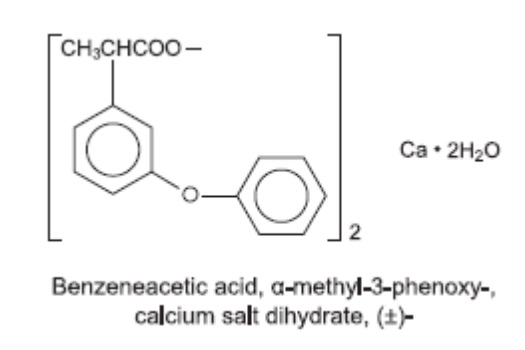
FENOPRON
FENOPRON
Inactive ingredients in FENOPRON
8CLINICAL STUDIES
Fenoprofen is a nonsteroidal, anti-inflammatory, antiarthritic drug that also possesses analgesic and antipyretic activities. Its exact mode of action is unknown, but it is thought that prostaglandin synthetase inhibition is involved.
Results in humans demonstrate that fenoprofen has both anti-inflammatory and analgesic actions. The emergence and degree of erythemic response were measured in adult male volunteers exposed to ultraviolet irradiation. The effects of fenoprofen calcium, aspirin, and indomethacin were each compared with those of a placebo. All 3 drugs demonstrated antierythemic activity.
In all patients with rheumatoid arthritis, the anti-inflammatory action of FENOPRON
The use of FENOPRON
In patients with osteoarthritis, the anti-inflammatory and analgesic effects of FENOPRON
In patients with rheumatoid arthritis and osteoarthritis, clinical studies have shown FENOPRON
In patients with pain, the analgesic action of FENOPRON
9HOW SUPPLIED/STORAGE AND HANDLING
FENOPRON
- The 300 mg capsule is hard gelatin capsule with orange opaque cap and yellow opaque body, imprinted with “R” on the cap and “8” on the body in black ink.
NDC 61825-311-10 Bottles of 100
Storage:
Store at room temperature 20° to 25°C (68° to 77°F); excursions permitted between 15° to 30°C (59° to 86°F) [see USP Controlled Room Temperature].
Store at room temperature 20° to 25°C (68° to 77°F); excursions permitted between 15° to 30°C (59° to 86°F) [see USP Controlled Room Temperature].
Preserve in well-closed containers.
10PATIENT COUNSELING INFORMATION
Advise the patient to read the FDA-approved patient labeling (Medication Guide) that accompanies each prescription dispensed. Inform patients, families, or their caregivers of the following information before initiating therapy with fenoprofen calcium and periodically during the course of ongoing therapy.
Cardiovascular Thrombotic Events
Advise patients to be alert for the symptoms of cardiovascular thrombotic events, including chest pain, shortness of breath, weakness, or slurring of speech, and to report any of these symptoms to their health care provider immediately [see .
Advise patients to be alert for the symptoms of cardiovascular thrombotic events, including chest pain, shortness of breath, weakness, or slurring of speech, and to report any of these symptoms to their health care provider immediately [see .
Gastrointestinal Bleeding, Ulceration, and Perforation
Advise patients to report symptoms of ulcerations and bleeding, including epigastric pain, dyspepsia, melena, and hematemesis to their health care provider. In the setting of concomitant use of low-dose aspirin for cardiac prophylaxis, inform patients of the increased risk for and the signs and symptoms of GI bleeding [see ].
Advise patients to report symptoms of ulcerations and bleeding, including epigastric pain, dyspepsia, melena, and hematemesis to their health care provider. In the setting of concomitant use of low-dose aspirin for cardiac prophylaxis, inform patients of the increased risk for and the signs and symptoms of GI bleeding [see ].
Hepatotoxicity
Inform patients of the warning signs and symptoms of hepatotoxicity (e.g., nausea, fatigue, lethargy, pruritus, diarrhea, jaundice, right upper quadrant tenderness, and “flu-like” symptoms). If these occur, instruct patients to stop FENOPRONTM and seek immediate medical therapy [see .
Inform patients of the warning signs and symptoms of hepatotoxicity (e.g., nausea, fatigue, lethargy, pruritus, diarrhea, jaundice, right upper quadrant tenderness, and “flu-like” symptoms). If these occur, instruct patients to stop FENOPRONTM and seek immediate medical therapy [see .
Heart Failure and Edema
Advise patients to be alert for the symptoms of congestive heart failure including shortness of breath, unexplained weight gain, or edema and to contact their healthcare provider if such symptoms occur [see .
Advise patients to be alert for the symptoms of congestive heart failure including shortness of breath, unexplained weight gain, or edema and to contact their healthcare provider if such symptoms occur [see .
Anaphylactic Reactions
Inform patients of the signs of an anaphylactic reaction (e.g., difficulty breathing, swelling of the face or throat). Instruct patients to seek immediate emergency help if these occur [see Contraindications (].
Inform patients of the signs of an anaphylactic reaction (e.g., difficulty breathing, swelling of the face or throat). Instruct patients to seek immediate emergency help if these occur [see Contraindications (].
Serious Skin Reactions, including DRESS
Advise patients to stop taking FENOPRONTM immediately if they develop any type of rash or fever and to contact their healthcare provider as soon as possible [see Warnings and Precautions (].
Advise patients to stop taking FENOPRONTM immediately if they develop any type of rash or fever and to contact their healthcare provider as soon as possible [see Warnings and Precautions (].
Female Fertility
Advise females of reproductive potential who desire pregnancy that NSAIDs, including FENOPRONTM, may be associated with a reversible delay in ovulation [see
Advise females of reproductive potential who desire pregnancy that NSAIDs, including FENOPRONTM, may be associated with a reversible delay in ovulation [see
Fetal Toxicity
Inform pregnant women to avoid use of FENOPRONTM and other NSAIDs starting at 30 weeks gestation because of the risk of the premature closing of the fetal ductus arteriosus. If treatment with FENOPRONTM is needed for a pregnant woman between about 20 to 30 weeks gestation, advise her that she may need to be monitored for oligohydramnios, if treatment continues for longer than 48 hours [see .
Inform pregnant women to avoid use of FENOPRONTM and other NSAIDs starting at 30 weeks gestation because of the risk of the premature closing of the fetal ductus arteriosus. If treatment with FENOPRONTM is needed for a pregnant woman between about 20 to 30 weeks gestation, advise her that she may need to be monitored for oligohydramnios, if treatment continues for longer than 48 hours [see .
Avoid Concomitant Use of NSAIDs
Inform patients that the concomitant use of FENOPRONTM with other NSAIDs or salicylates (e.g., diflunisal, salsalate) is not recommended due to the increased risk of gastrointestinal toxicity, and little or no increase in efficacy [see ]. Alert patients that NSAIDs may be present in “over the counter” medications for treatment of colds, fever, or insomnia.
Inform patients that the concomitant use of FENOPRONTM with other NSAIDs or salicylates (e.g., diflunisal, salsalate) is not recommended due to the increased risk of gastrointestinal toxicity, and little or no increase in efficacy [see ]. Alert patients that NSAIDs may be present in “over the counter” medications for treatment of colds, fever, or insomnia.
Use of NSAIDS and Low-Dose Aspirin
Inform patients not to use low-dose aspirin concomitantly with FENOPRONTM until they talk to their healthcare provider [see .
Inform patients not to use low-dose aspirin concomitantly with FENOPRONTM until they talk to their healthcare provider [see .
Manufactured for:
Galt Pharmaceuticals, LLC
Atlanta, GA 30339
Galt Pharmaceuticals, LLC
Atlanta, GA 30339
Neutral Code: 4323147/TS/DRUGS/2025
Made in India
Revised: 02/2026
PIP31110-00
GLT.311.99
11PRINCIPAL DISPLAY PANEL
Fenopron™ (Fenoprofen Calcium Capsules, USP) 300 mg*
NDC 61825-311-10
100 Caps Bottle Label