Brand Name

Fludarabine

View Brand Information
FDA approval date: November 16, 2007
Classification: Nucleoside Metabolic Inhibitor
Form: Injection

What is Fludarabine?

Fludarabine Phosphate Injection, USP is indicated for the treatment of patients with B-cell chronic lymphocytic leukemia who have not responded to or whose disease has progressed during treatment with at least one standard alkylating-agent containing regimen. The safety and effectiveness of Fludarabine Phosphate Injection, USP in previously untreated or non-refractory patients with CLL have not been established.
Save this treatment for later
Sign Up
Not sure about your diagnosis?
Check Your Symptoms

Related Clinical Trials

A Phase I Study of Autologous T Cells Transduced With Retroviral Vectors Expressing TCRs for Participant-specific Neoantigens in Patients With Acute Myeloid Leukemia, Myelodysplastic Syndrome, and Other Hematologic Malignancies

Background: Blood cancers (such as leukemias) can be hard to treat, especially if they have mutations in the TP53 or RAS genes. These mutations can cause the cancer cells to create substances called neoepitopes. Researchers want to test a method of treating blood cancers by altering a person s T cells (a type of immune cell) to target neoepitopes.

Phase1 Basket Trial Of CAR.70-Engineered IL15-Transduced With TGFBR2 Knock Out Cord Blood-Derived NK Cells For Relapsed/Refractory Lymphoid Malignancies

Summary: This is a phase 1 basket trial of TGFBR2 KO CAR27/IL-15 NK cells after lymphodepleting chemotherapy for patients with R/R B-NHL, HL, T-NHL or B-ALL.

A Phase 1/1b, Open-label, Dose-escalation, Dose-expansion, Parallel Assignment Study to Evaluate Safety and Clinical Activity of PBCAR0191 (Azercabtagene Zapreleucel or Azer-cel) in Subjects With Relapsed/Refractory (r/r) Non-Hodgkin Lymphoma (NHL) and r/r B-cell Acute Lymphoblastic Leukemia (B-ALL)

Summary: This is a Phase 1/1b, nonrandomized, open-label, parallel assignment, dose-escalation, and dose-expansion study to evaluate the safety and clinical activity of azer-cel, an allogeneic anti-CD19 CAR T, in adults with r/r B ALL, r/r B-cell NHL and CLL/SLL.

Brand Information

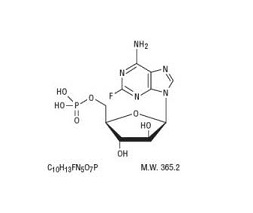
Fludarabine Phosphate (Fludarabine Phosphate)
WARNING: SEVERE BONE MARROW SUPPRESSION, CNS TOXICITY, HEMOLYTIC ANEMIA, AND PULMONARY TOXICITY
Fludarabine Phosphate Injection should be administered under the supervision of a qualified physician experienced in the use of antineoplastic therapy. Fludarabine phosphate injection can severely suppress bone marrow function. When used at high doses in dose-ranging studies in patients with acute leukemia, fludarabine phosphate was associated with severe neurologic effects, including blindness, coma, and death. This severe central nervous system toxicity occurred in 36% of patients treated with doses approximately four times greater (96 mg/m
Instances of life-threatening and sometimes fatal autoimmune phenomena such as hemolytic anemia, autoimmune thrombocytopenia/thrombocytopenic purpura (ITP), Evans syndrome, and acquired hemophilia have been reported to occur after one or more cycles of treatment with Fludarabine Phosphate Injection. Patients undergoing treatment with Fludarabine Phosphate Injection should be evaluated and closely monitored for hemolysis 
In a clinical investigation using fludarabine phosphate in combination with pentostatin (deoxycoformycin) for the treatment of refractory chronic lymphocytic leukemia (CLL), there was an unacceptably high incidence of fatal pulmonary toxicity. Therefore, the use of Fludarabine Phosphate Injection in combination with pentostatin is not recommended