Brand Name

Effexor

Generic Name
Venlafaxine
View Brand Information
FDA approval date: August 04, 2006
Classification: Serotonin and Norepinephrine Reuptake Inhibitor
Form: Tablet, Capsule

What is Effexor (Venlafaxine)?

Effexor XR is indicated in adults for the treatment of: Major Depressive Disorder [see Clinical Studies (1.

Approved To Treat

Save this treatment for later
Sign Up
Not sure about your diagnosis?
Check Your Symptoms

Related Clinical Trials

The Analgesic Efficacy and Safety of Oral Medications (Venlafaxine) for Prevention of Postherpetic Neuralgia in Acute Herpes Zoster

Summary: Postherpetic neuralgia (PHN) is the most common complication of herpes zoster (HZ) and represents a major clinical challenge due to its chronicity and impact on quality of life. Current treatments for acute HZ pain have limited efficacy in preventing PHN, highlighting the need for effective preventive strategies targeting early pathophysiological mechanisms. Venlafaxine as a plausible and clinical...

Comparing the Efficacy and Safety of Pregabalin Monotherapy With Pregabalin Combined Other Neuromodulatory Drugs (Venlafaxine) in the Treatment of Fibromyalgia: A Multicenter Clinical Study

Summary: Fibromyalgia (FM) is a chronic pain syndrome characterized by widespread pain, fatigue, and emotional disorders. Its onset is related to factors such as central sensitization and imbalance of neurotransmitters. The current mainstream treatments include pregabalin, but the efficacy of pregabalin is limited, with only 25%-40% pain relief rate, and adverse reactions are common. Selective serotonin an...

Efficacy of a Combination of Chronotherapeutics for the Treatment of Major Depressive Episode (MDE) With Insomnia: a Multicenter, Randomized, 2*2 Factorial, Double-blind, Placebo-controlled Trial

Summary: Major Depressive Disorder (MDD) affects 5% of the global population and is the second leading cause of disability worldwide. Despite the widespread use of antidepressants, 50-60% of patients do not respond adequately after 8 weeks of treatment. Insomnia, present in approximately 85% of individuals with MDD, is a frequent and persistent symptom that contributes to poor treatment outcomes. Targeting...

Brand Information

Effexor (VENLAFAXINE HYDROCHLORIDE)
WARNING: SUICIDAL THOUGHTS AND BEHAVIORS
Antidepressants increased the risk of suicidal thoughts and behavior in pediatric and young adult patients in short-term studies. Closely monitor all antidepressant-treated patients for clinical worsening, and emergence of suicidal thoughts and behaviors .
1INDICATIONS AND USAGE
Effexor XR is indicated in adults for the treatment of:
  • Major Depressive Disorder (MDD)
  • Generalized Anxiety Disorder (GAD)
  • Social Anxiety Disorder (SAD)
  • Panic Disorder (PD)
2DOSAGE FORMS AND STRENGTHS
Effexor XR
  • 37.5 mg extended-release capsule: grey cap and peach body with “W” and “Effexor XR” on the cap and “37.5” on the body
  • 75 mg extended-release capsule: peach cap and body with “W” and “Effexor XR” on the cap and “75” on the body
  • 150 mg extended-release capsule: dark orange cap and body with “W” and “Effexor XR” on the cap and “150” on the body
3CONTRAINDICATIONS
Effexor XR is contraindicated in patients:
  • with known hypersensitivity to venlafaxine hydrochloride, desvenlafaxine succinate or to any excipients in the formulation
  • taking, or within 14 days of stopping, MAOIs (including the MAOIs linezolid and intravenous methylene blue) because of the risk of serotonin syndrome
4ADVERSE REACTIONS
The following adverse reactions are discussed in more detail in other sections of the labeling:
  • Hypersensitivity
  • Suicidal Thoughts and Behaviors in Adolescents and Young Adults
  • Serotonin Syndrome
  • Elevated Blood Pressure
  • Increased Risk of Bleeding
  • Angle-Closure Glaucoma
  • Activation of Mania/Hypomania
  • Discontinuation Syndrome
  • Seizure
  • Hyponatremia
  • Weight and Height Changes in Pediatric Patients
  • Appetite Changes in Pediatric Patients
  • Interstitial Lung Disease and Eosinophilic Pneumonia
  • Sexual Dysfunction
4.1Clinical Studies Experience
Because clinical trials are conducted under widely varying conditions, adverse reaction rates observed in the clinical trials of a drug cannot be directly compared to rates in the clinical studies of another drug and may not reflect the rates observed in clinical practice.
4.1.1Most Common Adverse Reactions
The most commonly observed adverse reactions in the clinical study database in Effexor XR treated patients in MDD, GAD, SAD, and PD (incidence ≥5% and at least twice the rate of placebo) were: nausea (30.0%), somnolence (15.3%), dry mouth (14.8%), sweating (11.4%), abnormal ejaculation (9.9%), anorexia (9.8%), constipation (9.3%), impotence (5.3%), and decreased libido (5.1%).
4.1.2Adverse Reactions Reported as Reasons for Discontinuation of Treatment
Combined across short-term, placebo-controlled premarketing studies for all indications, 12% of the 3,558 patients who received Effexor XR (37.5-225 mg) discontinued treatment due to an adverse experience, compared with 4% of the 2,197 placebo-treated patients in those studies.
The most common adverse reactions leading to discontinuation in ≥1% of the Effexor XR treated patients in the short-term studies (up to 12 weeks) across indications are shown in Table 7.
4.1.3Common Adverse Reactions in Placebo-controlled Studies
The number of patients receiving multiple doses of Effexor XR during the premarketing assessment for each approved indication is shown in Table 8. The conditions and duration of exposure to venlafaxine in all development programs varied greatly, and included (in overlapping categories) open and double-blind studies, uncontrolled and controlled studies, inpatient (Effexor only) and outpatient studies, fixed-dose, and titration studies.
The incidences of common adverse reactions (those that occurred in ≥2% of Effexor XR treated patients [357 MDD patients, 1,381 GAD patients, 819 SAD patients, and 1,001 PD patients] and more frequently than placebo) in Effexor XR treated patients in short-term, placebo-controlled, fixed- and flexible-dose clinical studies (doses 37.5 to 225 mg per day) are shown in Table 9.
The adverse reaction profile did not differ substantially between the different patient populations.
4.1.4Other Adverse Reactions Observed in Clinical Studies
Body as a Whole – Photosensitivity reaction, chills
Cardiovascular System –Postural hypotension, syncope, hypotension, tachycardia
Digestive System – Gastrointestinal hemorrhage [see Warnings and Precautions (5.4)], bruxism
Hemic/Lymphatic System – Ecchymosis [see Warnings and Precautions (5.4)]
Metabolic/Nutritional – Hypercholesterolemia, weight gain [see Warnings and Precautions (5.10)], weight loss [see Warnings and Precautions (5.10)]
Nervous System – Seizures [see Warnings and Precautions (5.8)], manic reaction [see Warnings and Precautions (5.6)], agitation, confusion, akathisia, hallucinations, hypertonia, myoclonus, depersonalization, apathy
Skin and Appendages – Urticaria, pruritus, rash, alopecia
Special Senses– Mydriasis, abnormality of accommodation, tinnitus, taste perversion
Urogenital System – Urinary retention, urination impaired, urinary incontinence, urinary frequency increased, menstrual disorders associated with increased bleeding or increased irregular bleeding (e.g., menorrhagia, metrorrhagia)
4.1.5Vital Sign Changes
In placebo-controlled premarketing studies, there were increases in mean blood pressure (see Table 10). Across most indications, a dose-related increase in mean supine systolic and diastolic blood pressure was evident in patients treated with Effexor XR. Across all clinical studies in MDD, GAD, SAD and PD, 1.4% of patients in the Effexor XR groups experienced an increase in SDBP of ≥15 mm Hg along with a blood pressure ≥105 mm Hg, compared to 0.9% of patients in the placebo groups. Similarly, 1% of patients in the Effexor XR groups experienced an increase in SSBP of ≥20 mm Hg with a blood pressure ≥180 mm Hg, compared to 0.3% of patients in the placebo groups.
Effexor XR treatment was associated with sustained hypertension (defined as Supine Diastolic Blood Pressure [SDBP] ≥90 mm Hg and ≥10 mm Hg above baseline for three consecutive on-therapy visits (see Table 11). An insufficient number of patients received mean doses of Effexor XR over 300 mg per day in clinical studies to fully evaluate the incidence of sustained increases in blood pressure at these higher doses.
Effexor XR was associated with mean increases in pulse rate compared with placebo in premarketing placebo-controlled studies (see Table 12)
4.2Postmarketing Experience
The following adverse reactions have been identified during post-approval use of Effexor XR. Because these reactions are reported voluntarily from a population of uncertain size, it is not always possible to reliably estimate their frequency or establish a causal relationship to drug exposure.
Body as a Whole– Anaphylaxis, angioedema
Cardiovascular System– QT prolongation, ventricular fibrillation, ventricular tachycardia (including torsade de pointes), takotsubo cardiomyopathy
Digestive System – Pancreatitis
Hemic/Lymphatic System – Mucous membrane bleeding [see Warnings and Precautions (5.4)], blood dyscrasias (including agranulocytosis, aplastic anemia, neutropenia and pancytopenia), prolonged bleeding time, thrombocytopenia
Metabolic/Nutritional – Hyponatremia [see Warnings and Precautions (5.9)], Syndrome of Inappropriate Antidiuretic Hormone (SIADH) secretion [see Warnings and Precautions (5.9)], abnormal liver function tests, hepatitis, prolactin increased
Musculoskeletal – Rhabdomyolysis
Nervous System – Neuroleptic Malignant Syndrome (NMS) [see , serotonergic syndrome [see , delirium, extrapyramidal reactions (including dystonia and dyskinesia), impaired coordination and balance, tardive dyskinesia
Respiratory, Thoracic and Mediastinal Disorders – Anosmia, dyspnea, hyposmia, interstitial lung disease, pulmonary eosinophilia[see Warnings and Precautions (5.12)]
Skin and Appendages – Stevens-Johnson syndrome, toxic epidermal necrolysis, erythema multiforme
Special Senses – Angle-closure glaucoma [see Warnings and Precautions (5.5)]
5OVERDOSAGE
Human Experience
During the premarketing evaluations of Effexor XR (for MDD, GAD, SAD, and PD) and Effexor (for MDD), there were twenty reports of acute overdosage with Effexor (6 and 14 reports in Effexor XR and Effexor patients, respectively), either alone or in combination with other drugs and/or alcohol.
Somnolence was the most commonly reported symptom. Among the other reported symptoms were paresthesia of all four limbs, moderate dizziness, nausea, numb hands and feet, and hot-cold spells 5 days after the overdose. In most cases, no signs or symptoms were associated with overdose. The majority of the reports involved ingestion in which the total dose of venlafaxine taken was estimated to be no more than several-fold higher than the usual therapeutic dose. One patient who ingested 2.75 g of venlafaxine was observed to have two generalized convulsions and a prolongation of QTc to 500 msec, compared with 405 msec at baseline. Mild sinus tachycardia was reported in two of the other patients.
Actions taken to treat the overdose included no treatment, hospitalization and symptomatic treatment, and hospitalization plus treatment with activated charcoal. All patients recovered.
In postmarketing experience, overdose with venlafaxine has occurred predominantly in combination with alcohol and/or other drugs. The most commonly reported events in overdosage include tachycardia, changes in level of consciousness (ranging from somnolence to coma), mydriasis, seizures, and vomiting. Electrocardiogram changes (e.g., prolongation of QT interval, bundle branch block, QRS prolongation), ventricular tachycardia, bradycardia, hypotension, rhabdomyolysis, vertigo, liver necrosis, serotonin syndrome, and death have been reported.
Published retrospective studies report that venlafaxine overdosage may be associated with an increased risk of fatal outcomes compared to that observed with SSRI antidepressant products, but lower than that for tricyclic antidepressants. Epidemiological studies have shown that venlafaxine-treated patients have a higher preexisting burden of suicide risk factors than SSRI-treated patients. The extent to which the finding of an increased risk of fatal outcomes can be attributed to the toxicity of venlafaxine in overdosage, as opposed to some characteristic(s) of venlafaxine-treated patients, is not clear. Prescriptions for Effexor XR should be written for the smallest quantity of capsules consistent with good patient management, in order to reduce the risk of overdose.
Management of Overdosage
No specific antidotes for Effexor XR are known. In managing overdosage, consider the possibility of multiple drug involvement. Consider contacting a Poison Center (1-800-222-1222) or a medical toxicologist for overdosage management recommendations for Effexor XR.
6DESCRIPTION
Effexor XR is an extended-release capsule for once-a-day oral administration that contains venlafaxine hydrochloride, a serotonin and norepinephrine reuptake inhibitor (SNRI).
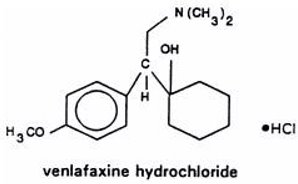
Venlafaxine is designated (R/S)-1-[2-(dimethylamino)-1-(4-methoxyphenyl)ethyl] cyclohexanol hydrochloride or (±)-1-[α- [(dimethylamino)methyl]-p-methoxybenzyl] cyclohexanol hydrochloride and has the empirical formula of C
Venlafaxine Hydrochloride Structural Formula
Venlafaxine hydrochloride is a white to off-white crystalline solid, with a solubility of 572 mg/mL in water (adjusted to ionic strength of 0.2 M with sodium chloride). Its octanol:water (0.2 M sodium chloride) partition coefficient is 0.43.
Drug release is controlled by diffusion through the coating membrane on the spheroids and is not pH-dependent. Capsules contain venlafaxine hydrochloride equivalent to 37.5 mg, 75 mg, or 150 mg venlafaxine. Inactive ingredients consist of cellulose, ethylcellulose, gelatin, hypromellose, iron oxide, and titanium dioxide.
7HOW SUPPLIED/STORAGE AND HANDLING
Effexor XR
  • 37.5 mg, grey cap/peach body with “W” and “Effexor XR” on the cap and “37.5” on the body.
  • 75 mg, peach cap and body with “W” and “Effexor XR” on the cap and “75” on the body.
  • 150 mg, dark orange cap and body with “W” and “Effexor XR” on the cap and “150” on the body.
Store at controlled room temperature, 20° to 25°C (68° to 77°F).
8PATIENT COUNSELING INFORMATION
Advise the patient to read the FDA-approved patient labeling (
Suicidal Thoughts and Behaviors
Advise patients and caregivers to look for the emergence of suicidality, especially early during treatment and when the dose is adjusted up or down, and instruct them to report such symptoms to the healthcare provider
Concomitant Medication
Instruct patients not to take Effexor XR with an MAOI or within 14 days of stopping an MAOI
Serotonin Syndrome
Caution patients about the risk of serotonin syndrome, particularly with the concomitant use of Effexor XR with other serotonergic drugs including triptans, tricyclic antidepressants, opioids, lithium, tryptophan, buspirone, amphetamines, St. John’s Wort, and with drugs that impair metabolism of serotonin (in particular, MAOIs, both those intended to treat psychiatric disorders and also others, such as linezolid). Instruct patients to contact their healthcare provider or report to the emergency room if they experience signs or symptoms of serotonin syndrome
Elevated Blood Pressure
Advise patients that they should have regular monitoring of blood pressure when taking Effexor XR
Increased Risk of Bleeding
Inform patients about the concomitant use of Effexor XR with NSAIDs, aspirin, other antiplatelet drugs, warfarin, or other drugs that affect coagulation because the combined use has been associated with an increased risk of bleeding. Advise patients to inform their health care providers if they are taking or planning to take any prescription or over-the-counter medications that increase the risk of bleeding
Activation of Mania/Hypomania
Advise patients, their families and caregivers to observe for signs of activation of mania/hypomania and instruct them to report such symptoms to the healthcare provider
Cardiovascular/Cerebrovascular Disease
Caution is advised in administering Effexor XR to patients with cardiovascular, cerebrovascular, or lipid metabolism disorders
Serum Cholesterol and Triglyceride Elevation
Advise patients that elevations in total cholesterol, LDL and triglycerides may occur and that measurement of serum lipids may be considered
Discontinuation Syndrome
Advise patients not to abruptly stop taking Effexor XR without talking first with their healthcare provider. Patients should be aware that discontinuation effects may occur when stopping Effexor XR and they should monitor for discontinuation symptoms
Sexual Dysfunction
Advise patients that use of Effexor XR may cause symptoms of sexual dysfunction in both male and female patients. Inform patients that they should discuss any changes in sexual function and potential management strategies with their healthcare provider
Interference with Cognitive and Motor Performance
Caution patients about operating hazardous machinery, including automobiles, until they are reasonably certain that Effexor XR therapy does not adversely affect their ability to engage in such activities.
Alcohol
Advise patients to avoid alcohol while taking Effexor XR
Allergic Reactions
Advise patients to notify their healthcare provider if they develop allergic phenomena such as rash, hives, swelling, or difficulty breathing
Pregnancy
Advise patients to notify their healthcare provider if they become pregnant or intend to become pregnant during treatment with Effexor XR. Advise patients that Effexor XR use during mid to late pregnancy may lead to an increased risk for preeclampsia and may increase the risk for neonatal complications requiring prolonged hospitalization, respiratory support, and tube feeding. Advise patients that there is a pregnancy exposure registry that monitors pregnancy outcomes in women exposed to Effexor XR during pregnancy
Residual Spheroids
Effexor XR contains spheroids, which release the drug slowly into the digestive tract. The insoluble portion of these spheroids is eliminated, and patients may notice spheroids passing in the stool or via colostomy. Patients should be informed that the active medication has already been absorbed by the time the patient sees the spheroids.
Distributed by:
Made in Ireland
© 2023 Viatris Inc.
EFFEXOR XR is a registered trademark of Viatris Specialty LLC, a Viatris Company.
UPJ:EFFXRXR:R1m
9MEDICATION GUIDE
This Medication was approved by the U.S. Food and Drug Administration.     Revised: 8/2023
10PRINCIPAL DISPLAY PANEL – 37.5 mg
ALWAYS DISPENSE WITH MEDICATION GUIDE
NDC 58151-125-93
Effexor XR(venlafaxine HCl)
Extended-Release Capsules
37.5 mg*
30 Capsules     Rx only
Store at controlled room
USUAL DOSAGE
See accompanying
prescribing information.
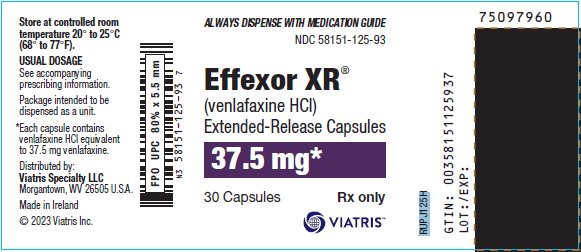
Package intended to be
*Each capsule contains
Distributed by:
Made in Ireland
© 2023 Viatris Inc.
RUPJ125H
Effexor XR Extended-Release Capsules 37.5 mg Bottle Label
11PRINCIPAL DISPLAY PANEL – 75 mg
ALWAYS DISPENSE WITH MEDICATION GUIDE
NDC 58151-126-93
Effexor XR(venlafaxine HCl)
Extended-Release Capsules
75 mg*
30 Capsules     Rx only
Store at controlled room temperature
USUAL DOSAGE
See accompanying prescribing information.
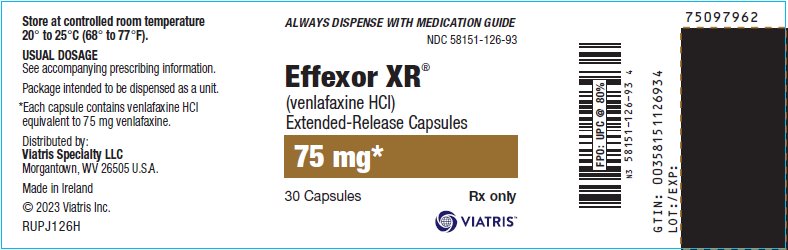
Package intended to be dispensed as a unit.
*Each capsule contains venlafaxine HCI
Distributed by:
Made in Ireland
© 2023 Viatris Inc.
RUPJ126H
Effexor XR Extended-Release Capsules 75 mg Bottle Label
12PRINCIPAL DISPLAY PANEL – 150 mg
ALWAYS DISPENSE WITH MEDICATION GUIDE
NDC 58151-127-93
Effexor XR(venlafaxine HCl)
Extended-Release Capsules
150 mg*
30 Capsules     Rx only
Store at controlled room temperature
USUAL DOSAGE
See accompanying prescribing information.
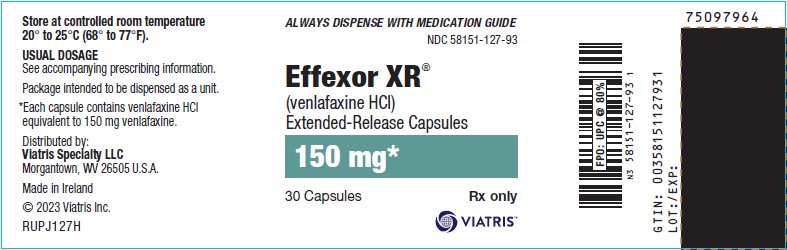
Package intended to be dispensed as a unit.
*Each capsule contains venlafaxine HCI
Distributed by:
Made in Ireland
© 2023 Viatris Inc.
RUPJ127H
Effexor XR Extended-Release Capsules 150 mg Bottle Label