Atherosclerosis Treatments

Find Atherosclerosis Treatments

Brand Name

Xarelto

Generic Name
Rivaroxaban
View Brand Information
FDA approval date: July 01, 2011
Classification: Factor Xa Inhibitor
Form: Tablet, Kit, Granule, For

What is Xarelto (Rivaroxaban)?

XARELTO is a factor Xa inhibitor indicated: to reduce risk of stroke and systemic embolism in nonvalvular atrial fibrillation.
Save this treatment for later
Sign Up
Not sure about your diagnosis?
Check Your Symptoms
Tired of the same old research?
Check Latest Advances

Related Clinical Trials

Efficacy of Rivaroxaban for Thromboprophylaxis in Idiopathic Membranous Nephropathy: A Prospective, Single-Center, Randomized Controlled Trial

Summary: Through a prospective, single-center, randomized controlled trial, we aim to determine the thromboprophylactic efficacy of rivaroxaban in patients with idiopathic membranous nephropathy (IMN). IMN patients at high risk of thrombosis and low risk of bleeding will be enrolled and randomly assigned to a rivaroxaban group or a control group (receiving warfarin). Prophylactic anticoagulation will be ad...

DEFIANCE - ClotTriever® Thrombectomy System vs. Anticoagulation Alone for Treatment of Deep Vein Thrombosis

Summary: This study is a prospective, multicenter, randomized controlled trial of an interventional strategy using the ClotTriever System to achieve and maintain vessel patency (ClotTriever Intervention Arm) versus conservative medical management using anticoagulation therapy alone (Conservative Medical Management Arm) in the treatment of subjects with symptomatic unilateral iliofemoral DVT. The study will...

PEERLESS II: RCT of FlowTriever vs. Anticoagulation Alone in Pulmonary Embolism

Summary: This study is a prospective, multicenter, randomized controlled trial of the FlowTriever System plus anticoagulation compared to anticoagulation alone for intermediate-risk acute PE.

Brand Information

XARELTO (rivaroxaban)
WARNING: (A) PREMATURE DISCONTINUATION OF XARELTO INCREASES THE RISK OF THROMBOTIC EVENTS, (B) SPINAL/EPIDURAL HEMATOMA
A. Premature discontinuation of XARELTO increases the risk of thrombotic events
Premature discontinuation of any oral anticoagulant, including XARELTO, increases the risk of thrombotic events. If anticoagulation with XARELTO is discontinued for a reason other than pathological bleeding or completion of a course of therapy, consider coverage with another anticoagulant
B. Spinal/epidural hematoma
Epidural or spinal hematomas have occurred in patients treated with XARELTO who are receiving neuraxial anesthesia or undergoing spinal puncture. These hematomas may result in long-term or permanent paralysis. Consider these risks when scheduling patients for spinal procedures. Factors that can increase the risk of developing epidural or spinal hematomas in these patients include:
  • use of indwelling epidural catheters
  • concomitant use of other drugs that affect hemostasis, such as non-steroidal anti-inflammatory drugs (NSAIDs), platelet inhibitors, other anticoagulants
  • a history of traumatic or repeated epidural or spinal punctures
  • a history of spinal deformity or spinal surgery
  • optimal timing between the administration of XARELTO and neuraxial procedures is not known
[see
Monitor patients frequently for signs and symptoms of neurological impairment. If neurological compromise is noted, urgent treatment is necessary
Consider the benefits and risks before neuraxial intervention in patients anticoagulated or to be anticoagulated for thromboprophylaxis
1DOSAGE FORMS AND STRENGTHS
  • 2.5 mg tablets: Round, light yellow, and film-coated with a triangle pointing down above a "2.5" marked on one side and "Xa" on the other side
  • 10 mg tablets: Round, light red, biconvex and film-coated with a triangle pointing down above a "10" marked on one side and "Xa" on the other side
  • 15 mg tablets: Round, red, biconvex, and film-coated with a triangle pointing down above a "15" marked on one side and "Xa" on the other side
  • 20 mg tablets: Triangle-shaped, dark red, and film-coated with a triangle pointing down above a "20" marked on one side and "Xa" on the other side
  • For oral suspension: white to off-white granules; once reconstituted, provide flavored white to off-white opaque liquid with a concentration of 1 mg/mL.
2CONTRAINDICATIONS
XARELTO is contraindicated in patients with:
  • active pathological bleeding
  • severe hypersensitivity reaction to XARELTO (e.g., anaphylactic reactions)
3ADVERSE REACTIONS
The following clinically significant adverse reactions are also discussed in other sections of the labeling:
  • Increased Risk of Stroke After Discontinuation in Nonvalvular Atrial Fibrillation
  • Bleeding Risk
  • Spinal/Epidural Hematoma
3.1Clinical Trials Experience
Because clinical trials are conducted under widely varying conditions, adverse reaction rates observed in the clinical trials of a drug cannot be directly compared to rates in the clinical trials of another drug and may not reflect the rates observed in clinical practice.
During clinical development for the approved indications, 34,947 adult patients were exposed to XARELTO.
Hemorrhage
The most common adverse reactions with XARELTO were bleeding complications
Nonvalvular Atrial Fibrillation
In the ROCKET AF trial, the most frequent adverse reactions associated with permanent drug discontinuation were bleeding events, with incidence rates of 4.3% for XARELTO vs. 3.1% for warfarin. The incidence of discontinuations for non-bleeding adverse events was similar in both treatment groups.
Table 5 shows the number of patients experiencing various types of bleeding events in the ROCKET AF trial.
Figure 1 shows the risk of major bleeding events across major subgroups.
Treatment of Deep Vein Thrombosis (DVT) and/or Pulmonary Embolism (PE)
EINSTEIN DVT and EINSTEIN PE Studies
In the pooled analysis of the EINSTEIN DVT and EINSTEIN PE clinical studies, the most frequent adverse reactions leading to permanent drug discontinuation were bleeding events, with XARELTO vs. enoxaparin/Vitamin K antagonist (VKA) incidence rates of 1.7% vs. 1.5%, respectively. The mean duration of treatment was 208 days for XARELTO-treated patients and 204 days for enoxaparin/VKA-treated patients.
Table 6 shows the number of patients experiencing major bleeding events in the pooled analysis of the EINSTEIN DVT and EINSTEIN PE studies.
Reduction in the Risk of Recurrence of DVT and/or PE
EINSTEIN CHOICE Study
In the EINSTEIN CHOICE clinical study, the most frequent adverse reactions associated with permanent drug discontinuation were bleeding events, with incidence rates of 1% for XARELTO 10 mg, 2% for XARELTO 20 mg, and 1% for acetylsalicylic acid (aspirin) 100 mg. The mean duration of treatment was 293 days for XARELTO 10 mg-treated patients and 286 days for aspirin 100 mg-treated patients.
Table 7 shows the number of patients experiencing bleeding events in the EINSTEIN CHOICE study.
In the EINSTEIN CHOICE study, there was an increased incidence of bleeding, including major and CRNM bleeding in the XARELTO 20 mg group compared to the XARELTO 10 mg or aspirin 100 mg groups.
Prophylaxis of Deep Vein Thrombosis Following Hip or Knee Replacement Surgery
In the RECORD clinical trials, the overall incidence rate of adverse reactions leading to permanent treatment discontinuation was 3.7% with XARELTO.
The rates of major bleeding events and any bleeding events observed in patients in the RECORD clinical trials are shown in Table 8.
Following XARELTO treatment, the majority of major bleeding complications (≥60%) occurred during the first week after surgery.
Prophylaxis of Venous Thromboembolism in Acutely Ill Medical Patients at Risk for Thromboembolic Complications Not at High Risk of Bleeding
In the MAGELLAN study, the most frequent adverse reactions associated with permanent drug discontinuation were bleeding events. Cases of pulmonary hemorrhage and pulmonary hemorrhage with bronchiectasis were observed. Patients with bronchiectasis/pulmonary cavitation, active cancer (i.e., undergoing acute, in-hospital cancer treatment), dual antiplatelet therapy or active gastroduodenal ulcer or any bleeding in the previous three months all had an excess of bleeding with XARELTO compared with enoxaparin/placebo and are excluded from all MAGELLAN data presented in Table 9. The incidence of bleeding leading to drug discontinuation was 2.5% for XARELTO vs. 1.4% for enoxaparin/placebo.
Table 9 shows the number of patients experiencing various types of bleeding events in the MAGELLAN study.
Reduction of Risk of Major Cardiovascular Events in Patients with CAD
In the COMPASS trial overall, the most frequent adverse reactions associated with permanent drug discontinuation were bleeding events, with incidence rates of 2.7% for XARELTO 2.5 mg twice daily vs. 1.2% for placebo on background therapy for all patients with aspirin 100 mg once daily. The incidences of important bleeding events in the CAD and PAD populations in COMPASS were similar.
Table 10 shows the number of patients experiencing various types of major bleeding events in the COMPASS trial.
Reduction of Risk of Major Thrombotic Vascular Events in Patients with Peripheral Artery Disease (PAD), Including Patients after Lower Extremity Revascularization due to Symptomatic PAD
The incidence of premature permanent discontinuation due to bleeding events for XARELTO 2.5 mg twice daily vs. placebo on background therapy with aspirin 100 mg once daily in VOYAGER was 4.1% vs. 1.6% and in COMPASS PAD was 2.7% vs. 1.3%, respectively.
Table 11 shows the number of patients experiencing various types of TIMI (Thrombolysis in Myocardial Infarction) major bleeding events in the VOYAGER trial. The most common site of bleeding was gastrointestinal.
Other Adverse Reactions
Non-hemorrhagic adverse reactions reported in ≥1% of XARELTO-treated patients in the EINSTEIN DVT and EINSTEIN PE studies are shown in Table 12.
Non-hemorrhagic adverse reactions reported in ≥1% of XARELTO-treated patients in RECORD 1–3 studies are shown in Table 13.
Pediatric Patients
Treatment of Venous Thromboembolism and Reduction in Risk of Recurrent Venous Thromboembolism in Pediatric Patients
The safety assessment is based on data from the EINSTEIN Junior Phase 3 study in 491 patients from birth to less than 18 years of age. Patients were randomized 2:1 to receive body weight-adjusted doses of XARELTO or comparator (unfractionated heparin, low molecular weight heparin, fondaparinux or VKA).
Discontinuation due to bleeding events occurred in 6 (1.8%) patients in the XARELTO group and 3 (1.9%) patients in the comparator group.
Table 14 shows the number of patients experiencing bleeding events in the EINSTEIN Junior study. In female patients who had experienced menarche, ages 12 to <18 years of age, menorrhagia occurred in 23 (27%) female patients in the XARELTO group and 5 (10%) female patients in the comparator group.
Non-bleeding adverse reactions reported in ≥5% of XARELTO-treated patients are shown in Table 15.
A clinically relevant adverse reaction in XARELTO-treated patients was vomiting (10.6% in the XARELTO group vs 8% in the comparator group).
Thromboprophylaxis in Pediatric Patients with Congenital Heart Disease (CHD) after the Fontan Procedure
The data below are based on Part B of the UNIVERSE study which was designed to evaluate the safety and efficacy of XARELTO for thromboprophylaxis in 98 children with CHD after the Fontan procedure who took at least one dose of study drug. Patients in Part B were randomized 2:1 to receive either body weight-adjusted doses of XARELTO or aspirin (approximately 5 mg/kg).
Discontinuation due to bleeding events occurred in 1 (1.6%) patient in the XARELTO group and no patients in the aspirin group.
Table 16 shows the number of patients experiencing bleeding events in the UNIVERSE study.
Non-bleeding adverse reactions reported in ≥5% of XARELTO-treated patients are shown in Table 17.
3.2Postmarketing Experience
The following adverse reactions have been identified during post-approval use of XARELTO. Because these reactions are reported voluntarily from a population of uncertain size, it is not always possible to reliably estimate their frequency or establish a causal relationship to drug exposure.
Blood and lymphatic system disorders: agranulocytosis, thrombocytopenia
Hepatobiliary disorders: jaundice, cholestasis, hepatitis (including hepatocellular injury)
Immune system disorders: hypersensitivity, anaphylactic reaction, anaphylactic shock, angioedema
Nervous system disorders: hemiparesis
Renal disorders: Anticoagulant-related nephropathy
Respiratory, thoracic and mediastinal disorders: Eosinophilic pneumonia
Skin and subcutaneous tissue disorders: Stevens-Johnson syndrome, drug reaction with eosinophilia and systemic symptoms (DRESS)
Injury, poisoning and procedural complications: Atraumatic splenic rupture
4OVERDOSAGE
Overdose of XARELTO may lead to hemorrhage. Discontinue XARELTO and initiate appropriate therapy if bleeding complications associated with overdosage occur. Rivaroxaban systemic exposure is not further increased at single doses >50 mg due to limited absorption. The use of activated charcoal to reduce absorption in case of XARELTO overdose may be considered. Due to the high plasma protein binding, rivaroxaban is not dialyzable
5DESCRIPTION
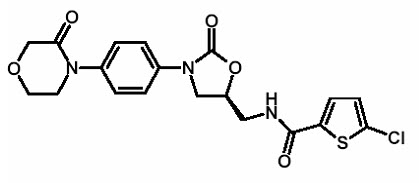
Rivaroxaban, a factor Xa (FXa) inhibitor, is the active ingredient in XARELTO
Chemical Structure
Rivaroxaban is a pure (
Each XARELTO tablet contains 2.5 mg, 10 mg, 15 mg, or 20 mg of rivaroxaban. The inactive ingredients of XARELTO are: croscarmellose sodium, hypromellose, lactose monohydrate, magnesium stearate, microcrystalline cellulose, and sodium lauryl sulfate. Additionally, the proprietary film coating mixture used for XARELTO 2.5 mg is Opadry
XARELTO for oral suspension is supplied as granules in bottles containing 155 mg of rivaroxaban (1 mg of rivaroxaban per mL after reconstitution). The inactive ingredients are: anhydrous citric acid, hypromellose, mannitol, microcrystalline cellulose and carboxymethylcellulose sodium, sodium benzoate, sucralose, sweet and creamy flavor and xanthan gum.
6HOW SUPPLIED/STORAGE AND HANDLING
XARELTO
  • 2.5 mg tablets are round, light yellow, and film-coated with a triangle pointing down above a "2.5" marked on one side and "Xa" on the other side. The tablets are supplied in the packages listed:
  • 10 mg tablets are round, light red, biconvex film-coated tablets marked with a triangle pointing down above a "10" on one side, and "Xa" on the other side. The tablets are supplied in the packages listed:
  • 15 mg tablets are round, red, biconvex film-coated tablets with a triangle pointing down above a "15" marked on one side and "Xa" on the other side. The tablets are supplied in the packages listed:
  • 20 mg tablets are triangle-shaped, dark red film-coated tablets with a triangle pointing down above a "20" marked on one side and "Xa" on the other side. The tablets are supplied in the packages listed:
  • Starter Pack for treatment of deep vein thrombosis and treatment of pulmonary embolism:
XARELTO
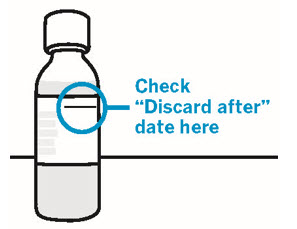
Discard reconstituted suspension after "Discard after" date written on the bottle.
7PATIENT COUNSELING INFORMATION
For the tablets, advise the patient and/or caregiver to read the FDA-approved patient labeling (Medication Guide).
For the suspension, advise the patient and/or caregiver to read the FDA-approved patient labeling (Medication Guide and Instructions for Use).
Instructions for Patient Use
  • Advise patients to take XARELTO only as directed.
  • Remind patients to not discontinue XARELTO without first talking to their healthcare professional.
Adults
  • Advise patients with atrial fibrillation to take XARELTO once daily with the evening meal.
  • Advise patients for initial treatment of DVT and/or PE to take XARELTO 15 mg or 20 mg tablets with food at approximately the same time every day
  • Advise patients who are at a continued risk of recurrent DVT and/or PE after at least 6 months of initial treatment, to take XARELTO 10 mg once daily with or without food
  • Advise patients who cannot swallow the tablet whole to crush XARELTO and combine with a small amount of applesauce followed by food
  • For patients requiring an NG tube or gastric feeding tube, instruct the patient or caregiver to crush the XARELTO tablet and mix it with a small amount of water before administering via the tube
  • If a dose is missed, advise the patient according to the instructions in the Full Prescribing Information based on their dosing schedule
Pediatric Patients
  • The adult caregiver should administer the dose. Advise caregivers to use the syringes provided in the original carton.
  • Advise the caregiver whether the dose needs to be taken with food or not
  • Advise the caregiver the tablet must not be split in an attempt to provide a fraction of a tablet dose
  • If a child vomits or spits up the dose within 30 minutes after receiving the dose, a new dose should be given. However, if the child vomits more than 30 minutes after the dose is taken, the dose should not be re-administered and the next dose should be taken as scheduled. If a child vomits or spits up the dose repeatedly, the caregiver should contact the child's doctor right away
  • For children who are unable to swallow whole tablets, XARELTO oral suspension may be used.
  • If a dose is missed, advise the patient according to the instructions in the Full Prescribing Information based on their dosing schedule
Bleeding Risks
  • Advise patients to report any unusual bleeding or bruising to their physician. Inform patients that it might take them longer than usual to stop bleeding, and that they may bruise and/or bleed more easily when they are treated with XARELTO
  • If patients have had neuraxial anesthesia or spinal puncture, and particularly, if they are taking concomitant NSAIDs or platelet inhibitors, advise patients to watch for signs and symptoms of spinal or epidural hematoma, such as back pain, tingling, numbness (especially in the lower limbs), muscle weakness, and stool or urine incontinence. If any of these symptoms occur, advise the patient to contact his or her physician immediately
Invasive or Surgical Procedures
Instruct patients to inform their healthcare professional that they are taking XARELTO before any invasive procedure (including dental procedures) is scheduled.
Concomitant Medication and Herbals
Advise patients to inform their physicians and dentists if they are taking, or plan to take, any prescription or over-the-counter drugs or herbals, so their healthcare professionals can evaluate potential interactions
Pregnancy and Pregnancy-Related Hemorrhage
  • Advise patients to inform their physician immediately if they become pregnant or intend to become pregnant during treatment with XARELTO
  • Advise pregnant women receiving XARELTO to immediately report to their physician any bleeding or symptoms of blood loss

Lactation
Advise patients to discuss with their physician the benefits and risks of XARELTO for the mother and for the child if they are nursing or intend to nurse during anticoagulant treatment
Females and Males of Reproductive Potential
Advise patients who can become pregnant to discuss pregnancy planning with their physician
8Instructions for Use XARELTO® (zah-REL-toe) (rivaroxaban) for oral suspension
Image
This Instructions for Use contains information on how to give a dose of XARELTO oral suspension.
Read this Instructions for Use before giving XARELTO and each time you get a refill. There may be new information. This leaflet does not take the place of talking with your doctor about your child's medical condition or treatment.
Important information:
  • XARELTO suspension is for oral use only.
  • Give XARELTO to your child exactly as prescribed by your doctor. The adult caregiver should give the dose. If you have questions, contact your doctor or pharmacist for more information on giving a dose.
  • Only use the oral dosing syringe provided with XARELTO oral suspension. Contact your doctor or pharmacist if the oral dosing syringe is missing, lost or damaged.
ImageStorage information
Store XARELTO oral suspension at room temperature between
Store the bottle upright with the oral dosing syringes in the original carton.
Keep XARELTO and all medicines out of reach of children.
XARELTO Oral Dosing Syringe:
XARELTO Bottle
Image
Image
Check "Discard after" date on the XARELTO bottle.
If "Discard after" date has passed,
Image
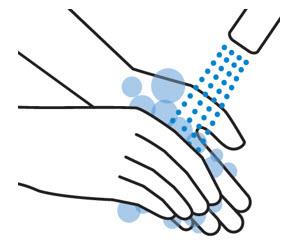
Wash hands.
Wash your hands well with soap and warm water.
Image
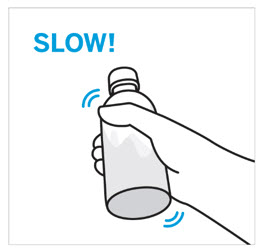
Shake bottle slowly for 10 seconds before each use.
Image
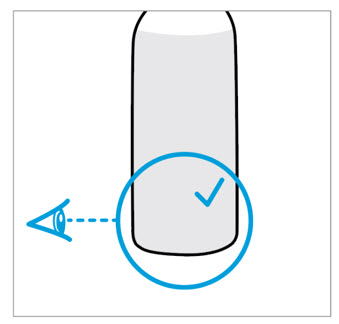
Check XARELTO oral suspension.
If there are lumps or granules at the bottom of the bottle, shake the bottle
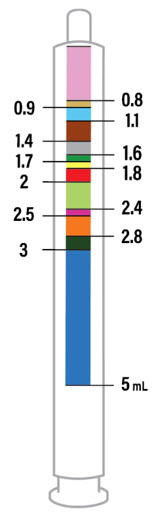
Find your dose line.
You can use either side of the syringe to set your dose.
If using mL side of syringe:
Top of the plunger should line up with the prescribed mL.
If using color side of syringe:
Top of the plunger should line up with the prescribed mL dose line at the
Image
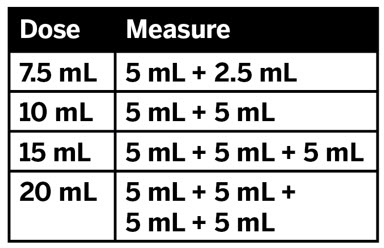
If your dose is more than 5 mL.
You will need to use the same syringe more than one time. Repeat Steps 4 and 5 to complete your dose. Ask your pharmacist if you are not sure.
Image
Image
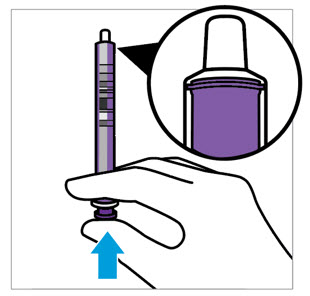
Push plunger all the way in to remove air.
Image
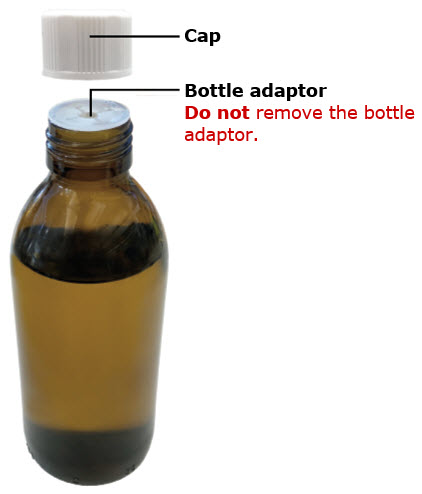
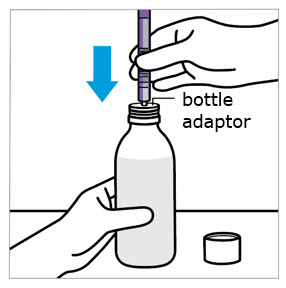
Insert oral dosing syringe into bottle adaptor.
Twist off the cap from the bottle.
Do not remove the bottle adaptor from the bottle.
Insert the syringe tip into the bottle adaptor.
Image
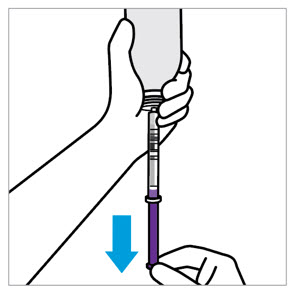
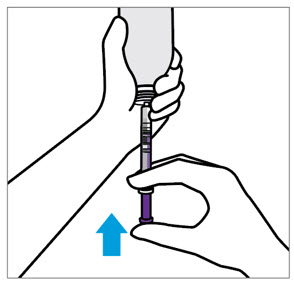
Fill oral dosing syringe.
Turn the bottle upside down, as shown.
Pull the plunger to fill the oral dosing syringe
ImageCAUTION:
Make sure you have enough medicine for a full dose. Do not take a partial dose.
Image
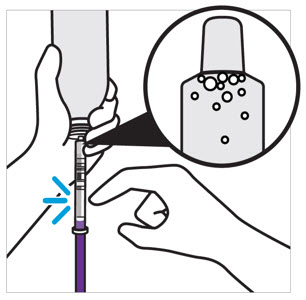
Tap syringe to move air bubbles to the top.
Doing this helps set the correct dose.
Image
Adjust to your prescribed dose.
If using mL side of syringe: Push plunger to align with the prescribed dose line.
If using color side of syringe: Push plunger to align with the prescribed mL dose line at the bottom of the color band.
Image
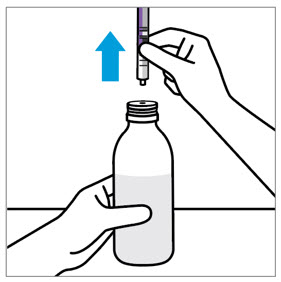
Remove oral dosing syringe.
Place the bottle on a flat surface.
Remove the oral dosing syringe from the bottle.
Image
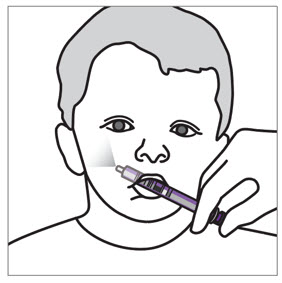
Give the dose.
Place the oral dosing syringe gently into the child's mouth with
This allows the child to swallow naturally.
Make sure the child swallows the full dose.
If your child vomits or spits out the medicine repeatedly, contact your child's doctor right away.
Image
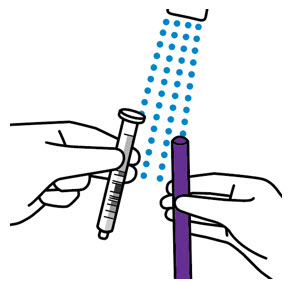
Close XARELTO bottle and rinse oral dosing syringe.
Rinse the oral dosing syringe with tap water and let it air dry.
Disposing XARELTO bottle and syringe
  • Throw the XARELTO bottle away in your household trash.
  • Throw away any used oral dosing syringe with the opening of a new XARELTO bottle.
  • Do not pour XARELTO suspension down the drain (for example: sink, toilet, shower or tub).
  • Do not recycle the bottle.
Manufactured for:
For patent information: www.janssenpatents.com
© Johnson & Johnson and its affiliates 2021, 2024
Xarelto is a registered trademark of Bayer Aktiengesellschaft.
This Instructions for Use has been approved by the U.S. Food and Drug Administration.