Cardiac Arrest Treatments
Find Cardiac Arrest Treatments
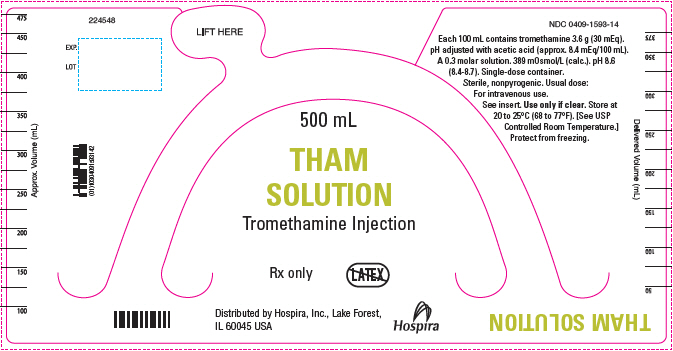
THAM
What is THAM (Tromethamine)?
Approved To Treat
Related Clinical Trials
Summary: The purpose of this study is to characterize the pharmacokinetic (PK) and safety profile of anesthetics and analgesics in children and adolescents.
Summary: Out of all proportion to its short duration, the perioperative period is critical in determining the long-term outcome of cancer. To contribute to a better understanding of the neural and inflammatory mechanisms underlying this issue, we aim to implement a novel intervention based on the preoperative use of non-steroidal anti-inflammatory drugs (NSAIDs) with or without an anti-epileptic drug. Our ...
Summary: The purpose of this research is to determine if two commonly used medications to treat metabolic acidosis in the setting of cardiac surgery, sodium bicarbonate and THAM, are equivalent.
Related Latest Advances
Brand Information

- Metabolic Acidosis Associated with Cardiac Bypass Surgery.
- Tham Solution has been found to be primarily beneficial in correcting metabolic acidosis which may occur during or immediately following cardiac bypass surgical procedures.
- Correction of Acidity of ACD Blood in Cardiac Bypass Surgery.
- It is well known that ACD blood is acidic and becomes more acidic on storage. Tromethamine effectively corrects this acidity. Tham Solution may be added directly to the blood used to prime the pump-oxygenator. When ACD blood is brought to a normal pH range the patient is spared an initial acid load. Additional tromethamine may be indicated during cardiac bypass surgery should metabolic acidosis appear.
- Metabolic Acidosis Associated with Cardiac Arrest.
- Acidosis is nearly always one of the consequences of cardiac arrest and, in some instances, may even be a causative factor in arrest. It is important therefore, that the correction of acidosis should be started promptly with other resuscitative efforts. By correcting acidosis, Tham Solution (tromethamine injection) has caused the arrested heart to respond to resuscitative efforts after standard methods alone had failed. In these cases, tromethamine was given intraventricularly. It is to be noted, however, that such precariously ill patients often have died subsequently of causes unrelated to the administration of tromethamine. With administration by the peripheral venous route, metabolic acidosis has been corrected in a majority of patients. The success in reinstitution of cardiac rhythm by this means probably has not been of the same order of magnitude as with the intraventricular route.
- Large doses of Tham Solution may depress ventilation, as a result of increased blood pH and reduced CO
- Care must be exercised to prevent perivascular infiltration since this can cause inflammation, necrosis and sloughing of tissue. Venospasm and intravenous thrombosis, which may occur during infusion, can be minimized by insuring that the injection needle is well within the largest available vein and that solutions are slowly infused. Intravenous catheters are recommended. If perivascular infiltration occurs, institute appropriate countermeasures (see
- Tham Solution (tromethamine injection) should be administered slowly and in amounts sufficient only to correct the existing acidosis, and to avoid overdosage and alkalosis. Overdosage in terms of total drug and/or too rapid administration, may cause hypoglycemia of a prolonged duration (several hours). Therefore, frequent blood glucose determinations should be made during and after therapy.
- Extreme care should be exercised in patients with renal disease or reduced urinary output because of potential hyperkalemia and the possibility of a decreased excretion of tromethamine. In such patients, the drug should be used cautiously with electrocardiographic monitoring and frequent serum potassium determinations.
- Because clinical experience has been limited generally to short-term use, the drug should not be administered for more than a period of one day except in a life-threatening situation.
- Blood pH, PCO
- While it has not been shown that the drug increases coagulation time in humans, this possibility should be kept in mind since this has been noted experimentally in dogs.