Childhood Iron Deficiency AnemiaSymptoms, Doctors, Treatments, Advances & More
Learn About Childhood Iron Deficiency Anemia
View Main Condition: Anemia
Anemia is a condition in which the body does not have enough healthy red blood cells. Red blood cells provide oxygen to body tissues. There are many types of anemia.
Iron helps make red blood cells and helps these cells carry oxygen. A lack of iron in the body may lead to anemia. The medical name of this problem is iron deficiency anemia.
Anemia - iron deficiency - children
Anemia caused by a low iron level is the most common form of anemia. The body gets iron through certain foods. It also reuses iron from old red blood cells.
A diet that does not have enough iron is the most common cause of this type of anemia in children. When a child is growing rapidly, such as during puberty, even more iron is needed.
Toddlers who drink too much cow's milk may also become anemic because drinking too much cow's milk makes it difficult for the body to absorb iron. Also, children who drink too much cow's milk may not eat enough other healthy foods that have iron.
Other causes may be:
- The body is not able to absorb iron well, even though the child is eating enough iron.
- Slow blood loss over a long period, often due to menstrual periods or bleeding in the digestive tract.
Iron deficiency in children can also be related to lead poisoning.
Mild anemia may have no symptoms. As the iron level and blood counts become lower, your child may:
- Act irritable
- Become short of breath
- Crave unusual foods (pica)
- Eat less food
- Feel tired or weak all the time
- Have a sore tongue
- Have headaches or dizziness
With more severe anemia, your child may have:
- Blue-tinged or very pale whites of eyes
- Brittle nails
- Pale skin
Since children only absorb a small amount of the iron they eat, most children need to have 3 mg/kg to 6 mg/kg of iron per day, in 1 to 2 doses per day.
Eating healthy foods is the most important way to prevent and treat iron deficiency. Good sources of iron include:
- Apricots
- Chicken, turkey, fish, and other meats
- Dried beans, lentils, and soybeans
- Eggs
- Liver
- Molasses
- Oatmeal
- Peanut butter
- Prune juice
- Raisins and prunes
- Spinach, kale and other green leafy vegetables
If a healthy diet does not prevent or treat your child's low iron level and anemia, the provider will likely recommend iron supplements for your child. These are taken by mouth.
Do not give your child iron supplements or vitamins with iron without checking with your child's provider. The provider will prescribe the right kind of supplement for your child. Too much iron in children can be toxic. Supplemental iron is usually prescribed to be taken by mouth, but may also be given intravenously (through a vein).
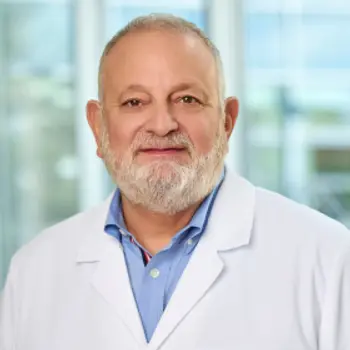
Abingdon Physician Partners - Regional Cancer Center At Johnston Memorial Hospital
Anthony DeSalvo, MD, believes the best care comes from both science and compassion, especially during life's most difficult moments. He chose to specialize in oncology because it's rapidly advancing field that allows him to support patients when they need it most. After an internal medicine rotation, he explored several career paths but felt a strong connection to oncology and the opportunity it provides to make a meaningful difference. Originally from upstate New York, Dr. DeSalvo first came to the Appalachian Highlands to attend Virginia Tech and fell in love with the region. He was drawn back by the honesty and faith of the people here. In his free time, he enjoys restoring his pre-Civil War farmhouse, hiking and swimming. Dr. Desalvo is rated as a Distinguished provider by MediFind in the treatment of Childhood Iron Deficiency Anemia. He is also highly rated in 32 other conditions, according to our data. His clinical expertise encompasses Inflammatory Breast Cancer, Paget Disease of the Breast, Angiosarcoma, and Childhood Iron Deficiency Anemia. Dr. Desalvo is board certified in American Board Of Internal Medicine.
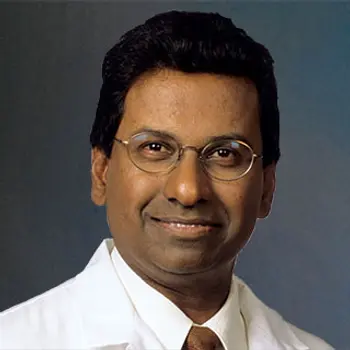
Ballad Health Cancer Center
Asheesh Shipstone is a Hematologist and an Oncologist practicing medicine in Kingsport, Tennessee. Dr. Shipstone is rated as a Distinguished provider by MediFind in the treatment of Childhood Iron Deficiency Anemia. He is also highly rated in 54 other conditions, according to our data. His clinical expertise encompasses Adult Immune Thrombocytopenia, Colorectal Cancer, Hemangioma Thrombocytopenia Syndrome, and Thrombocytopenia. Dr. Shipstone is board certified in American Board Of Internal Medicine.

Bassett Medical Center
Anush Patel is a Hematologist practicing medicine in Cooperstown, New York. Dr. Patel is rated as a Distinguished provider by MediFind in the treatment of Childhood Iron Deficiency Anemia. He is also highly rated in 58 other conditions, according to our data. His clinical expertise encompasses Angiosarcoma, Small Cell Lung Cancer (SCLC), Lung Adenocarcinoma, and Iron Deficiency Anemia.
With treatment, the outcome is likely to be good. In most cases, the blood counts will return to normal in 2 to 3 months. It is important that your child's provider finds the cause of your child's iron deficiency.
Anemia caused by a low iron level can affect a child's ability to learn in school. A low iron level can cause decreased attention span, reduced alertness, and learning problems in children.
A low iron level can cause the body to absorb too much lead.
Eating a variety of healthy foods is the most important way to prevent and treat iron deficiency.
Summary: Malnutrition and infectious disease form a vicious circle, posing a double threat to vulnerable children in low- and middle-income countries. Malnutrition makes children more vulnerable to infectious diseases, while infectious diseases increase the risk of malnutrition. When caught in this cycle, children are far more likely to die or suffer adverse effects on their health and development. High ra...
Summary: Varus-derotation osteotomy (VDRO) is a surgery to prevent or address hip displacement in children. Many children having this surgery have cerebral palsy or other neuromotor disorders, who have a higher rate of malnutrition, including low iron or anemia. This can affect their surgical outcomes, such as increasing their need for blood transfusions. This project aims to develop a preoperative nutriti...
Published Date: January 02, 2026
Published By: Neil K. Kaneshiro, MD, MHA, Clinical Professor of Pediatrics, University of Washington School of Medicine, Seattle, WA. Also reviewed by David C. Dugdale, MD, Medical Director, Brenda Conaway, Editorial Director, and the A.D.A.M. Editorial team.
National Heart, Lung, and Blood Institute website. Iron-deficiency anemia. www.nhlbi.nih.gov/health/anemia/iron-deficiency-anemia. Updated March 24, 2022. Accessed January 21, 2026.
Rothman JA. Iron-deficiency anemia. In: Kliegman RM, St. Geme JW, Blum NJ, et al, eds. Nelson Textbook of Pediatrics. 22nd ed. Philadelphia, PA: Elsevier; 2025:chap 504.