ColitisSymptoms, Doctors, Treatments, Advances & More
Learn About Colitis
Colitis is swelling (inflammation) of the large intestine (colon).
Most of the time, the cause of colitis is not known.
Causes of colitis include:
- Infections caused by a virus, bacteria or parasite
- Crohn disease
- Ulcerative colitis
- Lack of blood flow to the colon (ischemic colitis)
- Past radiation to the colon (radiation colitis and strictures)
- Necrotizing enterocolitis in newborns
- Pseudomembranous colitis caused by Clostridium difficile infection (now called Clostridiodes difficile)
Symptoms can include:
- Abdominal pain and bloating that may be constant or come and go
- Bloody stools
- Constant urge to have a bowel movement (tenesmus)
- Dehydration
- Diarrhea
- Fever
Your treatment will depend on the cause of the disease.
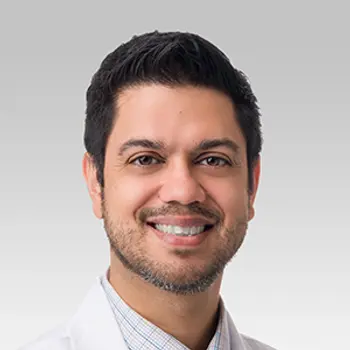
Parambir Dulai is a Gastroenterologist practicing medicine in Chicago, Illinois. He has been practicing medicine for over 17 years. Dr. Dulai is rated as an Elite provider by MediFind in the treatment of Colitis. He is also highly rated in 10 other conditions, according to our data. His clinical expertise encompasses Viral Gastroenteritis, Ulcerative Colitis, Hemorrhagic Proctocolitis, Endoscopy, and Colonoscopy. Dr. Dulai is board certified in American Board Of Internal Medicine - Gastroenterology (Certified).

Perelman Center For Advanced Medicine South Pavilion
Gary Lichtenstein is a Gastroenterologist practicing medicine in Philadelphia, Pennsylvania. Dr. Lichtenstein is rated as an Elite provider by MediFind in the treatment of Colitis. He is also highly rated in 17 other conditions, according to our data. His clinical expertise encompasses Ulcerative Colitis, Viral Gastroenteritis, Crohn's Disease, Endoscopy, and Colonoscopy. Dr. Lichtenstein is currently accepting new patients.

Cleveland Clinic Main Campus
Miguel Regueiro is a Gastroenterologist practicing medicine in Cleveland, Ohio. Dr. Regueiro is rated as an Elite provider by MediFind in the treatment of Colitis. He is also highly rated in 16 other conditions, according to our data. His clinical expertise encompasses Crohn's Disease, Viral Gastroenteritis, Ulcerative Colitis, Ileostomy, and Colonoscopy. Dr. Regueiro is board certified in American Board Of Internal Medicine, 1997.
The outlook depends on the cause of the problem.
- Crohn disease is a chronic condition which has no cure, but can be controlled. Biologic agents are very effective in controlling symptoms of Crohn colitis.
- Ulcerative colitis can usually be controlled with medicines, including biologic agents. If not controlled, it can be cured by surgically removing the colon.
- Viral, bacterial, and parasitic colitis can be cured with appropriate medicines.
- Pseudomembranous colitis caused by Clostridioides difficile can usually be cured with appropriate antibiotics.
Complications may include:
- Bleeding with bowel movements
- Perforation of the colon
- Toxic megacolon
Contact your provider if you have symptoms such as:
- Abdominal pain that does not get better
- Blood in the stool or stools that look black
- Diarrhea or vomiting that does not go away
- Swollen abdomen
Summary: Ulcerative colitis (UC) is a type of inflammatory bowel disease that causes inflammation and bleeding from the lining of the rectum and colon (large intestine). This study will assess the change in disease activity of risankizumab treatment in adult participants with moderate to severe UC in real-world clinical practice. Risankizumab is an approved drug for treating participants with ulcerative co...
Summary: The gut microbiota comprises all microorganisms inhabiting the digestive tract, evolving throughout life under the influence of various intrinsic and extrinsic factors. Under healthy conditions, the microbiota remains stable, resilient, and maintains a symbiotic relationship with its host. Conversely, dysbiosis refers to an alteration in microbial composition and function, which has been linked to...
Published Date: July 22, 2025
Published By: Todd Eisner, MD, Private practice specializing in Gastroenterology in Boca Raton and Delray Beach, Florida at Gastroenterology Consultants of Boca Raton. Affiliate Assistant Professor, Florida Atlantic University School of Medicine. Review provided by VeriMed Healthcare Network. Also reviewed by David C. Dugdale, MD, Medical Director, Brenda Conaway, Editorial Director, and the A.D.A.M. Editorial team.
Ananthakrishnan AN, Regueiro MD, Rubin DT. Management of inflammatory bowel diseases. In: Chung RT, Rubin DT, Wilcox CM, eds. Sleisenger and Fordtran's Gastrointestinal and Liver Disease. 12th ed. Philadelphia, PA: Elsevier; 2026:chap 118.
Lichtenstein GR. Inflammatory bowel disease. In: Goldman L, Cooney KA, eds. Goldman-Cecil Medicine. 27th ed. Philadelphia, PA: Elsevier; 2024:chap 127.
Pardi DS, Tome J. Other diseases of the colon. In: Chung RT, Rubin DT, Wilcox CM, eds. Sleisenger and Fordtran's Gastrointestinal and Liver Disease. 12th ed. Philadelphia, PA: Elsevier; 2026:chap 130.