Cortical DysplasiaSymptoms, Doctors, Treatments, Advances & More
Learn About Cortical Dysplasia
For a parent, navigating a child’s diagnosis of epilepsy can be a challenging journey. When seizures are difficult to control with standard drugs, finding an underlying cause becomes paramount. In many of these cases, the culprit is a subtle structural abnormality in the brain called focal cortical dysplasia. This is a congenital condition, meaning it is present from birth, where a small area of the brain’s outer layer did not form correctly during fetal development. It is crucial to understand that cortical dysplasia is not a tumor and it is not a degenerative disease that gets worse over time. Rather, it is a static “wiring” problem that acts as a trigger point for seizures. A correct diagnosis is the key that can unlock more advanced and potentially curative treatment options, including epilepsy surgery.
Cortical dysplasia is a type of malformation of cortical development. To understand this, it is essential to first understand how the brain’s cortex is formed.
- The cerebral cortex is the highly folded, outermost layer of the brain, often called “gray matter.” It is responsible for all of our higher-level functions, including thought, language, memory, and voluntary movement.
- In a developing fetus, the brain undergoes a remarkable process of construction. Nerve cells, or neurons, are “born” deep within the brain and must then travel, or migrate, to their precise, final destinations on the surface. They organize themselves into six distinct, highly structured layers.
A helpful analogy is to think of building a complex, six-story computer server building (the cerebral cortex).
- Specialized computer servers (neurons) are manufactured on the ground floor. A sophisticated system of elevators and hallways is designed to take each server to its precise location on the correct floor.
- In cortical dysplasia, this intricate construction process is disrupted. It is as if some servers got off the elevator on the wrong floor. Others were installed sideways or upside down.
- The result is a localized patch of the building where the wiring is a complete jumble. This disorganized, chaotic area of brain tissue does not function properly and is inherently unstable. The abnormal neurons in the dysplastic tissue are prone to generating spontaneous, synchronized electrical signals, which then spread to the surrounding healthy brain, firing off as a focal seizure.
Cortical dysplasia is one of the most common causes of difficult-to-treat, drug-resistant focal epilepsy in children and is a leading reason why children are evaluated for epilepsy surgery.
Clinically, cortical dysplasia refers to abnormal development of the brain’s cerebral cortex, where neurons fail to migrate properly during fetal development, often leading to epilepsy and developmental delays.
The cause of cortical dysplasia is a disruption to the normal processes of neuronal proliferation, migration, or organization during fetal development. For years, the exact cause was unknown. However, with advances in genetic testing, scientists now understand that many cases are caused by a somatic genetic mutation.
- A somatic mutation is a random genetic “spelling error” that is not inherited from a parent.
- It occurs by chance in a single cell after conception, during the very early stages of brain development.
- That one faulty cell then divides and gives rise to the entire patch of disorganized, dysplastic brain tissue.
- Because the mutation is “somatic,” it is confined only to that area of the brain; the cells in the rest of the person’s body (including their blood) are genetically normal.
The genes that are affected often belong to a specific cellular signaling pathway known as the mTOR pathway, which is a master regulator of cell growth and migration.
In my experience, some cases may be linked to environmental factors during gestation, such as infections or ischemia, but most are considered congenital and non-preventable.
Cortical dysplasia is a congenital condition, meaning it is present at birth because the error occurs during fetal development.
It is crucial for parents to understand that because the vast majority of cases are caused by a spontaneous, somatic mutation, there is nothing they did or did not do to cause the condition. It is a random biological event.
- It is not contagious.
- It is not inherited in the vast majority of cases. The risk of parents having another child with the same condition is extremely low.
- It is not caused by any injury during birth or after.
In my experience, this condition is present at birth and typically becomes apparent during infancy or early childhood when seizures or developmental delays emerge.
The primary, and often the only, clinical manifestation of cortical dysplasia is seizures. The condition itself does not cause pain, but the seizures it generates are the central problem.
- Focal Seizures: Because dysplasia is a localized patch of abnormal brain tissue, the seizures that originate there are focal seizures. This means they start in one specific area of the brain.
- Seizure Symptoms: The symptoms of the seizure depend entirely on where the cortical dysplasia is located in the brain and what that part of the brain does.
- If the dysplasia is in the motor cortex, a seizure might cause involuntary jerking or stiffening of a limb or one side of the face.
- If it is in the occipital lobe (the vision center), a seizure might cause visual symptoms like flashing lights.
- If it is in the temporal lobe, a seizure might cause a strange feeling in the stomach, a sense of déjà vu, or lip-smacking and staring spells.
- Sometimes, a focal seizure can spread to involve both sides of the brain, leading to a generalized tonic-clonic (or “grand mal”) seizure.
- Drug-Resistant Epilepsy: A key feature of the epilepsy associated with cortical dysplasia is that it is often drug-resistant or medically intractable. This means that the seizures are not well-controlled even after a child has tried two or more different anti-seizure medications.
- Other Symptoms: Depending on the size and location of the dysplasia, some individuals may also have other neurological issues, such as learning disabilities, developmental delays, or mild motor deficits.
Seizures, especially focal ones that don’t respond well to medications are the most common sign I see in clinical practice, often beginning in infancy or early childhood.
The diagnostic journey often begins when a child’s seizures are not easily controlled with the first or second medication they are prescribed. At this point, they are typically referred to a pediatric neurologist or a comprehensive epilepsy center for a more detailed evaluation.
The goal of the diagnostic workup is to confirm the presence of epilepsy and identify the underlying structural cause.
- Electroencephalogram (EEG): This is a critical test that records electrical brain activity using electrodes placed on the scalp. The EEG can capture the abnormal electrical discharges of a seizure and, importantly, can help to pinpoint the area of the brain where the seizures are originating. A long-term video EEG, where the child is monitored in the hospital for several days, is often necessary.
- Magnetic Resonance Imaging (MRI): A brain MRI is the gold standard and most important diagnostic tool for identifying cortical dysplasia.
- It is essential that the child has a high-resolution 3-Tesla MRI that uses a specific epilepsy protocol. A standard, lower-resolution MRI can easily miss the subtle signs of dysplasia.
- A skilled neuroradiologist will look for the characteristic signs of cortical dysplasia, which can include blurring of the boundary between the gray and white matter, an area of abnormally thick cortex, or an abnormal signal in the brain tissue.
- Advanced Imaging: If surgery is being considered, more advanced imaging tests may be used to get an even more precise map of the seizure focus and its relationship to important brain functions like language and movement. These can include a PET scan, a SPECT scan, or a Magnetoencephalography (MEG) scan.
In my experience, many cases require high-resolution MRI or even epilepsy-focused neuroimaging to detect subtle lesions that standard imaging might miss.
The goal of treatment is to control the seizures, minimize the side effects of medication, and improve the child’s quality of life.
1. Anti-Seizure Medications
This is always the first line of treatment. A pediatric neurologist will try a variety of different anti-seizure medications to find one, or a combination, that is most effective at controlling the child’s specific type of seizures with the fewest side effects. However, as mentioned, the seizures from cortical dysplasia are often drug-resistant.
2. Epilepsy Surgery
For children with drug-resistant focal epilepsy caused by a well-defined area of cortical dysplasia, epilepsy surgery offers the best chance for a cure.
- The Principle: If the seizures are all originating from one single, identifiable patch of abnormal brain tissue, and if that tissue can be safely removed without causing a significant new neurological deficit, then surgery can potentially stop the seizures permanently.
- Pre-Surgical Evaluation: Before surgery, a child will undergo an extensive evaluation at a comprehensive epilepsy center to precisely map the location of the dysplasia and the surrounding healthy brain functions.
- The Procedure: A pediatric neurosurgeon will perform a resective surgery, which involves carefully removing the area of dysplastic brain tissue identified as the source of the seizures.
- Outcomes: When a child is a good candidate, epilepsy surgery can be life-transforming. It has the potential to completely eliminate the seizures, which may allow the child to be weaned off their anti-seizure medications and can lead to significant improvements in their development and behavior.
3. Other Treatment Options
For individuals who are not good candidates for resective surgery (e.g., if the dysplasia is in an area that controls critical functions), other treatment options may be considered.
- Laser Interstitial Thermal Therapy (LITT): A minimally invasive procedure where a laser probe is guided to the dysplasia and uses heat to destroy the abnormal tissue.
- Neurostimulation Devices: Devices like the Vagus Nerve Stimulator (VNS) or Responsive Neurostimulation (RNS) can be implanted to help modulate brain activity and reduce seizure frequency.
- Dietary Therapies: The ketogenic diet or modified Atkins diet can be effective for some children with difficult-to-control epilepsy.
Clinically, I coordinate care with neurologists and neurosurgeons to consider resective surgery, which can significantly reduce or eliminate seizures in well-selected cases.
Cortical dysplasia is a congenital “wiring” abnormality of the brain that is a common cause of focal epilepsy that is difficult to treat with medication. While the diagnosis can be challenging, a high-resolution MRI can often identify these subtle areas, providing a clear explanation for a child’s seizures. It is important for parents to remember that this is not a progressive or degenerative disease, but a static problem that has been present since birth. The journey of managing drug-resistant epilepsy is undoubtedly difficult, but a diagnosis of cortical dysplasia can be a hopeful one. It opens up the possibility of a potentially curative treatment. For well-selected children, epilepsy surgery to remove the abnormal tissue can be a life-transforming intervention, offering the incredible prospect of a life free from the burden of seizures.
- The Epilepsy Foundation. (n.d.). Focal Cortical Dysplasia. Retrieved from https://www.epilepsy.com/what-is-epilepsy/syndromes/focal-cortical-dysplasia
- National Institute of Neurological Disorders and Stroke (NINDS). (2023). Focal Cortical Dysplasia Information Page. Retrieved from https://www.ninds.nih.gov/health-information/disorders/focal-cortical-dysplasia
- The Brain Recovery Project. (n.d.). Cortical Dysplasia. Retrieved from https://www.brainrecoveryproject.org/what-is-the-treatment-for-cortical-dysplasia/
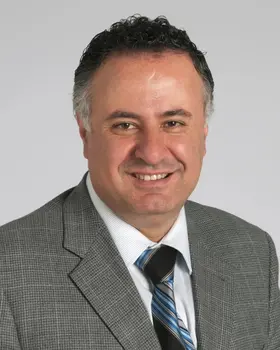
Cleveland Clinic Main Campus
Imad Najm is a Neurologist practicing medicine in Cleveland, Ohio. Dr. Najm is rated as an Elite provider by MediFind in the treatment of Cortical Dysplasia. He is also highly rated in 28 other conditions, according to our data. His clinical expertise encompasses Seizures, Epilepsy, Cortical Dysplasia, Generalized Tonic-Clonic Seizure, and Deep Brain Stimulation. Dr. Najm is board certified in American Board Of Psychiatry And Neurology, 2013.

Cleveland Clinic Main Campus
Andreas Alexopoulos is a Neurologist practicing medicine in Cleveland, Ohio. Dr. Alexopoulos is rated as an Elite provider by MediFind in the treatment of Cortical Dysplasia. He is also highly rated in 30 other conditions, according to our data. His clinical expertise encompasses Seizures, Epilepsy, Cortical Dysplasia, and Generalized Tonic-Clonic Seizure. Dr. Alexopoulos is board certified in American Board Of Psychiatry And Neurology, 2011.
C H Neurology Foundation Inc
Jurriaan Peters is a Pediatrics provider practicing medicine in Boston, Massachusetts. Dr. Peters is rated as an Elite provider by MediFind in the treatment of Cortical Dysplasia. He is also highly rated in 42 other conditions, according to our data. His clinical expertise encompasses Tuberous Sclerosis Complex, Tuberous Sclerosis, Cortical Dysplasia, and Seizures.
Summary: Pulmonary lymphangioleiomyomatosis (LAM) is a destructive lung disease typically affecting women of childbearing age. Currently, there is no effective therapy for the disease and the prognosis is poor. This study is designed to determine the disease processes involved at the level of cells and molecules, in order to develop more effective therapy. Researchers intend to identify the proteins and ge...
Summary: NOTE: This is a research study and is not meant to be a substitute for clinical genetic testing. Families may never receive results from the study or may receive results many years from the time they enroll. If you are interested in clinical testing please consider seeing a local genetic counselor or other genetics professional. If you have already had clinical genetic testing and meet eligibility...