Epilepsy with Myoclonic-Atonic Seizures Treatments
Find Epilepsy with Myoclonic-Atonic Seizures Treatments
Levetiracetam
What is Elepsia (Levetiracetam)?
Approved To Treat
Top Global Experts


Related Clinical Trials
Summary: The main purpose of this study is to determine the maximum safe tolerated dose of LEV in the treatment of neonatal seizures. Our hypothesis is that optimal dosing of Levetiracetam (LEV) to treat neonatal seizures is significantly greater than 60mg/kg. This study will be an open label dose-escalation, preliminary safety and efficacy study. There will be a randomized control treatment component. Inf...
Summary: This study aims to evaluate the efficacy and safety of levetiracetam for the prevention of postoperative seizures in adult patients undergoing supratentorial brain tumor surgery. It is a multicenter, randomized, double-blind, placebo-controlled, parallel-group clinical trial. Eligible participants will be randomly assigned in a 1:1 ratio to receive levetiracetam or placebo, starting 1 hour before ...
Summary: The goal of this clinical trial is to determine if treatment of patients with two doses of ketamine plus levetiracetam versus levetiracetam alone leads to more effective control of status epilepticus.
Related Latest Advances
Brand Information
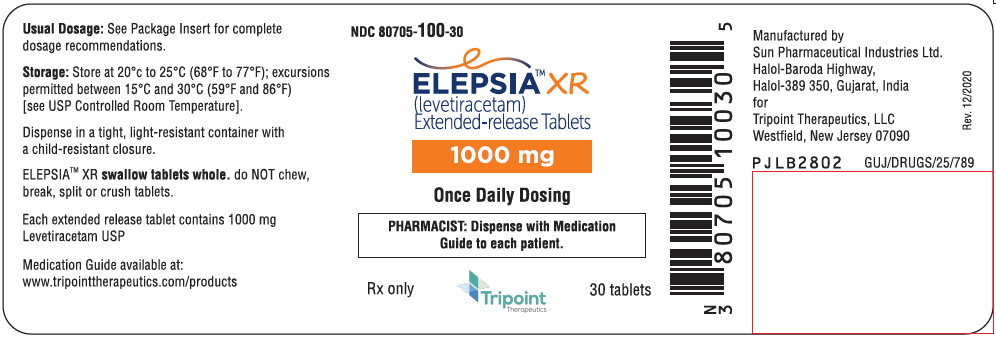
- 1000 mg: oval biconvex, coated, blue and white to off-white, bilayer tablet with drilled portal on blue layer; imprinted with "574" with black ink on one side and plain on the other side.
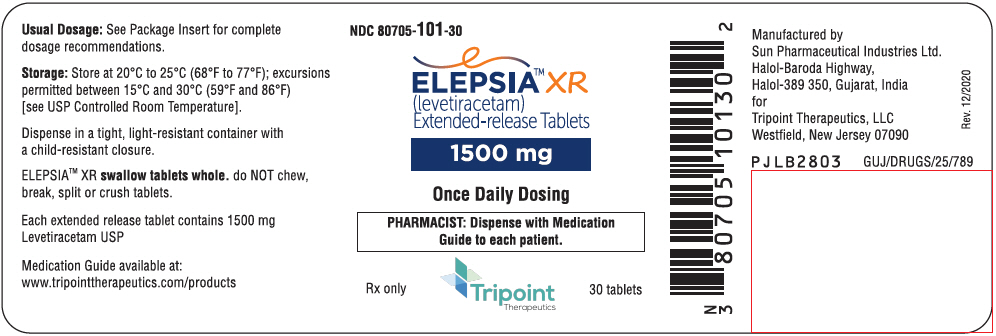
- 1500 mg: oval biconvex, coated, blue and white to off-white, bilayer tablet with drilled portal on blue layer; imprinted with "575" with black ink on one side and plain on the other side.
- Behavioral Abnormalities and Psychotic Symptoms
- Suicidal Behavior and Ideation
- Somnolence and Fatigue
- Anaphylaxis and Angioedema
- Serious Dermatological Reactions
- Drug Reaction with Eosinophilia and Systemic Symptoms (DRESS)/Multiorgan Hypersensitivity
- Coordination Difficulties
- Hematologic Abnormalities
- thoughts about suicide or dying
- attempts to commit suicide
- new or worse depression
- new or worse anxiety
- feeling agitated or restless
- panic attacks
- trouble sleeping (insomnia)
- new or worse irritability
- acting aggressive, being angry, or violent
- acting on dangerous impulses
- an extreme increase in activity and talking (mania)
- other unusual changes in behavior or mood
- Stopping ELEPSIA XR suddenly can cause serious problems. Stopping a seizure medicine suddenly can cause seizures that will not stop (status epilepticus).
- Suicidal thoughts or actions can be caused by things other than medicines. If you have suicidal thoughts or actions, your healthcare provider may check for other causes.
- Pay attention to any changes, especially sudden changes, in mood, behaviors, thoughts, or feelings.
- Keep all follow-up visits with your healthcare provider as scheduled.
- have or have had depression, mood problems or suicidal thoughts or behavior.
- have kidney problems.
- are pregnant or planning to become pregnant. It is not known if ELEPSIA XR will harm your unborn baby. You and your healthcare provider will have to decide if you should take ELEPSIA XR while you are pregnant. If you become pregnant while taking ELEPSIA XR, talk to your healthcare provider about registering with the North American Antiepileptic Drug Pregnancy Registry. You can enroll in this registry by calling 1-888-233-2334 or go to http://www.aedpregnancyregistry.org. The purpose of this registry is to collect information about the safety of ELEPSIA XR and other antiepileptic medicines during pregnancy.
- are breastfeeding or plan to breastfeed. ELEPSIA XR can pass into your breast milk. It is not known if the ELEPSIA XR that passes into your breast milk can harm your baby. Talk to your healthcare provider about the best way to feed your baby while you receive ELEPSIA XR.
- Your healthcare provider will tell you how much ELEPSIA XR to take and when to take it. ELEPSIA XR is usually taken 1 time per day.
- Your healthcare provider may change your dose.
- Swallow the tablets whole.
- Each coated tablet has 2 layers, a blue layer and a white to off-white layer. If you
- The inactive part of ELEPSIA XR tablets may not dissolve after all the medicine has been released in your body. You may sometimes notice something in your bowel movement that looks like pieces of coating or swollen pieces of the original tablet. This is normal.
- If you take too much ELEPSIA XR, call your local Poison Control Center or go to the nearest emergency room right away.
- mood and behavior changes such as aggression, agitation, anger, anxiety, apathy, mood swings, depression, hostility, and irritability. A few people may get psychotic symptoms such as hallucinations (seeing or hearing things that are really not there), delusions (false or strange thoughts or beliefs) and unusual behavior.
- extreme sleepiness, tiredness, and weakness
- problems with muscle coordination (problems walking and moving)
- allergic reactions such as swelling of the face, lips, eyes, tongue, and throat, trouble swallowing or breathing, and hives.
- a skin rash. Serious skin rashes can happen after you start taking ELEPSIA XR. There is no way to tell if a mild rash will become a serious reaction.
- a serious allergic reaction that may affect your skin or other parts of your body such as your liver, kidneys, heart, or blood cells. This allergic reaction can be life-threatening and can cause death, particularly if it is not treated as early as possible. Call your healthcare provider right away if you have:
- flu
- sleepiness
- irritability
- nasal congestion, sore throat, and runny nose (nasopharyngitis)
- dizziness
- nausea