Febrile Neutropenia Treatments
Find Febrile Neutropenia Treatments
Filgrastim
What is Granix (Filgrastim)?
Approved To Treat
Top Global Experts


Related Clinical Trials
Summary: This phase I trial tests the safety, side effects, and best dose of ASTX727 and filgrastim for the treatment of children with high risk acute myeloid leukemia that has come back after a period of improvement (recurrent) or that does not respond to treatment (refractory) who have undergone allogenic hematopoietic stem cell transplantation. ASTX727 is a combination of cedazuridine and decitabine. Ce...
Background: Severe aplastic anemia (SAA) and myelodysplastic syndrome (MDS) are bone marrow diseases. People with these diseases usually need a bone marrow transplant. Researchers are testing ways to make stem cell transplant safer and more effective.
Background: * Stem cell transplants from related donors (allogenic stem cell transplants) can be used to treat individuals with certain kinds of severe blood diseases or cancers, such as severe anemia. Allogenic stem cell transplants encourage the growth of new bone marrow to replace that of the recipient. Because stem cell transplants can have serious complications, researchers are interested in developing n...
Related Latest Advances
Brand Information
- Splenic Rupture
- Acute Respiratory Distress Syndrome
- Serious Allergic Reactions
- Sickle Cell Disorders
- Glomerulonephritis
- Capillary Leak Syndrome
- Potential for Tumor Growth Stimulatory Effects on Malignant Cells
- Myelodysplastic Syndrome and Acute Myeloid Leukemia
- Leukocytosis
- Simultaneous Use with Chemotherapy and Radiation Therapy Not Recommended
- Aortitis
- Alveolar Hemorrhage
- Sweet’s syndrome (acute febrile neutrophilic dermatosis), asthenia, diarrhea, and fatigue
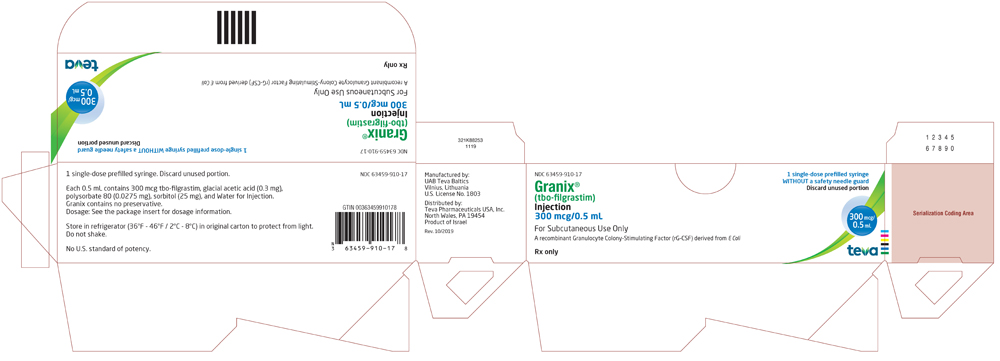
- Pack of 1 with a safety needle guard in blister: NDC 63459-910-11
- Packs of 10 with a safety needle guard in blisters: NDC 63459-910-15
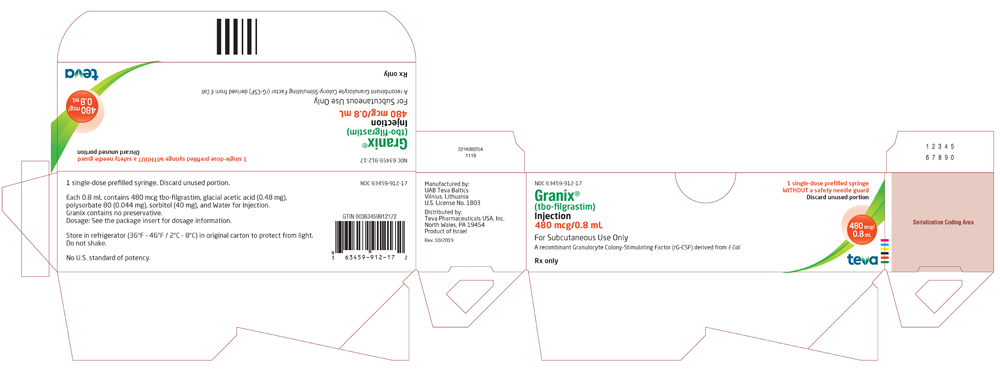
- Pack of 1 with a safety needle guard in blister: NDC 63459-912-11
- Packs of 10 with a safety needle guard in blisters: NDC 63459-912-15
- Pack of 1 without a safety needle guard (for patients and caregivers): NDC 63459-910-17
- Packs of 5 without a safety needle guard (for patients and caregivers): NDC 63459-910-36
- Pack of 1 without a safety needle guard (for patients and caregivers): NDC 63459-912-17
- Packs of 5 without a safety needle guard (for patients and caregivers): NDC 63459-912-36
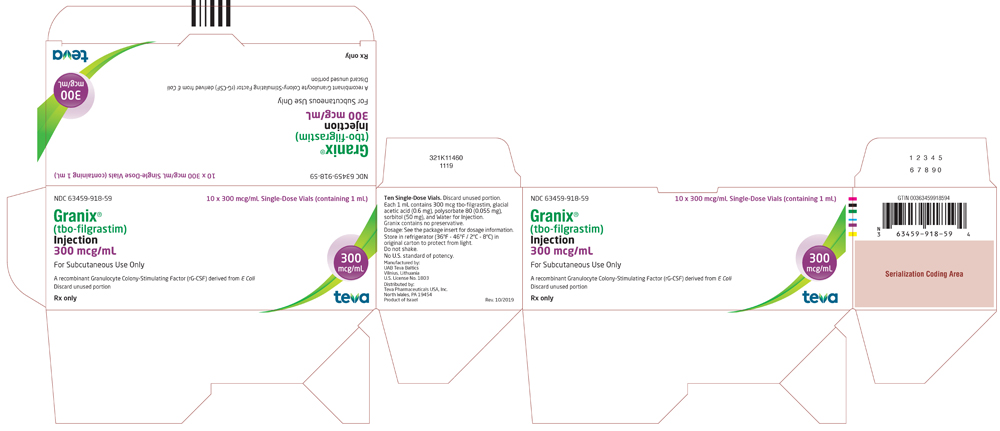
- Packs of 10 single-dose vials: (NDC 63459-918-59)
- Packs of 10 single-dose vials: (NDC 63459-920-59)

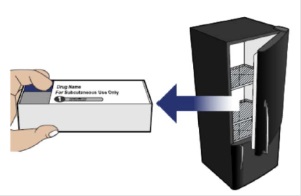
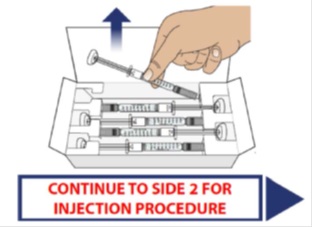
- How to store your syringes.
- How to read the syringe markings.
- How to adjust the amount of
- How to prepare and give the injection.
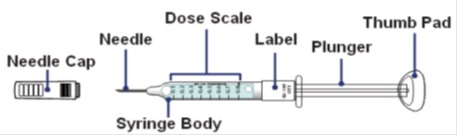
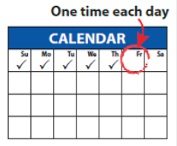
- Store GRANIX in the refrigerator between 36°F to 46°F (2°C to 8°C).
- Store GRANIX in the original carton to protect it from light.
- Do not shake.
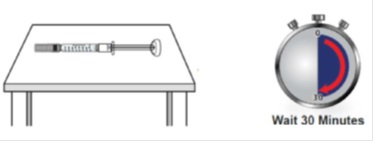
- Take GRANIX out of the refrigerator 30 minutes before use and allow it to reach room temperature before preparing an injection.
- GRANIX syringes can be left at room temperature for a single period of up to 5 days, and if not used can be returned to the refrigerator. Throw away (dispose of) any GRANIX syringes that have been left at room temperature for more than 5 days.
- After you inject your dose, throw away (dispose of) any unused GRANIX left in the syringe. Do not save unused GRANIX in the syringe for later use.
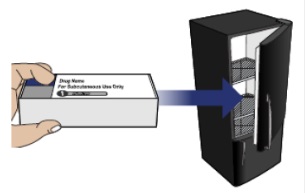
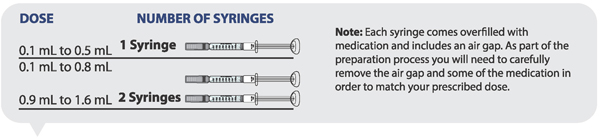
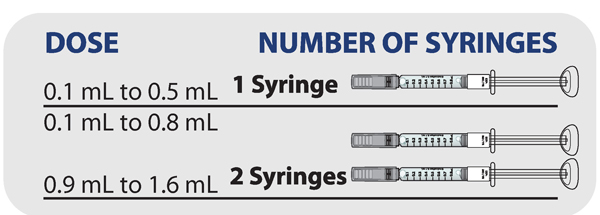
- If your prescribed daily dose is 0.5 mL or less, use 1 syringe.
- If your prescribed daily dose is 0.8 mL or less, use 1 syringe.
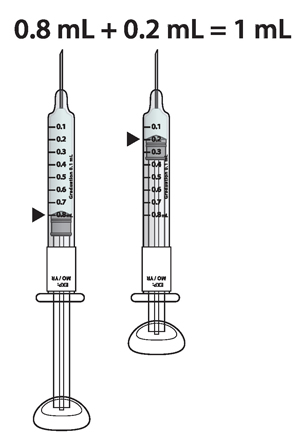
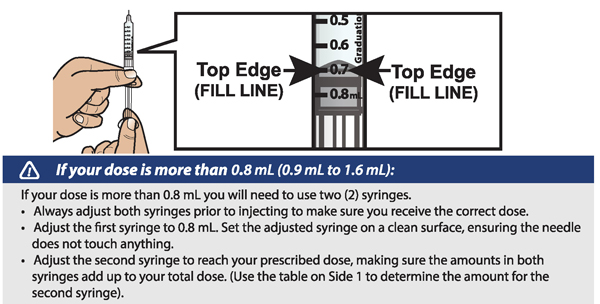
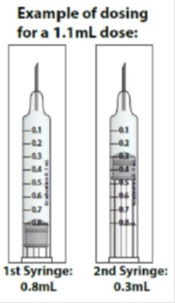
- If your prescribed daily dose is more than 0.8 mL you will need to prepare 2 syringes in order to match your prescribed dose:
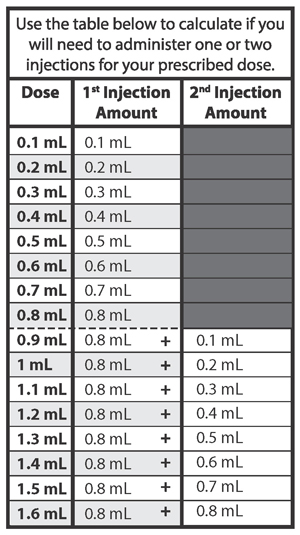
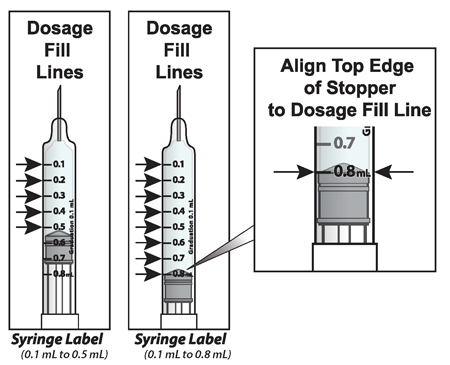
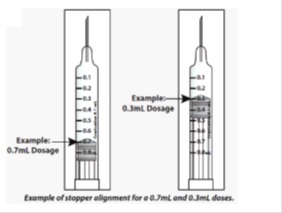
- When setting your dose, (
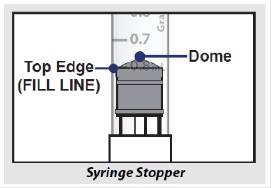
- Note: The top edge of the grey rubber stopper is the edge directly below the dome at the top of the stopper.
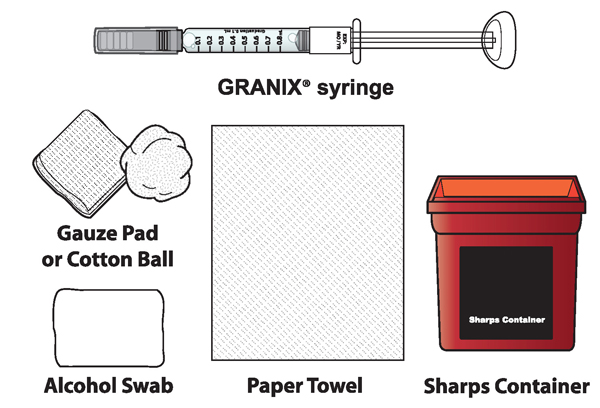
- GRANIX syringe(s)
- Alcohol swabs
- Paper towel
- Cotton ball or gauze pad
- Adhesive Bandage, if needed
- Sharps disposal container (hard-walled container for discarding syringes)
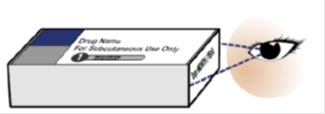
- “GRANIX
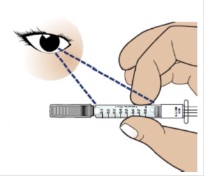
- The expiration date on the syringe label has passed.
- GRANIX
- The medicine is cloudy, discolored, or foamy.
- The medicine contains lumps, flakes, or particles.
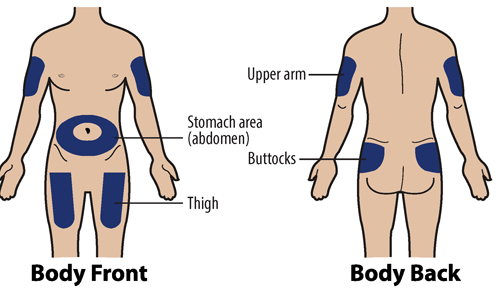
- You should select a different injection site each time you give yourself an injection.
- If you want to use the same injection site for a dose requiring 2 injections, make sure the second injection site is at least 1 inch away from the first injection site.
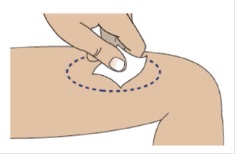
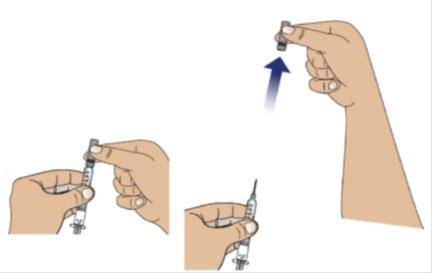
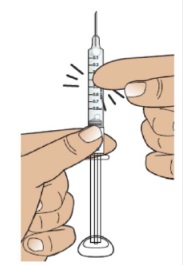
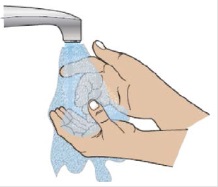
- If GRANIX gets on your skin, wash your skin with soap and water.
- If GRANIX get in your eyes, flush well with water.
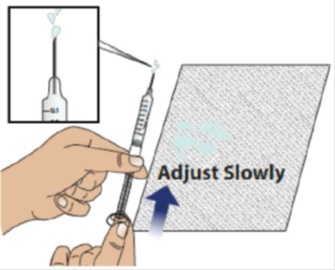
- made of a heavy-duty plastic,
- can be closed with a tight-fitting, puncture-resistant lid, without sharps being able to come out,
- upright and stable during use,
- leak-resistant, and
- properly labeled to warn of hazardous waste inside the container.
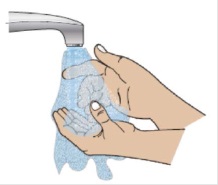
- Follow instructions 3A through 3E for injecting.
- Choose a different site for your second injection. If you want to use the same part of your body, make sure the second injection site is

GRANIX (GRAN-icks)
(tbo-filgrastim)
for subcutaneous injection
Single-Dose Vial
- GRANIX vial is supplied as either 300 mcg in 1 mL solution, or 480 mcg of tbo-filgrastim in 1.6 mL solution. Your healthcare provider will determine which strength of GRANIX to prescribe for you. Your healthcare provider will prescribe the correct number of vials, and the dose in milliliters (mL) that you will need to inject based on your body weight.
- When you receive your vials of GRANIX at the pharmacy, check the label to be sure that the dose strength on the vial matches the dose strength that your healthcare provider prescribed for you. If you are not sure, ask your pharmacist.
- If you are told that more than 1 injection is needed for each dose of GRANIX, the total dose should be divided into two equal parts. Each of the two parts of your dose should be drawn from a separate vial.
- Your healthcare provider will show you how to measure the correct dose of GRANIX before you try to inject it for the first time. This dose will be measured in milliliters (mL).
- Store GRANIX in the refrigerator between 36°F to 46°F (2°C to 8°C).
- Keep GRANIX vials away from light to protect it. If your GRANIX vial comes in a carton, keep it in the carton until you are ready to use it to protect from light.
- Do not freeze.
- Take GRANIX out of the refrigerator 30 minutes before use and allow it to reach room temperature before preparing an injection.
- GRANIX vials can be left at room temperature for a single period of up to 5 days, and if not used can be returned to the refrigerator to use later. Throw away (dispose of) any GRANIX vials that have been left at room temperature for more than 5 days.
- After you inject your dose, properly dispose of any unused GRANIX left in the vial.
- It is important that you do not try to give the injection unless you or your caregiver has received training from your healthcare provider.
- Make sure that the name GRANIX appears on the carton and vial label.
- Check the label and the expiration date on the side of the carton.
- Do not shake the vial.
- Do not use the vial if the medicine is cloudy or discolored, or contains flakes or particles.
- Check to make sure "GRANIX® (tbo-filgrastim)” is listed on the carton
- Do not use if the expiration date on the carton has passed
- Do not try to warm the vial by using a heat source such as hot water or microwave
- Protect the vial from light
- Do not shake the vial
- Use a vial
- Check to make sure GRANIX is listed on the vial label.
- Do not use the vial if:
- The medicine is cloudy or discolored, or contains flakes or particles.
- The expiration date on the vial label has passed
- In these cases, use a new vial and call your healthcare provider.
- 1 GRANIX vial
- 1 disposable syringe and needles
- 2 alcohol swabs
- 1 cotton balls or gauze pad(s)
- 1 adhesive bandage(s), if needed
- 1 sharps disposal container
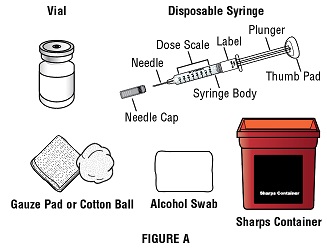
- Only use disposable syringes and needles that your healthcare provider prescribes.
- Only use the syringes and needles 1 time. Throw away (dispose of) any used syringes and needles in a sharps disposal container.
- You should only use syringes that are marked in tenths of milliliters (mL).
- Your healthcare provider will show you how to measure the correct dose of GRANIX. This dose will be measured in milliliters (mL).
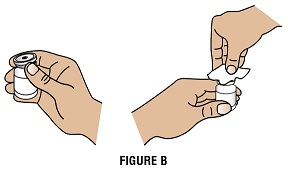
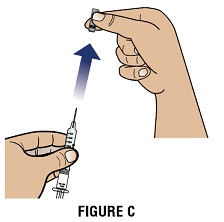
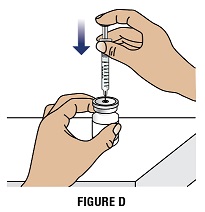
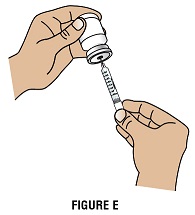
- Stomach-area (abdomen): Except for a 2-inch area around the navel (belly button)
Thighs: Top or middle area of thighs
Arms: Fleshy areas on upper, back part of the arm (only if someone else is giving you the injection) Upper outer area of your buttocks: Fleshy areas around the back of the upper hips and upper sides of the buttocks (only if someone else if giving you the injection).
- If 2 injections will be performed, then the second injection should be at least 1 inch away from the first injection.
Do not touch this area again before injecting.
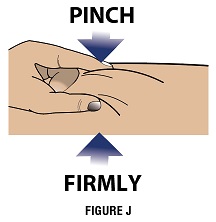
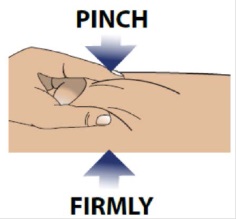
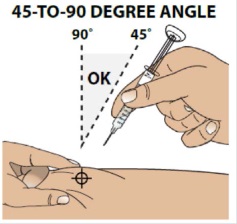
Hold the body of the syringe between your thumb and index finger. Use a quick motion to fully insert the needle straight into the pinched skin at a 45 to 90 degree angle.
- When the needle is inserted, you can release the pinched skin.
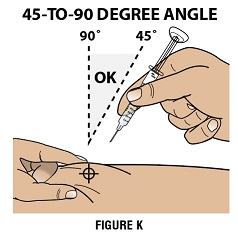
- Do not hold or push on the plunger while inserting the needle into the skin.
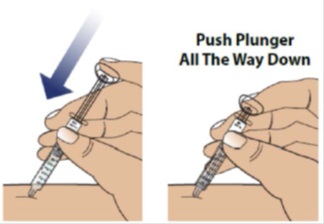
Use your finger to gently push down on the plunger. When the plunger head is as far down as it will go, all of the GRANIX has been injected. When done, gently remove the needle from the skin.
- Put your used needles and syringes in a FDA-cleared sharps disposal container right away after use. Do not throw away (dispose of) loose needles and syringes in your household trash.
- If you do not have a FDA-cleared sharps disposal container, you may use a household container that is:
- When your sharps disposal container is almost full, you will need to follow your community guidelines for the right way to dispose of your sharps disposal container. There may be state or local laws about how you should throw away used needles and syringes. For more information about safe sharps disposal, and for specific information about sharps disposal in the state that you live in, go to the FDA’s website at:
- Do not dispose of your used sharps disposal container in your household trash unless your community guidelines permit this. Do not recycle your used sharps disposal container.