Gastrointestinal Stromal Tumor Treatments
Find Gastrointestinal Stromal Tumor Treatments
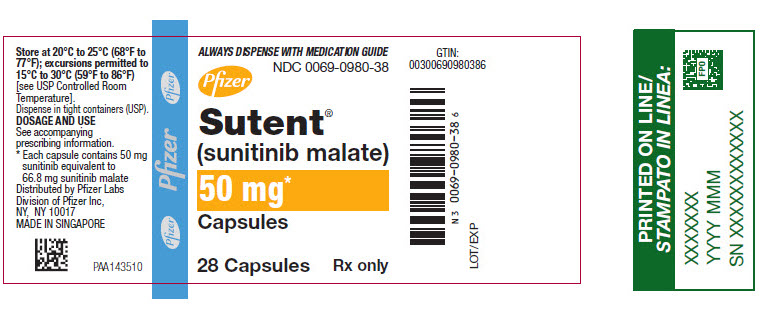
Sutent
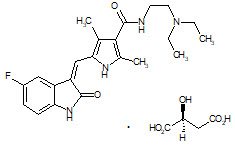
What is Sutent (Sunitinib)?
Top Global Experts


Related Clinical Trials
Summary: This phase II trial compares the effect of retreatment with 177Lu-DOTATATE peptide receptor radionuclide therapy (PRRT) to the usual approach of treatment with everolimus, sunitinib, or cabozantinib in patients who have previously received 177Lu-DOTATATE for gastroenteropancreatic neuroendocrine tumor (GEPNET) that has spread from where it first started (primary site) to other places in the body (...
Summary: This is a Phase 3, open-label, international, multicenter study of CGT9486 in combination with sunitinib. This is a multi-part study that will enroll approximately 482 patients. Part 1 consists of two evaluations: 1) confirming the dose of an updated formulation of CGT9486 to be used in subsequent parts in approximately 20 patients who have received at least one prior line of therapy for Gastroint...
Summary: The purpose of this study is to find out if a new drug, called IDRX-42 (also known as GSK6042981), is effective in treating adults with a type of cancer called Gastrointestinal Stromal Tumors (GIST) when compared to another drug named sunitinib. The study will see if IDRX-42 works well and is safe for participants whose GIST has spread or cannot be surgically removed, and who have already taken th...
Related Latest Advances
Brand Information
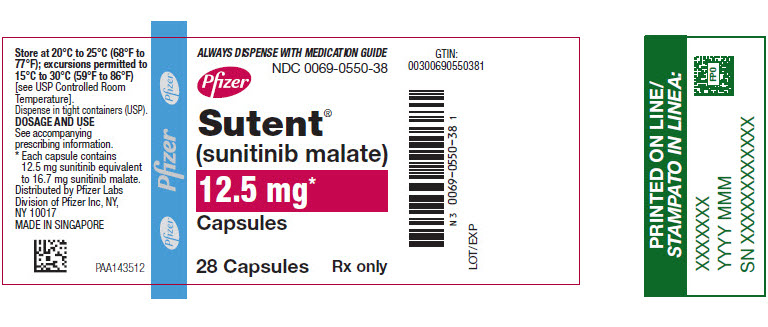
- 12.5 mg sunitinib: orange cap and orange body, printed with white ink “Pfizer” on the cap and “STN 12.5 mg” on the body.
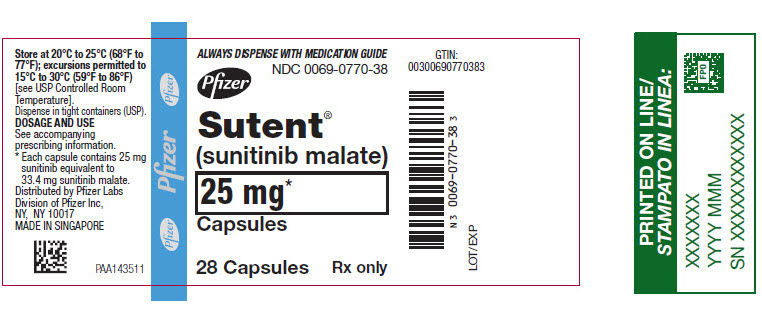
- 25 mg sunitinib: caramel cap and orange body, printed with white ink “Pfizer” on the cap and “STN 25 mg” on the body.
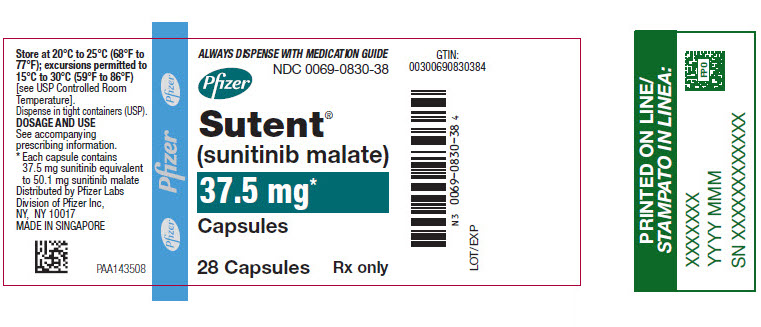
- 37.5 mg sunitinib: yellow cap and yellow body, printed with black ink “Pfizer” on the cap and “STN 37.5 mg” on the body.
- 50 mg sunitinib: caramel top and caramel body, printed with white ink “Pfizer” on the cap and “STN 50 mg” on the body.
- Hepatotoxicity
- Cardiovascular Events
- QT Interval Prolongation and Torsade de Pointes
- Hypertension
- Hemorrhagic Events
- Tumor Lysis Syndrome
- Thrombotic Microangiopathy
- Proteinuria
- Dermatologic Toxicities
- Reversible Posterior Leukoencephalopathy Syndrome
- Thyroid Dysfunction
- Hypoglycemia
- Osteonecrosis of the Jaw
- Impaired Wound Healing
- Blood and lymphatic system disorders: hemorrhage associated with thrombocytopenia
including some fatalities . - Gastrointestinal disorders: esophagitis.
- Hepatobiliary disorders: cholecystitis, particularly acalculous cholecystitis.
- Immune system disorders: hypersensitivity reactions, including angioedema.
- Infections and infestations: serious infection (with or without neutropenia)
. The infections most commonly observed with SUTENT include respiratory, urinary tract, skin infections, and sepsis/septic shock. - Musculoskeletal and connective tissue disorders: fistula formation, sometimes associated with tumor necrosis and/or regression
; myopathy and/or rhabdomyolysis with or without acute renal failure . - Renal and urinary disorders: renal impairment and/or failure
. - Respiratory disorders: pulmonary embolism
, pleural effusion . - Skin and subcutaneous tissue disorders: pyoderma gangrenosum, including positive de-challenges.
- Vascular disorders: arterial (including aortic) aneurysms, dissections
, and rupture ; arterial thromboembolic events . The most frequent events included cerebrovascular accident, transient ischemic attack, and cerebral infarction. - General disorders and administration site conditions: impaired wound healing.