Gastrointestinal Stromal Tumor Treatments
Find Gastrointestinal Stromal Tumor Treatments
Brand Name
Qinlock
Generic Name
Ripretinib
View Brand Information FDA approval date: May 15, 2020
Classification: Kinase Inhibitor
Form: Tablet
What is Qinlock (Ripretinib)?
QINLOCK is indicated for the treatment of adult patients with advanced gastrointestinal stromal tumor who have received prior treatment with 3 or more kinase inhibitors, including imatinib. QINLOCK is a kinase inhibitor indicated for the treatment of adult patients with advanced gastrointestinal stromal tumor who have received prior treatment with 3 or more kinase inhibitors, including imatinib.
Approved To Treat


Save this treatment for later
Not sure about your diagnosis?
Tired of the same old research?
Related Clinical Trials
A Master Protocol for the Multi-Cohort, Phase 1/2 Study of DCC-3116 in Combination With Anticancer Therapies in Participants With Advanced Malignancies
Summary: This is a Phase 1/2, multicenter, open-label (unless otherwise specified in a combination-specific module) study of inlexisertib in combination with anticancer therapies. Modules within the master protocol are defined according to different combinations of inlexisertib with other anticancer agents.
A Multicenter, Single-arm, Prospective Study to Evaluate the Efficacy and Safety of Radiotherapy Combined With Ripretinib in the Treatment of Unresectable Advanced GIST
Summary: The goal of this prospective study is to learn whether there is a synergistic effect when radiotherapy is combined with ripretinib in the treatment of patients with unresectable advanced GIST. It will also learn about the safety of this regimen.The main questions it aim to answer is: Dose radiotherapy combined with ripretinib prolong the time to disease progression for patients with advanced GIST?
Related Latest Advances
Brand Information
QINLOCK (Ripretinib)
1INDICATIONS AND USAGE
QINLOCK is indicated for the treatment of adult patients with advanced gastrointestinal stromal tumor (GIST) who have received prior treatment with 3 or more kinase inhibitors, including imatinib.
2DOSAGE FORMS AND STRENGTHS
Tablets: 50 mg, white to off-white, oval shaped, debossed with “DC1” on one side.
3CONTRAINDICATIONS
None.
4ADVERSE REACTIONS
The following clinically significant adverse reactions are discussed elsewhere in the labeling:
- Palmar-Plantar Erythrodysesthesia Syndrome
- New Primary Cutaneous Malignancies
- Hypertension
- Cardiac Dysfunction
- Photosensitivity
4.1Clinical Trials Experience
Because clinical trials are conducted under widely varying conditions, adverse reaction rates observed in the clinical trials of a drug cannot be directly compared to rates in the clinical trials of another drug and may not reflect the rates observed in practice.
Unless otherwise specified, the pooled safety population described in the WARNINGS AND PRECAUTIONS reflect exposure to QINLOCK as a single agent in 351 patients with advanced solid tumors enrolled in either an open-label dose finding with cohort expansion trial or INVICTUS. Among the patients who received QINLOCK in these trials, 52% were exposed for 6 months or longer and 21% were exposed for greater than one year.
5DESCRIPTION
Ripretinib is a kinase inhibitor. The chemical name of ripretinib is 1-(4-bromo-5-[1-ethyl-7-(methylamino)-2-oxo-1,2-dihydro-1,6-naphthyridin-3-yl]-2-fluorophenyl)-3-phenylurea. The molecular formula is C
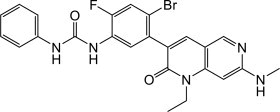
Ripretinib is a white to off-white crystalline solid. Ripretinib is a lipophilic, weak base, and practically insoluble in aqueous media.
QINLOCK is available as a white to off-white, oval tablets for oral use containing 50 mg of ripretinib. The tablet is debossed with “DC1” on one side. Each tablet contains the following inactive ingredients: crospovidone, hypromellose acetate succinate, lactose monohydrate, magnesium stearate, microcrystalline cellulose, and silicon dioxide.
6CLINICAL STUDIES
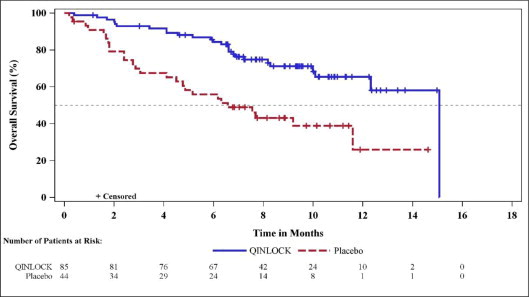
The efficacy of QINLOCK was evaluated in INVICTUS, an international, multi-center, randomized (2:1), double-blind, placebo-controlled trial (NCT03353753). Eligible patients had unresectable, locally advanced or metastatic gastrointestinal stromal tumor (GIST) and had received prior treatment with imatinib, sunitinib, and regorafenib. Randomization was stratified by prior lines of therapy (3 versus ≥4) and Eastern Cooperative Oncology Group (ECOG) performance status (0 versus 1 or 2). Patients received QINLOCK 150 mg or placebo orally once daily until disease progression or unacceptable toxicity. Tumor response assessments were performed every 28 days through for the first 4 months and then every 56 days thereafter. The major efficacy outcome measure was progression-free survival (PFS) based on disease assessment by blinded independent central review (BICR) using modified RECIST 1.1 criteria, in which lymph nodes and bone lesions were not target lesions and a progressively growing new tumor nodule within a pre-existing tumor mass must meet specific criteria to be considered unequivocal evidence of progression. Additional efficacy outcome measures included objective response rate (ORR) by BICR and overall survival (OS). Patients randomized to receive placebo could be treated with QINLOCK at the time of disease progression.
A total of 129 patients were randomized, 85 to QINLOCK and 44 to placebo.
Patient characteristics of the intent-to-treat (ITT) population in INVICTUS were median age of 60 years (range: 29 to 83 years), with 39% aged ≥65 years; 57% were male; 75% were White; and 92% had an ECOG performance status of 0 or 1. Sixty-three percent (63%) of patients received 3 prior therapies and 37% received 4 or more prior therapies. Sixty-six percent (66%) of patients randomized to placebo switched to QINLOCK after disease progression.
Efficacy results from INVICTUS are summarized in
Figure 1: Kaplan-Meier Curve of Progression-Free Survival in INVICTUS
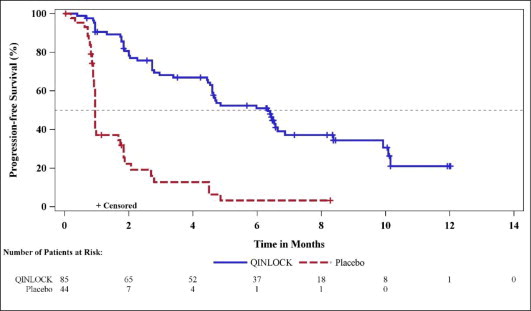
Figure 2: Kaplan-Meier Curve of Overall Survival in INVICTUS
7HOW SUPPLIED/STORAGE AND HANDLING
QINLOCK 50 mg tablets are white to off-white, oval shaped, and debossed with “DC1” on one side.
- 90-count bottles NDC 73207-101-30
Dispense in original container only. Store in the original container with the desiccant to protect from moisture and light. Replace cap securely each time after opening. Do not discard desiccant.
Store at 20°C to 25°C (68°F to 77°F); excursion permitted between 15°C to 30°C (59°F to 86°F)
8PATIENT COUNSELING INFORMATION
Advise the patient to read the FDA-approved patient labeling (