
Overview
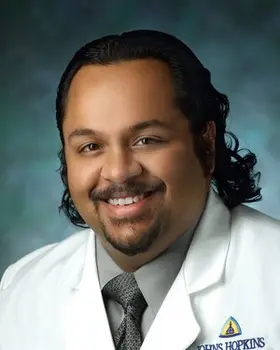
"David Rastall is a physician scientist and fellowship-trained neurologist specializing in neuro-visual and vestibular disorders. He diagnoses and treats patients with eye movement disorders and dizziness resulting from ataxia, cerebellar damage, brainstem damage, or peripheral vestibular lesions, with symptoms including vertigo, nystagmus, oscillopsia, diplopia and dizziness. Dr. Rastall helped develop and participates in the teledizzy initiative, a transformative approach to medicine incorporating data science and cutting-edge technologies including artificial intelligence, machine learning and counterfactual analysis to efficiently pair dizzy patients with emergencies at remote locations with world-leading Johns Hopkins vestibular neurologists. Among the procedures he offers are video-oculography, video head impulse test, quantitative sensory and motor testing for ocular alignment, photo funds evaluation and video ocular counter-roll evaluation. Dr. Rastall obtained his doctorate in osteopathic medicine from Michigan State University College of Osteopathic Medicine, where he remained for residency training in neurology and ophthalmology. He underwent fellowship training in vestibular and ocular motor oto-neurology at the Johns Hopkins University School of Medicine. Dr. Rastall’s research interests include developing machine learning and artificial intelligence approaches to increase diagnostic accuracy of eye movement disorders, chronic dizziness, and neurodegenerative disorders; developing medical “spy-ware"" to allow passive, interaction-free longitudinal patient measurements; and creation of an eye movement and behavioral “behaviorome"" in healthy aging and neurodegeneration. He is also interested in ocular motor phenotyping of healthy aging, neurodegeneration and cerebellar disease.".
Dr. Rastall is rated as an Experienced provider by MediFind in the treatment of Hereditary Ataxia. His top areas of expertise are Primary Lateral Sclerosis, Amyotrophic Lateral Sclerosis (ALS or Lou Gehrig's Disease), and Hereditary Ataxia.
Insurance
Accepted insurance can change. Please verify directly with the provider.
Accepted insurance plans:
- EPO
- HMO
- POS
- PPO
- HMO
- POS
- PPO
- EPO
- HMO
- PPO
- INSURANCE PLAN
- MEDICARE PDP
- PPO
- HMO
- POS
- PPO
- HMO
- MANAGED MEDICAID PLAN
- MEDICARE MAPD
- MEDICARE-MEDICAID PLAN
- OTHER MEDICAID
- STATE MEDICAID
- EPO
- HMO
- INSURANCE PLAN
- MANAGED MEDICAID PLAN
- MEDICARE MAPD
- MEDICARE PDP
- MEDICARE SNP
- MEDICARE-MEDICAID PLAN
- OTHER MEDICARE
- OTHER MEDICARE PART D
Locations
Floor 5, Baltimore, MD 21287

Johns Hopkins Health Care & Surgery Center - Green Spring Station, Lutherville
Liana Rosenthal, M.D. is an Assistant Professor in the Department of Neurology at Johns Hopkins University School of Medicine in Baltimore, Maryland. Dr. Rosenthal completed medical school at Johns Hopkins with an internship at Johns Hopkins Bayview Medical Center. She completed her neurology residency and movement disorder fellowship at The Johns Hopkins Hospital. Dr. Rosenthal is rated as a Distinguished provider by MediFind in the treatment of Hereditary Ataxia. Her top areas of expertise are Movement Disorders, Parkinson's Disease, Olivopontocerebellar Atrophy, and Spinocerebellar Ataxia.
University Of Maryland Neurology Associates PA
Joseph Savitt is a Neurologist in Baltimore, Maryland. Dr. Savitt is rated as a Distinguished provider by MediFind in the treatment of Hereditary Ataxia. His top areas of expertise are Parkinson's Disease, Movement Disorders, Supranuclear Ophthalmoplegia, Supranuclear Ocular Palsy, and Gastrostomy. Dr. Savitt is currently accepting new patients.
Johns Hopkins Outpatient Center
Dr. Ankur Butala specializes in the care of persons with complex neuropsychiatric conditions, including persons with advanced Parkinson Disease or other movement or neurodegenerative disorders. Upon graduating from a selective Physician-Scientist program at Albany Medical College, he joined the University of Massachusetts in an uncommon residency in both Neurology and Psychiatry. Dual-trained neuropsychiatrists such as Dr. Butala have experience with: Parkinson Disease and atypical Parkinsonism, Huntington Disease, Ataxia, Dystonia, early-onset dementia, traumatic brain injury and chronic traumatic encephalopathy, autism spectrum disorders, medication refractory mood and psychotic disorders, epilepsy and functional neurological disorders. In residency, he developed an interest in circuit models of brain function and how non-pharmacological approaches such as Neuromodulation and brain stimulation may be used to address treatment-resistant conditions. Consequently, he joined Johns Hopkins University School of Medicine as a Clinical and Research Fellow from 2015 to 2018, where he developed a skill set including deep brain stimulation, non-invasive brain stimulation (tDCS), and measurement of eye movements. Currently, Dr. Butala's clinical and research interests are in diagnosing and managing persons with advanced Parkinson's Disease, movement disorders, and neuropsychiatric conditions using neuromodulation, cannabinoids, and entheogens. He has ongoing multidisciplinary collaborations with colleagues at the Whiting School of Engineering - Center of Speech & Language Processing in using Machine-Learning Models and Artificial Intelligence to improve the detection and diagnosis of Movement and Neuropsychiatric disorders. LinkedIn https://www.linkedin.com/in/ankurbutalamd Videos Neurology: Junior Faculty Spotlight. Dr. Butala is rated as a Distinguished provider by MediFind in the treatment of Hereditary Ataxia. His top areas of expertise are Parkinson's Disease, Corticobasal Degeneration, Movement Disorders, Drug Induced Dyskinesia, and Deep Brain Stimulation.
Areas of Expertise
MediFind evaluates expertise by pulling from factors such as number of articles a doctor has published in medical journals, participation in clinical trials, speaking at industry conferences, prescribing and referral patterns, and strength of connections with other experts in their field.
Learn more about MediFind’s expert tiers
- Experienced
- Amyotrophic Lateral Sclerosis (ALS or Lou Gehrig's Disease)
- Hereditary AtaxiaDr. Rastall isExperienced. Learn about Hereditary Ataxia.
- Primary Lateral SclerosisDr. Rastall isExperienced. Learn about Primary Lateral Sclerosis.