Hyperthyroidism Treatments
Find Hyperthyroidism Treatments
I-131
What is Megatope (I-131)?
Approved To Treat

Related Clinical Trials
Summary: Study rationale High risk patients with differentiated thyroid cancer (DTC) require therapy with 131 I under thyroid stimulating hormone (TSH) stimulation. There are two methods of TSH stimulation endogenous by thyroid hormone withdrawal (THW) leading to hypothyroidism and exogenous by injection of human recombinant TSH (rhTSH Thyrogen). The appropriate 131-I activity utilized for treatment is eit...
Summary: This phase III trial studies iobenguane I-131 or lorlatinib and standard therapy in treating younger patients with newly-diagnosed high-risk neuroblastoma or ganglioneuroblastoma. Radioactive drugs, such as iobenguane I-131, may carry radiation directly to tumor cells and not harm normal cells. Lorlatinib may stop the growth of tumor cells by blocking some of the enzymes needed for cell growth. Gi...
Summary: Persons diagnosed with thyroid cancer are often treated initially with a thyroidectomy, which is followed by ablation using Iodine-131, a therapy which has been shown to be effective and safe. Imaging of metastatic thyroid cancer has been performed with whole body I-131 and Iodine 123 (I-123) imaging for many decades and use I-123 for staging studies. Iodine 124 (I-124) is a radioisotope of iodine...
Related Latest Advances
Brand Information
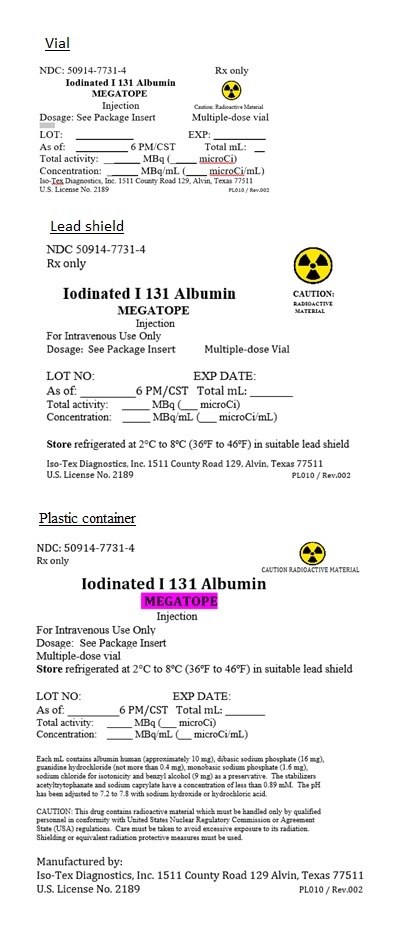
MEGATOPE (iodinated I 131 albumin) injection is a sterile, nonpyrogenic, radioactive diagnostic agent for intravenous use. Each mL contains albumin human (approximately 10 mg), dibasic sodium phosphate (16 mg), guanidine hydrochloride (not more than 0.4 mg), monobasic sodium phosphate (1.6 mg), sodium chloride for isotonicity, and benzyl alcohol (9 mg) as a preservative. The stabilizers acetyltryptophanate and sodium caprylate have a concentration of less than 0.89 mM. The pH has been adjusted to 7.2 to 7.8 with sodium hydroxide or hydrochloric acid. Each vial contains 37 MBq/mL (1,000 microCi/mL) of radioactivity as iodinated I 131 albumin at time of calibration (see HOW SUPPLIED).
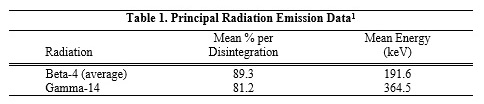
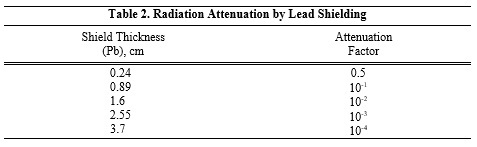
The specific gamma ray constant for iodine-131 is 2.2 R/hour-millicurie at 1 cm. The first half-value layer is 0.24 cm lead (Pb). A range of values for the relative attenuation of the radiation emitted by this radionuclide that result from interposition of various thicknesses of Pb is shown in Table 2. To facilitate control of the radiation exposure from this radionuclide, the use of a 2.55 cm thickness of Pb will attenuate the radiation emitted by a factor of about 1,000.
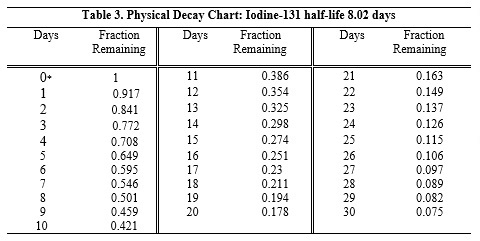
In the use of any radioactive material, care should be taken to minimize radiation exposure to the patient and healthcare providers consistent with proper patient management.
No long-term animal studies have been performed to evaluate carcinogenic potential or whether iodinated I 131 albumin affects fertility in males or females.
Iodine-131 crosses the placenta and can permanently impair fetal thyroid function. MEGATOPE should be administered to a pregnant woman only if clearly needed. Administration of an appropriate thyroid blocking agent is recommended before use of MEGATOPE in a pregnant woman to protect the woman and fetus from accumulation of iodine-131 (see DOSAGE AND ADMINISTRATION).
Iodine-131 is present in human milk. There are no data on the effect of iodinated I 131 albumin on the breastfed infant or milk production. Because of the potential for serious adverse reactions in the breastfed infant, including transient hypothyroidism, advise women not to breastfeed during treatment with MEGATOPE and for 80 days after the final dose.
Safety and effectiveness of MEGATOPE in pediatric patients have not been established.
Clinical studies of MEGATOPE did not include sufficient numbers of subjects aged 65 and over to determine whether they respond differently from younger subjects. Other reported clinical experience has not identified differences in responses between the elderly and younger patients.
Administer 10 drops of Strong Iodine Solution, USP (e.g., Lugol’s Solution) three times daily, beginning at least 24 hours before administration of MEGATOPE and continue for 1 week or 2 weeks thereafter to minimize the uptake of iodine-131.
The recommended dose of MEGATOPE for total blood or plasma volume determination in adult patients is from 0.185 MBq to 1.85 MBq (5 microCi to 50 microCi) administered intravenously.
• Measure the patient dose using a suitable dose calibrator immediately prior to administration.
• Use a shielded syringe for withdrawing and injecting MEGATOPE.
• Parenteral drug products should be inspected visually for particulate matter and discoloration prior to administration whenever solution and container permit. MEGATOPE is a colorless to very pale yellow solution. Do not use MEGATOPE if excessive coloration is present.
• The expiration date given on the MEGATOPE vial label pertains to the stability of MEGATOPE and not to the radioactivity level.
Preparation of Reference Solution
1. Remove the amount from the vial to be used in the procedure identical in volume to the dose to be administered to the patient.
2. Prepare a reference solution using 0.9% Sodium Chloride Injection, USP as a diluent. The recommended dilution is 1:4,000 [Dilution Factor (DF) = 4,000].
3. Determine the radioactivity concentration (net cpm/mL) of the reference solution.
4. Assay the reference solution and the blood samples (Step 3 of Administration of Dose) using the same geometric configuration.
1. Inject the dose into a large vein in patient’s arm. Measure the residual radioactivity in the syringe and needle.
2. Do not reuse the syringe. Dispose the syringe in accordance with the US Nuclear Regulatory Commission or Agreement State regulations pertaining to the disposal of radioactive waste.
3. At 5 minutes and 15 minutes after injecting the dose, withdraw blood samples from the patient’s other arm with a sterile heparinized syringe.
1. Take a known aliquot from each blood sample and determine radioactivity concentration in net cpm/mL.
2. Plot the 5-minute and 15- minute sample counts (net cpm/mL) on semilog graph paper using the average count value of each sample and determine the radioactivity concentration at injection time (zero time) by drawing a straight line through the 15-minute and 5-minute points to zero time. The x ordinate of the graph is the sample withdrawal time and the logarithmic y ordinate is radioactivity concentration in net cpm/mL.
3. Calculate patient’s blood volume (in mL) using the following formula:
• Use a low dose of MEGATOPE to permit repetitions as often as required by clinical circumstances.
• In each determination after the first dose, correct the background radioactivity remaining in the blood from former determinations by subtracting the radioactivity concentration of a blood sample obtained before the injection of MEGATOPE (i.e., background blood sample) from the radioactivity concentration of a post-injection blood sample.
1. Prior to injecting MEGATOPE, withdraw background blood sample from large vein in patient’s arm with a sterile heparinized syringe.
2. Leaving needle in patient’s vein, detach syringe containing blood sample.
3. Attach syringe containing the dose of MEGATOPE to the indwelling needle and administer (see instructions under Blood Volume Determination, Administration of Dose).
4. Determine radioactivity concentration in net cpm/mL of aliquots taken from background and post-injection blood samples, and from the reference solution.
Subtract the radioactivity concentration (net cpm/mL) per aliquot of the background blood sample from the radioactivity concentration per aliquot of the blood sample obtained after the injection of MEGATOPE. The formula for calculating each blood volume determination after the first one thus becomes:
Net cpm/mL Net cpm/mL
postinjection minus background
blood sample blood sample
The procedure is essentially the same as that for blood volume determination, except that the blood sample drawn from the patient is centrifuged, the red blood cells are removed, and net cpm /mL of the plasma is determined. The formula for calculation of plasma volume, therefore, is:
Net cpm/mL patient's plasma sample
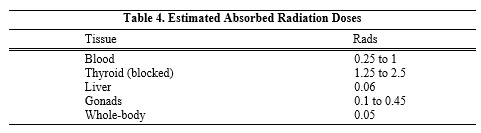
The estimated absorbed radiation doses to an adult patient from an intravenous injection of 1.85 MBq (50 microCi) of MEGATOPE are shown in Table 4.