Iron Deficiency Anemia Treatments
Find Iron Deficiency Anemia Treatments
Injectafer
What is Injectafer (Carboxymaltose)?
Approved To Treat


Related Clinical Trials
Summary: The objectif of the IRON-DEP Study is to assess the efficacy of intravenous (IV) versus oral iron treatment on the prevalence of postpartum depression (PPD) in women with moderate iron deficiency anemia after caesarean delivery.
Summary: The goal of this clinical trial is to compare the pharmacokinetic profile of the developed drug product and reference product in healthy participants under fasting condition. The main questions it aims to answer are: * \[Question 1\] Is there significant difference in the pharmacokinetic profile between the ferric carboxymaltose injection 750 mg iron/15 mL provided by Sichuan Huiyu Pharmaceutical ...
Summary: The main objective of this study is to evaluate the efficacy and safety of IV FCM(ferric carboxymaltose) in patients with AGC receiving palliative chemotherapy. This study will also evaluate the effect of IV FCM on the treatment outcomes of palliative chemotherapy in patients with gastric cancer receiving fluoropyrimidine and platinum-based regimen in the same 1st-line palliative setting.
Related Latest Advances
Brand Information
• Hypophosphatemia has occurred in patients with normal baseline phosphate levels and without apparent risk factors for hypophosphatemia [see Warnings and Precautions (5.1)].
• Check serum phosphate levels prior to a repeat course of treatment in patients at risk for low serum phosphate and in any patient who receives a repeat course of therapy within three months [see Dosage and Administration (2.1, 2.3)]. Correct pre-existing hypophosphatemia prior to administering INJECTAFER [see Warnings and Precautions (5.1)].
• Advise patients receiving INJECTAFER about the risk of hypophosphatemia and to report any signs and symptoms of hypophosphatemia (e.g., fatigue, muscle weakness or pain, bone and joint pain, bone fractures) [see Warnings and Precautions (5.1)].
adult and pediatric patients 1 year of age and older who have either intolerance or an unsatisfactory response to oral iron. adult patients who have non-dialysis dependent chronic kidney disease.
- 100 mg iron/2 mL single-dose vial
- 500 mg iron/10 mL single-dose vial
- 750 mg iron/15 mL single-dose vial
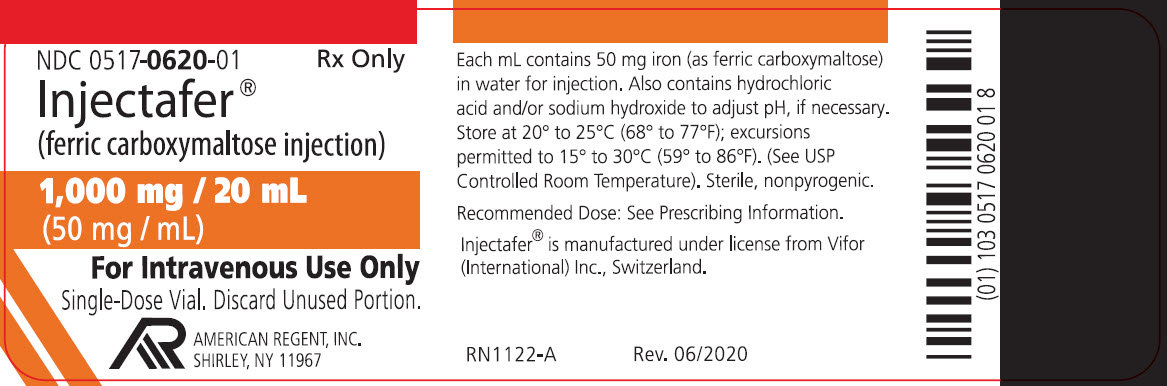
- 1,000 mg iron/20 mL single-dose vial
- Symptomatic Hypophosphatemia
- Hypersensitivity Reactions
- Hypertension
- Laboratory Test Alterations
*Grouped Terms:
Hypertension includes hypertension, blood pressure increased, and hypertensive crisis.
- Cardiac disorders: Tachycardia
- General disorders and administration site conditions: Chest discomfort, chills, pyrexia
- Metabolism and nutrition disorders: Hypophosphatemia
- Musculoskeletal and connective tissue disorders: Arthralgia, back pain, hypophosphatemic osteomalacia
- Nervous system disorders: Syncope
- Respiratory, thoracic and mediastinal disorders: Dyspnea
- Skin and subcutaneous tissue disorders: Angioedema, erythema, pruritus, urticaria
- Pregnancy: Fetal bradycardia
Tell your healthcare provider if you develop any of the following signs or symptoms of hypophosphatemia during treatment with INJECTAFER:
• tiredness • bone or joint pain
• muscle weakness or pain • broken bones
iron deficiency anemia (IDA) in:
adults and children 1 year of age and older who cannot tolerate iron taken by mouth (oral) or who have not responded well to oral iron adults who have chronic kidney disease who are not on dialysis (non-dialysis dependent chronic kidney disease).
iron deficiency in adults with mild to moderate heart failure to improve the ability to exercise (improve exercise capacity).
have a history of trouble absorbing certain vitamins or phosphate in your body have inflammatory bowel disease have hyperparathyroidism have low vitamin D levels have hereditary hemorrhagic telangiectasia (HHT) or Osler-Weber-Rendu syndrome have had an allergic reaction to iron given into your vein have previously received INJECTAFER have had high blood pressure (hypertension) are pregnant or plan to become pregnant. INJECTAFER may harm your unborn baby. Tell your healthcare provider right away if you become pregnant or think you are pregnant during treatment with INJECTAFER. are breastfeeding or plan to breastfeed. INJECTAFER passes into your breast milk. It is not known if INJECTAFER will harm your baby. Talk to your healthcare provider about the best way to feed your baby during treatment with INJECTAFER.
INJECTAFER is given into your vein by intravenous (IV) infusion by your healthcare provider. INJECTAFER is usually given in 2 doses at least 7 days apart for IDA, or 6 weeks apart for iron deficiency with mild to moderate heart failure to improve exercise capacity. If your healthcare provider decides it is right for you, INJECTAFER may be given intravenously by your healthcare provider as a single-dose treatment. INJECTAFER treatment may be repeated if your healthcare provider decides it is needed. INJECTAFER can cause discoloration or staining of your skin if leaking happens at your infusion site. Tell your healthcare provider if you notice any leaking from the infusion site during your infusion. What are the possible side effects of INJECTAFER? See “What is the most important information I should know about INJECTAFER?”
Allergic reactions. Serious life-threatening allergic reactions that can lead to death have happened in people who receive INJECTAFER. Your healthcare provider will watch you during and for at least 30 minutes after you receive INJECTAFER. Tell your healthcare provider right away if you develop any of the following signs or symptoms of allergic reactions during or after treatment with INJECTAFER:
low blood pressure feeling dizzy or lightheaded loss of consciousness trouble breathing swelling fast heartbeat cold or clammy skin feet or hands turn blue itching rash hives wheezing
The most common side effects of INJECTAFER in adults include:
nausea high blood pressure flushing injection site reactions skin redness low blood phosphate levels dizziness
low blood phosphate levels injection site reactions rash headache vomiting
Inactive ingredients: water for injection. Sodium hydroxide or hydrochloric acid may be added to adjust pH to 5.0-7.0.