Klippel-Feil SyndromeSymptoms, Doctors, Treatments, Advances & More
Learn About Klippel-Feil Syndrome
Klippel-Feil syndrome is a congenital skeletal condition characterized by the failure of the cervical (neck) vertebrae to properly segment or separate during early embryonic development. Instead of forming as distinct, individual bones, two or more of the seven neck vertebrae become fused together into a single, solid block of bone.
To better understand this, it is helpful to use an analogy. Think of the vertebrae in a normal neck like a stack of individual, uniform building blocks, with flexible discs in between that allow the stack to bend and twist. In Klippel-Feil Syndrome, it’s as if during the manufacturing process, two or more of these ‘blocks’ were improperly formed and came out of the mold already stuck together as one solid piece. This fused segment is rigid and cannot move, which restricts the overall flexibility of the neck and places extra stress on the vertebrae above and below the fused segment.
The extent of the fusion can vary greatly, from just two vertebrae being joined to a massive fusion of the entire cervical spine. The severity of the condition and its impact on an individual’s life depend heavily on how many vertebrae are fused and their specific location.
Historically, KFS was defined by a “classic triad” of physical signs. However, it is now known that fewer than 50% of individuals with KFS actually exhibit all three of these signs (NORD, 2021). The classic triad consists of:
- A short neck.
- A low posterior hairline at the back of the neck.
- Limited range of motion in the neck.
In my experience, KFS is often identified early due to the visible short neck and limited head movement, but the associated internal complications can be just as significant and require long-term monitoring.
Klippel-Feil Syndrome is caused by abnormal development of the cervical vertebrae during early fetal life, typically between the 3rd and 8th weeks of gestation. During this critical period, a structure called the notochord sends out signals that guide the formation of the embryonic spine. The precursor tissue of the spine, arranged in blocks called somites, must undergo a process of segmentation, where it divides into the distinct bony segments that will become the vertebrae.
In KFS, this segmentation process fails to occur properly in the cervical region. The vertebral blocks do not separate, leading to the congenital fusion that defines the syndrome. For the vast majority of cases, the specific trigger that causes this error in segmentation is unknown.
Clinically, I’ve seen KFS range from a simple vertebral fusion with minimal issues to complex cases with heart and kidney anomalies, each case is unique.
Klippel-Feil Syndrome is congenital, meaning it’s present at birth. It is not caused by anything the mother did or didn’t do during pregnancy, and it’s not contagious.
- Sporadic Occurrence: Most cases of KFS are considered sporadic, meaning they occur by chance in an individual with no prior family history of the disorder. This is thought to be the result of a de novo (new) genetic mutation that arises spontaneously.
- Inherited Forms: In some families, KFS is passed down through generations. It can be inherited in several different patterns:
- Autosomal Dominant: This is the most common inherited form. An individual only needs to inherit one copy of the mutated gene from one affected parent to have the condition. The affected parent has a 50% chance of passing the gene to each child.
- Autosomal Recessive: In this rarer pattern, a child must inherit a mutated gene from both parents to be affected. The parents are typically unaffected carriers.
Researchers have identified several genes that, when mutated, can trigger Klippel-Feil syndrome. Many of these genes, such as GDF6, GDF3, and MEOX1, play critical roles in the complex signaling pathways that regulate bone and skeletal development (NIH Genetic and Rare Diseases Information Center [GARD], 2023).
Patients often ask if they could have prevented it during pregnancy, and I reassure them, it’s a developmental error that occurs very early and isn’t linked to behavior or environment.
Signs and symptoms of KFS vary widely. Some individuals with mild fusion may have few or no symptoms and may only be diagnosed by chance on an X-ray taken for another reason. Others with more extensive fusions can have significant physical limitations and a wide range of associated medical problems.
Musculoskeletal Signs (The Most Common Features): Besides the classic triad of a short neck, low hairline, and limited neck motion, several other skeletal issues are very common:
- Scoliosis: A sideways curvature of the spine is present in over half of all KFS patients.
- Sprengel’s Deformity: This is another common associated finding, where one shoulder blade (scapula) is underdeveloped and sits abnormally high on the back.
- Other Spinal Abnormalities: Fusions or other malformations can also occur in the thoracic (upper back) or lumbar (lower back) spine.
- Rib Abnormalities: Fused or misshapen ribs may be present.
Associated Systemic Conditions: A crucial aspect of KFS is that it is often associated with abnormalities in other organ systems that develop at the same time in the embryo. This is why a new diagnosis of KFS must trigger a comprehensive evaluation. Common associated conditions include:
- Hearing Loss: This is very common, affecting up to 30% of patients. It can be conductive (due to problems in the middle ear bones), sensorineural (due to problems with the inner ear or auditory nerve), or mixed.
- Kidney (Renal) Abnormalities: A significant number of individuals (up to one-third) have an underlying issue with their urinary tract. The most common is having only one kidney (unilateral renal agenesis). Other problems can include a misplaced or malformed kidney.
- Heart (Cardiac) Defects: Congenital heart defects are also seen more frequently in people with KFS. A ventricular septal defect (VSD), or a “hole in the heart,” is one of the more common findings.
- Neurological Problems: The fusion of the vertebrae can lead to instability in the parts of the neck that are not fused. This hypermobility can put the spinal cord at risk. Furthermore, the abnormal bone structure can narrow the spinal canal, leading to compression of the spinal cord or nerve roots, which can cause pain, numbness, tingling, or weakness in the arms.
- Cleft Palate: An opening in the roof of the mouth is another possible associated finding.
Clinically, I always assess hearing, kidney function, and spinal cord compression in KFS patients, internal complications can be silent but serious.
The diagnosis of KFS may be suspected at birth or during childhood based on the physical appearance of a short, webbed neck or a limited ability to turn the head.
The diagnostic process involves several key steps:
- Physical Examination: A doctor will perform a thorough physical exam, assessing the neck’s range of motion, the position of the shoulder blades, and looking for any curvature of the spine.
- X-rays: A simple X-ray clearly shows the fusion of two or more vertebrae. The doctor may also order flexion-extension X-rays, where images are taken while you bend your neck forward and backward, to check for any signs of instability.
- Advanced Imaging: If there is any concern about instability or neurological symptoms, a Magnetic Resonance Imaging (MRI) or Computed Tomography (CT) scan will be ordered. These tests provide a much more detailed view of the bones, the spinal cord, and the nerves.
Screening for Associated Conditions: Because KFS is so frequently linked to other issues, a new diagnosis should always prompt a full workup to screen for them. This essential evaluation includes:
- An ultrasound of the kidneys to check their structure and ensure both are present.
- An echocardiogram (an ultrasound of the heart) to rule out any congenital heart defects.
- A formal hearing test by an audiologist.
In my practice, early detection through neck imaging in children with limited motion is key. This helps plan for long-term monitoring of the spine and nervous system.
There is no cure for KFS, but treatment focuses on managing symptoms, preserving spinal function, and preventing complications. Care often involves a multidisciplinary team of specialists, including an orthopedic surgeon, a neurosurgeon, a physical therapist, and other specialists as needed (e.g., cardiologist, nephrologist).
Observation and Conservative Care: For individuals with mild, asymptomatic cases, regular monitoring may be all that’s needed. Physical therapy can be beneficial to strengthen neck and back muscles, which can help to support and stabilize the spine.
Activity Restrictions and Precautions: This is the most important aspect of lifelong management for anyone with KFS. The fused segment of the spine is rigid and cannot absorb shock. This means that the mobile vertebrae above and below the fusion are subjected to excess stress and motion, making them more prone to premature arthritis, disc herniation, and injury.
- It is strongly recommended that individuals with KFS avoid activities that put their neck at risk of trauma.
- This includes avoiding all high-impact and contact sports, such as football, rugby, hockey, wrestling, and boxing.
- Activities with a high risk of falls or sudden jarring movements, such as gymnastics, diving into pools, or riding trampolines, should also be avoided.
Treatment for Associated Conditions: Management also focuses on addressing the specific health issues that can accompany KFS.
- Scoliosis may be treated with bracing or, if severe, with spinal fusion surgery.
- Sprengel’s deformity may be surgically corrected to improve shoulder appearance and function.
- Hearing loss can be managed with hearing aids or other assistive devices.
- Any heart or kidney problems will be managed by the appropriate specialists.
Surgery for Klippel-Feil Syndrome: Surgery on the cervical spine itself is reserved for rare cases where there is evidence of significant cervical instability or spinal cord compression that is causing progressive neurological problems, such as persistent pain, numbness, weakness, or problems with balance. In these situations, a neurosurgeon may perform a spinal fusion surgery to stabilize the unstable segments of the neck.
I remind patients that even with vertebral fusion, they can live full, active lives, careful monitoring and targeted therapy make a huge difference in long-term outcomes.
Klippel-Feil syndrome is a rare congenital disorder resulting from improper formation of neck bones in the womb. Its impact ranges from a minor anatomical curiosity with few symptoms to a complex condition associated with a host of other medical challenges. The most critical aspects of living with KFS are a thorough initial diagnosis to identify any associated heart, kidney, or hearing problems, and a lifelong commitment to protecting the neck from injury. While the fused vertebrae cannot be changed, a proactive approach to management and adherence to common-sense safety precautions can prevent serious neurological injury. Patients and families often find relief in finally understanding the condition. With the right care plan, they can focus on health, function, and confidence.
National Institutes of Health, Genetic and Rare Diseases Information Center (GARD). (2023). Klippel-Feil syndrome. Retrieved from https://rarediseases.info.nih.gov/diseases/6863/klippel-feil-syndrome
National Organization for Rare Disorders (NORD). (2021). Klippel-Feil syndrome. Retrieved from https://rarediseases.org/rare-diseases/klippel-feil-syndrome/
Mayo Clinic. (2023). Klippel-Feil Syndrome Overview. https://www.mayoclinic.org

Spine Specialists At SNI
Dr. Oskouian is a neurosurgeon who specializes in the diagnosis and treatment of complex spinal disorders. As the Chief of the Complex Spine Department, his clinical practice located on the Swedish/Cherry Hill campus in Seattle focuses on scoliosis, spinal deformities, spine trauma, spine fractures, spinal surgery revisions, osteoporosis, spinal cord injury, degenerative disc disease, spine tumors, stereotactic spinal radiosurgery, spine infections, and minimally invasive spinal surgery. Dr. Oskouian received his medical degree from the University of California, Los Angeles. He completed his residency in neurosurgery at the University of Virginia under the late Dr. John Jane, Sr. Dr. Oskouian completed his neurosurgery fellowship at the New Zealand National Hospital in Auckland. Dr. Oskouian has published in numerous medical journals and textbooks, including Neuroscience, Neurosurgery, Neurosurgical Clinics of North America, the Journal of Neurosurgery, Neurosurgical Focus and Spine. His philosophy of care is to provide comprehensive, individualized medical care for his patients based on the most recent scientific advances. Dr. Oskouian also believes prevention, communication and education are a vital component of a patient’s long-term health and well-being. Dr. Oskouian offers the Digital Surgical Experience to guide his practice and maintain consistent communication with his patients throughout their care. This includes offering virtual visits to patients, timely access to information, and interactive messages, check-ins, and reminders, allowing patients to become custodians of their own care. Dr. Oskouian was selected by Seattle Magazine and Seattle Met Magazine as a Top Doctor. Dr. Oskouian is rated as an Advanced provider by MediFind in the treatment of Klippel-Feil Syndrome. He is also highly rated in 25 other conditions, according to our data. His clinical expertise encompasses Spondylolisthesis, Epidural Hematoma, Scoliosis, Laminectomy, and Spinal Fusion. Dr. Oskouian is board certified in American Board Of Neurological Surgery. Dr. Oskouian is currently accepting new patients.
Texas Health Neurosurgery And Spine Specialists
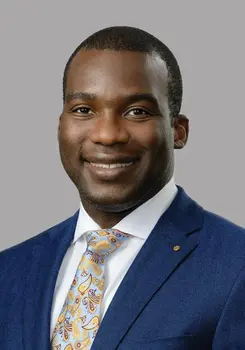
"Dr. Olaide Ajayi is board-certified by the American Board of Neurological Surgeons and is a Fellow of the American Association of Neurological Surgeons. He is the Medical Director of Spine Surgery at Texas Health Harris Methodist Hospital in Fort Worth.Dr. Ajayi completed his Neurosurgery Residency as well as a Complex and Minimally Invasive Spine Fellowship at Loma Linda University Medical Center in Southern California. He also received his Medical Doctorate from the same institution. He has authored and contributed to many peer review publications on various neurosurgical and spine related topics.His areas of special focus include the surgical management of degenerative scoliosis, spine tumors, spine trauma, complex and minimally invasive spine surgery, and degenerative spine disease. Dr. Ajayi takes a comprehensive approach in the management of spinal disease, utilizing conservative treatment options when feasible, as well as minimally invasive and complex reconstructive approaches when necessary.Dr. Ajayi is a member of the North American Spine Society (NASS), American Association of Neurological Surgeons (AANS), Congress of Neurological Surgeons (CNS) and AANS/CNS Joint Spine Section.WATCH NOW:</h5>Patient Testimonial: North Texas Neurosurgical & Spine Center (Dr. Ajayi)</a>". Dr. Ajayi is rated as an Advanced provider by MediFind in the treatment of Klippel-Feil Syndrome. He is also highly rated in 23 other conditions, according to our data. His clinical expertise encompasses Subdural Hematoma, Chronic Subdural Hematoma, Delirium, Microdiscectomy, and Herniated Disc Surgery.

Advocate Medical Group Neurosurgery
Dean Karahalios is a Neurosurgery provider practicing medicine in Park Ridge, Illinois. Dr. Karahalios is rated as an Advanced provider by MediFind in the treatment of Klippel-Feil Syndrome. He is also highly rated in 3 other conditions, according to our data. His clinical expertise encompasses Klippel-Feil Syndrome, Subdural Hematoma, Spinal Stenosis, Laminectomy, and Microdiscectomy. Dr. Karahalios is board certified in American Board Of Neurological Surgery.
Summary: CoRDS, or the Coordination of Rare Diseases at Sanford, is based at Sanford Research in Sioux Falls, South Dakota. It provides researchers with a centralized, international patient registry for all rare diseases. This program allows patients and researchers to connect as easily as possible to help advance treatments and cures for rare diseases. The CoRDS team works with patient advocacy groups, in...