Manitoba Oculotrichoanal SyndromeSymptoms, Doctors, Treatments, Advances & More
Learn About Manitoba Oculotrichoanal Syndrome
Manitoba oculotrichoanal syndrome is a condition involving several characteristic physical features, particularly affecting the eyes (oculo-), hair (tricho-), and anus (-anal).
Manitoba oculotrichoanal syndrome is caused by mutations in the FREM1 gene.
Manitoba oculotrichoanal syndrome is estimated to occur in 2 to 6 in 1,000 people in a small isolated Ojibway-Cree community in northern Manitoba, Canada. Although this region has the highest incidence of the condition, it has also been diagnosed in a few people from other parts of the world.
This condition is inherited in an autosomal recessive pattern, which means both copies of the gene in each cell have mutations. The parents of an individual with an autosomal recessive condition each carry one copy of the mutated gene, but they typically do not show signs and symptoms of the condition.
ETSU Physicians & Associates- Pediatrics
Alvaro Russi is a Pediatrics provider practicing medicine in Johnson City, Tennessee. Dr. Russi is rated as an Advanced provider by MediFind in the treatment of Manitoba Oculotrichoanal Syndrome. He is also highly rated in 125 other conditions, according to our data. His clinical expertise encompasses Increased Head Circumference, Ehlers-Danlos Syndrome (EDS), Chromosome 8p Deletion, and Chromosome 6q Duplication. Dr. Russi is board certified in American Board Of Pediatrics and American Board Of Medical Genetics.

Atrium Health Levine Children's Nephrology
Donald Weaver is a Pediatric Nephrologist practicing medicine in Charlotte, North Carolina. Dr. Weaver is rated as an Experienced provider by MediFind in the treatment of Manitoba Oculotrichoanal Syndrome. He is also highly rated in 2 other conditions, according to our data. His clinical expertise encompasses Posterior Urethral Valves, Togaviridae Disease, Feingold Syndrome, and Congenital Nephrotic Syndrome. Dr. Weaver is board certified in American Board Of Pediatrics and American Board Of Pediatrics, Pediatric Nephrology. Dr. Weaver is currently accepting new patients.
Advocate Heart Institute
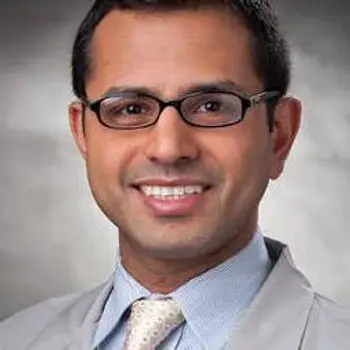
Sunil Pauwaa is an Advanced Heart Failure and Transplant Cardiologist practicing medicine in Oak Lawn, Illinois. Dr. Pauwaa is rated as an Experienced provider by MediFind in the treatment of Manitoba Oculotrichoanal Syndrome. He is also highly rated in 9 other conditions, according to our data. His clinical expertise encompasses Heart Failure, Pulmonary Hypertension, Pulmonary Veno-Occlusive Disease, Pulmonary Edema, and Heart Transplant. Dr. Pauwaa is board certified in American Board Of Internal Medicine, Advanced Heart Failure And Transplant Cardiology.
Published Date: May 01, 2011
Published By: National Institutes of Health