Obsessive-Compulsive Disorder (OCD)Symptoms, Doctors, Treatments, Advances & More
Learn About Obsessive-Compulsive Disorder (OCD)
Obsessive-compulsive disorder (OCD) is a mental disorder in which people have unwanted and repeated thoughts, feelings, ideas, sensations (obsessions), and behaviors that drive them to do something over and over (compulsions).
Often the person carries out the behaviors to get rid of the obsessive thoughts. But this only provides short-term relief. Not doing the obsessive rituals can cause great anxiety and distress.
Obsessive-compulsive neurosis; OCD
Health care providers do not know the exact cause of OCD. Factors that may play a role include prior head injury, infections, and abnormal function in certain areas of the brain. Genes (family history) seems to play a strong role. A history of physical or sexual abuse also appears to increase the risk for OCD.
Parents and teachers often recognize OCD symptoms in children. Most people are diagnosed between the ages of 7 and 12, or in their early 20s. Few people show symptoms after age 35.
People with OCD have repeated thoughts, urges, or mental images that cause anxiety. These are called obsessions.
Examples are:
- Excessive fear of germs
- Forbidden thoughts related to sex, religion, or harm to others or self
- Need for order
They also perform repeated behaviors in response to their thoughts or obsessions. These are called compulsions.
Examples include:
- Checking and rechecking actions (such as turning out the lights and locking the door)
- Excessive counting
- Ordering things in a certain way
- Repeatedly washing the hands to ward off infection
- Repeating words silently
- Praying silently over and over
Not everyone who has habits or rituals they like to perform has OCD. But, the person with OCD:
- Is not able to control their thoughts or behaviors, even when they understand that they are excessive.
- Spends at least an hour a day on these thoughts or behaviors.
- Does not get pleasure from performing a behavior or ritual, other than perhaps brief relief of anxiety.
- Has major problems in daily life due to these thoughts and rituals.
People with OCD may also have a tic disorder, such as:
- Eye blinking
- Facial grimacing
- Shoulder shrugging
- Head jerking
- Repeated clearing of the throat, sniffing, or grunting sounds
OCD is treated using a combination of medicine and behavioral therapy.
Medicines used include antidepressants, antipsychotics, and mood stabilizers.
Clomipramine has been shown to be effective for many with OCD.
Talk therapy (cognitive behavioral therapy; CBT) has been shown to be effective for this disorder. During therapy, the person is exposed many times to a situation that triggers the obsessive thoughts and learns to gradually tolerate the anxiety and resist the urge to do the compulsion. Therapy can also be used to reduce stress and anxiety and resolve inner conflicts.
ColumbiaDoctors - Columbus Circle
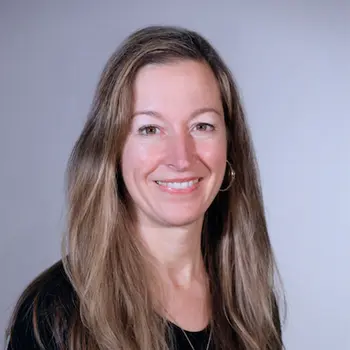
Kate Fitzgerald is a Psychiatrist practicing medicine in New York, New York. Dr. Fitzgerald is rated as an Elite provider by MediFind in the treatment of Obsessive-Compulsive Disorder (OCD). She is also highly rated in 1 other condition, according to our data. Her clinical expertise encompasses Obsessive-Compulsive Disorder (OCD), Attention Deficit Hyperactivity Disorder (ADHD), Generalized Anxiety Disorder (GAD), and Autism Spectrum Disorder. Dr. Fitzgerald is board certified in Child And Adolescent Psychiatry. Dr. Fitzgerald is currently accepting new patients.

UChicago Medicine Mitchell Hospital - Hyde Park
Jon Grant is a Psychiatrist practicing medicine in Chicago, Illinois. Dr. Grant is rated as an Elite provider by MediFind in the treatment of Obsessive-Compulsive Disorder (OCD). He is also highly rated in 2 other conditions, according to our data. His clinical expertise encompasses Obsessive-Compulsive Disorder (OCD), Attention Deficit Hyperactivity Disorder (ADHD), Major Depression, Anorexia, and Deep Brain Stimulation. Dr. Grant is board certified in Psychiatry, Practicing Since, and 1999. Dr. Grant is currently accepting new patients.

Kennedy Krieger Associates
Marco Grados is a Psychiatrist and a Child and Adolescent Psychiatrist practicing medicine in Baltimore, Maryland. Dr. Grados is rated as an Elite provider by MediFind in the treatment of Obsessive-Compulsive Disorder (OCD). He is also highly rated in 2 other conditions, according to our data. His clinical expertise encompasses Tourette Syndrome, Obsessive-Compulsive Disorder (OCD), Attention Deficit Hyperactivity Disorder (ADHD), and Anorexia. Dr. Grados is board certified in American Board Of Psychiatry And Neurology. Dr. Grados is currently accepting new patients.
You can ease the stress of having OCD by joining a support group. Sharing with others who have common experiences and problems can help you not feel alone.
Support groups are usually not a good substitute for talk therapy or taking medicine, but can be a helpful addition.
- International OCD Foundation -- iocdf.org/ocd-finding-help/supportgroups/
- National Institute of Mental Health -- www.nimh.nih.gov/health/find-help
OCD is a long-term (chronic) illness with periods of severe symptoms followed by times of improvement. A completely symptom-free period is unusual. Most people improve with treatment.
Long-term complications of OCD have to do with the type of obsessions or compulsions. For example, constant handwashing can cause skin breakdown. OCD does not usually progress into another mental problem.
Contact your provider for an appointment if your symptoms interfere with daily life, work, or relationships.
Summary: PTSD is one of the most universal and severe psychiatric disorders whose incidence continues to rise due to the common exposure to severe trauma in the United States and worldwide. After trauma, a proportion of individuals maintains high symptoms of PTSD and depression, which can persist for years. The early weeks following trauma present a unique opportunity to deliver early interventions that ca...
Summary: The aim of this study is to expand access to Bergen Four-Day Treatment (B4DT) in Finland and to integrate it into psychiatric care pathways at Tampere University Hospital (TAYS). A Bergen team has been established within TAYS Psychiatry and has been trained in collaboration with the B4DT team from HUS and the Norwegian developers. The objective of this study is to enhance understanding of the mode...
Published Date: May 15, 2026
Published By: Fred K. Berger, MD, DLFAPA, board-certified in psychiatry, Scripps Memorial Hospital, La Jolla, CA. Also reviewed by David C. Dugdale, MD, Medical Director, Brenda Conaway, Editorial Director, and the A.D.A.M. Editorial team.
American Psychiatric Association website. Obsessive-compulsive and related disorders. Diagnostic and Statistical Manual of Mental Disorders. 5th ed. Text Revision (DSM-5-TR), Washington, DC: American Psychiatric Association Publishing; 2022.
Kim RK. Anxiety disorders, obsessive-compulsive disorder, and posttraumatic stress disorder. In: Kliegman RM, St. Geme JW, Blum NJ, et al, eds. Nelson Textbook of Pediatrics. 22nd ed. Philadelphia, PA: Elsevier; 2025:chap 38.
Lyness JM, Lee HB. Psychiatric disorders in medical practice. In: Goldman L, Cooney KA, eds. Goldman-Cecil Medicine. 27th ed. Philadelphia, PA: Elsevier; 2024:chap 362.
Salvi JD, Ipek S, Keuthen NJ, et al. Obsessive-compulsive and related disorders. In: Stern TA, Wilens TE, Fava M, eds. Massachusetts General Hospital Comprehensive Clinical Psychiatry. 3rd ed. Philadelphia, PA: Elsevier; 2025:chap 32.
Walter HJ, Bukstein OG, Abright AR, et al. Clinical practice guideline for the assessment and treatment of children and adolescents with anxiety disorders. J Am Acad Child Adolesc Psychiatry. 2020;59(10):1107-1124. PMID: 32439401 pubmed.ncbi.nlm.nih.gov/32439401/.