Paroxysmal Supraventricular Tachycardia (PSVT) Treatments

Find Paroxysmal Supraventricular Tachycardia (PSVT) Treatments

Generic Name

Verapamil

Brand Names
Trandolapril, Verapamil HCI
FDA approval date: October 01, 1986
Classification: Calcium Channel Blocker
Form: Injection, Tablet, Capsule

What is Trandolapril (Verapamil)?

Trandolapril and verapamil hydrochloride extended-release tablets are indicated for the treatment of hypertension. This fixed combination drug is not indicated for the initial therapy of hypertension. In using trandolapril and verapamil hydrochloride extended-release tablets, consideration should be given to the fact that an angiotensin converting enzyme inhibitor, captopril, has caused agranulocytosis, particularly in patients with renal impairment or collagen vascular disease, and that available data are insufficient to show that trandolapril does not have similar risk.
Save this treatment for later
Sign Up
Not sure about your diagnosis?
Check Your Symptoms
Tired of the same old research?
Check Latest Advances

Related Clinical Trials

A Randomized Phase 1/2 Trial of Low Dose Anti-thymocyte Globulin (ATG) With Subsequent Adalimumab or Verapamil in New Onset Type 1 Diabetes

Summary: This multi-center randomized controlled trial will assess the safety and efficacy of ATG followed by either adalimumab or verapamil in preserving insulin secretion 2 years from randomization in persons aged 9 to \<21 with recent-onset stage 3 T1D.

Pharmacokinetics and Safety of Commonly Used Drugs in Lactating Women and Breastfed Infants

Summary: Over half of women in the US who are breastfeeding their infants take prescription drugs. You are being asked to participate in this study because you are breastfeeding your infant and are currently taking, as part of your medical care, at least one of the drugs we are studying. We are interested in studying drugs commonly prescribed to women who are breastfeeding so we can learn more about the am...

A Prospective, Randomized, Controlled Clinical Pilot Trial Investigating the Partial Down-titration of Guideline-directed Medical Therapy in Patients With Heart Failure in Remission.

Summary: Heart failure (HF) is a chronic condition that is characterized by a weakened and enlarged heart. It typically causes symptoms such as breathlessness and swelling of the legs, and it is a serious illness that shortens life expectancy. In recent years, new medicines have been developed that can improve heart function and help patients with HF live longer. HF patients with reduced heart function typ...

Brand Information

    Trandolapril and Verapamil Hydrochloride (Trandolapril and Verapamil Hydrochloride)
    WARNING: FETAL TOXICITY
    • When pregnancy is detected, discontinue trandolapril and verapamil hydrochloride extended-release tablets as soon as possible.
    • Drugs that act directly on the renin-angiotensin system can cause injury and death to the developing fetus (see WARNINGS: .
    1DESCRIPTION
    Trandolapril and verapamil hydrochloride extended-release tablets combine a slow release formulation of a calcium channel blocker, verapamil hydrochloride, USP, and an immediate release formulation of an angiotensin converting enzyme inhibitor, trandolapril, USP.
    1.1Verapamil Component
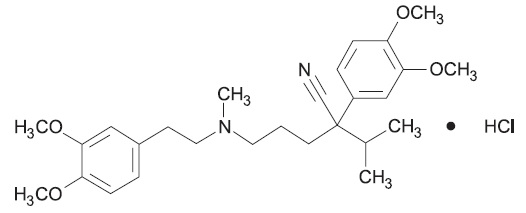
    Verapamil hydrochloride, USP is chemically described as benzeneacetonitrile, α [3-[[2-(3,4-dimethoxyphenyl) -ethyl] methylamino] propyl] -3,4-dimethoxy-α -(1-methylethyl)-, monohydrochloride, (±). Its molecular formula is C
    verapamil-structure
    Verapamil hydrochloride, USP is a white or practically white crystalline powder, with a molecular weight of 491.06 g/mol. It is soluble in water, freely soluble in chloroform, sparingly soluble in alcohol and practically insoluble in ether. It is practically odorless and has a bitter taste.
    1.2Trandolapril Component
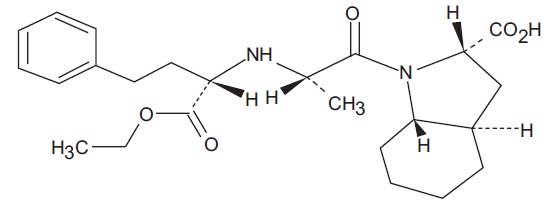
    Trandolapril, USP is the ethyl ester prodrug of a nonsulfhydryl angiotensin converting enzyme (ACE) inhibitor, trandolaprilat. It is chemically described as (2S,3aR,7aS)- 1- [(S)-2-[[(S)-1-(EthoxyCarbonyl)-3-phenylpropyl] amino]Propanoyl]octahydro-1H-indole-2-carboxylic acid. Its molecular formula is C
    trandolapril-structure
    Trandolapril, USP is a white or almost white powder with a molecular weight of 430.54 g/mol. It is practically insoluble in water; freely soluble in methylene chloride; sparingly soluble in absolute alcohol.
    Trandolapril and verapamil hydrochloride extended-release tablets are formulated for oral administration, containing verapamil hydrochloride, USP as a controlled release formulation and trandolapril, USP as an immediate release formulation. The tablet strengths are trandolapril and verapamil hydrochloride extended-release tablets 1 mg/240 mg, trandolapril and verapamil hydrochloride extended-release tablets 2 mg/180 mg, trandolapril and verapamil hydrochloride extended-release tablets 2 mg/240 mg, and trandolapril and verapamil hydrochloride extended-release tablets 4 mg/240 mg. The tablets also contain the following ingredients: colloidal silicon dioxide, corn starch, croscarmellose sodium, ferric oxide red, hypromellose, lactose monohydrate, povidone, sodium alginate, sodium stearyl fumarate, magnesium stearate, and microcrystalline cellulose. The film coating contains: 1 mg/240 mg – hypromellose, titanium dioxide, and polyethylene glycol; 2 mg/180 mg – hypromellose, titanium dioxide, polyethylene glycol, iron oxide red, and FD&C blue #2; 2 mg/240 mg – hypromellose, titanium dioxide, polyethylene glycol, iron oxide yellow, iron oxide black, and iron oxide red; 4 mg/240 mg – hypromellose, titanium dioxide, polyethylene glycol, iron oxide yellow, iron oxide red, and iron oxide black.
    2CLINICAL PHARMACOLOGY
    Verapamil hydrochloride and trandolapril have been used individually and in combination for the treatment of hypertension. For the four dosing strengths, the antihypertensive effect of the combination is approximately additive to the individual components.
    2.1Verapamil Component
    Verapamil is a calcium channel blocker that exerts its pharmacologic effects by modulating the influx of ionic calcium across the cell membrane of the arterial smooth muscle as well as in conductile and contractile myocardial cells. Verapamil exerts antihypertensive effects by decreasing systemic vascular resistance, usually without orthostatic decreases in blood pressure or reflex tachycardia. During isometric or dynamic exercise, verapamil does not alter systolic cardiac function in patients with normal ventricular function. Verapamil does not alter total serum calcium levels.
    2.2Trandolapril Component
    Trandolapril is de-esterified to its diacid metabolite, trandolaprilat. Both inhibit angiotensin-converting enzyme (ACE) in human subjects and in animals. Trandolaprilat is about 8 times more potent than trandolapril. ACE is a peptidyl dipeptidase that catalyzes the conversion of angiotensin I to the vasoconstrictor, angiotensin II. Angiotensin II also stimulates aldosterone secretion by the adrenal cortex.
    Inhibition of ACE results in decreased plasma angiotensin II, which leads to decreased vasopressor activity and to decreased aldosterone secretion. The latter decrease may result in a small increase of serum potassium. In controlled clinical trials, treatment with trandolapril and verapamil hydrochloride extended-release tablets resulted in mean increases in potassium of 0.1 mEq/L (see
    ACE is identical to kininase II, an enzyme that degrades bradykinin. Whether increased levels of bradykinin, a potent vasodepressor peptide, play a role in the therapeutic effect of trandolapril and verapamil hydrochloride extended-release tablets remains to be elucidated.
    While the mechanism through which trandolapril lowers blood pressure is believed to be primarily suppression of the renin-angiotensin-aldosterone system, trandolapril has an antihypertensive effect even in patients with low renin hypertension. Trandolapril is an effective antihypertensive in all races studied. Both black patients (usually a predominantly low renin group) and non-black patients respond to 2 to 4 mg of trandolapril.
    3CLINICAL STUDIES
    In controlled clinical trials, once daily doses of trandolapril and verapamil hydrochloride extended-release tablets, trandolapril 4 mg/verapamil HCl extended-release 240 mg or trandolapril 2 mg/verapamil HCl extended-release 180 mg, decreased placebo-corrected seated pressure (systolic/diastolic) 24 hours after dosing by about 7 to 12/6 to 8 mmHg. Each of the components of trandolapril and verapamil hydrochloride extended-release tablets added to the antihypertensive effect. Treatment effects were consistent across age groups (<65, ≥65 years), and gender (male, female).
    Blood pressure reductions were significantly greater for the trandolapril and verapamil hydrochloride extended-release tablet 4 mg/240 mg combination than for either of the components used alone.
    The antihypertensive effects of trandolapril and verapamil hydrochloride extended-release tablets have continued during therapy for at least 1 year.
    4INDICATIONS AND USAGE
    Trandolapril and verapamil hydrochloride extended-release tablets are indicated for the treatment of hypertension.
    This fixed combination drug is not indicated for the initial therapy of hypertension (see ).
    In using trandolapril and verapamil hydrochloride extended-release tablets, consideration should be given to the fact that an angiotensin converting enzyme inhibitor, captopril, has caused agranulocytosis, particularly in patients with renal impairment or collagen vascular disease, and that available data are insufficient to show that trandolapril does not have similar risk (see
    5CONTRAINDICATIONS
    Trandolapril and verapamil hydrochloride extended-release tablets are contraindicated in patients who are hypersensitive to any ACE inhibitor or verapamil.
    Because of the verapamil component, trandolapril and verapamil hydrochloride extended-release tablets are contraindicated in:
    1. Severe left ventricular dysfunction (see
    2. Hypotension (systolic pressure less than 90 mmHg) or cardiogenic shock.
    3. Sick sinus syndrome (except in patients with a functioning artificial ventricular pacemaker).
    4. Second- or third-degree AV block (except in patients with a functioning artificial ventricular pacemaker).
    5. Patients with atrial flutter or atrial fibrillation and an accessory bypass tract (e.g. Wolff-Parkinson-White, Lown-Ganong-Levine syndromes) (see
    6. Patients taking flibanserin (see
    Because of the trandolapril component, trandolapril and verapamil hydrochloride extended-release tablets are contraindicated in patients with a history of angioedema related to previous treatment with an angiotensin converting enzyme (ACE) inhibitor.
    Do not co-administer aliskiren with trandolapril and verapamil hydrochloride extended-release tablets in patients with diabetes (see
    Trandolapril and verapamil hydrochloride extended-release tablets are contraindicated in combination with a neprilysin inhibitor (e.g., sacubitril). Do not administer trandolapril and verapamil hydrochloride extended-release tablets within 36 hours of switching to or from sacubitril/valsartan, a neprilysin inhibitor (see
    6ADVERSE REACTIONS
    Trandolapril and verapamil hydrochloride extended-release tablets have been evaluated in over 1,957 subjects and patients. Of these, 541 patients, including 23% elderly patients, participated in U.S. controlled clinical trials, and 251 were studied in foreign controlled clinical trials. In clinical trials with trandolapril and verapamil hydrochloride extended-release tablets, no adverse experiences peculiar to this combination drug have been observed. Adverse experiences that have occurred have been limited to those that have been previously reported with verapamil or trandolapril. Trandolapril and verapamil hydrochloride extended-release tablets have been evaluated for long-term safety in 272 patients treated for 1 year or more. Adverse experiences were usually mild and transient.
    Discontinuation of therapy because of adverse events in U.S. placebo-controlled hypertension studies was required in 2.6% and 1.9% of patients treated with trandolapril and verapamil hydrochloride extended-release tablets and placebo, respectively.
    Adverse experiences occurring in 1% or more of the 541 patients in placebo-controlled hypertension trials who were treated with a range of trandolapril (0.5 to 8 mg) and verapamil (120 to 240 mg) combinations are shown below.
    Other clinical adverse experiences possibly, probably, or definitely related to drug treatment occurring in 0.3% or more of patients treated with trandolapril/verapamil combinations with or without concomitant diuretic in controlled or uncontrolled trials (N = 990) and less frequent, clinically significant events (in italics) include the following:
    6.1Cardiovascular
    Angina, AV block second degree, bundle branch block, edema, flushing, hypotension, myocardial infarction, palpitations, premature ventricular contractions, nonspecific ST-T changes, near syncope, tachycardia.
    6.2Central Nervous System
    Drowsiness, hypesthesia, insomnia, loss of balance, paresthesia, vertigo.
    6.3Dermatologic
    Pruritus, rash.
    6.4Emotional, Mental, Sexual States
    Anxiety, impotence, abnormal mentation.
    6.5Eye, Ear, Nose, Throat
    Epistaxis, tinnitus, upper respiratory tract infection, blurred vision.
    6.6Gastrointestinal
    Diarrhea, dyspepsia, dry mouth, nausea.
    6.7General Body Function
    Chest pain, malaise, weakness.
    6.8Genitourinary
    Endometriosis, hematuria, nocturia, polyuria, proteinuria.
    6.9Hemopoietic
    Decreased leukocytes, decreased neutrophils.
    6.10Musculoskeletal System
    Arthralgias/myalgias, gout (increased uric acid).
    6.11Pulmonary
    Dyspnea.
    6.12Angioedema
    Angioedema has been reported in 3 (0.15%) patients receiving trandolapril and verapamil hydrochloride extended-release tablets in U.S. and foreign studies (N = 1,957). Angioedema associated with laryngeal edema may be fatal. If angioedema of the face, extremities, lips, tongue, glottis, and/or larynx occurs, treatment with trandolapril and verapamil hydrochloride extended-release tablets should be discontinued and appropriate therapy instituted immediately (see
    6.13Hypotension
    (See
    6.14Treatment of Acute Cardiovascular Adverse Reactions
    The frequency of cardiovascular adverse reactions which require therapy is rare, hence, experience with their treatment is limited. Whenever severe hypotension or complete AV block occur following oral administration of trandolapril and verapamil hydrochloride extended-release tablets (verapamil component), the appropriate emergency measures should be applied immediately, e.g., intravenously administered isoproterenol HCl, levarterenol bitartrate, atropine (all in the usual doses), or calcium gluconate (10% solution). In patients with hypertrophic cardiomyopathy (IHSS), alpha-adrenergic agents (phenylephrine, metaraminol bitartrate or methoxamine) should be used to maintain blood pressure, and isoproterenol and levarterenol should be avoided. If further support is necessary, inotropic agents (dopamine or dobutamine) may be administered. Actual treatment and dosage should depend on the severity and the clinical situation and the judgment and experience of the treating physician.
    6.15Other
    Other adverse experiences (in addition to those in table and listed above) that have been reported with the individual components are listed below.
    6.16Post Marketing Experience
    There has been a single postmarketing report of paralysis (tetraparesis) associated with the combined use of verapamil and colchicine. This may have been caused by colchicine crossing the blood-brain barrier due to CYP3A4 and P-gp inhibition by verapamil. Combined use of verapamil and colchicine is not recommended (see
    7OVERDOSAGE
    No specific information is available on the treatment of overdosage with trandolapril and verapamil hydrochloride extended-release tablets.
    7.1Verapamil Component
    Overdose with verapamil may lead to pronounced hypotension, bradycardia, and conduction system abnormalities (e.g., junctional rhythm with AV dissociation and high degree AV block, including asystole). Other symptoms secondary to hypoperfusion (e.g., metabolic acidosis, hyperglycemia, hyperkalemia, renal dysfunction, and convulsions) may be evident.
    Treat all verapamil overdoses as serious and maintain observation for at least 48 hours, preferably under continuous hospital care. Delayed pharmacodynamic consequences may occur with the sustained release formulation. Verapamil is known to decrease gastrointestinal transit time. In cases of overdose, verapamil hydrochloride sustained-release tablets have occasionally been reported to form concretions within the stomach or intestines. These concretions have not been visible on plain radiographs of the abdomen, and no medical means of gastrointestinal emptying is of proven efficacy in removing them. Endoscopy might reasonably be considered in cases of overdose when symptoms are unusually prolonged. Verapamil cannot be removed by hemodialysis.
    Treatment of overdosage should be supportive. Beta adrenergic stimulation or parenteral administration of calcium solutions may increase calcium ion flux across the slow channel, and have been used effectively in treatment of deliberate overdosage with verapamil. The following measures may be considered:
    7.1.1Bradycardia and Conduction System Abnormalities
    Atropine, isoproterenol, and cardiac pacing.
    7.1.2Hypotension
    Intravenous fluids, vasopressors (e.g., dopamine, dobutamine), calcium solutions (e.g., 10% calcium chloride solution).
    7.1.3Cardiac Failures
    Inotropic agents (e.g., isoproterenol, dopamine, dobutamine), diuretics. Asystole should be handled by the usual measures including cardiopulmonary resuscitation.
    7.2Trandolapril Component
    The oral LD
    In humans, the most likely clinical manifestation would be symptoms attributable to severe hypotension. Laboratory determinations of serum levels of trandolapril and its metabolites are not widely available, and such determinations have, in any event, no established role in the management of trandolapril overdose. No data are available to suggest that physiological maneuvers (e.g., maneuvers to change pH of the urine) might accelerate elimination of trandolapril and its metabolites. It is not known if trandolapril or trandolaprilat can be usefully removed from the body by hemodialysis.
    Angiotensin II could presumably serve as a specific antagonist antidote in the setting of trandolapril overdose, but angiotensin II is essentially unavailable outside of scattered research facilities. Because the hypotensive effect of trandolapril is achieved through vasodilation and effective hypovolemia, it is reasonable to treat trandolapril overdose by infusion of normal saline solution.
    8DOSAGE AND ADMINISTRATION
    The recommended usual dosage range of trandolapril for hypertension is 1 to 4 mg per day administered in a single dose or two divided doses. The recommended usual dosage range of verapamil hydrochloride sustained-release tablets for hypertension is 120 to 480 mg per day administered in a single dose or two divided doses.
    The hazards (see
    Rarely, the dose-independent hazards of trandolapril are serious. To minimize dose-independent hazards, it is usually appropriate to begin therapy with trandolapril and verapamil hydrochloride extended-release tablets only after a patient has either (a) failed to achieve the desired antihypertensive effect with one or the other monotherapy at its respective maximally recommended dose and shortest dosing interval, or (b) the dose of one or the other monotherapy cannot be increased further because of dose-limiting side effects.
    Clinical trials with trandolapril and verapamil hydrochloride extended-release tablets have explored only once-a-day doses. The antihypertensive effect and or adverse effects of adding 4 mg of trandolapril once-a-day to a dose of 240 mg verapamil hydrochloride sustained-release tablets administered twice-a-day has not been studied, nor have the effects of adding as little of 180 mg verapamil hydrochloride sustained-release tablets to 2 mg trandolapril administered twice-a-day been evaluated. Over the dose range of verapamil hydrochloride sustained-release tablets 120 to 240 mg once-a-day and trandolapril 0.5 to 8 mg once-a-day, the effects of the combination increase with increasing doses of either component.
    8.1Replacement Therapy
    For convenience, patients receiving trandolapril (up to 8 mg) and verapamil (up to 240 mg) in separate tablets, administered once-a-day, may instead wish to receive trandolapril and verapamil hydrochloride extended-release tablets containing the same component doses.
    Trandolapril and verapamil hydrochloride extended-release tablets should be administered with food.
    9HOW SUPPLIED
    Trandolapril and Verapamil Hydrochloride Extended-Release Tablets, 1 mg/240 mg are supplied as white to pinkish white colored, oval, biconvex, film-coated tablets with ‘294’ debossed on one side and plain on the other side containing 1 mg trandolapril, USP in an immediate-release form and 240 mg verapamil hydrochloride, USP in an extended-release form.
    NDC 68462-294-90 — bottles of 90

    NDC 68462-294-01 — bottles of 100

    NDC 68462-294-10 — bottles of 1000
    Trandolapril and Verapamil Hydrochloride Extended-Release Tablets, 2 mg/180 mg are supplied as pink colored, oval, biconvex, film-coated tablets with ‘295’ debossed on one side and plain on the other side containing 2 mg trandolapril, USP in an immediate-release form and 180 mg verapamil hydrochloride, USP in an extended-release form.
    NDC 68462-295-90 — bottles of 90

    NDC 68462-295-01 — bottles of 100

    NDC 68462-295-10 — bottles of 1000
    Trandolapril and Verapamil Hydrochloride Extended-Release Tablets, 2 mg/240 mg are supplied as cream colored, oval, biconvex, film-coated tablets with ‘296’ debossed on one side and plain on the other side containing 2 mg trandolapril, USP in an immediate-release form and 240 mg verapamil hydrochloride, USP in an extended-release form.
    NDC 68462-296-90 — bottles of 90

    NDC 68462-296-01 — bottles of 100

    NDC 68462-296-10 — bottles of 1000
    Trandolapril and Verapamil Hydrochloride Extended-Release Tablets, 4 mg/240 mg are supplied as brown colored, oval, biconvex, film-coated tablets with ‘G38’ debossed on one side and plain on the other side containing 4 mg trandolapril, USP in an immediate-release form and 240 mg verapamil hydrochloride, USP in an extended-release form.
    NDC 68462-329-01 — bottles of 100

    NDC 68462-329-10 — bottles of 1000
    Dispense in well-closed container with safety closure.
    9.1Storage:
    Store at 20°C to 25°C (68°F to 77°F) [see USP Controlled Room Temperature].
    Distributed by:
    Questions? 1 (888) 721-7115
    April 2025
    10Principle Display Panel - 1 mg/240 mg
    label1mg-240mg-100s
    11Principle Display Panel - 2 mg/180 mg
    label2mg-180mg-100s
    12Principle Display Panel - 2 mg/240 mg
    label2mg-240mg-100s
    13Principle Display Panel - 4 mg/240 mg
    label4mg-240mg-100s