Generic Name

Trimethoprim

Brand Names
Bactrim, Sulfameth, Sulfamethox-TMP, Sulfamethoxazole, Sulfatrim
FDA approval date: July 01, 1983
Classification: Dihydrofolate Reductase Inhibitor Antibacterial
Form: Injection, Tablet, Suspension, Solution

What is Bactrim (Trimethoprim)?

To reduce the development of drug-resistant bacteria and maintain the effectiveness of Bactrim tablets and other antibacterial drugs, Bactrim tablets should be used only to treat or prevent infections that are proven or strongly suspected to be caused by susceptible bacteria. When culture and susceptibility information are available, they should be considered in selecting or modifying antibacterial therapy. In the absence of such data, local epidemiology and susceptibility patterns may contribute to empiric selection of therapy. Urinary Tract Infections For the treatment of urinary tract infections due to susceptible strains of the following organisms: Escherichia coli, Klebsiella species, Enterobacter species, Morganella morganii, Proteus mirabilis and Proteus vulgaris. It is recommended that initial episodes of uncomplicated urinary tract infections be treated with a single effective antibacterial agent rather than the combination. Acute Otitis Media For the treatment of acute otitis media in pediatric patients due to susceptible strains of Streptococcus pneumoniae or Haemophilus influenzae when in the judgment of the physician sulfamethoxazole and trimethoprim offers some advantage over the use of other antimicrobial agents. To date, there are limited data on the safety of repeated use of BACTRIM in pediatric patients under two years of age. BACTRIM is not indicated for prophylactic or prolonged administration in otitis media at any age. Acute Exacerbations of Chronic Bronchitis in Adults For the treatment of acute exacerbations of chronic bronchitis due to susceptible strains of Streptococcus pneumoniae or Haemophilus influenzae when a physician deems that BACTRIM could offer some advantage over the use of a single antimicrobial agent. Shigellosis For the treatment of enteritis caused by susceptible strains of Shigella flexneri and Shigella sonnei when antibacterial therapy is indicated. Pneumocystis jirovecii Pneumonia For the treatment of documented Pneumocystis jirovecii pneumonia and for prophylaxis against P. jirovecii pneumonia in individuals who are immunosuppressed and considered to be at an increased risk of developing P. jirovecii pneumonia. Traveler's Diarrhea in Adults For the treatment of traveler's diarrhea due to susceptible strains of enterotoxigenic E. coli.
Save this treatment for later
Sign Up
Not sure about your diagnosis?
Check Your Symptoms
Tired of the same old research?
Check Latest Advances

Related Clinical Trials

Effects of Treatments on the Microbiome in Healthy Volunteers and Patients With Atopic Dermatitis

Background: \- Atopic dermatitis, or eczema, is a chronic skin disorder. Patients sometimes have infections with S. aureus bacteria. Researchers want to study how eczema treatments affect the number and the type of bacteria on the skin.

Preventive Effect of Prophylactic Oral Antibiotics Against Cholangitis After Kasai Portoenterostomy in Biliary Atresia: a Randomized Controlled Trial

Summary: This study is non-inferiority trial design. This study aimed to investigate the effect of prophylactic oral antibiotics on preventing cholangitis in biliary atresia (BA) patients after Kasai portoenterostomy (KP) by comparing the cholangitis rate in BA patients who received prophylactic oral antibiotics and those who did not. The patients were followed up for 2 years after KP.

Finding the Optimal Regimen for Mycobacterium Abscessus Treatment (FORMaT)

Summary: Mycobacterium abscessus (MABS) is a group of rapid-growing, multi-drug resistant non-tuberculous mycobacteria (NTM) causing infections in humans. MABS pulmonary disease (MABS-PD) can result in significant morbidity, increased healthcare utilisation, accelerated lung function decline, impaired quality of life, more challenging lung transplantation, and increased mortality. While the overall numbers...

Brand Information

    Bactrim DS (sulfamethoxazole and Trimethoprim)
    1DESCRIPTION
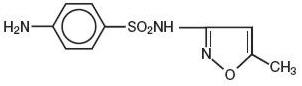
    BACTRIM (sulfamethoxazole and trimethoprim) is a synthetic antibacterial combination product available in DS (double strength) tablets, each containing 800 mg sulfamethoxazole and 160 mg trimethoprim; in tablets, each containing 400 mg sulfamethoxazole and 80 mg trimethoprim for oral administration.
    Sulfamethoxazole is
    Chemical Structure
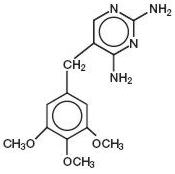
    Trimethoprim is 2,4-diamino-5-(3,4,5-trimethoxybenzyl) pyrimidine; the molecular formula is C
    Chemical Structure
    Inactive ingredients:Docusate sodium 85%, sodium benzoate 15%, sodium starch glycolate, magnesium stearate and pregelatinized starch.
    2CLINICAL PHARMACOLOGY
    BACTRIM is rapidly absorbed following oral administration. Both sulfamethoxazole and trimethoprim exist in the blood as unbound, protein-bound and metabolized forms; sulfamethoxazole also exists as the conjugated form. Sulfamethoxazole is metabolized in humans to at least 5 metabolites: the N
    Trimethoprim is metabolized
    The free forms of sulfamethoxazole and trimethoprim are considered to be the therapeutically active forms.
    In vitrostudies suggest that trimethoprim is a substrate of P-glycoprotein, OCT1 and OCT2, and that sulfamethoxazole is not a substrate of P-glycoprotein.
    Approximately 70% of sulfamethoxazole and 44% of trimethoprim are bound to plasma proteins. The presence of 10 mg percent sulfamethoxazole in plasma decreases the protein binding of trimethoprim by an insignificant degree; trimethoprim does not influence the protein binding of sulfamethoxazole.
    Peak blood levels for the individual components occur 1 to 4 hours after oral administration. The mean serum half-lives of sulfamethoxazole and trimethoprim are 10 and 8 to 10 hours, respectively. However, patients with severely impaired renal function exhibit an increase in the half-lives of both components, requiring dosage regimen adjustment (see
    Both sulfamethoxazole and trimethoprim distribute to sputum, vaginal fluid and middle ear fluid; trimethoprim also distributes to bronchial secretion, and both pass the placental barrier and are excreted in human milk.
    Pharmacokinetics in Pediatric Patients
    A simulation conducted with data from a pharmacokinetic study in 153 infants and children demonstrated that mean steady state AUC and maximum plasma concentration of trimethoprim and sulfamethoxazole would be comparable between pediatric patients 2 months to 18 years receiving 8/40 (trimethoprim/ sulfamethoxazole) mg/kg/day divided every 12 hours and adult patients receiving 320/1600 (trimethoprim/ sulfamethoxazole) mg/day.
    Pharmacokinetics in Geriatric Patients
    The pharmacokinetics of sulfamethoxazole 800 mg and trimethoprim 160 mg were studied in 6 geriatric subjects (mean age: 78.6 years) and 6 young healthy subjects (mean age: 29.3 years) using a non-US approved formulation. Pharmacokinetic values for sulfamethoxazole in geriatric subjects were similar to those observed in young adult subjects. The mean renal clearance of trimethoprim was significantly lower in geriatric subjects compared with young adult subjects (19 mL/h/kg vs. 55 mL/h/kg). However, after normalizing by body weight, the apparent total body clearance of trimethoprim was on average 19% lower in geriatric subjects compared with young adult subjects.
    2.1Microbiology
    Mechanism of Action
    Sulfamethoxazole inhibits bacterial synthesis of dihydrofolic acid by competing with para-aminobenzoic acid (PABA). Trimethoprim blocks the production of tetrahydrofolic acid from dihydrofolic acid by binding to and reversibly inhibiting the required enzyme, dihydrofolate reductase. Thus, sulfamethoxazole and trimethoprim blocks two consecutive steps in the biosynthesis of nucleic acids and proteins essential to many bacteria.
    Resistance
    In vitrostudies have shown that bacterial resistance develops more slowly with both sulfamethoxazole and trimethoprim in combination than with either sulfamethoxazole or trimethoprim alone.
    Antimicrobial Activity
    BACTRIM has been shown to be active against most isolates of the following microorganisms, both
    Aerobic gram-positive bacteria
    Streptococcus pneumoniae
    Aerobic gram-negative bacteria
    Escherichia coli(including susceptible enterotoxigenic strains implicated in traveler's diarrhea)
    Klebsiellaspecies
    Enterobacterspecies
    Haemophilus influenzae
    Morganella morganii
    Proteus mirabilis
    Proteus vulgaris
    Shigella flexneri
    Shigella sonnei
    Other Microorganisms
    Pneumocystis jirovecii
    Susceptibility Testing
    For specific information regarding susceptibility test interpretive criteria and associated test methods and quality control standards recognized by FDA for this drug, please see: https://www.fda.gov/STIC.
    3INDICATIONS AND USAGE
    To reduce the development of drug-resistant bacteria and maintain the effectiveness of BACTRIM (sulfamethoxazole and trimethoprim) tablets and other antibacterial drugs, BACTRIM (sulfamethoxazole and trimethoprim) tablets should be used only to treat or prevent infections that are proven or strongly suspected to be caused by susceptible bacteria. When culture and susceptibility information are available, they should be considered in selecting or modifying antibacterial therapy. In the absence of such data, local epidemiology and susceptibility patterns may contribute to empiric selection of therapy.
    4CONTRAINDICATIONS
    BACTRIM is contraindicated in the following situations:
    • a known hypersensitivity to trimethoprim or sulfonamides
    • history of drug-induced immune thrombocytopenia with use of trimethoprim and/or sulfonamides
    • documented megaloblastic anemia due to folate deficiency
    • pediatric patients less than 2 months of age
    • marked hepatic damage
    • severe renal insufficiency when renal function status cannot be monitored
    • concomitant administration with dofetilide (see
    5ADVERSE REACTIONS
    The following adverse reactions associated with the use of BACTRIM or sulfamethoxazole and trimethoprim were identified in clinical trials, postmarketing or published reports. Because some of these reactions were reported voluntarily from a population of uncertain size, it is not always possible to reliably estimate their frequency or establish a causal relationship to drug exposure.
    The most common adverse reactions are gastrointestinal disturbances (nausea, vomiting, anorexia) and allergic skin reactions (such as rash and urticaria).
    Hematologic:Agranulocytosis, aplastic anemia, thrombocytopenia, leukopenia, neutropenia, hemolytic anemia, megaloblastic anemia, hypoprothrombinemia, methemoglobinemia, eosinophilia, thrombotic thrombocytopenic purpura, idiopathic thrombocytopenic purpura.
    Allergic/ Immune Reactions:Stevens-Johnson syndrome, toxic epidermal necrolysis, anaphylaxis, allergic myocarditis, erythema multiforme, exfoliative dermatitis, angioedema, drug fever, chills, Henoch-Schoenlein purpura, serum sickness-like syndrome, generalized allergic reactions, generalized skin eruptions, photosensitivity, conjunctival and scleral injection, pruritus, urticaria, rash, periarteritis nodosa, hemophagocytic lymphohistiocytosis (HLH), systemic lupus erythematosus, drug reaction with eosinophilia and systemic symptoms (DRESS), acute generalized erythematous pustulosis (AGEP), and acute febrile neutrophilic dermatosis (AFND) (see WARNINGS).
    Gastrointestinal:Hepatitis (including cholestatic jaundice and hepatic necrosis), elevation of serum transaminase and bilirubin, pseudomembranous enterocolitis, pancreatitis, stomatitis, glossitis, nausea, emesis, abdominal pain, diarrhea, anorexia.
    Genitourinary:Renal failure, interstitial nephritis, BUN and serum creatinine elevation, renal insufficiency, oliguria and anuria, crystalluria and nephrotoxicity in association with cyclosporine.
    Metabolic and Nutritional:Hyperkalemia, hyponatremia (see PRECAUTIONS: Electrolyte Abnormalities), metabolic acidosis.
    Neurologic:Aseptic meningitis, convulsions, peripheral neuritis, ataxia, vertigo, tinnitus, headache.
    Psychiatric:Hallucinations, depression, apathy, nervousness.
    Endocrine:The sulfonamides bear certain chemical similarities to some goitrogens, diuretics (acetazolamide and the thiazides) and oral hypoglycemic agents. Cross-sensitivity may exist with these agents. Diuresis and hypoglycemia have occurred.
    Musculoskeletal:Arthralgia, myalgia, rhabdomyolysis.
    Respiratory:Cough, shortness of breath and pulmonary infiltrates, acute eosinophilic pneumonia, acute and delayed lung injury, interstitial lung disease, acute respiratory failure (see WARNINGS).
    Cardiovascular System:QT prolongation resulting in ventricular tachycardia and torsades de pointes, circulatory shock (see WARNINGS) .
    Miscellaneous:Weakness, fatigue, insomnia.
    6OVERDOSAGE
    Acute
    The amount of a single dose of BACTRIM that is either associated with symptoms of overdosage or is likely to be life-threatening has not been reported. Signs and symptoms of overdosage reported with sulfonamides include anorexia, colic, nausea, vomiting, dizziness, headache, drowsiness and unconsciousness. Pyrexia, hematuria and crystalluria may be noted. Blood dyscrasias and jaundice are potential late manifestations of overdosage.
    Signs of acute overdosage with trimethoprim include nausea, vomiting, dizziness, headache, mental depression, confusion and bone marrow depression.
    General principles of treatment include the institution of gastric lavage or emesis, forcing oral fluids, and the administration of intravenous fluids if urine output is low and renal function is normal. Acidification of the urine will increase renal elimination of trimethoprim. The patient should be monitored with blood counts and appropriate blood chemistries, including electrolytes. If a significant blood dyscrasia or jaundice occurs, specific therapy should be instituted for these complications. Peritoneal dialysis is not effective and hemodialysis is only moderately effective in eliminating sulfamethoxazole and trimethoprim.
    Chronic
    Use of BACTRIM at high doses and/or for extended periods of time may cause bone marrow depression manifested as thrombocytopenia, leukopenia and/or megaloblastic anemia. If signs of bone marrow depression occur, the patient should be given leucovorin 5 to 15 mg daily until normal hematopoiesis is restored.
    7DOSAGE AND ADMINISTRATION
    BACTRIM is contraindicated in pediatric patients less than 2 months of age.
    Urinary Tract Infections and Shigellosis in Adults and Pediatric Patients, and Acute Otitis Media in Children
    Adults:The usual adult dosage in the treatment of urinary tract infections is 1 BACTRIM DS (double strength) tablet or 2 BACTRIM tablets every 12 hours for 10 to 14 days. An identical daily dosage is used for 5 days in the treatment of shigellosis.
    Children:The recommended dose for children with urinary tract infections or acute otitis media is 40 mg/kg sulfamethoxazole and 8 mg/kg trimethoprim per 24 hours, given in two divided doses every 12 hours for 10 days. An identical daily dosage is used for 5 days in the treatment of shigellosis. The following table is a guideline for the attainment of this dosage:
    For Patients with Impaired Renal Function
    When renal function is impaired, a reduced dosage should be employed using the following table:
    Acute Exacerbations of Chronic Bronchitis in Adults
    The usual adult dosage in the treatment of acute exacerbations of chronic bronchitis is 1 BACTRIM DS (double strength) tablet or 2 BACTRIM tablets every 12 hours for 14 days.
    Pneumocystis jiroveciiPneumonia
    Treatment
    Adults and Children:
    The recommended dosage for treatment of patients with documented Pneumocystis jiroveciipneumonia is 75 to 100 mg/kg sulfamethoxazole and 15 to 20 mg/kg trimethoprim per 24 hours given in equally divided doses every 6 hours for 14 to 21 days. 12The following table is a guideline for the upper limit of this dosage:
    For the lower limit dose (75 mg/kg sulfamethoxazole and 15 mg/kg trimethoprim per 24 hours) administer 75% of the dose in the above table.
    Prophylaxis
    Adults:
    The recommended dosage for prophylaxis in adults is 1 BACTRIM DS (double strength) tablet daily.
    Children:
    For children, the recommended dose is 750 mg/m 2/day sulfamethoxazole with 150 mg/m 2/day trimethoprim given orally in equally divided doses twice a day, on 3 consecutive days per week. The total daily dose should not exceed 1600 mg sulfamethoxazole and 320 mg trimethoprim. 14The following table is a guideline for the attainment of this dosage in children:
    Traveler’s Diarrhea in Adults
    For the treatment of traveler’s diarrhea, the usual adult dosage is 1 BACTRIM DS (double strength) tablet or 2 BACTRIM tablets every 12 hours for 5 days.
    8HOW SUPPLIED
    BACTRIM Tablets are supplied as follows:
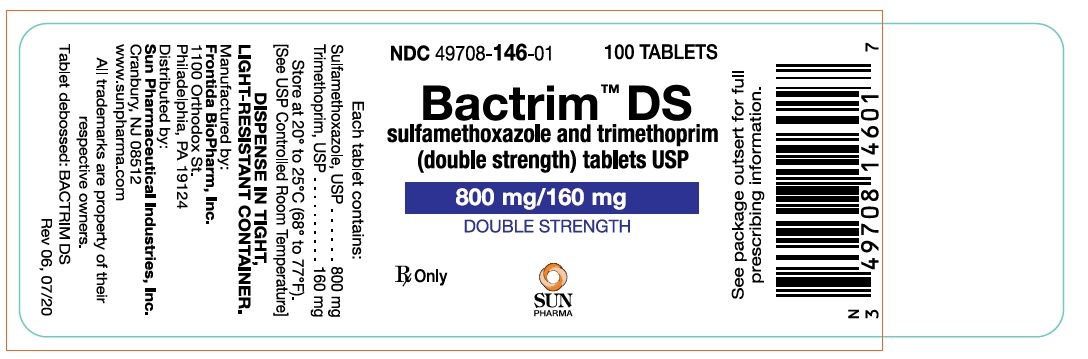
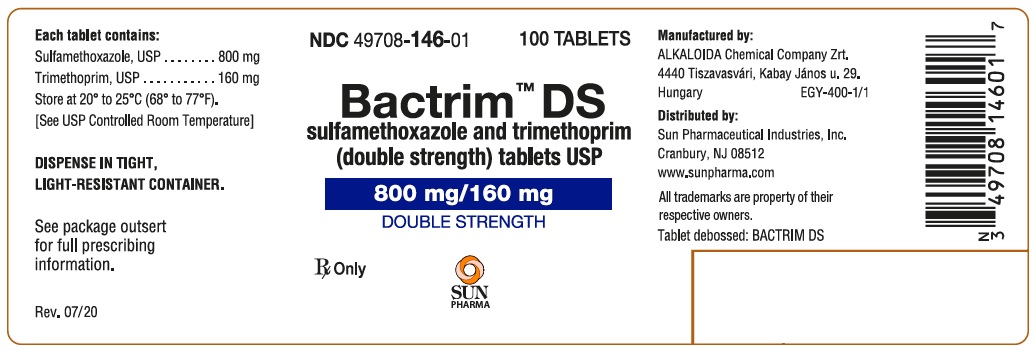
    BACTRIM DS (double strength) Tablets (white, oval shaped, scored) containing 160 mg trimethoprim and 800 mg sulfamethoxazole – bottles of 100 (NDC 49708-146-01). Imprint on tablets (debossed): (front) BACTRIM DS
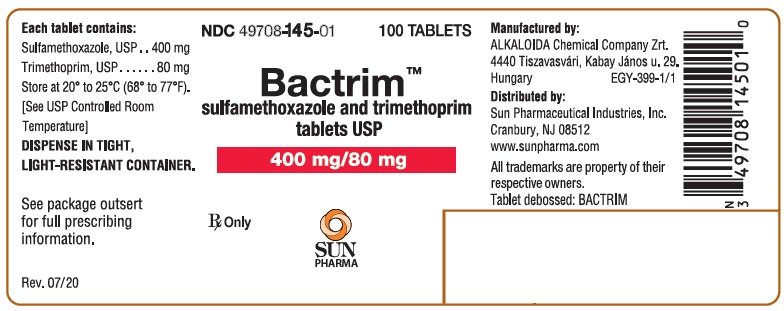
    BACTRIM Tablets (white, round, scored) containing 80 mg trimethoprim and 400 mg sulfamethoxazole – bottles of 100 (NDC 49708-145-01). Imprint on tablets (debossed): (front) BACTRIM
    Store at 20° to 25°C (68° to 77°F).
    DISPENSE IN TIGHT, LIGHT-RESISTANT CONTAINER.
    9REFERENCES
    1. Kremers P, Duvivier J, Heusghem C. Pharmacokinetic Studies of Co-Trimoxazole in Man after Single and Repeated Doses.
    2. Kaplan SA, et al. Pharmacokinetic Profile of Trimethoprim-Sulfamethoxazole in Man.
    3. Varoquaux O, et al. Pharmacokinetics of the trimethoprim-sulfamethoxazole combination in the elderly.
    4. Safrin S, Lee BL, Sande MA. Adjunctive folinic acid with trimethoprim-sulfamethoxazole for
    5. Marinella Mark A. 1999. Trimethoprim-induced hyperkalemia: An analysis of reported cases.
    6. Margassery, S. and B. Bastani. 2002. Life threatening hyperkalemia and acidosis secondary to trimethoprim-sulfamethoxazole treatment.
    7. Moh R, et al. Haematological changes in adults receiving a zidovudine-containing HAART regimen in combination with cotrimoxazole in Côte d’Ivoire.
    8. Al-Khatib SM, LaPointe N, Kramer JM, Califf RM. What Clinicians Should Know About the QT Interval.
    9. Boyer EW, Stork C, Wang RY. Review: The Pharmacology and Toxicology of Dofetilide.
    10. Kosoglou T, Rocci ML Jr, Vlasses PH. Trimethoprim alters the disposition of procainamide and
    11. Brumfitt W, Pursell R. Trimethoprim/Sulfamethoxazole in the Treatment of Bacteriuria in Women.
    12. Masur H. Prevention and treatment of
    13. Recommendations for prophylaxis against
    14. CDC Guidelines for prophylaxis against
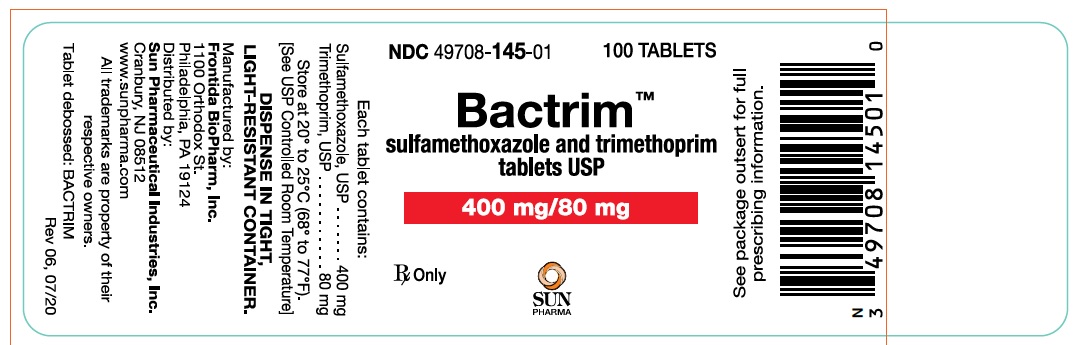
    10PRINCIPAL DISPLAY PANEL - 400 mg/80 mg Tablet Bottle Label
    S:\exRanbaxy\SAN-Reg\Regulatory\spl\Deepa\2020\Bactrim\20200804_f59d0c04-9c66-4d53-a0e1-cb55570deb62\Bactrim-03.jpgS:\exRanbaxy\SAN-Reg\Regulatory\spl\Deepa\2020\Bactrim\20200804_f59d0c04-9c66-4d53-a0e1-cb55570deb62\Bactrim-04.jpg
    11PRINCIPAL DISPLAY PANEL - 800 mg/160 mg Tablet Bottle Label
    S:\exRanbaxy\SAN-Reg\Regulatory\spl\Deepa\2020\Bactrim\20200804_f59d0c04-9c66-4d53-a0e1-cb55570deb62\Bactrim-05.jpgS:\exRanbaxy\SAN-Reg\Regulatory\spl\Deepa\2020\Bactrim\20200804_f59d0c04-9c66-4d53-a0e1-cb55570deb62\Bactrim-06.jpg