The 20 Best Pontocerebellar Hypoplasia Doctors Near Me in Maryland, US
Find the Top Pontocerebellar Hypoplasia Experts and Specialists
Johns Hopkins Outpatient Center
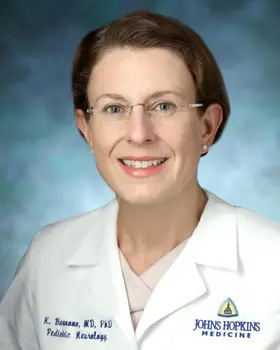
Dr. Barañano earned her M.D. and Ph.D. degrees from the Johns Hopkins University School of Medicine, where she also completed residencies in pediatrics and neurology, along with a fellowship in neurogenetics at the Kennedy Krieger Institute. Dr. Barañano is an Associate Professor of Clinical Neurology. She specializes in the diagnosis and management of rare neurogenetic disorders. She has a particular interest in the genetic control and function of the cerebellum and expertise in childhood-onset and inherited ataxias. She is a member of the multidisciplinary Fetal Management group and is available for prenatal consultations. Dr. Barañano's research includes collaborative efforts with the Johns Hopkins Department of Genetic Medicine and the Division of Neurogenetics at the Kennedy Krieger Institute. Dr. Baranano is rated as an Advanced provider by MediFind in the treatment of Pontocerebellar Hypoplasia. She is also highly rated in 22 other conditions, according to our data. Her clinical expertise encompasses Hypotonia, Ohdo Syndrome, Say-Barber-Biesecker-Young-Simpson Variant, Focal or Multifocal Malformations in Neuronal Migration, and Spinocerebellar Ataxia Type 3. Dr. Baranano is board certified in American Board Of Psychiatry And Neurology.

Frederick
Tammy Tsuchida, MD, PhD, is a professor in the departments of Neurology and Pediatrics at the George Washington University School of Medicine and Health Sciences. She completed her fellowships in child neurology and neurophysiology at the University of California, San Francisco, after finishing medical school at Columbia University Vagelos College of Physicians and Surgeons in 1997. At Children's National Hospital, she is a co-director of the Hemimegalencephaly (HME) Program. She consults and teaches in the Neonatal Neurocritical Care Program and Comprehensive Pediatric Epilepsy Program. Her areas of interest are the study and clinical care of neonates and infants with brain injury, seizures and epilepsy as well as neonatal electroencephalogram (EEG). Dr. Tsuchida has made significant contributions to national EEG guidelines and international recommendations for managing neonatal seizures and epilepsy. Dr. Tsuchida is rated as an Experienced provider by MediFind in the treatment of Pontocerebellar Hypoplasia. She is also highly rated in 11 other conditions, according to our data. Her clinical expertise encompasses Epilepsy in Children, Hemimegalencephaly, Seizures, Epilepsy, and Liver Embolization. Dr. Tsuchida is board certified in Epilepsy: American Board Of Psychiatry And Neurology, 2018, Clinical Neurophysiology: American Board Of Psychiatry And Neurology, 2009, and American Board Of Psychiatry And Neurology, 2003.

Kennedy Krieger Institute
Pediatric neurologist Eric Chin, a clinician-scientist with expertise in cerebral palsy and related neurodevelopmental disabilities, directs research at the Phelps Center for Cerebral Palsy at Kennedy Krieger Institute. After earning his medical degree from the University of Tennessee Health Science Center College of Medicine, Dr. Chin completed residency training in pediatrics at Our Lady of the Lake Regional Medical Center in Louisiana and at Penn State Hershey Medical Center. He completed neurodevelopmental disabilities training at Kennedy Krieger Institute, as well as a T32 research fellowship and a National Institute of Neurological Disorders and Stroke NeuroNEXT-supported clinical trials fellowship. Dr. Chin researches brain- and behavior-based pain mechanisms and treatment targets in children and adults with cerebral palsy. Seeking to define the consequences of brain injury patterns across functional domains, he leads ongoing studies combining participant and caregiver input; evaluations of sensation, movement and cognition; and MRI-based assessments of brain structure and function. Ultimately, he hopes to develop evidence-based individualized pain treatment plans that can improve quality of life of individuals with cerebral palsy. Dr. Chin is rated as an Experienced provider by MediFind in the treatment of Pontocerebellar Hypoplasia. His clinical expertise encompasses Aphantasia, Chronic Pain, Lissencephaly 1, and Polymicrogyria. Dr. Chin is board certified in American Board Of Psychiatry And Neurology and American Board Of Pediatrics.

Kennedy Krieger Institute
I am a pediatric neurologist with expertise in epilepsy and electroencephalography (EEG). My clinical and research interests include genetics of epilepsy, medical management of patients with intractable epilepsy and presurgical evaluation of patients who are candidates for epilepsy surgery. Dr. Gupta is rated as an Experienced provider by MediFind in the treatment of Pontocerebellar Hypoplasia. He is also highly rated in 7 other conditions, according to our data. His clinical expertise encompasses Benign Rolandic Epilepsy, Lennox-Gastaut Syndrome (LGS), Seizures, and Memory Loss. Dr. Gupta is board certified in American Board Of Psychiatry And Neurology.

Annapolis
Michel Fayad, MD, was born in Beirut, Lebanon and went to medical school at the American University of Beirut (AUB). After training in pediatrics at the AUB, then in Phoenix, AZ and in neurology at Emory in Atlanta, GA, he went back to Beirut, and was on the faculty at AUB for eight years. Dr. Fayad moved to Boston Children's Hospital in 2001 and has been on the faculty there since. He has seen general neurology patients, with a special interest in headaches, concussions, developmental and behavioral problems, especially autism and tic disorder. Dr. Fayad is rated as an Advanced provider by MediFind in the treatment of Pontocerebellar Hypoplasia. He is also highly rated in 30 other conditions, according to our data. His clinical expertise encompasses Infant Epilepsy with Migrant Focal Crisis, Epilepsy in Children, Epilepsy with Myoclonic-Atonic Seizures, and Myoclonic Epilepsy. Dr. Fayad is board certified in American Board Of Psychiatry And Neurology, 1998.
Kennedy Krieger Institute
Dr. Joanna Burton is a neurodevelopmental pediatrician at the Kennedy Krieger Institute and an assistant professor in the Department of Neurology at the Johns Hopkins School of Medicine. Dr. Burton graduated with honors with a bachelor’s degree in Linguistics from the University of Chicago in 1994. She then taught bilingual special education in Washington, DC for 5 years. She received an MD/PhD in 2008 from the University of Illinois, with the PhD in speech and hearing science, focusing on language acquisition. She then trained in general pediatrics at the University of Maryland Medical Center before receiving specialized training in neurodevelopmental disabilities at the Kennedy Krieger Institute. She currently sees patient with attentional and language based learning difficulties in the Center for Developmental and Learning, focusing on the development concerns of children with complex medical needs and those with a history of perinatal brain injury. She also sees patient in the Neurorehabilitation Concussion Clinic and provides inpatient consultations for high risk infants at Johns Hopkins Hospital. Contact for Research Inquiries 801 N. Broadway Baltimore, MD 21205 Research Summary Dr. Burton's dissertation focused on the effects of environment on assessment of word learning. She is a member of the Neurosciences Intensive Care Nursery (NICN) at the Charlotte Bloomberg Children’s Hospital at the Johns Hopkins Hospital and co-director of the Study on perinatal brain injury recovery and outcome (SPROUT) research collaborative at Kennedy Krieger. She currently investigates the neurodevelopmental outcomes of premature infants and term infants with a history of hypoxic-ischemic encephalopathy. She is working to identify which factors best predict short and long-term neurodevelopment and behavior associated with difficulties in daily living and academic success, specifically in the areas of attention and language. She also works with multi-disciplinary teams to examine potential interventions to mitigate early brain injury in these infants. Dr. Burton is rated as an Experienced provider by MediFind in the treatment of Pontocerebellar Hypoplasia. Her clinical expertise encompasses Intraventricular Hemorrhage of the Newborn, Alternating Hemiplegia of Childhood, Premature Infant, and Multiple Epiphyseal Dysplasia. Dr. Burton is board certified in American Board Of Psychiatry And Neurology.

Montgomery County
Tayyba Anwar, MD, is an assistant professor of Neurology and Pediatrics at George Washington University School of Medicine and Health Sciences. She joined the faculty at Children's National Hospital in 2019 after completing her epilepsy fellowship. She splits time between electroencephalogram (EEG) service, NICU neurology consult service and outpatient neurology clinic. Her research interests include epilepsy outcomes following neonatal brain injury, EEG signal processing and biomarkers of epilepsy. She also serves as the assistant program director for the epilepsy fellowship program at Children's National. Dr. Anwar is rated as an Experienced provider by MediFind in the treatment of Pontocerebellar Hypoplasia. She is also highly rated in 9 other conditions, according to our data. Her clinical expertise encompasses Hemimegalencephaly, Epilepsy in Children, Seizures, Increased Head Circumference, and Liver Embolization. Dr. Anwar is board certified in Epilepsy: American Board Of Psychiatry And Neurology, 2020 and American Board Of Psychiatry And Neurology, 2018.

Johns Hopkins Bayview Medical Center
Pediatric and neonatal neurologist Joseph Scafidi is a clinician-scientist with expertise in pre-term neonatal brain injury, hypoxic ischemia and neurodevelopmental disorders. He directs the Michael V. Johnston Center for Developmental Neuroscience at Kennedy Krieger Institute. Dr. Scafidi earned a degree in osteopathic medicine from the Philadelphia College of Osteopathic Medicine. He completed residency training in pediatrics at Rutgers University Medical School as well as in child neurology at Children’s National Hospital, where he also undertook fellowship training in neonatal neurology. Additionally, Dr. Scafidi was a postdoctoral research fellow in developmental neurobiology at Children’s National Research Institute. His research interests focus on understanding metabolic adaptations after perinatal brain injury in the acute and long-term recovery phases, specifically how different cell populations in different brain regions use energy after injury and how these adaptations or maladaptations affect the recovery process. As a practicing pediatric and neonatal neurologist, Dr. Scafidi is ideally positioned to facilitate bench-to-bedside therapies through his laboratory and to improve knowledge of disease by developing and testing bedside-to-bench, research-driven hypotheses. Dr. Scafidi is rated as an Experienced provider by MediFind in the treatment of Pontocerebellar Hypoplasia. He is also highly rated in 3 other conditions, according to our data. His clinical expertise encompasses Cerebral Hypoxia, Benign Rolandic Epilepsy, Seizures, Premature Infant, and Endovascular Embolization. Dr. Scafidi is board certified in American Board Of Psychiatry And Neurology.
University Of Maryland Pediatric Associates PA
Stephen Thompson is a Pediatric Neurologist practicing medicine in Baltimore, Maryland. Dr. Thompson is rated as an Experienced provider by MediFind in the treatment of Pontocerebellar Hypoplasia. He is also highly rated in 4 other conditions, according to our data. His clinical expertise encompasses Migraine with Brainstem Aura, Migraine, Seizures, and Generalized Tonic-Clonic Seizure.
Children's National Hospital
Alonso Zea Vera is a Pediatric Neurologist practicing medicine in Silver Spring, Maryland. Dr. Zea Vera is rated as an Experienced provider by MediFind in the treatment of Pontocerebellar Hypoplasia. He is also highly rated in 7 other conditions, according to our data. His clinical expertise encompasses Tourette Syndrome, Transient Tic Disorder, Chorea, Thrombectomy, and Deep Brain Stimulation.
Kennedy Krieger Institute
Heather Riordan is a Pediatric Neurologist practicing medicine in Baltimore, Maryland. Dr. Riordan is rated as an Experienced provider by MediFind in the treatment of Pontocerebellar Hypoplasia. She is also highly rated in 8 other conditions, according to our data. Her clinical expertise encompasses Cerebral Palsy, Focal Dystonia, Transient Tic Disorder, Spastic Diplegia Infantile Type, and Rhizotomy. Dr. Riordan is board certified in American Board Of Psychiatry And Neurology.
Marshall Summar is a Medical Genetics specialist and a Pediatrics provider practicing medicine in Chevy Chase, Maryland. Dr. Summar is rated as an Experienced provider by MediFind in the treatment of Pontocerebellar Hypoplasia. He is also highly rated in 7 other conditions, according to our data. His clinical expertise encompasses Argininosuccinic Aciduria, Urea Cycle Disorders (UCD), Propionic Acidemia, and Ornithine Translocase Deficiency.
Last Updated: 06/30/2026