Relapsing Multiple Sclerosis (RMS)Symptoms, Doctors, Treatments, Advances & More
Learn About Relapsing Multiple Sclerosis (RMS)
Condition 101 content is not available at this time, but we are continually updating the site. Please check back.
However, there may be experts who have treated this or similar conditions in our Find a Doctor section and research may be available in our Latest Advances section.

Multiple Sclerosis Center
Dr. Pavle Repovic is a Neurologist at the Swedish Neuroscience Institute that specializes in the treatment of Multiple Sclerosis. He offers his patients the guidance and support to effectively manage their condition and lead a fuller life. In his spare time he is interested in foreign languages, cultures and cuisine; tango and nature. Dr. Repovic was also selected by Seattle Magazine as a Top Doctor in Neurology. Dr. Repovic is rated as an Elite provider by MediFind in the treatment of Relapsing Multiple Sclerosis (RMS). He is also highly rated in 4 other conditions, according to our data. His clinical expertise encompasses Multiple Sclerosis (MS), Relapsing Multiple Sclerosis (RMS), Neuromyelitis Optica, and Optic Neuritis. Dr. Repovic is board certified in American Board Of Psychiatry And Neurology.
Cleveland Clinic Main Campus
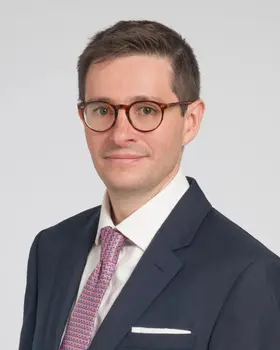
Daniel Ontaneda is a Neurologist practicing medicine in Cleveland, Ohio. Dr. Ontaneda is rated as an Elite provider by MediFind in the treatment of Relapsing Multiple Sclerosis (RMS). He is also highly rated in 12 other conditions, according to our data. His clinical expertise encompasses Multiple Sclerosis (MS), Relapsing Multiple Sclerosis (RMS), CACH Syndrome, and Encephalitis. Dr. Ontaneda is board certified in American Board Of Psychiatry And Neurology, 2010.

Johns Hopkins Outpatient Center
Neurologist Scott Newsome specializes in the care of patients with neuroimmunological and neuroinflammatory disorders of the central nervous system. He works within the Division of Neuroimmunology and Neurological Infections at The Johns Hopkins Hospital, and has special interest in evaluating and treating patients with multiple sclerosis, transverse myelitis, neuromyelitis optica and stiff person syndrome. After completing fellowship training, Dr. Newsome joined the Johns Hopkins Multiple Sclerosis and Transverse Myelitis Centers, and he is the director of the Johns Hopkins Neurosciences Consultation and Infusion Center and the Stiff Person Syndrome Center. He is also director of the Johns Hopkins Neuroimmunology and Neurological Infectious Disease Fellowship Program and co-director of the Multiple Sclerosis Experimental Therapeutics Program. Dr. Newsome received his medical degree from the New York College of Osteopathic Medicine, with honors. During his neurology residency, he was awarded the Golden Apple Outstanding Resident Teaching Award, and later was chosen to be chief resident. He subsequently completed a fellowship in neuroimmunology at The Johns Hopkins Hospital with the support of a Sylvia Lawry Physician Fellowship Award from the National Multiple Sclerosis Society. Identifying and testing novel therapies and therapeutic strategies for multiple sclerosis and other neuroimmunological disorders is Dr. Newsome’s main research focus. Other research endeavors include validating the use of new quantitative clinical outcome measures and imaging techniques in multiple sclerosis and identifying risk factors of disease onset and severity, response to treatment and long-term outcomes in neuroimmunological disorders. An adviser for the National Multiple Sclerosis Society and a member of the Miller-Coulson Academy of Clinical Excellence, Dr. Newsome has also served as president of the Consortium of Multiple Sclerosis Centers. Dr. Newsome is rated as an Elite provider by MediFind in the treatment of Relapsing Multiple Sclerosis (RMS). He is also highly rated in 15 other conditions, according to our data. His clinical expertise encompasses Stiff Person Syndrome, Multiple Sclerosis (MS), Transverse Myelitis, and Relapsing Multiple Sclerosis (RMS). Dr. Newsome is board certified in American Board Of Psychiatry And Neurology.
Summary: The primary purpose of this phase 3b study is to assess the efficacy of a modified regimen of ublituximab in participants with relapsing multiple sclerosis (RMS) as measured by T1 Gadolinium (Gd)-enhancing lesions in Part A; PK in Part B along with efficacy of ublituximab as measured by T1 Gd-enhancing lesions in participants who had a suboptimal experience on prior anti-CD20 therapy in Part C. Th...
Summary: The primary objective of the lactation study is to characterize the presence and concentration of BRIUMVI™ in breast milk among breastfeeding participants who receive BRIUMVI™ therapeutically for the treatment of relapsing forms of multiple sclerosis (RMS).