SchizencephalySymptoms, Doctors, Treatments, Advances & More
Learn About Schizencephaly
Schizencephaly is a rare congenital brain malformation that falls into a category of disorders known as neuronal migration defects. The name itself comes from the Greek words schizein, meaning “to split,” and enkephalos, meaning “brain,” literally translating to “split brain.”
It is critically important to understand that schizencephaly has absolutely nothing to do with schizophrenia, the psychiatric illness. The similar-sounding names are a source of frequent confusion, but the two conditions are completely unrelated.
To understand schizencephaly, it is helpful to picture early brain development. In a developing fetus, nerve cells (neurons) must travel or “migrate” from their starting point deep within the brain to their final destinations on the surface, forming the layers of the cerebral cortex. This is a highly complex and orchestrated process. In schizencephaly, this neuronal migration is disrupted during early gestation. This disruption leads to the formation of abnormal clefts or slits that extend from the surface of the brain down to the fluid-filled chambers in the center, the ventricles. A key feature is that these clefts are lined with abnormal gray matter (the part of the brain containing nerve cell bodies).
Schizencephaly is classified into two main types based on the appearance of these clefts on an MRI:
- Type I (Closed-Lip) Schizencephaly: In this form, the walls of the cleft are fused together, so there is no obvious channel of fluid. This type is generally associated with milder symptoms.
- Type II (Open-Lip) Schizencephaly: In this form, the walls of the cleft are separated, creating a clear channel that allows cerebrospinal fluid (CSF) to flow from the ventricles to the surface of the brain. This type is typically associated with more severe neurological impairment.
The condition can also be unilateral (affecting one hemisphere of the brain) or bilateral (affecting both hemispheres). Bilateral, open-lip schizencephaly is the most severe form of the disorder.
In my experience, families often discover the condition only after a child shows signs of delayed milestones. It’s not caused by anything the parents did, it’s a rare, developmental anomaly that happens early in fetal life.
Schizencephaly is caused by disruption to the normal process of neuronal migration that occurs between the third and fifth months of gestation. However, the specific trigger for this disruption can be varied and, in many cases, remains unknown.
The potential causes are generally grouped into several categories:
- Genetic Factors: In a growing number of cases, specific gene mutations have been identified as a cause of schizencephaly. Mutations in genes that play a critical role in early brain development, such as EMX2, SIX3, and COL4A1, have been linked to the condition.
- In-Utero Insults (Disruptive Events): Some cases are thought to be caused by a damaging event that occurs during pregnancy. This could include:
- A stroke in the developing fetus that disrupts blood flow to a specific part of the brain.
- A maternal infection that passes to the fetus, like cytomegalovirus (CMV).
- Exposure to certain toxins.
- Young Maternal Age: Some studies have noted a statistical association with young maternal age, although the biological reasons for this are not understood.
In many individuals, a specific cause is never identified, and the condition is thought to be the result of a complex interplay of genetic and environmental factors.
Parents often feel a deep sense of guilt, but I always remind them: this condition forms long before birth and usually can’t be prevented. It’s a structural difference, not something caused by care or lifestyle.
Schizencephaly is a congenital disorder, meaning it is present at birth. It is not contagious and cannot be acquired later in life. Its origins are almost always genetic or related to an event during pregnancy.
- Sporadic Occurrence: The vast majority of cases of schizencephaly are sporadic. This means the condition occurs by chance in a child with no prior family history of the disorder. It can be the result of a new, spontaneous (de novo) gene mutation or an in-utero event. It is imperative for parents to understand that in these cases, there is nothing they could have done to cause or prevent it.
- Familial Inheritance: In a small number of families, schizencephaly is inherited. The inheritance pattern can be complex, but some cases have been shown to be passed down in an autosomal dominant or recessive pattern. Because of the potential for a genetic cause, genetic counseling is an important resource for families affected by the condition.
I’ve often found that understanding the condition’s prenatal origin helps families stop blaming themselves and focus on giving their child the best possible care.
The signs, symptoms, and severity of schizencephaly exist on an extremely wide spectrum. The outcome depends entirely on the location and size of the brain clefts, and whether they affect one or both sides of the brain.
Mild Schizencephaly
An individual with a small, unilateral, closed-lip cleft might have relatively mild symptoms. These can include:
- Normal or near-normal intelligence.
- Mild developmental delays.
- Seizures that are well-controlled with medication.
- Mild weakness on one side of the body (hemiparesis).
Severe Schizencephaly
Individuals with large, bilateral, open-lip clefts typically have much more severe and wide-ranging impairments.
- Seizures / Epilepsy: This is the most common symptom, affecting nearly all individuals with schizencephaly. The seizures often begin in infancy or early childhood and can be very difficult to control, sometimes requiring multiple anti-epileptic medications.
- Developmental Delays: There are almost always significant global developmental delays, affecting all areas, motor, cognitive, and speech.
- Intellectual Disability: Ranging from mild to profound.
- Motor Impairments: Often a form of cerebral palsy, with spasticity (stiff, tight muscles) or hypotonia (low, “floppy” muscle tone). They may have difficulty with voluntary movements and may never be able to walk independently.
- Microcephaly (small head).
- Hydrocephalus (build-up of fluid in the brain).
What stands out to me is how different each child is, some walk and talk almost normally, while others need full-time care. The cleft type doesn’t always predict the outcome, so I treat each case individually.
A diagnosis of schizencephaly is often suspected based on a child’s clinical symptoms, such as intractable seizures or severe developmental delays.
- Prenatal Diagnosis: In some cases, the condition may be suspected before birth on a high-quality prenatal ultrasound, but a fetal MRI is usually needed to confirm.
- Postnatal Diagnosis: After birth, the gold standard for diagnosing schizencephaly is neuroimaging.
- Magnetic Resonance Imaging (MRI): An MRI is the definitive diagnostic tool. It provides highly detailed images of the brain’s structure and can clearly show the characteristic gray matter-lined clefts. An MRI allows doctors to determine the exact location, size, and type (open-lip vs. closed-lip) of the clefts, which is essential for determining the prognosis and planning management.
- Computed Tomography (CT) Scan: A CT scan can also detect the clefts, but it provides less detail about the brain’s structure compared to an MRI.
- Electroencephalogram (EEG): Once a child is diagnosed, an EEG is performed to record the brain’s electrical activity. This test is crucial for identifying and characterizing seizure activity to help guide the choice of anti-epileptic medication.
I always recommend an MRI when infants have unexplained seizures or delayed milestones, it’s the window into the developing brain that gives us crucial answers.
There is no cure for schizencephaly, but symptoms can often be effectively managed with a multidisciplinary approach focused on improving quality of life. This requires a dedicated and coordinated multidisciplinary team of medical specialists and therapists.
The care team for a child with schizencephaly may include:
- A Pediatric Neurologist to manage seizures and other neurological issues.
- A Developmental Pediatrician to oversee the child’s overall development.
- A Neurosurgeon if hydrocephalus requires the placement of a shunt.
- An Orthopedic Surgeon to manage any skeletal issues like scoliosis.
- Physical, Occupational, and Speech Therapists.
Key management strategies include:
- Seizure Control: This is a primary focus of medical management. Finding the right combination of anti-epileptic drugs to control the seizures can be challenging and often requires a trial-and-error approach under the guidance of a neurologist.
- Management of Hydrocephalus: If hydrocephalus develops, a neurosurgeon will place a ventriculoperitoneal (VP) shunt. This is a thin tube that drains the excess cerebrospinal fluid from the brain’s ventricles into the abdominal cavity, where it can be safely reabsorbed.
- Developmental and Rehabilitation Therapies: This is the cornerstone of daily care and is essential for helping a child reach their full potential.
- Physical Therapy is crucial for managing muscle tone (spasticity or hypotonia), preventing joint contractures, improving mobility, and assisting with positioning and equipment needs (like wheelchairs or braces).
- Occupational Therapy helps with fine motor skills, sensory integration, and adapting daily living activities like feeding and dressing.
- Speech Therapy is vital for addressing communication challenges. This may involve working on oral-motor skills or, for non-verbal individuals, developing alternative communication methods, such as using picture boards or electronic devices.
- Educational Support: Children with schizencephaly will require a highly specialized and individualized education plan (IEP) in a supportive school environment to address their unique learning needs.
What I tell parents is this: progress may be slower, but it’s still progress. With the right therapies and team, many kids make meaningful gains that were never predicted at diagnosis.
Schizencephaly is a rare and complex chromosomal disorder that brings with it a lifetime of significant medical and developmental challenges. The condition’s wide spectrum of features, particularly its impact on the heart, blood platelets, and cognitive development, requires care from a dedicated and coordinated team of specialists. While the diagnosis can be daunting, it is important for families to know that it is almost always a random event and not their fault. Though there is no cure, a proactive and comprehensive management plan focused on treating the associated health problems and providing robust developmental support can make a world of difference.
National Institute of Neurological Disorders and Stroke (NINDS). (2023). Schizencephaly. Retrieved from https://www.ninds.nih.gov/health-information/disorders/schizencephaly
National Organization for Rare Disorders (NORD). (2022). Schizencephaly. Retrieved from https://rarediseases.org/rare-diseases/schizencephaly/
National Institutes of Health, Genetic and Rare Diseases Information Center (GARD). (2021). Schizencephaly. Retrieved from https://rarediseases.info.nih.gov/diseases/7614/schizencephaly

OSF Illinois Neurological Institute - Neurosurgery
Andrew Tsung is a Neurosurgery provider practicing medicine in Peoria, Illinois. Dr. Tsung is rated as a Distinguished provider by MediFind in the treatment of Schizencephaly. He is also highly rated in 47 other conditions, according to our data. His clinical expertise encompasses Glioblastoma, Astrocytoma, Glioma, Awake Craniotomy, and Gamma Knife Radiosurgery. Dr. Tsung is board certified in American Board Of Neurological Surgery.
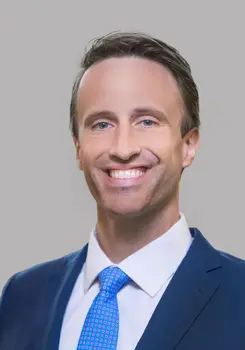
Texas Health Neurosurgery And Spine Specialists
Dr. Joseph Quillin believes that the practice of neurosurgery is a tremendous privilege. His focus is on durable symptom relief, patient quality of life, maximum safe tumor resection, and the prevention of further neurological damage for his patients. His advanced training in brain, spine, and skull base/cerebrovascular disorders has enabled him to care for some of the most complex patients in neurosurgery. Dr. Quillin specializes in neurosurgical oncology and skull base surgery, using techniques such as radiotherapy and minimally invasive endoscopic surgery to promote tumor treatment and removal. He has served the DFW area since 2021.Dr. Quillin earned his medical degree at Louisiana State University Health Sciences Center in Shreveport. He completed his neurological surgery residency and fellowship training in neurological oncology at Emory University in Atlanta, Georgia. He also completed additional fellowship training in skull base/cerebrovascular surgery at Rutgers University in New Brunswick, N.J. Away from the office, Dr. Quillin has served as an ad hoc reviewer for publications including NEUROSURGERY, World Neurosurgery, and the Journal of Neuro-Oncology. He is a member of the American Association of Neurological Surgeons and Congress of Neurological Surgeons. Dr. Quillin is rated as an Experienced provider by MediFind in the treatment of Schizencephaly. He is also highly rated in 21 other conditions, according to our data. His clinical expertise encompasses Meningioma, Pituitary Tumor, Chiari Malformation Type 1, Endoscopic Transnasal Transsphenoidal Surgery, and Awake Craniotomy.

Bassett Medical Center
Peter Roux is a Neurosurgery provider practicing medicine in Cooperstown, New York. Dr. Roux is rated as an Experienced provider by MediFind in the treatment of Schizencephaly. He is also highly rated in 11 other conditions, according to our data. His clinical expertise encompasses Brain Aneurysm, Hydrocephalus, Subdural Hematoma, Laminectomy, and Awake Craniotomy. Dr. Roux is board certified in The American Board Of Neurological Surgery.