Generic Name

Ceftazidime

Brand Names
Avycaz, Tazicef
FDA approval date: November 02, 2005
Classification: Cephalosporin Antibacterial
Form: Injection, Powder

What is Avycaz (Ceftazidime)?

Tazicef is indicated for the treatment of patients with infections caused by susceptible strains of the designated organisms in the following diseases: 1. Lower Respiratory Tract Infections, including pneumonia, caused by Pseudomonas aeruginosa and other Pseudomonas spp.; Haemophilus influenzae, including ampicillin-resistant strains; Klebsiella spp.; Enterobacter spp.; Proteus mirabilis ; Escherichia coli ; Serratia spp.; Citrobacter spp.; Streptococcus pneumoniae ; and Staphylococcus aureus . 2. Skin and Skin-Structure Infections caused by Pseudomonas aeruginosa ; Klebsiella spp.; Escherichia coli ; Proteus spp., including Proteus mirabilis and indole-positive Proteus ; Enterobacter spp.; Serratia spp.; Staphylococcus aureus ; and Streptococcus pyogenes . 3. Urinary Tract Infections, both complicated and uncomplicated, caused by Pseudomonas aeruginosa ; Enterobacter spp.; Proteus spp., including Proteus mirabilis and indole-positive Proteus ; Klebsiella spp.; and Escherichia coli. 4. Bacterial Septicemia caused by Pseudomonas aeruginosa, Klebsiella spp., Haemophilus influenzae, Escherichia coli, Serratia spp., Streptococcus pneumoniae, and S taphylococcus aureus . 5. Bone and Joint Infections caused by Pseudomonas aeruginosa, Klebsiella spp., Enterobacter spp., and Staphylococcus aureus . 6. Gynecologic Infections, including endometritis, pelvic cellulitis, and other infections of the female genital tract caused by Escherichia coli. 7. Intra-abdominal Infections, including peritonitis caused by Escherichia coli, Klebsiella spp., and Staphylococcus aureus and polymicrobial infections caused by aerobic and anaerobic organisms and Bacteroides spp. . 8. Central Nervous System Infections, including meningitis, caused by Haemophilus influenzae and Neisseria meningitidis. Ceftazidime has also been used successfully in a limited number of cases of meningitis due to Pseudomonas aeruginosa and Streptococcus pneumoniae. Tazicef may be used alone in cases of confirmed or suspected sepsis. Ceftazidime has been used successfully in clinical trials as empiric therapy in cases where various concomitant therapies with other antibacterial drugs have been used. Tazicef may also be used concomitantly with other antibacterial drugs, such as aminoglycosides, vancomycin, and clindamycin; in severe and life-threatening infections; and in the immunocompromised patient. When such concomitant treatment is appropriate, prescribing information in the labeling for the other antibacterial drugs should be followed. The dose depends on the severity of the infection and the patient's condition. To reduce the development of drug-resistant bacteria and maintain the effectiveness of Tazicef and other antibacterial drugs, Tazicef should be used only to treat infections that are proven or strongly suspected to be caused by susceptible bacteria. When culture and susceptibility information are available, they should be considered in selecting or modifying antibacterial therapy. In the absence of such data, local epidemiology and susceptibility patterns may contribute to the empiric selection of therapy.
Save this treatment for later
Sign Up
Not sure about your diagnosis?
Check Your Symptoms
Tired of the same old research?
Check Latest Advances

Related Clinical Trials

A PHASE 2A, 2-PART, OPEN-LABEL, NON-RANDOMIZED, MULTICENTER, SINGLE AND MULTIPLE DOSE TRIAL TO EVALUATE PHARMACOKINETICS, SAFETY AND TOLERABILITY OF AZTREONAM AND AVIBACTAM ± METRONIDAZOLE IN NEONATES AND INFANTS FROM BIRTH TO LESS THAN 9 MONTHS OF AGE WITH SUSPECTED OR CONFIRMED INFECTIONS DUE TO GRAM-NEGATIVE PATHOGENS REQUIRING INTRAVENOUS ANTIBIOTIC TREATMENT

Summary: The purpose of this study is to learn about the safety and effects of ATM-AVI for the possible treatment of infections caused by a type of bacteria called gram-negative bacteria. The study medicine is a combination of an antibiotic, aztreonam (ATM), and another medicine, avibactam (AVI), which is used to help stop bacteria from being resistant to antibiotics. Antibiotics are medicines that fights ...

Optimizing the Diagnostic Approach to Cephalosporin Allergy Testing

Summary: Cephalosporin antibiotics are commonly used but can result in allergic reactions and anaphylaxis. There is no clear diagnostic approach for cephalosporin-allergic patients, and guidance for the use of other antibiotics in allergic patients is based on side chain chemical similarity and limited skin testing evidence. This project includes a clinical trial and mechanistic studies to optimize the app...

Brand Information

    AVYCAZ (ceftazidime, avibactam)
    1DOSAGE FORMS AND STRENGTHS
    AVYCAZ 2.5 grams (ceftazidime and avibactam) for injection is supplied as a white to yellow sterile powder for constitution in a single-dose, sterile, clear glass vial containing ceftazidime 2 grams and avibactam 0.5 grams. 
    2CONTRAINDICATIONS
    AVYCAZ is contraindicated in patients with known serious hypersensitivity to the components of AVYCAZ (ceftazidime and avibactam), avibactam containing products, or other members of the cephalosporin class 
    3ADVERSE REACTIONS
    The following adverse reactions are discussed in greater detail in the Warnings and Precautions section:
    • Hypersensitivity Reactions
    • Clostridioides difficile-Associated Diarrhea [see Warnings and Precautions (5.3)]
    • Central Nervous System Reactions
    3.1Clinical TrialsExperience
    Because clinical trials are conducted under widely varying conditions, adverse reaction rates observed in the clinical trials of a drug cannot be directly compared to rates in the clinical trials of another drug and may not reflect the rates observed in practice.
    Clinical Trials Experience in Adult Patients
    AVYCAZ was evaluated in six active-controlled clinical trials in patients with cIAI, cUTI, including pyelonephritis, or HABP/VABP. These trials included two Phase 2 trials, one in cIAI and one in cUTI, as well as four Phase 3 trials, one in cIAI, one in cUTI (Trial 1), one in cIAI or cUTI due to ceftazidime non-susceptible pathogens (Trial 2), and one in HABP/VABP. Data from cUTI Trial 1 served as the primary dataset for AVYCAZ safety findings in cUTI as there was a single comparator. cUTI Trial 2 had an open-label design as well as multiple comparator regimens which prevented pooling but provided supportive information. The six clinical trials included a total of 1809 adult patients treated with AVYCAZ and 1809 patients treated with comparators.
    Complicated Intra-abdominal Infections
    The Phase 3 cIAI trial included 529 adult patients treated with AVYCAZ 2.5 grams (ceftazidime 2 grams and avibactam 0.5 grams) administered intravenously over 120 minutes every 8 hours plus 0.5 grams metronidazole administered intravenously over 60 minutes every 8 hours and 529 patients treated with meropenem. The median age of patients treated with AVYCAZ was 50 years (range 18 to 90 years) and 22.5% of patients were 65 years of age or older. Patients were predominantly male (62%) and Caucasian (76.6%).
    Treatment discontinuation due to an adverse reaction occurred in 2.6% (14/529) of patients receiving AVYCAZ plus metronidazole and 1.3% (7/529) of patients receiving meropenem.
    Adverse reactions occurring at 5% or greater in patients receiving AVYCAZ plus metronidazole were diarrhea, nausea, and vomiting.
    Table 11 lists adverse reactions occurring in 1% or more of patients receiving AVYCAZ plus metronidazole and with incidences greater than the comparator in the Phase 3 cIAI clinical trial.
    Increased Mortality
    In the Phase 3 cIAI trial, death occurred in 2.5% (13/529) of patients who received AVYCAZ plus metronidazole and in 1.5% (8/529) of patients who received meropenem. Among a subgroup of patients with baseline CrCl 30 to less than or equal to 50 mL/min, death occurred in 19.5% (8/41) of patients who received AVYCAZ plus metronidazole and in 7.0% (3/43) of patients who received meropenem. Within this subgroup, patients treated with AVYCAZ received a 33% lower daily dose than is currently recommended for patients with CrCl 30 to less than or equal to 50 mL/min
    Complicated Urinary Tract Infections, Including Pyelonephritis
    The Phase 3 cUTI Trial 1 included 511 adult patients treated with AVYCAZ 2.5 grams (ceftazidime 2 grams and avibactam 0.5 grams) administered intravenously over 120 minutes every 8 hours and 509 patients treated with doripenem; in some patients parenteral therapy was followed by a switch to an oral antimicrobial agent 
    There were no deaths in Trial 1. Treatment discontinuation due to adverse reactions occurred in 1.4% (7/511) of patients receiving AVYCAZ and 1.2% (6/509) of patients receiving doripenem.
    The most common adverse reactions occurring in 3% of cUTI patients treated with AVYCAZ were nausea and diarrhea. 
    Table 12 lists adverse reactions occurring in 1% or more of patients receiving AVYCAZ and with incidences greater than the comparator in Trial 1.
    Hospital-acquired Bacterial Pneumonia/Ventilator-associated Bacterial Pneumonia
    The Phase 3 HABP/VABP trial included 436 adult patients treated with AVYCAZ 2.5 grams (ceftazidime 2 grams and avibactam 0.5 grams) administered intravenously over 120 minutes and 434 patients treated with meropenem. The median age of patients treated with AVYCAZ was 66 years (range 18 to 89 years) and 54.1% of patients were 65 years of age or older. Patients were predominantly male (74.5%) and Asian (56.2%).
    Death occurred in 9.6% (42/ 436) of patients who received AVYCAZ and in 8.3% (36/434) of patients who received meropenem. Treatment discontinuation due to an adverse reaction occurred in 3.7% (16/436) of patients receiving AVYCAZ and 3% (13/434) of patients receiving meropenem.
    Adverse reactions occurring at 5% or greater in patients receiving AVYCAZ were diarrhea and vomiting.
    Table 13 lists selected adverse reactions occurring in 1% or more of patients receiving AVYCAZ and with incidences greater than the comparator in the Phase 3 HABP/VABP clinical trial.
    Other Adverse Reactions of AVYCAZ and Ceftazidime in Adults
    Direct Coombs’ Test Seroconversion with AVYCAZ
    In the Phase 3 trials, seroconversion from a negative to a positive direct Coombs’ test result among patients with an initial negative Coombs’ test and at least one follow up test occurred in 3% (cUTI), 12.9% (cIAI), and 21.4% (HABP/VABP) of patients receiving AVYCAZ and 0.9% (cUTI), 3% (cIAI) and 7% (HABP/VABP) of patients receiving a carbapenem comparator.
    Less Common Adverse Reactions with AVYCAZ
    The following selected adverse reactions were reported in AVYCAZ-treated patients at a rate of less than 1% in the Phase 3 trials and are not described elsewhere in the labeling.
    Blood and lymphatic disorders Thrombocytopenia, Thrombocytosis, Leukopenia
    General disorders and administration site conditionsInjection site phlebitis
    Infections and infestations Candidiasis
    Investigations Increased aspartate aminotransferase, Increased alanine aminotransferase, Increased gamma-glutamyl transferase
    Metabolism and nutrition disorders Hypokalemia
    Nervous system disorders Dysgeusia
    Renal and urinary disorders Acute kidney injury, Renal impairment, Nephrolithiasis
    Skin and subcutaneous tissue disorders Rash, Rash maculo-papular, Urticaria
    Psychiatric disorders Anxiety
    Adverse Reactions with Ceftazidime
    Additionally, adverse reactions reported with ceftazidime alone that were not reported in AVYCAZ-treated patients in the Phase 3 trials are listed below:
    Blood and lymphatic disorders Agranulocytosis, Hemolytic anemia, Lymphocytosis, Neutropenia, Eosinophilia
    General disorders and administration site conditions – Infusion site inflammation, Injection site hematoma, Injection site thrombosis
    Hepatobiliary disorders Jaundice
    Investigations Increased blood lactate dehydrogenase,Prolonged prothrombin time
    Nervous system disorders Paresthesia, seizures, encephalopathy, coma, asterixis, neuromuscular excitability, myoclonia
    Renal and urinary disorders Tubulointerstitial nephritis
    Reproductive and breast disorders Vaginal inflammation
    Hypersensitivity ReactionsAnaphylaxis, Angioedema, Erythema multiforme, Stevens-Johnsonsyndrome, Toxic epidermal necrolysis
    Clinical Trials Experience in Pediatric Patients
    Pediatric Patients Aged 3 months to less than 18 years
    AVYCAZ was evaluated in 128 pediatric patients aged 3 months to < 18 years in two single-blind, randomized, active-controlled clinical trials, one in patients with cUTI and the other in patients with cIAI. Safety data from the two studies were pooled. The AVYCAZ dosing regimen was the same in both of these trials 
    There were no deaths reported in the trials of cUTI, cIAI, and HABP/VABP in pediatric patients aged 3 months and older. Treatment discontinuation due to adverse reactions in the pediatric cUTI and cIAI trials occurred in 2.3% (3/128) of patients receiving AVYCAZ and 0/50 of patients receiving comparator drugs. 
    The most common adverse reactions occurring in greater than 3% of pediatric patients aged 3 months to < 18 years treated with AVYCAZ were vomiting, diarrhea, rash, and infusion site phlebitis.
    Pediatric Patients less than 3 months of Age
    AVYCAZ was also evaluated in a trial enrolling 46 pediatric patients less than three months of age as follows: infants > 28 days to < 3 months (N=17), term neonates from birth to 28 days, (N=13), pre-term neonates from birth (gestational age ≥ 31 weeks) to 28 days (N=16). The median age of patients treated with AVYCAZ was 24 days. In this single-arm trial, 25 patients with a suspected or confirmed bacterial infection received a single-dose of AVYCAZ and 21 patients with suspected or confirmed serious gram-negative infections received multiple doses of AVYCAZ
    There was one death reported in the trial for pediatric patients less than 3 months of age. There were no treatment discontinuations due to adverse reactions. The most common adverse reactions occurring in greater than 3% of pediatric patients less than 3 months of age were vomiting and increased transaminases.
    The safety profile of AVYCAZ in pediatric patients was similar to adults with cIAI, cUTI, and HABP/VABP treated with AVYCAZ.
    3.2Postmarketing Experience
    The following adverse reactions and altered laboratory tests have been identified during post approval use of ceftazidime (a component of AVYCAZ), or other cephalosporin-class antibacterial drugs. Because these reactions are reported voluntarily from a population of uncertain size, it is not always possible to reliably estimate their frequency or establish a causal relationship to drug exposure.
    Colitis, toxic nephropathy, hepatic dysfunction including cholestasis, hemorrhage, pancytopenia, aplastic anemia, prolonged prothrombin time, false-positive test for urinary glucose. Acute myocardial ischemia with or without myocardial infarction may occur as part of an allergic reaction.
    4OVERDOSAGE
    In the event of overdose, discontinue AVYCAZ and institute general supportive treatment.
    Ceftazidime and avibactam can be removed by hemodialysis. In subjects with end-stage renal disease (ESRD) administered 1 gram ceftazidime, the mean total recovery in dialysate following a 4-hour hemodialysis session was 55% of the administered dose. In subjects with ESRD administered 100 mg avibactam, the mean total recovery in dialysate following a 4-hour hemodialysis session started 1 hour after dosing was approximately 55% of the dose.
    No clinical information is available on the use of hemodialysis to treat AVYCAZ overdosage
    5DESCRIPTION
    AVYCAZ is an antibacterial combination product consisting of the semisynthetic cephalosporin ceftazidime pentahydrate and the beta-lactamase inhibitor avibactam sodium for intravenous administration.
    Ceftazidime
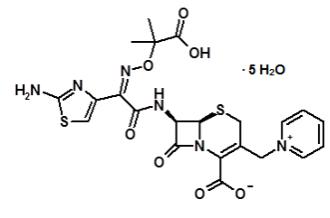
    Ceftazidime is a semisynthetic, beta-lactam antibacterial drug. It is the pentahydrate of (6
    Figure 1 Chemical structure of ceftazidime pentahydrate
    Figure 1.       Chemical structure of ceftazidime pentahydrate
    Avibactam
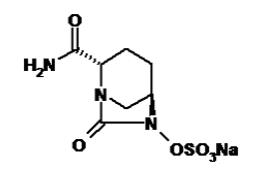
    Avibactam sodium chemical name is sodium [(2S,5R)-2-carbamoyl-7-oxo-1,6-diazabicyclo[3.2.1]octan-6-yl] sulfate. Its molecular weight is 287.23. The empirical formula is C
    Figure 2 Chemical structure of avibactam sodium
    Figure 2.       Chemical structure of avibactam sodium
    AVYCAZ 2.5 grams (ceftazidime and avibactam) for injection is a white to yellow sterile powder for constitution consisting of ceftazidime pentahydrate and avibactam sodium packaged in glass vials. The formulation also contains sodium carbonate.
    Each AVYCAZ 2.5 grams single-dose vial contains ceftazidime 2 grams (equivalent to 2.601 grams sterile ceftazidime pentahydrate/sodium carbonate) and avibactam 0.5 grams (equivalent to 0.544 grams sterile avibactam sodium). The sodium carbonate content of the mixture is 236.5 mg/vial. The total sodium content of the mixture is approximately 146 mg (6.4 mEq)/vial.
    6HOW SUPPLIED/STORAGE AND HANDLING
    AVYCAZ 2.5 grams (ceftazidime and avibactam) for injection is supplied as a white to yellow sterile powder for constitution in single-dose, clear glass vial containing: ceftazidime 2 grams and avibactam 0.5 grams. Vials are supplied as individual vial (NDC
    AVYCAZ vials should be stored at 25°C (77°F); excursions permitted between 15°C and 30°C (59°F and 86°F) [See USP Controlled Room Temperature]. Protect from light. Store in carton until time of use.
    Storage conditions for constituted and diluted solutions of AVYCAZ for injection are described in another section of labeling
    7PATIENT COUNSELING INFORMATION
    Serious Allergic Reactions
    Advise patients, their families, or caregivers that allergic reactions, including serious allergic reactions, could occur that require immediate treatment. Ask them about any previous hypersensitivity reactions to AVYCAZ, other beta-lactams (including cephalosporins), or other allergens 
    Potentially Serious Diarrhea
    Advise patients, their families, or caregivers that diarrhea is a common problem caused by antibacterial drugs. Sometimes, frequent watery or bloody diarrhea may occur and may be a sign of a more serious intestinal infection. If severe watery or bloody diarrhea develops, tell them to contact his or her healthcare provider
    Nervous System Reactions
    Advise patients, their families, or caregivers that neurological adverse reactions can occur with AVYCAZ use. Instruct patients their families, or caregivers to inform a healthcare provider at once of any neurological signs and symptoms, including encephalopathy (disturbance of consciousness including confusion, hallucinations, stupor, and coma), myoclonus, and seizures, for immediate treatment, dosage adjustment, or discontinuation of AVYCAZ
    Antibacterial Resistance
    Patients should be counseled that antibacterial drugs including AVYCAZ should only be used to treat bacterial infections. They do not treat viral infections (e.g., the common cold). When AVYCAZ is prescribed to treat a bacterial infection, patients should be told that although it is common to feel better early in the course of therapy, the medication should be taken exactly as directed. Skipping doses or not completing the full course of therapy may (1) decrease the effectiveness of the immediate treatment and (2) increase the likelihood that bacteria will develop resistance and will not be treatable by AVYCAZ or other antibacterial drugs in the future
    Distributed by:
    AbbVie, Inc.
    North Chicago, IL 60064, USA
    Manufactured by:
    ACS Dobfar SpA
    Via Alessandro Fleming, 2
    Verona 37135, Italy
    AVYCAZ
    V4.0USPI2700
    Avycaz has been selected.