Status Epilepticus Treatments

Find Status Epilepticus Treatments

Generic Name

Phenytoin

Brand Names
Dilantin-125, Infatabs, Phenytek, Phenytoin Infatabs
FDA approval date: July 16, 1975
Classification: Anti-epileptic Agent
Form: Injection, Tablet, Suspension, Capsule

What is Dilantin-125 (Phenytoin)?

DILANTIN is indicated for the treatment of tonic-clonic and psychomotor seizures. DILANTIN is indicated for the treatment of tonic-clonic and psychomotor seizures.
Save this treatment for later
Sign Up
Not sure about your diagnosis?
Check Your Symptoms
Tired of the same old research?
Check Latest Advances

Related Clinical Trials

An Open-Label, Parallel Group Study Designed to Investigate the Effect of the CYP3A Inducer Phenytoin and the CYP3A Inhibitor Itraconazole on the Pharmacokinetics of BGB-58067 in Healthy Participants

Summary: This study is being done to understand how the body processes the study drug (BGB-58067) when it is taken together with other medicines. BGB-58067 is mainly broken down in the body by a liver enzyme called CYP3A. Some medicines can affect how this enzyme works. For example, certain medicines can increase the production of the enzyme (called inducers), while others can block or inhibit its activity...

Correlation Between Phenotypic Activity of CYP2C9 and Genetic Polymorphism in CYP2C9 and Warfarin Metabolism.

Summary: The anticoagulant effect of warfarin varies greatly among individuals. Some of this variability is attributed to differences in the activity of CYP2C9, the predominant enzyme involved in the metabolism of S-warfarin. The present study is designed to define the differences in warfarin metabolism among healthy individuals carrying different CYP2C9 genotypes. In addition, the study will define the co...

Assessing Phenytoin and Levetiracetam Efficacy, Cost-Effectiveness, and CYP2C9/SV2A Polymorphism in Early Post-Traumatic Seizures: A Multicentric Prospective Randomized Trial

Objectives: To evaluate the seizure incidence \& efficacy of the respective anti-epileptic drug in each treatment arm. Assessment of clinical \& functional outcomes, safety profile, and cost-effectiveness in each group. Effect of genetic polymorphisms on seizure incidence among study participants

Brand Information

    Dilantin-125 (Phenytoin)
    1INDICATIONS AND USAGE
    DILANTIN is indicated for the treatment of tonic-clonic (grand mal) and psychomotor (temporal lobe) seizures.
    2DOSAGE FORMS AND STRENGTHS
    DILANTIN-125 is available as a 125 mg phenytoin/5 mL oral suspension of orange color with an orange-vanilla flavor.
    3CONTRAINDICATIONS
    DILANTIN is contraindicated in patients with:
    • A history of hypersensitivity to phenytoin, its inactive ingredients, or other hydantoins
    • A history of prior acute hepatotoxicity attributable to phenytoin
    • Coadministration with delavirdine because of the potential for loss of virologic response and possible resistance to delavirdine or to the class of non-nucleoside reverse transcriptase inhibitors.
    4ADVERSE REACTIONS
    The following serious adverse reactions are described elsewhere in the labeling:
    • Withdrawal Precipitated Seizure, Status Epilepticus
    • Suicidal Behavior and Ideation
    • Serious Dermatologic Reactions
    • Drug Reaction with Eosinophilia and Systemic Symptoms (DRESS)/Multiorgan Hypersensitivity
    • Hypersensitivity
    • Cardiac Effects
    • Angioedema
    • Hepatic Injury
    • Hematopoietic Complications
    • Effects on Vitamin D and Bone
    • Exacerbation of Porphyria
    • Teratogenicity and Other Harm to the Newborn
    • Hyperglycemia
    The following adverse reactions associated with the use of DILANTIN were identified in clinical studies or postmarketing reports. Because these reactions are reported voluntarily from a population of uncertain size, it is not always possible to reliably estimate their frequency or establish a causal relationship to drug exposure.
    Body as a Whole: Allergic reactions in the form of rash and rarely more serious forms and DRESS have been observed, as has angioedema [see . Anaphylaxis has also been reported.
    There have also been reports of coarsening of facial features, systemic lupus erythematosus, periarteritis nodosa, and immunoglobulin abnormalities.
    Digestive System: Acute hepatic failure, toxic hepatitis, liver damage, nausea, vomiting, constipation, enlargement of the lips, and gingival hyperplasia.
    Hematologic and Lymphatic System: Hematopoietic complications, some fatal, have occasionally been reported in association with administration of phenytoin. These have included thrombocytopenia, leukopenia, granulocytopenia, agranulocytosis, and pancytopenia with or without bone marrow suppression. While macrocytosis and megaloblastic anemia have occurred, these conditions usually respond to folic acid therapy. Lymphadenopathy including benign lymph node hyperplasia, pseudolymphoma, lymphoma, and Hodgkin’s disease have been reported [see . Pure red cell aplasia has also been reported.
    Laboratory Test Abnormality: Phenytoin may decrease serum concentrations of thyroid hormone (T4 and T3), sometimes with an accompanying increase in thyroid-stimulating hormone (TSH), but usually in the absence of clinical hypothyroidism. Phenytoin may also produce lower than normal values for dexamethasone or metyrapone tests. Phenytoin may cause increased serum levels of glucose [see , alkaline phosphatase, and gamma glutamyl transpeptidase (GGT).
    Nervous System: The most common adverse reactions encountered with phenytoin therapy are nervous system reactions and are usually dose-related. Reactions include nystagmus, ataxia, slurred speech, decreased coordination, somnolence, and mental confusion. Dizziness, vertigo, insomnia, transient nervousness, motor twitchings, paresthesias, and headaches have also been observed. There have also been rare reports of phenytoin-induced dyskinesias, including chorea, dystonia, tremor and asterixis, similar to those induced by phenothiazine and other neuroleptic drugs. Cerebellar atrophy has been reported, and appears more likely in settings of elevated phenytoin levels and/or long-term phenytoin use [see .
    A predominantly sensory peripheral polyneuropathy has been observed in patients receiving long-term phenytoin therapy.
    Skin and Appendages: Dermatological manifestations sometimes accompanied by fever have included scarlatiniform or morbilliform rashes. A morbilliform rash (measles-like) is the most common; other types of dermatitis are seen more rarely. Other more serious forms which may be fatal have included bullous, exfoliative or purpuric dermatitis, acute generalized exanthematous pustulosis, Stevens-Johnson syndrome, and toxic epidermal necrolysis [see . There have also been reports of hypertrichosis and urticaria.
    Special Senses: Altered taste sensation including metallic taste.
    Urogenital: Peyronie’s disease.
    5DRUG INTERACTIONS
    Phenytoin is extensively bound to plasma proteins and is prone to competitive displacement. Phenytoin is primarily metabolized by the hepatic cytochrome P450 enzyme CYP2C9 and to a lesser extent by CYP2C19 and is particularly susceptible to inhibitory drug interactions because it is subject to saturable metabolism. Inhibition of metabolism may produce significant increases in circulating phenytoin concentrations and enhance the risk of drug toxicity. Monitoring of phenytoin serum levels is recommended when a drug interaction is suspected.
    Phenytoin is a potent inducer of hepatic drug-metabolizing enzymes.
    5.1Drugs that Affect Phenytoin Concentrations
    Table 2 includes commonly occurring drug interactions that affect phenytoin concentrations. However, this list is not intended to be inclusive or comprehensive. Individual prescribing information from relevant drugs should be consulted.
    The addition or withdrawal of these agents in patients on phenytoin therapy may require an adjustment of the phenytoin dose to achieve optimal clinical outcome.
    5.2Drugs Affected by Phenytoin
    Table 3 includes commonly occurring drug interactions affected by phenytoin. However, this list is not intended to be inclusive or comprehensive. Individual drug package inserts should be consulted.
    The addition or withdrawal of phenytoin during concomitant therapy with these agents may require adjustment of the dose of these agents to achieve optimal clinical outcome.
    5.3Hyperammonemia with Concomitant Use of Valproate
    Concomitant administration of phenytoin and valproate has been associated with an increased risk of valproate-associated hyperammonemia. Patients treated concomitantly with these two drugs should be monitored for signs and symptoms of hyperammonemia.
    5.4Drug Enteral Feeding/Nutritional Preparations Interaction
    Literature reports suggest that patients who have received enteral feeding preparations and/or related nutritional supplements have lower than expected phenytoin serum levels. It is therefore suggested that phenytoin not be administered concomitantly with an enteral feeding preparation. More frequent serum phenytoin level monitoring may be necessary in these patients.
    5.5Drug/Laboratory Test Interactions
    Care should be taken when using immunoanalytical methods to measure serum phenytoin concentrations.
    6OVERDOSAGE
    The lethal dose in pediatric patients is not known. The lethal dose in adults is estimated to be 2 to 5 grams. The initial symptoms are nystagmus, ataxia, and dysarthria. Other signs are tremor, hyperreflexia, lethargy, slurred speech, blurred vision, nausea, and vomiting. The patient may become comatose and hypotensive. Bradycardia and cardiac arrest have been reported
    There are marked variations among individuals with respect to phenytoin serum levels where toxicity may occur. Nystagmus, on lateral gaze, usually appears at 20 mcg/mL, ataxia at 30 mcg/mL, dysarthria and lethargy appear when the serum concentration is over 40 mcg/mL, but as high a concentration as 50 mcg/mL has been reported without evidence of toxicity. As much as 25 times the therapeutic dose has been taken to result in a serum concentration over 100 mcg/mL with complete recovery. Irreversible cerebellar dysfunction and atrophy have been reported.
    Treatment: Treatment is nonspecific since there is no known antidote.
    The adequacy of the respiratory and circulatory systems should be carefully observed and appropriate supportive measures employed. Hemodialysis can be considered since phenytoin is not completely bound to plasma proteins. Total exchange transfusion has been used in the treatment of severe intoxication in pediatric patients.
    In acute overdosage the possibility of other CNS depressants, including alcohol, should be borne in mind.
    7DESCRIPTION
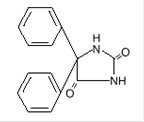
    DILANTIN (phenytoin) is related to the barbiturates in chemical structure, but has a five-membered ring. The chemical name is 5,5-diphenyl-2,4 imidazolidinedione, having the following structural formula:
    phenytoin structural formula
    Each 5 mL of the oral suspension contains 125 mg of phenytoin, USP; alcohol, USP (maximum content not greater than 0.6 percent); banana flavor; carboxymethylcellulose sodium, USP; citric acid, anhydrous, USP; glycerin, USP; magnesium aluminum silicate, NF; orange oil concentrate; polysorbate 40, NF; purified water, USP; sodium benzoate, NF; sucrose, NF; vanillin, NF; and FD&C yellow No. 6.
    8PATIENT COUNSELING INFORMATION
    Advise patients to read the FDA-approved patient labeling (Medication Guide).
    Administration Information
    Advise patients taking phenytoin of the importance of adhering strictly to the prescribed dosage regimen, and of informing the physician of any clinical condition in which it is not possible to take the drug orally as prescribed, e.g., surgery, etc.
    Instruct patients to use an accurately calibrated measuring device when using this medication to ensure accurate dosing.
    Withdrawal of Antiepileptic Drugs
    Advise patients not to discontinue use of DILANTIN without consulting with their healthcare provider. DILANTIN should normally be gradually withdrawn to reduce the potential for increased seizure frequency and status epilepticus
    Suicidal Ideation and Behavior
    Counsel patients, their caregivers, and families that AEDs, including DILANTIN, may increase the risk of suicidal thoughts and behavior and advise them of the need to be alert for the emergence or worsening of symptoms of depression, any unusual changes in mood or behavior, or the emergence of suicidal thoughts, behavior, or thoughts about self-harm. Behaviors of concern should be reported immediately to healthcare providers
    Serious Dermatologic Reactions
    Advise patients of the early signs and symptoms of severe cutaneous adverse reactions and to report any occurrence immediately to a physician
    Potential Signs of Drug Reaction with Eosinophilia and Systemic Symptoms (DRESS) and Other Systemic Reactions
    Advise patients of the early toxic signs and symptoms of potential hematologic, dermatologic, hypersensitivity, or hepatic reactions. These symptoms may include, but are not limited to, fever, sore throat, rash, ulcers in the mouth, easy bruising, lymphadenopathy, facial swelling, and petechial or purpuric hemorrhage, and in the case of liver reactions, anorexia, nausea/vomiting, or jaundice. Advise the patient that, because these signs and symptoms may signal a serious reaction, that they must report any occurrence immediately to a physician. In addition, advise the patient that these signs and symptoms should be reported even if mild or when occurring after extended use
    Cardiac Effects
    Counsel patients that cases of bradycardia and cardiac arrest have been reported, both at recommended phenytoin doses and levels, and in association with phenytoin toxicity. Patients should report cardiac signs or symptoms to their healthcare provider
    Angioedema
    Advise patients to discontinue DILANTIN and seek immediate medical care if they develop signs or symptoms of angioedema, such as facial, perioral, or upper airway swelling
    Effects of Alcohol Use and Other Drugs and Over-the-Counter Drug Interactions
    Caution patients against the use of other drugs or alcoholic beverages without first seeking their physician’s advice
    Inform patients that certain over-the-counter medications (e.g., antacids, cimetidine, and omeprazole), vitamins (e.g., folic acid), and herbal supplements (e.g., St. John’s wort) can alter their phenytoin levels.
    Hyperglycemia
    Advise patients that DILANTIN may cause an increase in blood glucose levels
    Gingival Hyperplasia
    Advise patients of the importance of good dental hygiene in order to minimize the development of gingival hyperplasia and its complications.
    Neurologic Effects
    Counsel patients that DILANTIN may cause dizziness, gait disturbance, decreased coordination and somnolence. Advise patients taking DILANTIN not to drive, operate complex machinery, or engage in other hazardous activities until they have become accustomed to any such effects associated with DILANTIN.
    Use in Pregnancy
    Inform pregnant women and women of childbearing potential that use of DILANTIN during pregnancy can cause fetal harm, including an increased risk for cleft lip and/or cleft palate (oral clefts), cardiac defects, dysmorphic skull and facial features, nail and digit hypoplasia, growth abnormalities (including microcephaly), and cognitive deficits. When appropriate, counsel pregnant women and women of childbearing potential about alternative therapeutic options. Advise women of childbearing potential who are not planning a pregnancy to use effective contraception while using DILANTIN, keeping in mind that there is a potential for decreased hormonal contraceptive efficacy
    Instruct patients to notify their physician if they become pregnant or intend to become pregnant during therapy, and to notify their physician if they are breastfeeding or intend to breastfeed during therapy
    Encourage patients to enroll in the North American Antiepileptic Drug (NAAED) Pregnancy Registry if they become pregnant. This registry is collecting information about the safety of antiepileptic drugs during pregnancy
    Distributed by:
    © 2023 Viatris Inc.
    DILANTIN-125 is a registered trademark of Viatris Specialty LLC, a Viatris Company.
    UPJ:DLNTNOS:R1
    Revised: 2/2023
    9Medication Guide
    DILANTIN-125
    This Medication Guide has been approved by the U.S. Food and Drug Administration          Revised: 2/2023
    UPJ:MG:DLNTNOS:R1
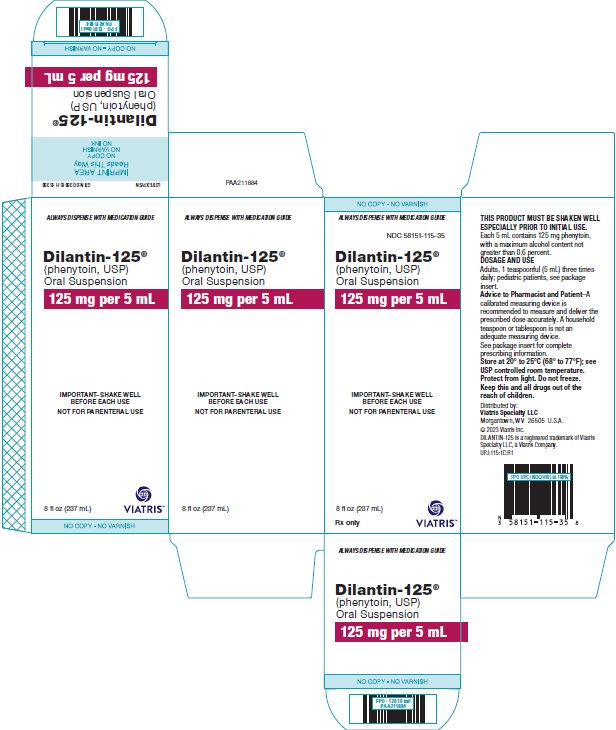
    10PRINCIPAL DISPLAY PANEL - 125 mg phenytoin/5 mL
    ALWAYS DISPENSE WITH MEDICATION GUIDE
    NDC 58151-115-35
    Dilantin-125
    (phenytoin, USP)
    Oral Suspension
    125 mg per 5 mL
    IMPORTANT–SHAKE WELL
    8 fl oz (237 mL)
    Rx only
    THIS PRODUCT MUST BE SHAKEN WELL
    Each 5 mL contains 125 mg phenytoin,
    DOSAGE AND USE
    Adults, 1 teaspoonful (5 mL) three times
    daily; pediatric patients, see package
    insert.
    Advice to Pharmacist and Patient–A
    calibrated measuring device is
    recommended to measure and deliver the
    prescribed dose accurately. A household
    teaspoon or tablespoon is not an
    adequate measuring device.
    See package insert for complete
    Store at 20° to 25°C (68° to 77°F); see
    Distributed by:
    © 2023 Viatris Inc.
    DILANTIN-125 is a registered trademark of Viatris
    UPJ:115:1C:R1
    Dilantin - 125 mg per 5 mL carton label