The 20 Best Stiff Person Syndrome Doctors Near Me in Maryland, US
Find the Top Stiff Person Syndrome Experts and Specialists

Johns Hopkins Outpatient Center
Neurologist Scott Newsome specializes in the care of patients with neuroimmunological and neuroinflammatory disorders of the central nervous system. He works within the Division of Neuroimmunology and Neurological Infections at The Johns Hopkins Hospital, and has special interest in evaluating and treating patients with multiple sclerosis, transverse myelitis, neuromyelitis optica and stiff person syndrome. After completing fellowship training, Dr. Newsome joined the Johns Hopkins Multiple Sclerosis and Transverse Myelitis Centers, and he is the director of the Johns Hopkins Neurosciences Consultation and Infusion Center and the Stiff Person Syndrome Center. He is also director of the Johns Hopkins Neuroimmunology and Neurological Infectious Disease Fellowship Program and co-director of the Multiple Sclerosis Experimental Therapeutics Program. Dr. Newsome received his medical degree from the New York College of Osteopathic Medicine, with honors. During his neurology residency, he was awarded the Golden Apple Outstanding Resident Teaching Award, and later was chosen to be chief resident. He subsequently completed a fellowship in neuroimmunology at The Johns Hopkins Hospital with the support of a Sylvia Lawry Physician Fellowship Award from the National Multiple Sclerosis Society. Identifying and testing novel therapies and therapeutic strategies for multiple sclerosis and other neuroimmunological disorders is Dr. Newsome’s main research focus. Other research endeavors include validating the use of new quantitative clinical outcome measures and imaging techniques in multiple sclerosis and identifying risk factors of disease onset and severity, response to treatment and long-term outcomes in neuroimmunological disorders. An adviser for the National Multiple Sclerosis Society and a member of the Miller-Coulson Academy of Clinical Excellence, Dr. Newsome has also served as president of the Consortium of Multiple Sclerosis Centers. Dr. Newsome is rated as an Elite provider by MediFind in the treatment of Stiff Person Syndrome. He is also highly rated in 15 other conditions, according to our data. His clinical expertise encompasses Stiff Person Syndrome, Multiple Sclerosis (MS), Transverse Myelitis, and Relapsing Multiple Sclerosis (RMS). Dr. Newsome is board certified in American Board Of Psychiatry And Neurology.
Johns Hopkins University
Peter Calabresi is a Neurologist practicing medicine in Baltimore, Maryland. Dr. Calabresi is rated as an Elite provider by MediFind in the treatment of Stiff Person Syndrome. He is also highly rated in 16 other conditions, according to our data. His clinical expertise encompasses Multiple Sclerosis (MS), Optic Neuritis, Relapsing Multiple Sclerosis (RMS), and CACH Syndrome.

Johns Hopkins Outpatient Center
Dr. Moukheiber trained in neurology at Tufts Medical Center and completed his fellowship in movement disorders at Johns Hopkins. His primary interests include using telehealth/teleneurology to help bridge the gap between tertiary care available in well-funded facilities and the dearth of it in significantly underserved and remote areas; especially pertaining to movement disorders in general and ataxia in particular. He has worked with a number of non-government organizations and founded his own entity that provides home health care in the form of advanced nursing, physical therapy and occupational therapy to underserved communities in third world countries, with particular emphasis on neurodegenerative diseases. Dr. Moukheiber is rated as a Distinguished provider by MediFind in the treatment of Stiff Person Syndrome. He is also highly rated in 22 other conditions, according to our data. His clinical expertise encompasses Stiff Person Syndrome, Movement Disorders, Parkinson's Disease, and Drug Induced Dyskinesia. Dr. Moukheiber is board certified in American Board Of Psychiatry And Neurology.

Johns Hopkins Outpatient Center
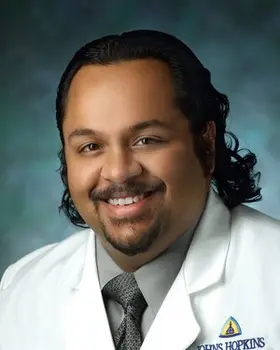
With fellowship training in neuro-ophthalmology and additional training in neuro-vestibular disorders, Dr. Daniel Gold sees patients with neuro-ophthalmic disorders (affecting vision, eyelids, pupils, or causing nystagmus or double vision) in addition to oto-neurologic disorders (causing dizziness and vertigo). Videos 2018 Best Consulting Physician Award Tele-(Dizzy) Medicine. Dr. Gold is rated as an Advanced provider by MediFind in the treatment of Stiff Person Syndrome. He is also highly rated in 12 other conditions, according to our data. His clinical expertise encompasses Vertigo, Benign Paroxysmal Positional Vertigo, Brown Syndrome, and Stiff Person Syndrome. Dr. Gold is board certified in American Board Of Psychiatry And Neurology.
Johns Hopkins Outpatient Center
Dr. Ankur Butala specializes in the care of persons with complex neuropsychiatric conditions, including persons with advanced Parkinson Disease or other movement or neurodegenerative disorders. Upon graduating from a selective Physician-Scientist program at Albany Medical College, he joined the University of Massachusetts in an uncommon residency in both Neurology and Psychiatry. Dual-trained neuropsychiatrists such as Dr. Butala have experience with: Parkinson Disease and atypical Parkinsonism, Huntington Disease, Ataxia, Dystonia, early-onset dementia, traumatic brain injury and chronic traumatic encephalopathy, autism spectrum disorders, medication refractory mood and psychotic disorders, epilepsy and functional neurological disorders. In residency, he developed an interest in circuit models of brain function and how non-pharmacological approaches such as Neuromodulation and brain stimulation may be used to address treatment-resistant conditions. Consequently, he joined Johns Hopkins University School of Medicine as a Clinical and Research Fellow from 2015 to 2018, where he developed a skill set including deep brain stimulation, non-invasive brain stimulation (tDCS), and measurement of eye movements. Currently, Dr. Butala's clinical and research interests are in diagnosing and managing persons with advanced Parkinson's Disease, movement disorders, and neuropsychiatric conditions using neuromodulation, cannabinoids, and entheogens. He has ongoing multidisciplinary collaborations with colleagues at the Whiting School of Engineering - Center of Speech & Language Processing in using Machine-Learning Models and Artificial Intelligence to improve the detection and diagnosis of Movement and Neuropsychiatric disorders. LinkedIn https://www.linkedin.com/in/ankurbutalamd Videos Neurology: Junior Faculty Spotlight. Dr. Butala is rated as an Advanced provider by MediFind in the treatment of Stiff Person Syndrome. He is also highly rated in 42 other conditions, according to our data. His clinical expertise encompasses Parkinson's Disease, Corticobasal Degeneration, Movement Disorders, Drug Induced Dyskinesia, and Deep Brain Stimulation. Dr. Butala is board certified in American Board Of Psychiatry And Neurology.

Johns Hopkins Outpatient Center
Dr. Sun is an expert in both pediatric neurology and cerebrovascular neurology, with a special interest in pediatric and young adult stroke. She focuses on both acute care of stroke as well as longitudinal management of an array of neurologic conditions that affect children and young adults. Dr. Sun’s research focuses broadly on pediatric and young adult stroke, with emphasis on discovering the causes, treatments, and prevention of stroke in the young. More specifically, Dr. Sun is investigating novel monitoring and stroke prevention techniques in children with moyamoya disease, which is a rare disease that places affected children and young adults at high risk of stroke. The goal of Dr. Sun's research is to improve outcomes and quality of life of individuals affected by stroke and moyamoya disease. In addition to her clinical and research interests, Dr. Sun is the associate program director of the Child Neurology residency program at Johns Hopkins. After completing medical school at the Johns Hopkins University School of Medicine, Dr. Sun completed her pediatrics and neurology residency training at Johns Hopkins, and subsequently she completed a fellowship in Vascular Neurology/Stroke. Dr. Sun is rated as an Advanced provider by MediFind in the treatment of Stiff Person Syndrome. She is also highly rated in 5 other conditions, according to our data. Her clinical expertise encompasses Moyamoya Disease, Stroke, Stiff Person Syndrome, Thrombectomy, and Endovascular Embolization. Dr. Sun is board certified in American Board Of Psychiatry And Neurology.
Johns Hopkins Hospital
Shiv Saidha is a Neurologist practicing medicine in Baltimore, Maryland. Dr. Saidha is rated as a Distinguished provider by MediFind in the treatment of Stiff Person Syndrome. He is also highly rated in 8 other conditions, according to our data. His clinical expertise encompasses Multiple Sclerosis (MS), Optic Neuritis, Relapsing Multiple Sclerosis (RMS), and Stiff Person Syndrome.

Johns Hopkins Outpatient Center
Dr. Alexander Pantelyat cares for patients with movement disorders such as Parkinson's disease and related syndromes, essential tremor, dystonia, chorea and normal pressure hydrocephalus. He also provides botulinum toxin injections for movement disorders and is involved in deep brain stimulation programming and intraoperative neurophysiological monitoring.His research explores atypical parkinsonian disorders, such as dementia with Lewy bodies, progressive supranuclear palsy, corticobasal syndrome/degeneration and multiple system atrophy; cognitive aspects of movement disorders; and music-based rehabilitation of neurodegenerative diseases.Dr. Pantelyat earned his medical degree from Temple University School of Medicine in Philadelphia, where he was elected a member of the Alpha Omega Alpha Honor Medical Society and received the Matthew T. Moore Prize in Neurology. He completed his residency training in Neurology at the University of Pennsylvania in Philadelphia, and a fellowship in movement disorders at the University of Pennsylvania/Philadelphia VA Medical Center. As part of his fellowship, Dr. Pantelyat also completed the Clinical Research Certificate Program at the Center for Clinical Epidemiology and Biostatistics. He is a 2013 American Academy of Neurology Palatucci Advocacy Leader and grant recipient. Dr. Pantelyat is rated as an Experienced provider by MediFind in the treatment of Stiff Person Syndrome. He is also highly rated in 39 other conditions, according to our data. His clinical expertise encompasses Progressive Supranuclear Palsy Atypical, Progressive Supranuclear Palsy, Supranuclear Ophthalmoplegia, and Movement Disorders.

Johns Hopkins Outpatient Center
Dr. Ahmet Hoke is Professor of Neurology and Neuroscience, W. W. Smith Charitable Trust Professor of Neuroimmunology at Johns Hopkins School of Medicine, Director of the Daniel B. Drachman Division of Neuromuscular Diseases and Director of the Merkin Peripheral Neuropathy and Nerve Regeneration Center at Johns Hopkins University School of Medicine. He completed his medical training at Hacettepe University School of Medicine in Ankara, Turkey followed by his PhD studies in developmental neuroscience at Case Western Reserve University in Cleveland, Ohio, and neurology residency at Johns Hopkins Hospital. After completing his neuromuscular training at University of Calgary, Canada, he returned to Johns Hopkins University as faculty and rose through the ranks. He is the recipient of several awards including Derek Denny Brown Young Neurological Scholar Award (2005) and Wolfe Neuropathy Research prize (2018) given by the American Neurological Association, Myung Memorial Lecture Award (2017) by the Korean Neurological Association, Nejat Eczacibasi Medical Scientist Award (2019) by the Eczacibasi Foundation, Turkey, and Alan J. Gebhart Prize in Excellence in Neuropathy Research (2022) by the Peripheral Nerve Society. He is an Ex-Officio member of the Board of Directors of the American Neurological Association, and Vice-President of the Toxic Neuropathy Consortium. He serves on several editorial boards and is the Editor-in-Chief of Annals of Clinical and Translational Neurology. Dr. Hoke is rated as an Experienced provider by MediFind in the treatment of Stiff Person Syndrome. He is also highly rated in 14 other conditions, according to our data. His clinical expertise encompasses Wallerian Degeneration, Peripheral Neuropathy, Tomaculous Neuropathy, Spinal Muscular Atrophy with Arthrogryposis, and Prostatectomy. Dr. Hoke is board certified in American Board Of Psychiatry And Neurology.

Johns Hopkins Outpatient Center
Nicholas Maragakis treats patients with motor neuron diseases, such as amyotrophic lateral sclerosis (ALS). This care is coordinated with the Johns Hopkins Center for ALS Specialty Care, a multidisciplinary clinic with expertise in treating patients with ALS and providing support to their caregivers. He serves as medical director of the ALS Clinical Trials Unit, an extension of the multidisciplinary clinic that seeks to facilitate opportunities for patients with ALS to participate in clinical trials that could advance the treatment of this disease. Dr. Maragakis is interested in the basic science of understanding neurodegenerative diseases, as well as the translational potential of therapeutic compounds developed in the laboratory. His fundamental research interest is in using stem cells — more specifically, stem cell-derived motor neurons and glia — for understanding the development and propagation of ALS. His laboratory has been involved in creating and characterizing lines of stem cells from patients with ALS using induced pluripotent stem cell (iPSC) methodologies. The laboratory has a large library of iPSCs from patients with familial ALS and from patients with sporadic ALS. The utilization of this library of iPSCs has facilitated the development of a spinal cord-specific iPSC-astrocyte/motor neuron co-culture system, which has been leveraged for the development of assays that can be used for both the basic understanding of ALS astrocyte and motor neuron biology as well as, eventually, drug screening for ALS therapeutics. His laboratory has taken its long-standing interests in astrocyte biology, as it relates to ALS, to develop a program that investigates astrocyte-specific mechanisms as contributors to the progression (both temporally and anatomically) of disease in ALS. In this vein, there is an interest in astrocytic glutamate transporters and, more recently, astrocyte hemichannels and gap junctions. Dr. Maragakis is rated as an Experienced provider by MediFind in the treatment of Stiff Person Syndrome. He is also highly rated in 7 other conditions, according to our data. His clinical expertise encompasses Amyotrophic Lateral Sclerosis (ALS or Lou Gehrig's Disease), Primary Lateral Sclerosis, 15q11.2 Microdeletion, and Spinal Muscular Atrophy (SMA).

Johns Hopkins Community Physicians - Remington, Baltimore
Colleen Leavitt, M.D., practices internal medicine and pediatrics at Johns Hopkins Community Physicians. She received her medical degree and completed her residency in medicine & pediatrics at Loyola University School of Medicine. Dr. Leavitt is rated as an Experienced provider by MediFind in the treatment of Stiff Person Syndrome. She is also highly rated in 5 other conditions, according to our data. Her clinical expertise encompasses Type 2 Diabetes (T2D), Maturity Onset Diabetes of the Young, Glucocorticoid-Remediable Aldosteronism, and Familial Hypertension. Dr. Leavitt is board certified in American Board Of Pediatrics and American Board Of Internal Medicine.

Johns Hopkins Bayview Medical Center
Dr. Elisabeth Marsh's clinical interest is in cerebrovascular neurology, and her clinical research focuses on stroke outcomes and recovery. Her clinical responsibilities include attending on the inpatient Stroke Service at the Johns Hopkins Hospital and inpatient Neurology Service at the Johns Hopkins Bayview Medical Center. In 2014, Dr. Marsh was named the Medical Director of the Comprehensive Stroke Program at the Johns Hopkins Bayview Medical Center. She implemented the Bayview Stroke Intervention Clinic (BaSIC), a multi-disciplinary follow-up clinic designed to promote patient follow-up, reduce hospital readmission rates, and enhance post-stroke recovery. Her current focus is on the under-reported neurologic deficits (particularly with respect to depression, fatigue, and cognition) that significantly impair long-term functional outcome and patient satisfaction, despite scores on metrics such as the NIH stroke scale that indicate a “good recovery”. She leads a team of vascular neurologists, emergency medicine physicians, neurosurgeons, interventional neuroradiologists, neurointensivists, and rehabilitation specialists, who work together to provide the highest level of care to all stroke patients, resulting in better functional outcomes and improved quality of life. She is also interested in the treatment of acute stroke and intracranial hemorrhage. Her past work has included evaluation of the predictors of hemorrhagic transformation following ischemic stroke. Using multivariable regression, she created a model that predicts rate of hemorrhagic transformation in patients with acute stroke on anticoagulation, the Hemorrhage Risk Stratification (HeRS) score. The tool is available for free through Apple by searching 'Johns Hopkins HeRS score' in the App Store. Dr. Marsh is rated as an Experienced provider by MediFind in the treatment of Stiff Person Syndrome. She is also highly rated in 7 other conditions, according to our data. Her clinical expertise encompasses Stroke, Apoplexy, Transient Ischemic Attack (TIA), Thrombectomy, and Gastrostomy. Dr. Marsh is board certified in American Board Of Psychiatry And Neurology.

Johns Hopkins Outpatient Center
Dr. Probasco is a professor at the Johns Hopkins University School of Medicine Department of Neurology. He is the Vice Chair for Quality, Safety, and Service for the department. He also serves as the Director of the Johns Hopkins Division of Advanced Clinical Neurology as well as the Medical Director of the Johns Hopkins Inpatient General Neurology Service. He co-directs the Johns Hopkins Encephalitis Center and the Johns Hopkins Center for Refractory Status Epilepticus and Neuroinflammation. He cares for general neurology inpatients and outpatients, specializing in autoimmune and paraneoplastic syndromes as well as neurological immune-related adverse events following immunotherapies for cancer. After completing his undergraduate studies in biochemistry at the University of New Mexico, Dr. Probasco attended the University of Oxford as a Rhodes Scholar and earned a second undergraduate degree in psychology, philosophy and physiology. He went on to earn his medical degree at the University of California, San Francisco. He completed an internship in internal medicine at Johns Hopkins Bayview Medical Center and a residency in neurology at Johns Hopkins, where he was the faculty liaison/executive chief resident. He went on to complete an instructorship in inpatient general neurology at Johns Hopkins. Dr. Probasco’s research interests include increasing care value through improving outcomes, incorporation of patient experience of disease and treatment, the efficiency of care delivery, and diagnostic test utilization in general and specifically in relation to autoimmune and paraneoplastic neurological syndromes, including encephalitis. Finally, he is interested in the management of neurological immune-related adverse events following immunotherapies for the treatment of cancer. Dr. Probasco has been recognized at the departmental, institutional, and national levels for teaching and clinical excellence, including the American Academy of Neurology’s A.B. Baker Teacher Recognition Award and the Frank L. Coulson, Jr. Award from the Johns Hopkins Medicine Miller-Coulson Academy of Clinical Excellence. He is a past graduate of the Johns Hopkins Armstrong Institute Resident Scholars (AIRS) program in Patient Safety and Quality. As a faculty member, he was inducted into the Miller-Coulson Academy of Clinical Excellence in 2019. He serves as Editor-in-Chief of NEJM Journal Watch Neurology. Videos The impact of COVID-19 on the Department of Neurology‚Äôs clinical care and medical education programs. Dr. Probasco is rated as an Advanced provider by MediFind in the treatment of Stiff Person Syndrome. He is also highly rated in 7 other conditions, according to our data. His clinical expertise encompasses Encephalitis, Anti-NMDA Receptor Encephalitis, Status Epilepticus, Creutzfeldt-Jakob Disease, and Gastrostomy. Dr. Probasco is board certified in American Board Of Psychiatry And Neurology.

Johns Hopkins Outpatient Center
Dr. Pardo's interest in transverse myelitis centers on management of acute myelitis, biomarkers of the disease in cerebrospinal fluid (CSF) and blood, and the role of neuroimmune factors in the pathogenesis of myelopathies. Along with others neurologists and health care providers in the Johns Hopkins Transverse Myelitis Center, Dr. Pardo focuses on a comprehensive approach in the diagnosis and management of myelopathies, myelitis, neuroimmunological and neuroinfectious disorders. Dr. Pardo is rated as an Advanced provider by MediFind in the treatment of Stiff Person Syndrome. He is also highly rated in 12 other conditions, according to our data. His clinical expertise encompasses Acute Flaccid Myelitis (AFM), Neurosarcoidosis, Transverse Myelitis, Zika Virus Disease, and Gastrostomy. Dr. Pardo is board certified in American Board Of Psychiatry And Neurology.
Office
James Russell is a Neurologist practicing medicine in Baltimore, Maryland. Dr. Russell is rated as an Experienced provider by MediFind in the treatment of Stiff Person Syndrome. He is also highly rated in 10 other conditions, according to our data. His clinical expertise encompasses Diabetic Neuropathy, Amyotrophic Lateral Sclerosis (ALS or Lou Gehrig's Disease), Cramp-Fasciculation Syndrome, and Spinal and Bulbar Muscular Atrophy.
Office
Mary Floeter is a Neurologist practicing medicine in Bethesda, Maryland. Dr. Floeter is rated as an Experienced provider by MediFind in the treatment of Stiff Person Syndrome. She is also highly rated in 5 other conditions, according to our data. Her clinical expertise encompasses Primary Lateral Sclerosis, Amyotrophic Lateral Sclerosis (ALS or Lou Gehrig's Disease), Frontotemporal Dementia, and Pseudobulbar Affect.
Johns Hopkins Plastic Surg Ass
Vinay Chaudhry is a Neurologist practicing medicine in Baltimore, Maryland. Dr. Chaudhry is rated as an Experienced provider by MediFind in the treatment of Stiff Person Syndrome. He is also highly rated in 27 other conditions, according to our data. His clinical expertise encompasses Amyotrophic Lateral Sclerosis (ALS or Lou Gehrig's Disease), Myasthenia Gravis, Spinal and Bulbar Muscular Atrophy, Spinal Muscular Atrophy Type 3, and Advanced Bronchoscopy.
Office
Neil Porter is a Neurologist practicing medicine in Baltimore, Maryland. Dr. Porter is rated as an Experienced provider by MediFind in the treatment of Stiff Person Syndrome. He is also highly rated in 29 other conditions, according to our data. His clinical expertise encompasses Myasthenia Gravis, Multiple Mononeuropathy, Mononeuritis Multiplex, Riboflavin Transporter Deficiency Neuronopathy, and Gastrostomy.
Office
Peter Jin is a Neurologist practicing medicine in Baltimore, Maryland. Dr. Jin is rated as an Experienced provider by MediFind in the treatment of Stiff Person Syndrome. He is also highly rated in 8 other conditions, according to our data. His clinical expertise encompasses Spinal and Bulbar Muscular Atrophy, Spinal Muscular Atrophy Type 3, Amyotrophic Lateral Sclerosis (ALS or Lou Gehrig's Disease), Spinal Muscular Atrophy (SMA), and Gastrostomy.
Office
Birgitta Miller is a primary care provider, practicing in Internal Medicine in Annapolis, Maryland. Dr. Miller is rated as an Experienced provider by MediFind in the treatment of Stiff Person Syndrome. She is also highly rated in 4 other conditions, according to our data. Her clinical expertise encompasses Vitamin B12 Deficiency Anemia, Folate Deficiency, Multiple Carboxylase Deficiency, and Maturity Onset Diabetes of the Young.
Last Updated: 06/30/2026