The 20 Best Temple Syndrome Doctors Near Me in Maryland, US
Find the Top Temple Syndrome Experts and Specialists

Johns Hopkins Bayview Medical Center
Myma Albayda is a Rheumatologist practicing medicine in Baltimore, Maryland. Dr. Albayda is rated as an Advanced provider by MediFind in the treatment of Temple Syndrome. She is also highly rated in 7 other conditions, according to our data. Her clinical expertise encompasses Dermatomyositis, Inclusion Body Myositis, Myositis, and Polymyositis. Dr. Albayda is board certified in American Board Of Internal Medicine. Dr. Albayda is currently accepting new patients.

University Of MD Pediatrics Specialty Office
Sofia Ayala is a Medical Genetics specialist and a Pediatrics provider practicing medicine in Baltimore, Maryland. Dr. Ayala is rated as an Experienced provider by MediFind in the treatment of Temple Syndrome. She is also highly rated in 5 other conditions, according to our data. Her clinical expertise encompasses Musculocontractural Ehlers-Danlos Syndrome (mcEDS), Ehlers-Danlos Syndrome (EDS), Carnitine Palmitoyltransferase 2 Deficiency, and Carnitine Palmitoyltransferase 1 Deficiency. Dr. Ayala is board certified in American Board Of Medical Genetics And Genomics - Clinical Genetics (MD), 2021. Dr. Ayala is currently accepting new patients.

Rubenstein Child Health Building
Julie Hoover-Fong is a Pediatrics specialist and a Medical Genetics provider practicing medicine in Baltimore, Maryland. Dr. Hoover-Fong is rated as an Experienced provider by MediFind in the treatment of Temple Syndrome. He is also highly rated in 26 other conditions, according to our data. His clinical expertise encompasses Achondroplasia, Rhizomelic Syndrome, Spondyloepimetaphyseal Dysplasia Strudwick Type, Adenoidectomy, and Myringotomy. Dr. Hoover-Fong is board certified in American Board Of Medical Genetics And Genomics. Dr. Hoover-Fong is currently accepting new patients.
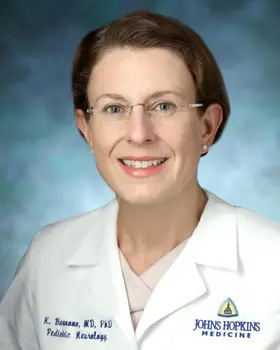
Johns Hopkins Outpatient Center
Kristin Baranano is a Pediatric Neurologist and a Neurologist practicing medicine in Baltimore, Maryland. Dr. Baranano is rated as an Experienced provider by MediFind in the treatment of Temple Syndrome. She is also highly rated in 21 other conditions, according to our data. Her clinical expertise encompasses Hypotonia, Ohdo Syndrome, Say-Barber-Biesecker-Young-Simpson Variant, Focal or Multifocal Malformations in Neuronal Migration, and Spinocerebellar Ataxia Type 3. Dr. Baranano is board certified in American Board Of Psychiatry And Neurology. Dr. Baranano is currently accepting new patients.
MMG Primary Care At Clinton
Tara Saggar is a primary care provider, practicing in Internal Medicine in Clinton, Maryland. Dr. Saggar is rated as an Experienced provider by MediFind in the treatment of Temple Syndrome. Her clinical expertise encompasses Tetrasomy 9p, Chromosome 11 Uniparental Disomy, Pallister-Killian Mosaic Syndrome, and Mosaic Variegated Aneuploidy Syndrome.
Maryland Oncology Hematology Annapolis
David Weng is a Hematologist and an Oncologist practicing medicine in Annapolis, Maryland. Dr. Weng is rated as an Experienced provider by MediFind in the treatment of Temple Syndrome. He is also highly rated in 40 other conditions, according to our data. His clinical expertise encompasses Paget Disease of the Breast, Breast Cancer, Inflammatory Breast Cancer, and Angiosarcoma. Dr. Weng is board certified in American Board Of Internal Medicine - Medical Oncology, 1997. Dr. Weng is currently accepting new patients.
Peds Neurology PSB
Neil Porter is a Neuromusculoskeletal Medicine specialist and a Neurologist practicing medicine in Baltimore, Maryland. Dr. Porter is rated as an Experienced provider by MediFind in the treatment of Temple Syndrome. He is also highly rated in 29 other conditions, according to our data. His clinical expertise encompasses Myasthenia Gravis, Mononeuritis Multiplex, Multiple Mononeuropathy, Riboflavin Transporter Deficiency Neuronopathy, and Gastrostomy. Dr. Porter is board certified in American Board Of Psychiatry And Neurology - Clinical Neurophysiology, 1997 and American Board Of Psychiatry And Neurology - Neurology, 1996. Dr. Porter is currently accepting new patients.
Ryan Gill is a Neurologist practicing medicine in Baltimore, Maryland. Dr. Gill is rated as an Experienced provider by MediFind in the treatment of Temple Syndrome. She is also highly rated in 4 other conditions, according to our data. Her clinical expertise encompasses Tuberous Sclerosis, Tuberous Sclerosis Complex, Sturge-Weber Syndrome, and West Syndrome. Dr. Gill is currently accepting new patients.
Last Updated: 09/26/2026