
Overview
I am a specialist in pediatric critical care medicine, which means that I take care of children in the intensive care unit. Even when very sick, children are focused on the most important things to them – recovering fully so they can go back to playing and being healthy. Their remarkable resilience and sense of wonder, even during their most vulnerable and critical times, is what gets me out of bed each morning. It is a privilege to take care of children in this setting, and my pride to be able to work with them every day. My patients are children of all ages who need advanced levels of care and monitoring in the intensive care unit, and sometimes invasive therapies. This can mean anything from a child with lung disease bad enough to need a ventilator, severe infections that cause dangerously low blood pressure, or organs that no longer work and need to be supported until a transplant can be found. My job is to support and coordinate among children and families, nurses, nutritionists, physical therapists, and other specialist doctors, so that the entire team can maintain the body’s delicate balance and allow it to function during a critical illness. In addition to my clinical work, I am the director for the Pediatric Critical Care Medicine fellowship training program. Our mission is to train future leaders in clinical medicine, scientific research, and advocacy for the needs of critically ill children and their families. I take a special interest in our fellows’ development as scholars, and their understanding of statistics and epidemiology. To that end, my own research focuses on what happens to children after they recover from critical illness and go back home to their normal lives. Do they continue to develop normally? How long does it take? What other kinds of problems might occur? How can we best help with any lingering health issues? These are the kinds of questions that I am trying to answer as both a critical care doctor and scientist by using the medical record and other sources of data on children who have recovered from critical illness. Through active research and educating physicians of the future, I hope to push medical care forward and take even better care of the sickest children in the hospital.
Dr. Geneslaw is highly rated in 1 condition, according to our data. His clinical expertise encompasses Multisystem Inflammatory Syndrome in Children (MIS-C).
Dr. Geneslaw is board certified in Pediatrics. He is actively involved in clinical research, co-authoring 24 peer reviewed articles. Dr. Geneslaw is currently accepting new patients.
Specialties
Licenses
Board Certifications
Fellowships
Hospital Affiliations
Languages Spoken
Gender
Insurance
Accepted insurance can change. Please verify directly with the provider.
Accepted insurance plans:
- OTHER MEDICAID
- STATE MEDICAID
Locations
3959 Broadway, New York, NY 10032
Clinical Research
Clinical research consists of overseeing clinical studies of patients undergoing new treatments and therapies, and publishing articles in peer reviewed medical journals. Providers who actively participate in clinical research are generally at the forefront of the fields and aware of the most up-to-date advances in treatments for their patients.
CUIMC/NewYork-Presbyterian Morgan Stanley Children's Hospital
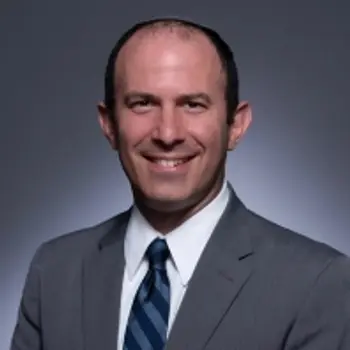
Joshua Milner is a leader in the field of discovery and immunopathogenesis of genetic diseases that lead to allergic symptoms. Among the disorders he has described and/or found major mechanistic insight are PLAID—an immune disorder that leads to lifelong cold urticaria, the glycosylation disorder PGM3 deficiency, ERBIN mutation, CARD11 dominant negative mutations, STAT3 gain-of-function, Hereditary Alpha Tryptasemia Syndrome, IL-6 receptor deficiency, and others. Dr. Milner graduated with an SB in biology from the Massachusetts Institute of Technology (MIT) in 1995 and an MD with distinction in immunology from the Albert Einstein College of Medicine. He completed his residency in pediatrics at the Children’s National Medical Center in Washington, DC, and, as the recipient of the Pediatric Scientist Development Program Fellowship, did his fellowship in allergy and immunology at NIAID. He completed a postdoctoral fellowship with Dr. William E. Paul, NIAID, examining issues of mouse T-cell receptor repertoires before beginning as an investigator in the Laboratory of Allergic Diseases in the NIAID, where he was eventually named chief.Dr. Milner's vision is to establish how genetic variation can help inform diagnosis and care of all patients with allergic disease—rare and common, severe and mild. This is achieved by performing genetic sequencing on samples from patients with allergic disease of all sorts, as well as performing functional studies on the same patient samples, which together help point to specific immune pathways that may be fundamentally causing disease. This comprehensive analysis, when performed in larger populations, will help personalize medicine so that patients can be better categorized for targeted care. Furthermore, this type of research and care requires a coordinated and comprehensive interdisciplinary approach, taking advantage of the expertise across the department of pediatrics and at multiple outpatient sites. Dr. Milner is highly rated in 11 conditions, according to our data. His clinical expertise encompasses Autosomal Dominant Hyper IgE Syndrome, Hyper IgE Syndrome, Multisystem Inflammatory Syndrome in Children (MIS-C), and Hereditary Alpha-Tryptasemia. Dr. Milner is board certified in Allergy And Immunology. Dr. Milner is currently accepting new patients.
Cohen Children's Northwell Health Physician Partners Pediatric Orthopaedics
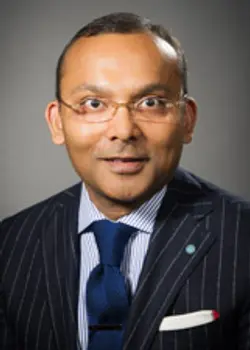
Dr. Sarwahi, heads the Center for Minimally Invasive Scoliosis Surgery and the Center for Advanced Pediatric Orthopedics at Cohens Children s Medical Center, which brings together a dedicated team of fellowship-trained Scoliosis surgeons, neurologists, anesthesiologists, hospitalists, nursing staff and others in state of the art treatment of scoliosis. Few centers in the world offer this technique, technology and team approach.Dr Sarwahi was the Edwin Warner Ryerson Fellow in Pediatric Orthopaedics at Northwestern University Medical School in Chicago. and completed another fellowship in spine deformity at the Hospital for Special Surgery of Cornell University, New York. This extensive training uniquely qualifies him to treat children and adolescents with the expertise of a spine surgeon and the approach of a pediatric orthopaedic surgeon. He is an active member of the Scoliosis Research Society, North American Spine Society and the Society for Minimally Invasive Spine Surgery.Dr Sarwahi has pioneered the minimally invasive scoliosis surgery for idiopathic scoliosis and published the first journal article in the world in the August 2011 issue of Scoliosis and a two-year follow up in the May 2014 issue of the Journal of Spinal Disorders & Techniques. Dr Sarwahi is leading the field again by providing this approach to children with neurological disorders. He is actively involved in basic and clinical science research, and has won numerous national and international awards and nominations. Russell Hibbs science Award (2015, 2013 nomination Scoliosis Research Society),Thomas Whitecloud Award ( 2014, 2014 nomination, 2011 won, Scoliosis Research Society), Young Investigator Research Award- clinical and basic science (2013, 2013 Pediatric Orthopaedic Society of North America), Value Award (North American Spine Society 2013 nomination), Richard D Selznik, MD Award (2013, 2011, 2010, 2009, 2006 Albert Einstein College of Medicine), Louis Goldstein Award (2010 nomination, Scoliosis Research Society), Teacher Of the Year Award 2009, Albert Einstein College Of Medicine, Bronx, New York, Joseph L Posch, MD Award 2004, Best Paper-American Association of Hand Surgeons, 2004 are some of the many. He has co-edited the textbook Spondylolisthesis: Diagnosis, Non-Surgical Management, and Surgical Techniques.Dr Sarwahi is ranked by Becker s Spine review amongst the 12 spine surgeons performing minimally invasive scoliosis surgery in the country. He has been invited by multiple organizations and has presented his technique at a half day course organized by the Scoliosis Research Society at its 47th Annual meeting. His surgical innovations and surgical results have been profiled by NY Daily News, NY1, the Journal News, Sanjay Gupta at www.everydayhealth.com/sanjay-gupta/star-tennis-play etc. He is actively involved in the training of fellows, residents and medical students and annually donates his time to the education of spine surgeons in India. Dr. Sarwahi is highly rated in 8 conditions, according to our data. His clinical expertise encompasses Scoliosis, Adolescent Idiopathic Scoliosis, Kyphosis, Spinal Fusion, and Osteotomy. Dr. Sarwahi is board certified in American Board Of Orthopaedic Surgery. Dr. Sarwahi is currently accepting new patients.
Kings County Hospital Center
Randall Kaye is a Pediatrics provider practicing medicine in Brooklyn, New York. Dr. Kaye is highly rated in 1 condition, according to our data. His clinical expertise encompasses Pseudobulbar Affect.
Frequently Asked Questions about Dr. Andrew S. Geneslaw
Is Dr. Andrew S. Geneslaw a top-rated expert for Multisystem Inflammatory Syndrome in Children (MIS-C)?
MediFind is an objective health platform that identifies experts based on real-world data. Dr. Andrew S. Geneslaw is classified as an Distinguished expert for Multisystem Inflammatory Syndrome in Children (MIS-C), meaning they are among the top experts in the country for this condition. This ranking is based on their volume of patients, published research, and peer connections.
What conditions does Dr. Andrew S. Geneslaw specialize in?
While Dr. Andrew S. Geneslaw is a Pediatrics, they have specific expertise in Multisystem Inflammatory Syndrome in Children (MIS-C). MediFind analyzes a doctor's articles and referral patterns to identify their specific areas of focus within Pediatrics.
Does Dr. Andrew S. Geneslaw participate in research or clinical trials?
Yes. Dr. Andrew S. Geneslaw has published 24 articles and abstracts on conditions like Multisystem Inflammatory Syndrome in Children (MIS-C). You can view a list of Dr. Andrew S. Geneslaw's latest peer-reviewed publications and clinical trial participation on their profile to see if they are active in new treatments.
Does Dr. Andrew S. Geneslaw accept my insurance?
Dr. Andrew S. Geneslaw accepts most major insurance plans, including Medicaid. We recommend calling the office directly to verify that your specific plan is currently accepted before your visit.
Areas of Expertise
MediFind evaluates expertise by pulling from factors such as number of articles a doctor has published in medical journals, participation in clinical trials, speaking at industry conferences, prescribing and referral patterns, and strength of connections with other experts in their field.
Learn more about MediFind’s expert tiers
- Distinguished
- Multisystem Inflammatory Syndrome in Children (MIS-C)