Brand Name

Palynziq

Generic Name
Pegvaliase-Pqpz
View Brand Information
FDA approval date: May 24, 2018
Classification: Phenylalanine Metabolizing Enzyme
Form: Injection

What is Palynziq (Pegvaliase-Pqpz)?

Palynziq is indicated to reduce blood phenylalanine concentrations in adult patients with phenylketonuria who have uncontrolled blood phenylalanine concentrations greater than 600 micromol/L on existing management. Palynziq is a phenylalanine ‑metabolizing enzyme indicated to reduce blood Phe concentrations in adult patients with phenylketonuria who have uncontrolled blood Phe concentrations greater than 600 micromol/L on existing management.

Approved To Treat

Save this treatment for later
Sign Up
Not sure about your diagnosis?
Check Your Symptoms

Related Clinical Trials

Palynziq and PKU: Treatment Impacts on Diet Quality, Neurological Health, Nutritional Status, and the Metabolome

Summary: Phenylketonuria (PKU) is an inherited metabolic disorder that impairs the metabolism of the essential amino acid phenylalanine (Phe). Without stringent dietary control, Phe accumulates in the blood and brain of PKU patients, leading to severe cognitive deficits. Achieving metabolic control, defined as blood Phe levels within the range of 120-360 μmol/L, has been a significant challenge for PKU pat...

A Global, Multicenter Study to Assess Maternal, Fetal and Infant Outcomes of Exposure to Palynziq® (Pegvaliase) During Pregnancy and Breastfeeding

Summary: This is a Phase 4 observational study designed to assess the impact of Palynziq ® (pegvaliase) treatment in pregnant women with PKU and on their offspring who were exposed to pegvaliase at any time during pregnancy and breastfeeding.

A Phase 4 Study to Evaluate the Impact of a Rapid Drug Desensitization (RDD) Protocol for Adults with Phenylketonuria and Experiencing Hypersensitivity Reactions to Palynziq

Summary: The purpose of this study is to determine if rapid drug desensitization (RDD) to Palynziq will improve drug tolerability and treatment persistence in adult patients on commercial Palynziq experiencing hypersensitivity reactions (HSRs) leading to treatment interruption or reduction of dose or dosing frequency. See Section 10.8 for full list of HSR preferred terms. Study details include: * Study dur...

Brand Information

Palynziq (pegvaliase-pqpz)
WARNING: ANAPHYLAXIS
  • Anaphylaxis has been reported after administration of PALYNZIQ and may occur at any time during treatment
  • Administer the initial dose of PALYNZIQ under the supervision of a healthcare provider equipped to manage anaphylaxis, and closely observe patients for at least 60 minutes following injection. Prior to self-injection, confirm patient competency with self-administration, and patient's and observer's (if applicable) ability to recognize signs and symptoms of anaphylaxis and administer epinephrine, if needed
  • Consider having an adult observer for patients who may need assistance in recognizing and managing anaphylaxis during PALYNZIQ treatment. If an adult observer is needed, the observer should be present during and for at least 60 minutes after PALYNZIQ administration, should be able to administer epinephrine, and call for emergency medical support upon its use
  • Prescribe epinephrine to all patients treated with PALYNZIQ. Prior to the first dose, instruct the patient and observer (if applicable) how to recognize the signs and symptoms of anaphylaxis, how to properly administer epinephrine, and to seek immediate medical care upon its use. Instruct patients to carry epinephrine with them at all times during treatment with PALYNZIQ
  • Consider the risks and benefits of readministering PALYNZIQ following an episode of anaphylaxis. If the decision is made to readminister PALYNZIQ, readminister the first dose under the supervision of a healthcare provider equipped to manage anaphylaxis and closely observe the patient for at least 60 minutes following the dose
  • Because of the risk of anaphylaxis, PALYNZIQ is available only through a restricted program under a Risk Evaluation and Mitigation Strategy (REMS) called the PALYNZIQ REMS
1INDICATIONS AND USAGE
PALYNZIQ is indicated to reduce blood phenylalanine concentrations in adult and pediatric patients 12 years of age and older with phenylketonuria (PKU) who have uncontrolled blood phenylalanine concentrations greater than 600 micromol/L on existing management.
2DOSAGE FORMS AND STRENGTHS
PALYNZIQ is a clear to slightly opalescent, colorless to pale yellow solution available as follows:
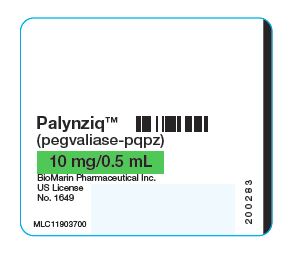
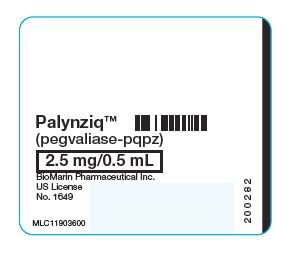
  • Injection: 2.5 mg/0.5 mL single-dose prefilled syringe
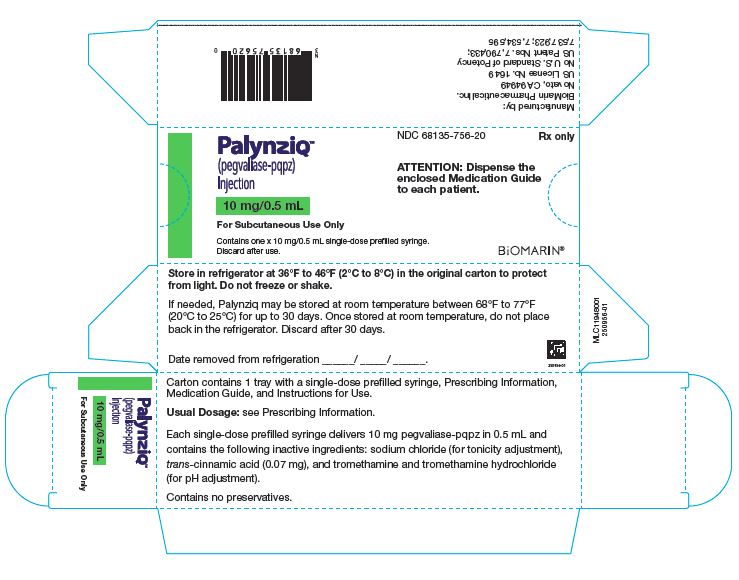
  • Injection: 10 mg/0.5 mL single-dose prefilled syringe
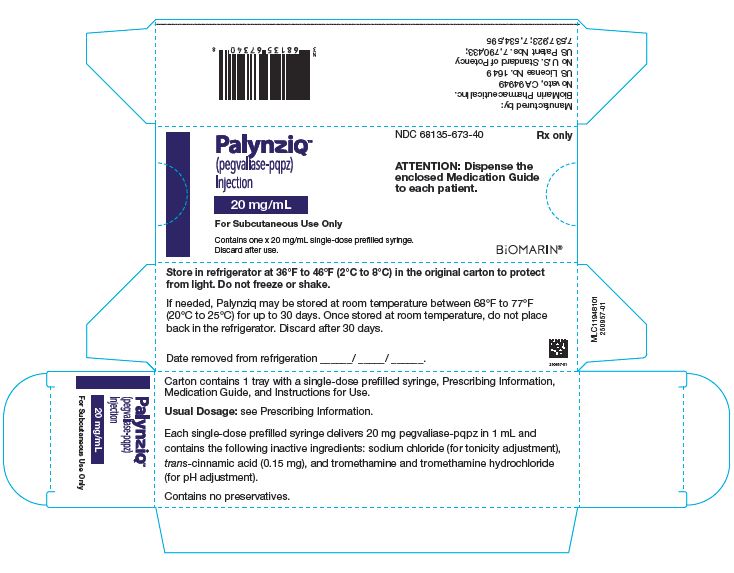
  • Injection: 20 mg/mL single-dose prefilled syringe
3CONTRAINDICATIONS
None.
4ADVERSE REACTIONS
The following serious adverse reactions are discussed below and in other sections of labeling:
  • Anaphylaxis
  • Other Hypersensitivity Reactions
  • Injection Site Infections
  • Hypophenylalaninemia
4.1Clinical Trial Experience
Because clinical trials are conducted under widely varying conditions, adverse reaction rates observed in the clinical trials of a drug cannot be directly compared to rates in the clinical trials of another drug and may not reflect the rates observed in practice.
Clinical Trials With Induction/Titration/Maintenance Dosage Regimen in Patients With PKU (Study 1, Study 2, and Study 3)
The data described below reflect a total treatment exposure of 789 patient-years in 285 patients who received PALYNZIQ in an induction/titration/maintenance regimen in a pooled safety analysis of a phase 2 study (Study 1), and 2 phase 3 studies (Studies 2 and 3, respectively)
The most common adverse reactions (at least 20% of patients in either treatment phase) were injection site reactions, arthralgia, hypersensitivity reactions, headache, generalized skin reactions lasting at least 14 days, nausea, abdominal pain, vomiting, cough, oropharyngeal pain, pruritus, diarrhea, nasal congestion, fatigue, dizziness, and anxiety.
Of the 285 patients exposed to PALYNZIQ from the pooled safety analysis, 44 (15%) patients discontinued treatment due to adverse reactions. The most common adverse reactions leading to treatment discontinuation were hypersensitivity reactions (6% of patients) including anaphylaxis (3% of patients), angioedema (1% of patients), arthralgia (4% of patients), generalized skin reactions lasting at least 14 days (2% of patients), and injection site reactions (1% of patients).
The most common adverse reactions leading to dosage reduction were arthralgia (15% of patients), hypersensitivity reactions (9% of patients), injection site reactions (4% of patients), alopecia (3% of patients), and generalized skin reactions lasting at least 14 days (2% of patients).
The most common adverse reactions leading to temporary drug interruption were hypersensitivity reactions (14% of patients), arthralgia (13% of patients), anaphylaxis (4% of patients), and injection site reactions (4% of patients).
Table 2 lists adverse reactions reported in at least 15% of patients treated with PALYNZIQ in an induction/titration/maintenance dosage regimen in clinical trials and illustrates the adverse reaction rates over time by treatment phase. Table 3 lists laboratory abnormalities reported in at least 10% of patients treated with PALYNZIQ in this pooled safety analysis.
For these analyses, the induction/titration phase was defined as the time prior to reaching a stable dose (completing an 8-week phase at the same dose level). Once a stable dosage was reached, patients were considered to be in the maintenance phase thereafter. Safety data for patients who reached the maintenance phase are included within either the induction/titration or maintenance phases depending on the onset date of the adverse reaction. Safety data for patients who did not reach the maintenance phase are included within the induction/titration phase. The maintenance phase includes data for patients who were previously on PALYNZIQ and transitioned to placebo during the randomized withdrawal period of Study 3
Rates of adverse reactions (adjusted for duration of exposure) generally decreased over time and for some stayed relatively stable. In the maintenance phase, the rate of adverse reactions (adjusted for duration of exposure) in patients who reached the maintenance phase was comparable across dosages evaluated. The types and rate of adverse reactions reported during the maintenance phase in patients who received 20 mg once daily, 40 mg once daily, and 60 mg once daily were similar. During long-term treatment (greater than 36 months), the exposure-adjusted rates of adverse reactions decreased.
Rates of laboratory abnormalities (adjusted for duration of exposure) stayed relatively stable over time, except for complement C4 below lower limit of normal (LLN) and high sensitivity-C Reactive Protein (hs-CRP) above 0.287 mg/dL over a 6-month period (both decreased over time) and hypophenylalaninemia (blood phenylalanine concentration below 30 micromol/L) on a single measurement (increased over time). There were no dose-related trends in type or rate of laboratory abnormalities (adjusted for duration of exposure) reported during the maintenance phase in patients receiving 20 mg once daily, 40 mg once daily, or 60 mg once daily.
Description of Selected Adverse Reactions
Arthralgia
In clinical trials, 245 out of 285 (86%) patients experienced episodes consistent with arthralgia (includes back pain, musculoskeletal pain, pain in extremity, and neck pain).
Arthralgia episodes were more frequent during the induction/titration phase (7.4 episodes/patient-year) and decreased over time (1.4 episodes/patient-year in the maintenance phase).
Forty-four out of 285 (15%) patients had one episode of arthralgia, 32 (11%) patients had 2 episodes of arthralgia, 18 (6%) had 3 episodes of arthralgia, and 146 (51%) had 4 or more episodes of arthralgia. Arthralgia occurred as early as after the first dose of PALYNZIQ and occurred at any time during treatment. The mean duration of arthralgia was 16 days (median: 3 days, range: 1 to 936 days), and 19% of arthralgia episodes had a duration of at least 14 days. Severe arthralgia (severe pain limiting self-care activities of daily living) was reported by 11 (4%) patients. In addition to arthralgia, other joint-related signs and symptoms reported were: joint swelling (24 patients; 8%), joint stiffness (22 patients; 8%), and musculoskeletal stiffness (20 patients; 7%). Arthralgia episodes were managed with medications (e.g., nonsteroidal anti-inflammatory drugs, glucocorticoids, and acetaminophen), PALYNZIQ dosage reduction (4% of episodes), PALYNZIQ interruption (4% of episodes), or PALYNZIQ withdrawal (0.6% of episodes). 97% of arthralgia episodes were reported as resolved at the time of last observation (up to 77 months of follow-up).
Injection Site Reactions
Injection site reactions were reported as early as after the first dose of PALYNZIQ and occurred at any time during treatment. Injection site reactions were more frequent during the induction/titration phase (21 episodes/patient-years) and decreased over time (3 episodes/patient-years in the maintenance phase). The mean duration of injection site reaction was 10 days (median: 2 days, range: 1 to 1612 days), and 8% of injection site reactions had a duration of at least 14 days. 99% of injection site reactions were reported as resolved at the time of last observation (up to 77 months of follow-up).
Three injection site reactions consistent with granulomatous skin lesions were reported (each reaction occurring in one patient): granulomatous dermatitis (occurred after 464 days of PALYNZIQ treatment and lasted 16 days), xanthogranuloma (occurred after 378 days of PALYNZIQ treatment and lasted 638 days) was treated with a topical antihistamine, corticosteroid, and PALYNZIQ treatment was discontinued, and necrobiosis lipoidica diabeticorum (occurred after 281 days of PALYNZIQ treatment and lasted 281 days). Necrobiosis lipoidica diabeticorum was treated with steroid injections and complicated by
One patient reported soft tissue infection (occurred after 196 days of PALYNZIQ treatment and lasted 8 days) associated with mesenteric panniculitis treated with antibiotics which resulted in treatment discontinuation.
Generalized Skin Reactions (not limited to the injection site) Lasting at Least 14 Days
In clinical trials, 134 out of 285 (47%) patients treated with PALYNZIQ experienced generalized skin reactions (not limited to the injection site) lasting at least 14 days. Mean duration of these reactions was 63 days (median: 37 days; range: 14 to 638 days). Generalized skin reactions were more frequent during the induction/titration phase (0.7 episodes/patient-years) and decreased over time (0.3 episodes/patient-years in the maintenance phase).
The mean time from first dose of PALYNZIQ to onset of skin reactions was 373 days (median: 213 days; range: 2 to 1970 days). 5% of these reactions persisted at least 180 days, and 86% of these reactions were reported as resolved at the time of last observation (up to 77 months of follow-up).
Angioedema
In clinical trials, 22 out of 285 (8%) patients experienced 45 episodes of angioedema (symptoms included: pharyngeal edema, swollen tongue, lip swelling, mouth swelling, eyelid edema and face edema) occurring independent of anaphylaxis. Angioedema (included under Hypersensitivity in Table 2) was more frequent during the induction/titration phase (0.14 episodes/patient-year) and decreased over time (0.04 episodes/patient-year in the maintenance phase). Three patients discontinued treatment. All episodes resolved. Angioedema can present as a symptom of anaphylaxis
Serum Sickness
In clinical trials, serum sickness was reported in 7 out of 285 (2%) patients. Serum sickness episodes were more frequent during the induction/titration phase (0.04 episodes/patient-year) and decreased over time (less than 0.01 episodes/patient-year during the maintenance phase). All serum sickness reactions resolved without sequelae (duration of serum sickness ranged from 1 to 8 days). Out of the 7 patients who experienced serum sickness, 5 patients continued treatment without a recurrence and managed serum sickness with drug interruption, dosage reduction and/or concomitant medication. Two patients discontinued treatment.
Clinical Trial in Patients who are 12 to Less Than 18 Years of Age With PKU (Study 4)
The safety of PALYNZIQ in patients who are 12 to less than 18 years of age was evaluated in Study 4, which was an open label, randomized study in 55 patients with PKU. Patients were randomized in a 2:1 ratio to receive PALYNZIQ in an induction/titration/maintenance regimen or to continue dietary management only for 72 weeks
In Study 4, the total exposure to PALYNZIQ was 45.4 person-years in 36 patients
The most common adverse reactions in patients who are 12 to less than 18 years of age (at least 20% and greater than in control) were injection site reactions, arthralgia, headache, pyrexia, hypersensitivity reactions, dizziness, nausea, vomiting, fatigue, and pain in extremity.
Table 4 lists the adverse reactions that were reported in at least 15% of patients treated with PALYNZIQ and greater than that of the diet-only arm in Study 4.
Laboratory Abnormalities
Eosinophilia: In Study 4, 44% of patients in the PALYNZIQ-treated group experienced eosinophilia above the ULN compared to 11% of patients in the diet-only group.
Hypophenylalaninemia: In Study 4, 28% of patients in the PALYNZIQ-treated group experienced hypophenylalaninemia, defined as blood Phe level < 30 µmol/L on 1 or more measurements, compared to 5% of patients in the diet-only group.
Creatine Phosphokinase (CPK) Elevation: In Study 4, 14% of patients in the PALYNZIQ-treated group experienced CPK level greater than 3 times the ULN compared to 0% of patients in the diet-only group.
4.2Postmarketing Experience
The following adverse reactions have been identified during post-approval use of PALYNZIQ. Because these reactions are reported voluntarily from a population of uncertain size, it is not always possible to reliably estimate their frequency or establish a causal relationship to drug exposure.
Administration site conditions: injection site infection, cellulitis, necrosis, and abscess.
5DESCRIPTION
Pegvaliase-pqpz is a phenylalanine-metabolizing enzyme that is composed of recombinant phenylalanine ammonia lyase (rAvPAL) conjugated to N-hydroxysuccinimide (NHS)-methoxypolyethylene glycol (PEG). rAvPAL is manufactured in
PALYNZIQ (pegvaliase-pqpz) injection, intended for subcutaneous injection, is a clear to slightly opalescent, colorless to pale yellow, sterile, preservative-free solution and is formulated at pH 6.6 to 7.4.
PALYNZIQ is provided in a single-dose prefilled syringe and is available in three dosage strengths: 2.5 mg/0.5 mL, 10 mg/0.5 mL, and 20 mg/mL. PALYNZIQ contents for each dosage strength are summarized in Table 5.
6CLINICAL STUDIES
Study 2: Induction/Titration/Maintenance Treatment
Study 2 (NCT01819727) was an open-label, randomized, multi-center study of adults with PKU to assess safety and tolerability of self-administered PALYNZIQ in an induction/titration/maintenance regimen with a target maintenance dose of 20 mg subcutaneously once daily or 40 mg subcutaneously once daily. At PALYNZIQ treatment initiation, 253 patients demonstrated inadequate blood phenylalanine control (blood phenylalanine concentration greater than 600 micromol/L) on existing management, and 8 patients had blood phenylalanine concentrations less than or equal to 600 micromol/L. Existing management options included prior or current restriction of dietary protein and phenylalanine intake, and/or prior treatment with sapropterin dihydrochloride. Patients previously treated with sapropterin dihydrochloride were required to discontinue use at least 14 days prior to the first dose.
The 261 enrolled patients were aged 16 to 55 years (mean: 29 years) and had a baseline mean (range) blood phenylalanine of 1,233 (285, 2330) micromol/L. One hundred forty nine out of 261 (57%) patients were taking medical food at baseline and 41 out of 261 patients (16%) were on a Phe-restricted diet at baseline (defined as receiving greater than 75% of total protein intake from medical food). Patients were randomized (1:1) to one of two target maintenance dosage arms: 20 mg once daily or 40 mg once daily. Patients were titrated to reach their randomized target dosage of 20 mg once daily or 40 mg once daily. The duration of titration varied among patients and was based on patient tolerability. Of the 261 enrolled patients, 195 (75%) patients reached their randomized maintenance dosage (103 in the 20 mg once daily arm, 92 in the 40 mg once daily arm). Among the patients who reached their randomized maintenance dosage, patients in the 20 mg once daily randomized arm reached their maintenance dosage at a median time of 10 weeks (range: 9 to 29 weeks) and patients in the 40 mg once daily arm reached their maintenance dosage at a median time of 11 weeks (range: 10 to 33 weeks).
Of the 261 patients who enrolled in Study 2, 54 (21%) patients discontinued treatment during Study 2, 4 patients completed Study 2 and did not continue to Study 3 (referred to as Study 302, NCT01889862), 152 patients continued to the eligibility period of Study 3, and 51 patients continued directly from Study 2 into the long-term treatment period of Study 3.
Study 3: Efficacy Assessment
A total of 164 adult patients with PKU who were previously treated with PALYNZIQ (152 patients from Study 2 and 12 patients from other PALYNZIQ trials) enrolled in Study 3 and continued treatment with PALYNZIQ in Study 3 for up to 13 weeks to assess eligibility for randomized withdrawal period.
Randomized Withdrawal Period
Following this period of up to 13 weeks of additional PALYNZIQ treatment in Study 3, eligibility for entry into the efficacy assessment period (randomized withdrawal period) was determined by whether a patient achieved at least a 20% reduction in blood phenylalanine concentration from pre-treatment baseline (when in previous studies). Eighty-six out of 164 patients (52%) met this response target and continued into the randomized withdrawal period. In the double-blind, placebo-controlled, randomized withdrawal period, patients were randomized in a 2:1 ratio to either continue their maintenance PALYNZIQ dosage or to receive matching placebo for a total of 8 weeks. The treatment difference in least squares (LS) mean change in blood phenylalanine concentration from the Study 3 randomized withdrawal baseline to randomized withdrawal Week 8 for each randomized study arm is shown in Table 6. Mean blood phenylalanine concentrations at pre-treatment baseline (Study 2 or other PALYNZIQ trials) are also shown in Table 6. At Study 3 randomized withdrawal Week 8, PALYNZIQ-treated patients (20 mg once daily or 40 mg once daily) maintained their blood phenylalanine concentrations as compared to their randomized withdrawal baseline, whereas patients randomized to matching placebo (20 mg once daily or 40 mg once daily) returned to their pretreatment baseline blood phenylalanine concentrations (Figure 1).
Studies 2 and 3 Continuous Treatment
Of 118 patients from Study 2 with a pre-treatment baseline blood phenylalanine concentration greater than 600 micromol/L who were randomized to and received at least one dose of 20 mg once daily PALYNZIQ, 107 patients, 97 patients, 93 patients, 86 patients, and 77 patients were treated for at least 6 months, 12 months, 18 months, 24 months, and 36 months, respectively. During the continuous treatment period, patients were allowed to dose up to 60 mg once daily based on investigator discretion to achieve blood phenylalanine lowering (for example, to achieve blood phenylalanine concentrations between 120 and 360 micromol/L).
Of the 118 patients, a majority (91 patients, 77%) reached their first response, defined as a blood phenylalanine concentration less than or equal to 600 micromol/L, at a time point prior to 36 months. Of the 91 patients, 9 patients (10%) achieved their first response at a dose less than 20 mg once daily, 44 patients (48%) achieved their first response at a dose of 20 mg once daily, 26 patients (29%) achieved their first response at a dose of 40 mg once daily, and 12 patients (13%) achieved their first response at a dose of 60 mg once daily. Of the 44 patients that achieved their first response at a dose of 20 mg once daily, 36 (82%) achieved it by 24 weeks of treatment. Of the 26 patients that achieved their first response at a dose of 40 mg once daily, 18 (69%) achieved it by 16 weeks of treatment. Of the 12 patients that achieved their first response at a dose of 60 mg once daily, 8 (67%) achieved it by 16 weeks of treatment.
Of the 107 patients treated for at least 6 months, 28 (26%), 18 (17%), and 11 (10%) had a blood phenylalanine concentration less than or equal to 600, 360, and 120 micromol/L, respectively, at 6 months of treatment. Of the 97 patients treated for at least 12 months, 47 (48%), 41 (42%), and 31 (32%) had a blood phenylalanine concentration less than or equal to 600, 360, and 120 micromol/L, respectively, at 12 months of treatment. Of the 93 patients treated for at least 18 months, 64 (69%), 46 (49%), and 36 (39%) had a blood phenylalanine concentration less than or equal to 600, 360, and 120 micromol/L, respectively, at 18 months of treatment. Of the 86 patients treated for at least 24 months, 65 (76%), 57 (66%), and 43 (50%) had a blood phenylalanine concentration less than or equal to 600, 360, and 120 micromol/L, respectively, at 24 months of treatment. Of the 77 patients treated for at least 36 months, 58 (75%), 51 (66%), and 37 (48%) had a blood phenylalanine concentration less than or equal to 600, 360, and 120 micromol/L, respectively, at 36 months of treatment.
Study 4
Study 4 (NCT05270837) was an open label, randomized, 2-arm study in patients who are 12 to less than 18 years of age who demonstrated inadequate blood phenylalanine control (blood phenylalanine concentration greater than 600 micromol/L) on existing management. Patients were randomized in a 2:1 ratio to receive PALYNZIQ in an induction/titration/maintenance regimen or to continue dietary management for 72 weeks.
Of the 55 randomized patients, 60% were female and 40% were male. The baseline mean (SD) age was 14.4 (1.3) years. The patient population consisted of 87% White, 4% Black, 2% Asian, and 7% not reported. Ethnicity consisted of 4% Hispanic or Latino and 96% not Hispanic or Latino.
Thirty-six patients received PALYNZIQ subcutaneously at doses of 20 mg, 40 mg, or 60 mg per day during maintenance dosing, and 19 patients were included in the diet-only control arm. All patients were required to maintain stable dietary protein intake from medical food and intact food up to week 72. Baseline mean (range) blood phenylalanine was 1,025 (635, 1,555) micromol/L in the PALYNZIQ arm and 1,029 (687, 1414) micromol/L in the diet only arm, respectively. Four patients in the PALYNZIQ arm discontinued from Study 4 up to week 72.
Of the 36 patients enrolled in the PALYNZIQ arm, 34/36 (94%) reached a dose of 20 mg per day (median time to first 20 mg per day dose was 12.1 weeks), 26/36 (72%) reached a dose of 40 mg per day (median time to first 40 mg per day dose was 40 weeks), and 14/36 (39%) reached a dose of 60 mg per day (median time to first 60 mg per day dose was 60.7 weeks).
Patients in the PALYNZIQ arm showed a significant mean reduction from baseline in blood Phe levels at Week 72 compared to patients in the diet only arm (Table 7).
Figure 2 shows the blood phenylalanine concentration over time of patients treated with PALYNZIQ patients on diet only.
7HOW SUPPLIED/STORAGE AND HANDLING
How Supplied
PALYNZIQ (pegvaliase-pqpz) injection is supplied as a preservative-free, sterile, clear to slightly opalescent, colorless to pale yellow solution. All dosage strengths of PALYNZIQ are provided in a 1 mL glass syringe with a 26-gauge, 0.5 inch needle.
Each carton contains 1 or 10 trays with single-dose prefilled syringe(s), Prescribing Information, Medication Guide, and Instructions for Use. The following packaging configurations are available.
8PATIENT COUNSELING INFORMATION
Advise the patient to read the FDA-approved patient labeling (Medication Guide and Instructions for Use).
Anaphylaxis and Other Hypersensitivity Reactions
  • Advise patients that PALYNZIQ may cause hypersensitivity reactions, including anaphylaxis that can occur at any time. Instruct patients to recognize the signs and symptoms of anaphylaxis
  • Instruct patients to carry epinephrine with them at all times during PALYNZIQ treatment. Instruct the patient and observer (if applicable) on the appropriate use of epinephrine for anaphylaxis
  • Instruct patients who experience anaphylaxis to seek immediate medical care, discontinue therapy, and resume treatment only at the instruction of a healthcare provider
PALYNZIQ REMS Program
PALYNZIQ is available only through a restricted program called the PALYNZIQ REMS
  • Patients must be enrolled in the PALYNZIQ REMS.
  • Patients must be educated about the risk of anaphylaxis by a certified prescriber to ensure they understand the risks and benefits of treatment with PALYNZIQ.
  • Patients must fill a prescription for epinephrine and carry it with them at all times.
  • Patients will be given a PALYNZIQ Patient Wallet Card that they should carry with them at all times. This card describes symptoms which, if experienced, should prompt the patient and observer (if applicable) to immediately seek medical care. Advise the patient to show the PALYNZIQ Wallet Card to other treating healthcare providers.
PALYNZIQ is available only from certified pharmacies participating in the program. Therefore, provide patients with the telephone number and website for information on how to obtain the product.
Administration
  • Advise patients to monitor their dietary protein and phenylalanine intake throughout treatment with PALYNZIQ, and adjust intake as directed by their healthcare provider based on blood phenylalanine concentrations
  • Provide appropriate instruction for methods of self-injection, including careful review of the PALYNZIQ Medication Guide and Instructions for Use. Instruct patients in the use of aseptic technique when administering PALYNZIQ
  • Inform patients that a healthcare provider will show them or their caregiver how to prepare to inject PALYNZIQ before self-administering.
  • Advise patients not to inject into moles, scars, birthmarks, bruises, rashes, or areas where the skin is hard, tender, red, damaged, burned, inflamed, or tattooed.
  • Advise patients to rotate injection sites with each dose.
  • Advise patients that injection site infections may occur and to check the injection site for redness, swelling, or tenderness prior to injection. Instruct patients to contact their healthcare provider if signs or symptoms of an infection develop, persist, or worsen
  • Advise patients to not administer PALYNZIQ into the affected area until the infection has resolved.
  • Advise patients to follow sharps disposal recommendations
  • Advise patients that the shelf-life expires after storage at room temperature for 30 days or after the expiration date on the product carton, whichever is earlier.
Pregnancy
Advise pregnant women and females of reproductive potential of the potential risk to a fetus. Advise females to inform their healthcare provider of a known or suspected pregnancy
Advise women who are exposed to PALYNZIQ during pregnancy or who become pregnant within one month following the last dose of PALYNZIQ that there is a pregnancy surveillance program that monitors pregnancy outcomes. Encourage these patients to report their pregnancy to BioMarin (1-866-906-6100)
9INSTRUCTIONS FOR USE
PALYNZIQ (Pal-lin-zeek)
This Instructions for Use contains information on how to inject PALYNZIQ.
Read this Instructions for Use before you start using the PALYNZIQ prefilled syringe and each time you get a new prescription. There may be new information. This information does not take the place of talking to your healthcare provider about your medical condition or your treatment.
Important Information You Need to Know Before Injecting PALYNZIQ:
  • Follow these instructions carefully while you are using PALYNZIQ.
  • If your healthcare provider decides that you (or your caregiver) can give the injections of PALYNZIQ at home, your healthcare provider will show you (or your caregiver) how to inject PALYNZIQ the right way.
  • Your healthcare provider should watch you (or your caregiver) give the first PALYNZIQ injection and monitor you for signs and symptoms of a severe allergic reaction (anaphylaxis).
  • Do not inject PALYNZIQ until your healthcare provider shows you (or your caregiver) how to inject PALYNZIQ the right way and has watched you (or your caregiver) give your injection.
  • Do not use a PALYNZIQ prefilled syringe more than 1 time.
  • Do not pull back on the plunger at any time.
  • Do not remove the needle cap until you are ready to inject.
  • Do not share your prefilled syringes with anyone else. You may give an infection to them or get an infection from them.
  • Store your PALYNZIQ prefilled syringe(s) in its original carton in the refrigerator. See " at the end of this Instructions for Use.
  • Talk to your healthcare provider if you (or your caregiver) have any questions about how to inject PALYNZIQ the right way.
Supplies you will need for each injection of PALYNZIQ (See
  • PALYNZIQ prefilled syringe(s) in sealed tray(s).
  • 1 gauze pad or cotton ball
  • 1 alcohol pad
  • 1 bandage
  • 1 puncture resistant or sharps disposal container. See
Figure B below shows what the prefilled syringe looks like before use.
Select the correct PALYNZIQ prefilled syringe(s) for your dose. You may need more than 1 prefilled syringe for your prescribed dose. Your healthcare provider will tell you which prefilled syringe(s) to use. Ask your healthcare provider if you have any questions.
When you receive your PALYNZIQ prefilled syringe(s), check that the name "Palynziq" appears on the carton(s).
  • PALYNZIQ prefilled syringes come in 3 different strengths (See
  • Before you inject PALYNZIQ, check each carton and syringe to make sure you have the right prefilled syringe for your prescribed dose.
Set up your injection
Choose and prepare injection site
Inject PALYNZIQ
Treat injection site
Dispose of the used prefilled syringes
Storing PALYNZIQ
This Instructions for Use has been approved by the U.S. Food and Drug Administration.
Manufactured by:
U.S. License No. 1649
Revised: 2/2026